Q&A About the Observable Universe


Below is a Q&A exchange that I had with the founder of a Croatian online publication dedicated to science, astronomy, and space exploration. The questions are in boldfaced font.
***
With the “fuller” data now available on 3I/ATLAS, what is your assessment of the object? Which features you initially highlighted now have satisfactory explanations, and which, if any, still strike you as unresolved? How likely is it that an object of technological origin has passed through our solar system without us detecting it?
3I/ATLAS displayed the chemical composition and speed of an iceberg which originated from a star that is about twice as old as the Sun. Its main anomalies are that it came within 5 degrees from the orbital plane of the planets around the Sun (corresponding to a random chance of a fraction of a percent); it displayed a major anti-tail jet pointed at the Sun and three mini-jets that are symmetrically organized around its nucleus instead of a standard cometary tail; it released organic molecules, and a deuterium abundance that is a thousand times higher than the cosmic value. It is possible that the organic molecules indicate the potential for microbial life in its deep interior or that its unusual trajectory implies that its cometary appearance represents a Trojan Horse inside of which a technological civilization planted probes inside of it, but we have no direct evidence for any of these possibilities.
The Galileo Project has reported triangulation results, and you have announced a new observatory in Ithaca. What has the Project learned so far, and what should the planned combination of radar, high-resolution imaging and spectroscopy make possible that was missing before?
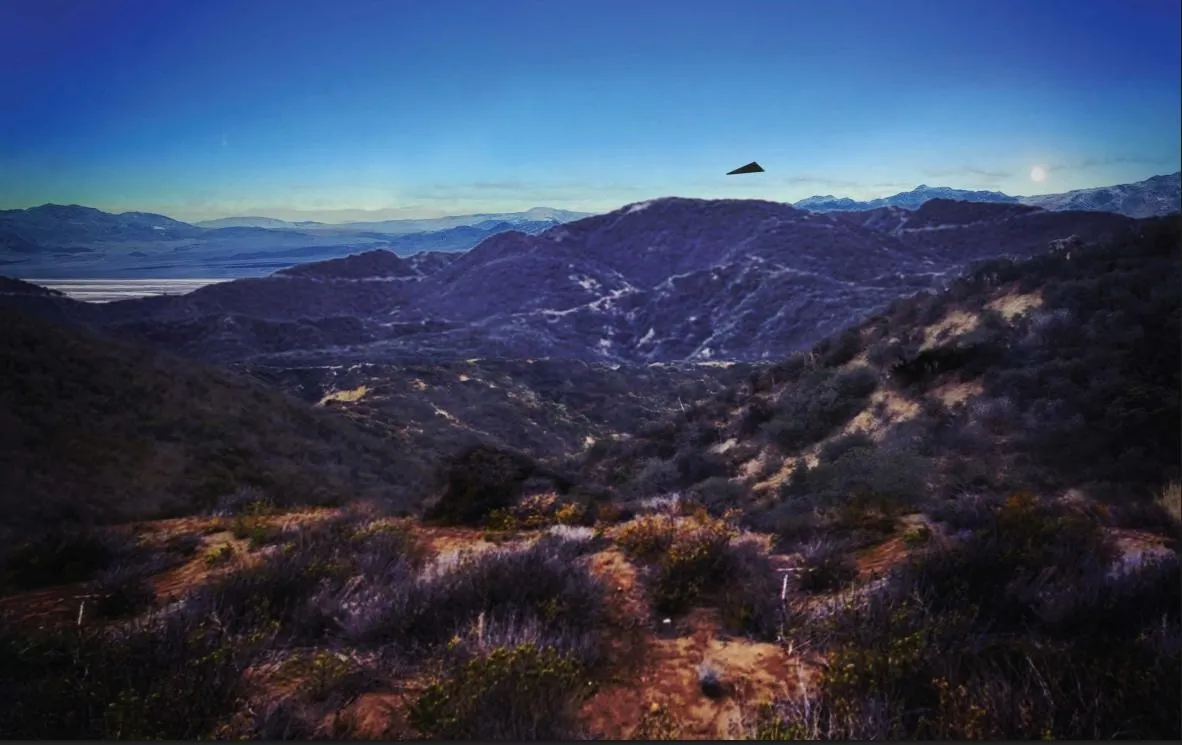
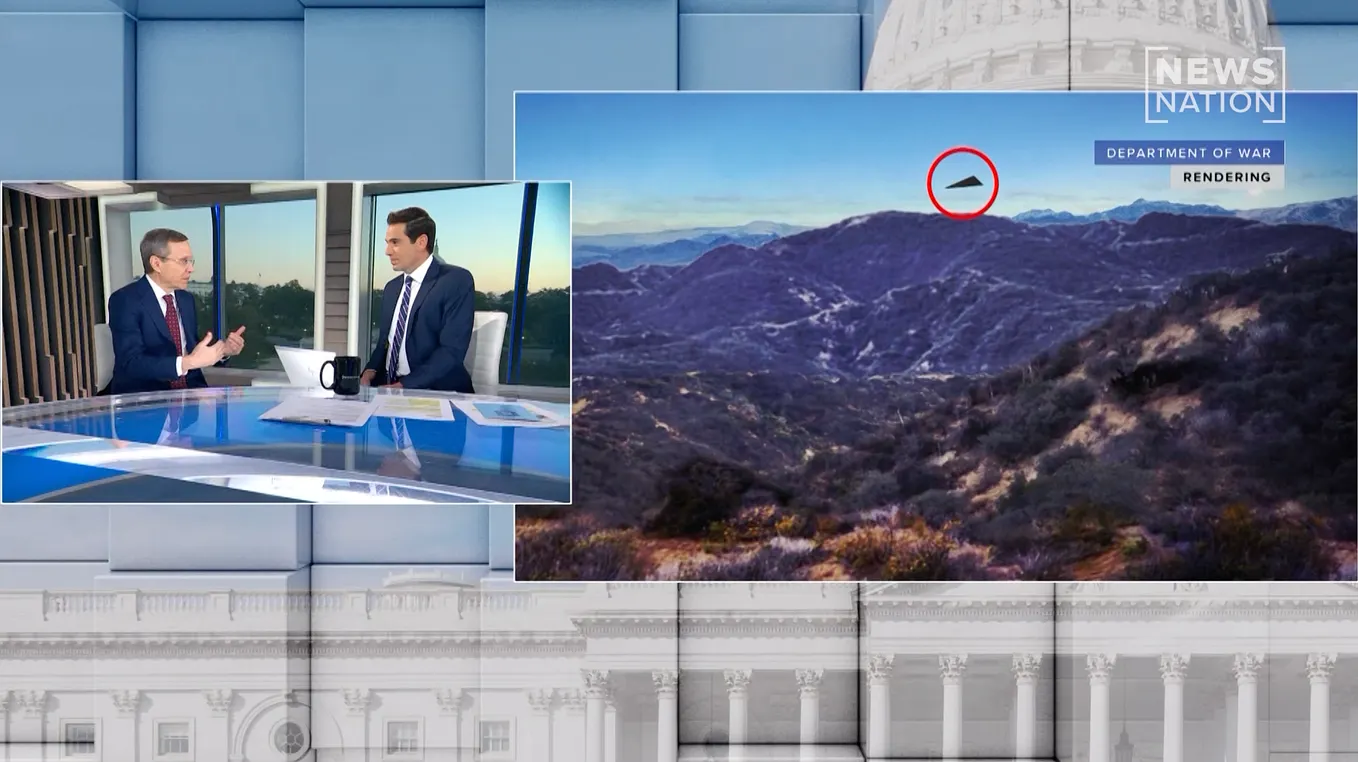
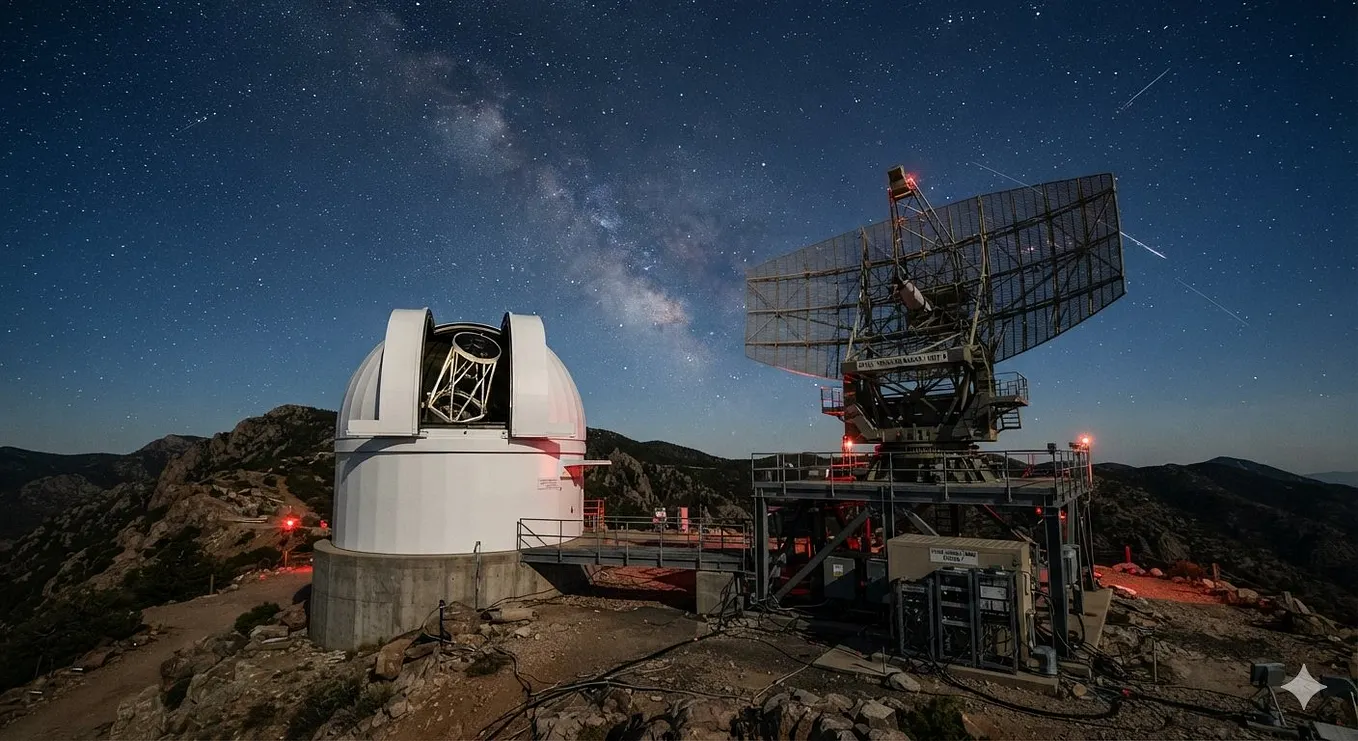
Out of all the infrared videos released by the All-Domain Anomaly Resolution Office in the Pentagon over the past five months, the UAP Science Advisory Council in partnership with the Galileo Project (in a paper here led by Jacob Haqq-Misra), found that 8% of the Unidentified Anomalous Phenomena (UAP) are birds. Triangulation data (as discussed in a Galileo Project paper here) allows us to validate any such inference by measuring the distances of UAP. The bird identification was based on a frame-by-frame analysis which implied that these UAP flicker about 7–8 times per second, similarly to birds in the Galileo Project data. The periodic fluctuations in the amount of heat emitted by these UAP is the result of birds flapping their wings. A couple of months ago, I invented a new observatory concept here which is optimized for high-resolution imaging and spectroscopy of Unidentified Anomalous Phenomena (UAP). This idea materialized into a funded construction plan of a new Galileo observatory at the old residence of Carl Sagan in Ithaca (as announced here). A passive radar system will identify UAP in the sky and steer a 0.7-meter sized telescope to obtain a high-resolution image and a spectrum of the UAP. The high-resolution image will allow us to identify fine details in the image (such as see passengers through the windows of a commercial airplane, and the spectrum will allow us to identify the chemical composition of the UAP.
Rubin has already announced thousands of new asteroids and a dwarf-planet candidate. What would you most like its future interstellar-object discoveries to reveal, and what discovery rate do you now consider realistic over the coming years?
The Rubin Observatory is capable of detecting dozens of new interstellar objects over the coming decade. Right now, its operations are slowed-down by a power outage from severe winter storms in Chile and the Observatory is currently powered by a generator.
Your population calculations suggest that vast numbers of interstellar objects could occupy the enormous volume extending out to the Oort Cloud. Which assumption most strongly controls those estimates, and what could a larger observed sample tell us about how planetary systems eject their material?
There should be of order a quadrillion (10^{15}) interstellar objects larger than a football field, about 100 meters, out to the edge of the Solar System at a distance of 100,000 times the Earth-Sun separation. This is based on the detection of 1I/`Oumuamua, 2I/Borisov and 3I/ATLAS over the past decade, folding in the surveyed volume and detection rate for these objects. The assumption underlying this estimate is that these objects move randomly and are uniformly distributed in the local interstellar space. If any objects are guided by technology, they might target the inner solar system and be more clustered there than on average. This situation is similar to bees which are clustered around flowers.
You helped predict the spectral signatures of the first generation of stars decades ago. With Webb observations now pointing to candidates such as Hebe near GN-z11, what evidence would convince you that we have identified a population of primordial stars, and what would you most want to learn from it?
I would like to know how early the first stars formed. My theoretical prediction from papers published over the past three decades is that the very first stars formed 50 million years after the Big Bang. But if any stars existed when the Universe was 15 million years old, then they would have witnessed what I called in a 2014 paper here “The Habitable Epoch” of the Universe, when the cosmic microwave background was at room temperature. Habitable planets at that time would not need to be in the Goldilocks zone at the right distance from stars in order for the chemistry of life-as-we-know-it to emerge in liquid water on their surface, because the entire volume of the Universe had the right temperature.
Your recent work explores whether material shed by supermassive stars could explain the dense gas surrounding Webb’s “Little Red Dots,” before those stars collapse into massive black-hole seeds. What observation would most clearly distinguish that picture from competing explanations?
My six latest papers on Little Red Dots (listed here) show how refined spectroscopic data from the Webb Telescope can distinguish between star clusters and supermassive stars as the seeds of supermassive black holes. The origin of supermassive stars as these seeds, dates back to a paper that I published here in 1994 with Fred Rasio, followed by a 1995 paper with my first PhD student Daniel Eisenstein here, and a 2003 paper with Volker Bromm here.
You have described pulsars near Sagittarius A as a natural GPS system for mapping spacetime. What could their precise clocks tell us about gravity that would complement black-hole images and observations of orbiting stars?
These pulsars are clocks which change their ticking rate relative to us as they move along their orbit around Sagittarius A*. Detecting pulsars close to the black hole would allow us to test Einstein’s General Relativity as well as measure the spin of the black hole.
In your new paper with the student Oem Trivedi, you investigate whether dark energy might be distributed unevenly. What observable difference would that make, and how could astronomers distinguish it from an ordinary region containing less matter?
Over the past five years, cosmologists identified a potential discrepancy between the expected and observed Hubble expansion rate in the local Universe. The expected value is based on the anisotropies of the cosmic microwave background, a relic from the early Universe. In principle, this so-called `Hubble tension’ could be explained by a large void that is deficient of dark energy relative to the cosmos at large. Our paper with Oem shows how this possible explanation can be tested by forthcoming data from galaxy surveys and distance indicators.
You have asked why life like ours appeared around a Sun-like star at this particular time in cosmic history. Has your recent work on stellar habitability made those circumstances look more typical or more exceptional to you, and how should that influence where we search for life?
Get Avi Loeb’s stories in your inbox
Join Medium for free to get updates from this writer.
The most likely explanation for the fact that the Sun is more massive than most stars is that the habitable zone around fainter dwarf stars is closer in, making rocky planets there vulnerable to sterilization by stellar winds and ultraviolet flares. My recommendation is to focus on the search for life near Sun-like stars even though they are rarer than dwarf stars.
The likelihood of finding technological signatures of intelligent civilizations depends sensitively on their lifespan which could be rather short relative to the age of the Universe, unless AI and space exploration extend it.
You recently argued for a search focused on extraterrestrial artificial intelligence. If the intelligence we encounter is machine-based rather than biological, what should we search for differently, and how can we avoid projecting today’s ideas about AI onto an unknown civilization?
The Search for Extraterrestrial AI (which I termed SETAI here) should take into account that AI data centers are likely to be located closer to the host star than the habitable zone distance, because of the increase in stellar power per unit area. Moreover, AI-assisted robots might appear in the form of self-replicating probes near Earth.
Your work with your former postdoc James Guillochon proposes searching for light leaking from beams that could propel hypothetical extraterrestrial light sails. What would such a signal look like in telescope data, and how would researchers separate it from stellar flares or instrumental artifacts?
A flare from a beam directed at a light sail would show up in our survey telescopes when our line-of-sight coincides with the beam axis. Our paper calculated the repeating signal that would result from such orientations. This is a new technological signature that was not considered before we studied it in two papers, here and here.
You have suggested attaching probes to passing interstellar objects, or eventually using their material to build spacecraft. What would be a credible first experiment toward that idea, and which engineering obstacle would have to be solved first?
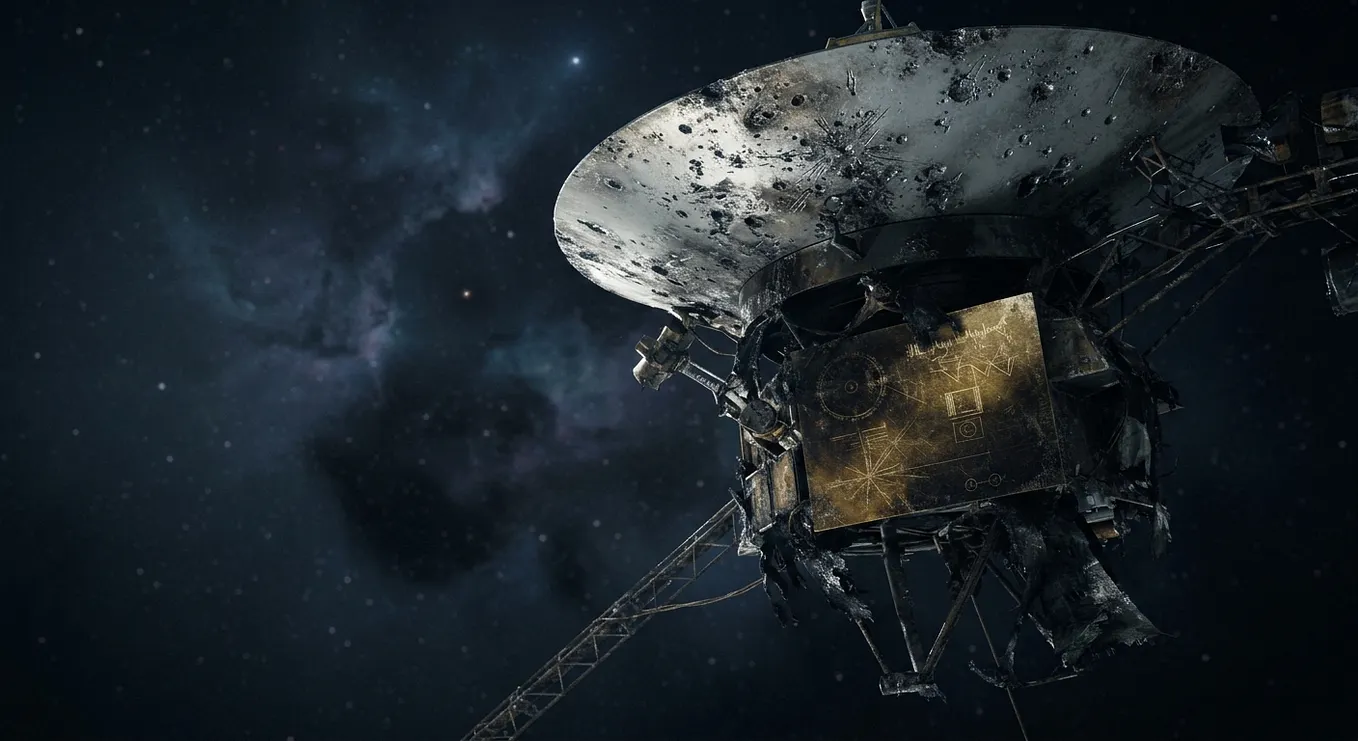
Our space agencies should consider launching an interceptor that will cross the path of a future interstellar object. As long as we identify the object 6–12 months in advance of its closest distance to Earth, it is feasible to launch an interceptor that will cross its path. One could design a sturdy interceptor payload that would survive the impact with an iceberg and be ultimately carried to interstellar space at a speed that exceeds by a large margin that of the Voyager spacecraft. By hitchhiking a comet with a technological probe or seeding it with life, we can create a Trojan Horse ourselves, as I discussed in a recent paper with my student Shokhruz Kakharov here. The artificial implant may be exposed once the ice around it is vaporized by a close passage to another star.
You recently wrote that some public claims misrepresent your views. Has that experience changed how you communicate speculative ideas, especially when the distinction between a possibility and a discovery can disappear in a headline?
Most of these misrepresentations resulted from a lack of understanding that progress in science is based on comparing theoretical ideas to experimental data. Without these ideas, we will not be motivated to retrieve new data. This means that we should treat innovative ideas with respect and ultimately accept the ideas that are supported by evidence. But we should not confuse, as done by some science reporters and social media influencers, that a theoretical idea claims a scientific fact. By suggesting the possibility that 1I/`Oumuamua might be technological in origin, I am not claiming that it is. As the fictitious detective Sherlock Holmes noted: “When you have eliminated all which is impossible, then whatever remains, however improbable, must be the truth.”
Many people have a cognitive dissonance when confronted with anomalies. They wish to shove these anomalies under the carpet of traditional thinking and hope that they will disappear, instead of considering non-conventional interpretations for them. The latter is my specialty. For example, see the essay which I wrote this morning here before heading to teach my class.
After completing your term as director of Harvard’s Institute for Theory and Computation, what lessons would you pass on about helping young scientists pursue unconventional questions while maintaining strong standards of evidence?
My main lesson is that irrespective of leadership titles, all of us should keep wondering about the mysteries of the Universe around us with childlike curiosity. I am much more excited about fostering curiosity in the students and postdocs that I mentor than anything else. The hundreds of young scholars who worked with me share my academic DNA.
This morning, I taught a class about gravitational waves. Traditional astronomy was about detecting electromagnetic waves. After reviewing the fundamental theory of gravitational waves, I had mentioned that LIGO (the Laser Interferometer Gravitational-Wave Observatory) can detect mirror displacements as small as 10^{-17} centimeters, about 10,000 times smaller than the size of a proton, allowing astronomers to study the spacetime fluctuations generated by a merger of stellar-mass black holes at distances of billions of light years. When the MIT physicist Rai Weiss came up with the initiative to construct LIGO, the scientific community dismissed it as not feasible. Even Rai’s close colleagues at MIT recommended to the local administration that no funding would be allocated to the project. Fortunately, Richard Isaacson, the Program Director for Gravitational Physics at the National Science Foundation (NSF) backed Rai’s early laser interferometer concept in the 1970s despite widespread skepticism in the scientific community. Over several decades, Isaacson steadily directed millions of dollars in NSF research grants toward prototype development and guided LIGO until it became the largest project in the agency’s history. When LIGO transitioned from prototype studies to a massive, expensive construction proposal, Walter Massey, who served as NSF Director between 1991–1993, fought to win over both the National Science Board and a hesitant U.S. Congress. His leadership helped secure the initial major construction appropriations needed to build the twin LIGO observatories in Washington and Louisiana, which were awarded the Physics Nobel Prize in 2017 for their detection of black hole mergers. “The lesson is…”, I told my students, “… not to surrender to naysayers. Successful science leaders are judged by their scientific vision and not by their weekly newsletters.”
ABOUT THE AUTHOR

Avi Loeb is chair of the UAP Science Advisory Council to the White House, Pentagon, FBI and intelligence agencies, director of the Galileo Project, founding director of Harvard University’s — Black Hole Initiative (2016–2021), former director of the Institute for Theory and Computation at the Harvard-Smithsonian Center for Astrophysics (2005–2026), and the former chair of the astronomy department at Harvard University (2011–2020). He is a former member of the President’s Council of Advisors on Science and Technology (2018–2019) and a former chair of the Board on Physics and Astronomy of the National Academies (2018–2021). He is the bestselling author of “Extraterrestrial: The First Sign of Intelligent Life Beyond Earth” and a co-author of the textbook “Life in the Cosmos”, both published in 2021. The paperback edition of his new book, titled “Interstellar”, was published in August 2024.
Professional website:
https://lweb.cfa.harvard.edu/~loeb/
Social media:
https://avi-loeb.medium.com/
https://www.youtube.com/@ProfessorAviLoeb
https://open.spotify.com/show/1zhndXkvSY2b8FdjspFpCd
https://x.com/ProfAviLoeb