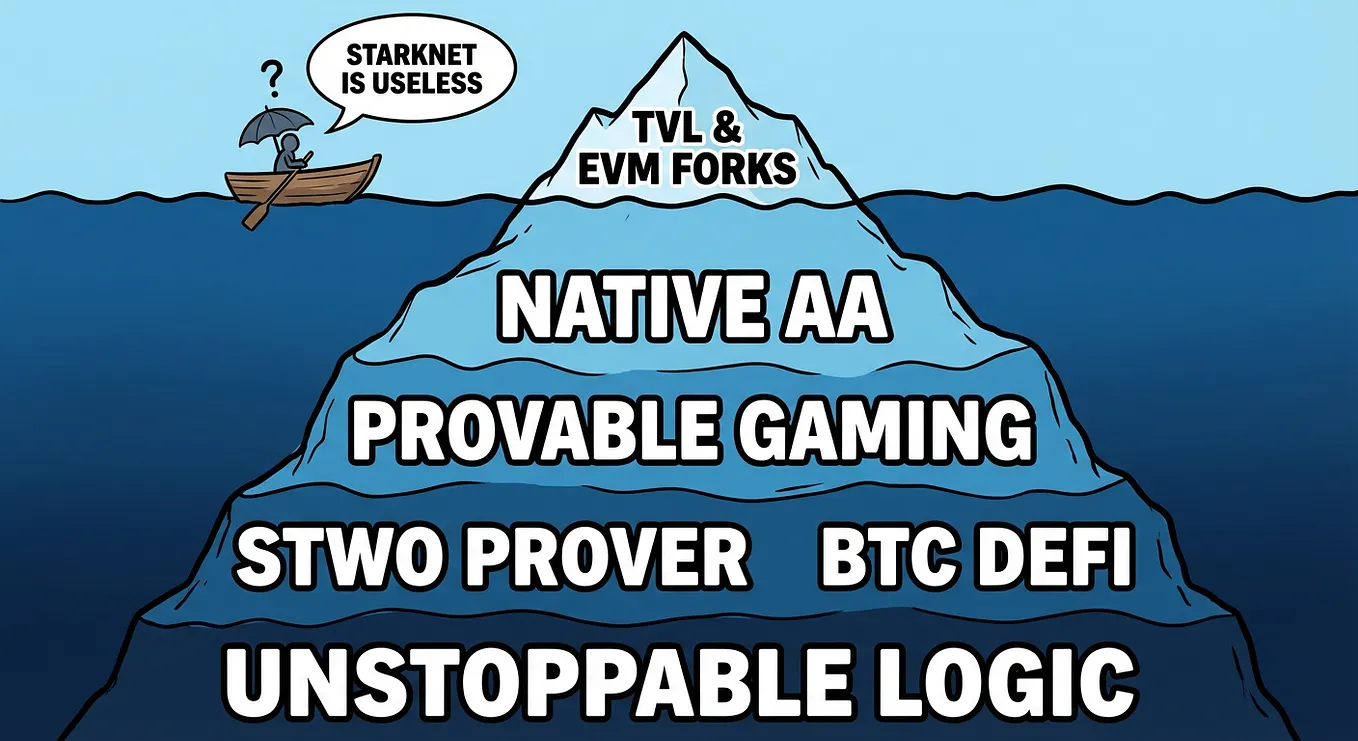
starknet Feels “Directed” From the Outside


Some ecosystems grow in many directions at once. Teams ship fast, but the pieces do not always fit together.
Starknet feels different because a few early choices show up everywhere you look:
how accounts work, how apps handle user safety, and how funds move in from other networks. That consistency matters more than any single feature.
This article breaks down the choices I pay attention to, and what they unlock for builders and users.
1) ZK-first design
Starknet sits in the “validity proof” family of Layer 2 systems. In plain terms, it aims to prove that a batch of transactions is correct, then post the proof back to Ethereum for settlement.
That approach shapes what teams optimize for:
- You can scale throughput without asking Ethereum to run every step of execution.
- You can keep security tied to Ethereum’s settlement layer.
- You can design apps that assume the chain can handle richer onchain logic over time.
When an ecosystem commits to this model, you see it in the tooling, the wallet design, and the kind of apps that become practical.
2) Native account abstraction changes the user model
The most concrete difference for users is this: on Starknet, accounts are smart contracts by default. Starknet calls this native account abstraction.
Why this matters:
- Accounts can enforce rules. You can add spending limits, allowlists, or multi-sig logic at the account level.
- Apps can use safer flows. A dApp can request a narrow permission for a session, instead of asking you to sign every action forever.
- Wallet UX can improve without “extra layers.” The account model already supports the idea that your account is code.
This design also makes “wallet features” feel less like wallet tricks and more like protocol-native building blocks.
A practical example is session keys, which let a user approve a scoped key for a short period. That can reduce signature fatigue and open the door to gasless-style flows where a sponsor pays fees under defined conditions.
3) Better UX needs better funding routes
A scaling system only becomes real for most users when it is easy to get assets in and out.
Starknet has been expanding connectivity through major interoperability rails. For example, it announced that LayerZero went live on Starknet, connecting Starknet to 160+ ecosystems and supporting widely used token expansion standards.
On the routing and aggregation side, Starknet also points to RocketX, which it describes as providing routes across 180+ chains and tapping CEX liquidity for deep execution on large transfers.
Two notes that keep this grounded:
- “More routes” does not mean every path is equal. Fees, trust assumptions, and execution quality differ by bridge and router.
- Some routes use centralized liquidity venues under the hood. That can improve fill quality, but it also changes the trust model.
Still, the direction is clear: reduce the friction between “I hold assets somewhere else” and “I can use Starknet apps now.”
4) Wallet work matters more than most people admit
A chain can have strong tech and still fail on UX. Most users interact with the ecosystem through wallets, so wallet design shapes adoption.
Starknet lists a growing wallet ecosystem, including Ready.
Ready positions itself as a Starknet wallet built around native account abstraction.
Get Chukwuma Alexia’s stories in your inbox
Join Medium for free to get updates from this writer.
When wallets lean into native accounts, they can ship features that feel “normal” to users:
- Better onboarding and recovery patterns
- Session-based permissions
- Cleaner transaction flows
This is also where the gasless story becomes practical. Gasless transactions often depend on a mix of account design, session keys, and fee sponsorship patterns. Starknet’s session key approach is one example of how the ecosystem builds toward that target.
5) Cairo keeps the contract story consistent
Developer experience also signals direction. Starknet’s contract stack centers on Cairo.
The official Cairo book frames Cairo as the smart contract language used for Starknet development, and it ties the model to provable computation.
Cairo also has its own official site that positions it as a language built for validity-proof-based systems.
The key point is not “Cairo is best.” The point is that Starknet does not treat language choice as a surface detail. The language, compiler path, and proving model align with the chain’s core design.
For builders, that alignment tends to reduce mismatch bugs and odd edge cases that come from forcing an ecosystem to fit tools it was not designed for.
6) The app layer reflects the base design
If the foundation is strong, you expect to see apps that stress it.
Onchain gaming
Starknet has highlighted fully onchain games like Loot Survivor, and it positions these games as examples of what becomes feasible when you combine ZK scaling with accounts and execution patterns tailored for onchain play.
It also highlights the broader Realms onchain gaming universe as a set of connected games and tools built on Starknet.
The deeper point: fully onchain games tend to push execution, state updates, and user UX in ways that reveal whether an ecosystem can handle real load.
DeFi primitives: lending and swaps
Starknet’s DeFi map includes well-known categories: lending, AMMs, and aggregators.
- Vesu describes itself as a lending protocol built on Starknet.
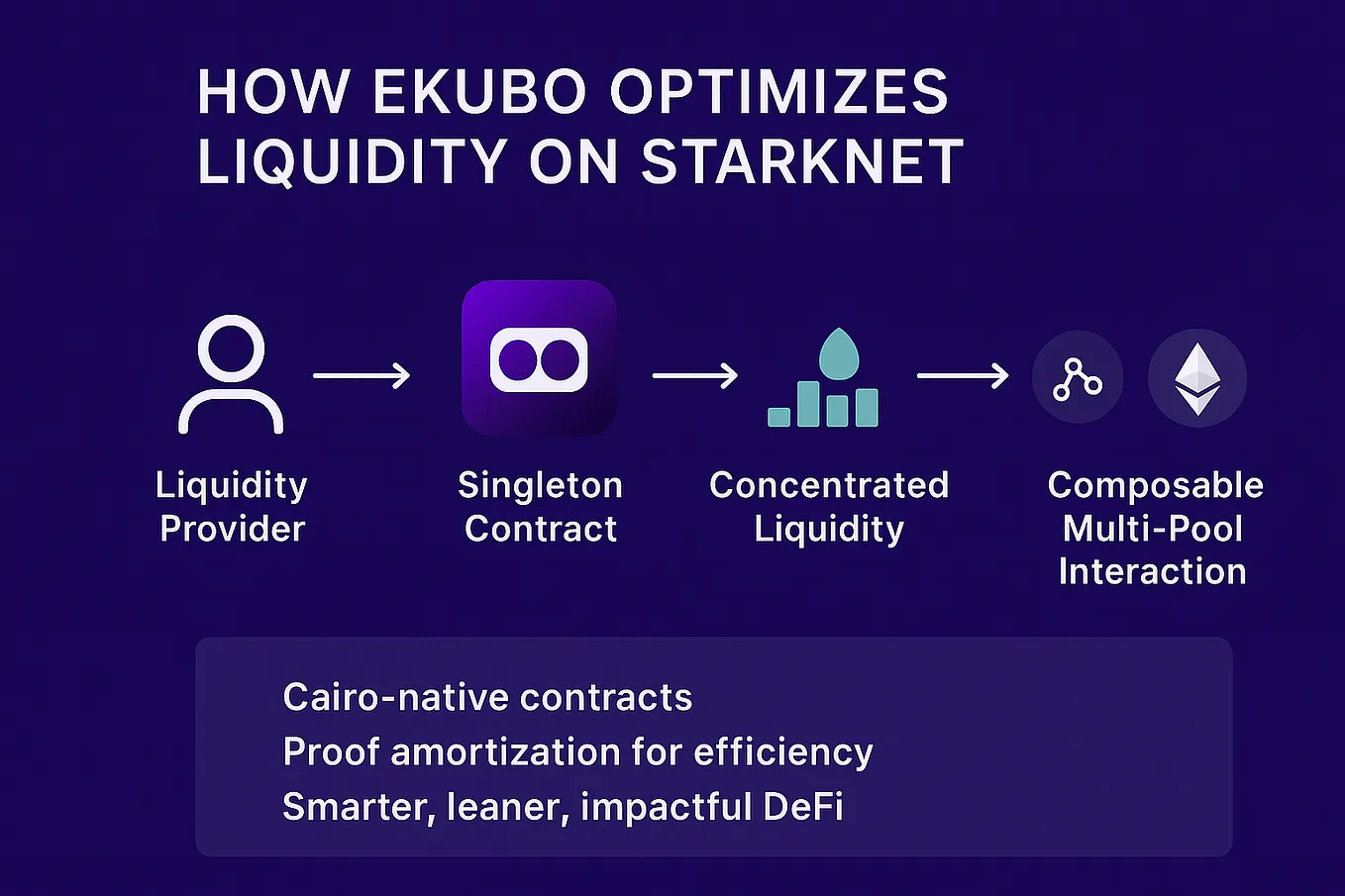
- Ekubo positions itself as a Starknet-native AMM, and Starknet has featured it as a major AMM in the ecosystem.
- AVNU positions itself as Starknet liquidity infrastructure / best-execution routing, and Starknet has published guides around trading via AVNU.
You do not need to claim any single app is “the best” to make the real point: the ecosystem has credible building blocks in each DeFi category.
Perps and derivatives
Derivatives platforms often stress throughput, latency, and risk logic.
Starknet has featured Extendedapp as a perps DEX live on Starknet mainnet. and its absolutely amazing so far.
For appchain/perps direction, StarkWare has written about Paradex launching as a Starknet appchain for derivatives.
Again, the detail that matters is not the marketing claims on any landing page. It is that the ecosystem keeps attracting apps that require strong execution and clear account behavior.
7) “Freedom” as a goal
People often use “freedom” as a slogan. I think it can also describe a technical direction:
- Freedom from single custodians
- Freedom to set your own account rules
- Freedom to use apps without giving blanket permissions
- Freedom to move value across networks without complex manual steps
Starknet design choices map well to that. Native accounts support user-controlled security. ZK scaling supports richer onchain apps. Better bridging routes reduce friction for new users.
That is why the ecosystem can feel “directed.” The pieces fit.