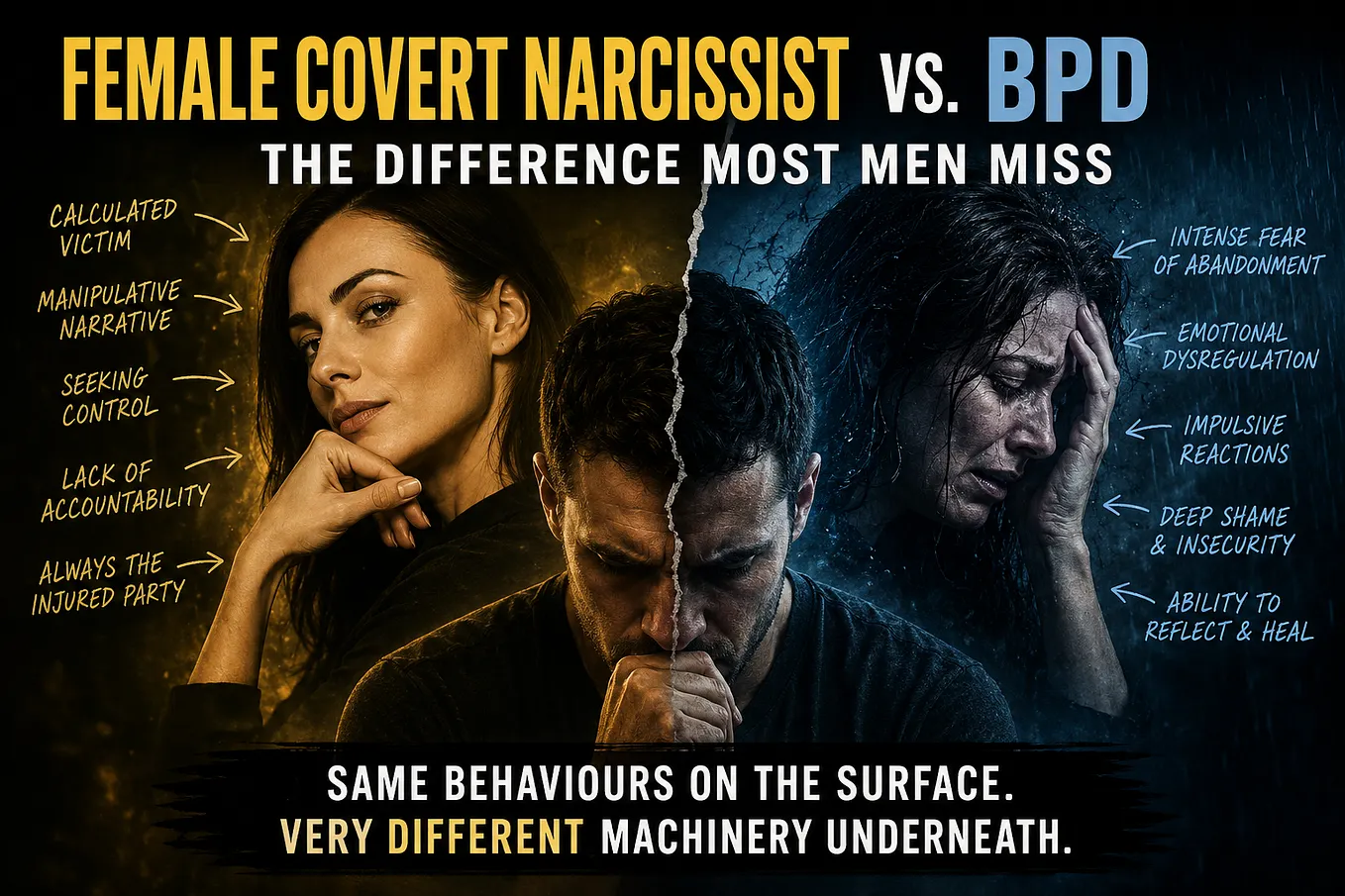
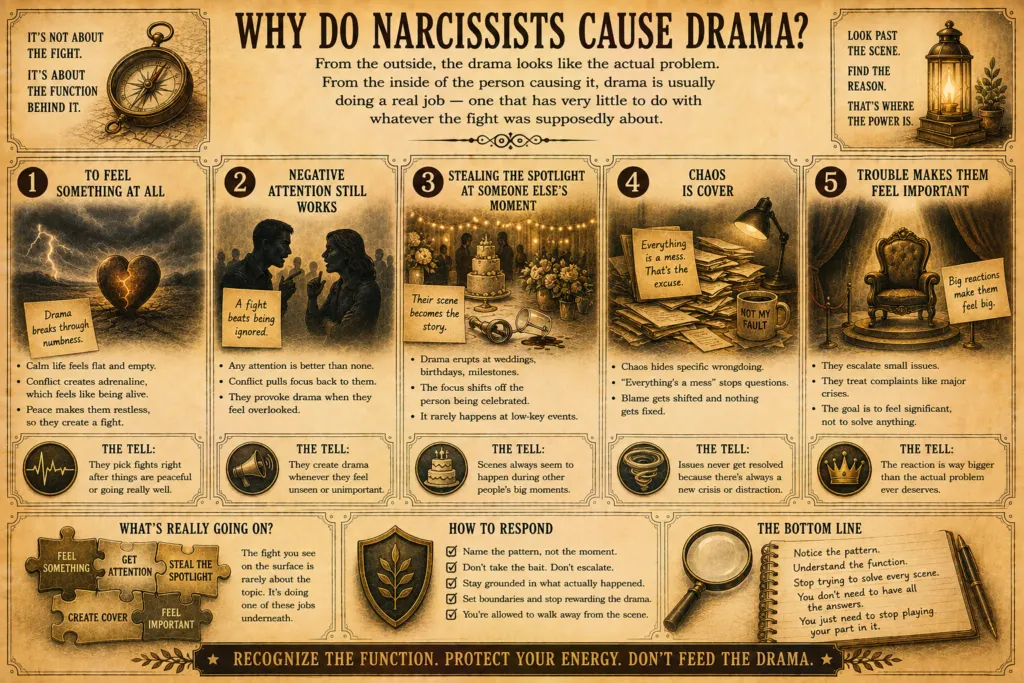
When They Realise You Finally See Them

The most dangerous moment is when the mask slips — and they know you can see the machinery underneath.

https://www.youtube.com/watch?v=fVtnHt1UzKo
What follows is rarely random. Gaslighting intensifies, victimhood becomes a performance, and your clarity becomes the threat they cannot control.
Let me ask you something. Have you ever seen the exact moment a narcissistic person realizes you finally see them? There is a very specific moment in the life of every survivor of narcissistic abuse. It is a moment that looks quiet on the outside, but on the inside, it feels like the ground has shifted under your feet and nobody else even notices. It is the moment when the person who has been controlling your reality looks at you and realizes maybe for the first time that you finally see them.
Not the curated version, not the charming mask, not the wounded hero, not the misunderstood partner, not the endlessly patient friend. You see the pattern now. You see the manipulation. You see the strategy hiding underneath the affection. You finally see the machinery underneath the shiny paintwork.
And in that instant, something in their eyes changes. The illusion they have worked so bloody hard to protect has just cracked. And they know it. Maybe you felt it as a sudden chill in the room. Maybe it was a strange pause in the conversation.
Maybe it was a flicker of panic behind their calm face. That moment is one of the most dangerous moments in the whole story of narcissistic abuse. It is also one of the most clarifying. Understanding what happens next can change the whole direction of your healing. what happens inside a narcissistic person when they realize you know the truth is not random. It follows a pattern you can actually recognize even though it may look slightly different in every person.
The Moment the Mask Cracks
At the center of narcissistic behavior is a need to protect a carefully constructed self-image. That image depends heavily on how other people see them. When you start seeing through that image, you stop reflecting the version of them they need in order to feel stable inside their own mind. You become a threat not because you are aggressive, not because you are cruel, but because your clarity breaks the mirror they have been using to manage their fragile sense of self.
Gaslighting Gets Louder
Once you stop polishing that mirror for them, the whole bloody performance starts to wobble. And when that mirror cracks, the reaction is almost never calm. The first shift you may notice is that the old confusing behaviors become stronger. Gaslighting becomes more aggressive, more frequent, more creative. Suddenly, conversations you clearly remember are rewritten right in front of you.
Events you documented are denied outright. Feelings you expressed are twisted into overreactions or imaginary wounds. That does not mean you are wrong. It means your accuracy has become something they cannot tolerate. The more clearly you understand the dynamic, the harder they must work to shake your perception.
Because your stable perception is the one thing their charm cannot control. You may notice the gaslighting starts arriving with more confidence than before. Almost as if they are daring you to challenge it. But it is not confidence. It is desperation wearing a straight face.
Small details get changed first. Dates, words, the order of events. Then bigger pieces of your shared history begin to shift. Eventually you are left wondering whether you imagined an entire conversation that you know deep down actually happened. This is not a coincidence and it is not your memory failing you.
Projection: Emotional Hot Potato
It is a deliberate although sometimes unconscious attempt to make the ground underneath you feel unstable again. Because a person who feels unstable is much easier to steer. Along with the gaslighting, you will often see a wave of blame-shifting and projection. Things they have done themselves suddenly get pinned on you. It is reality put through a fucking panel beater until you barely recognize it.
You become the manipulator, the cold one, the unstable one, the person who cannot let go of the past. This is not always a consciously constructed lie. In many cases, it comes from a deep psychological defense. The narcissistic person cannot sit with the version of themselves you are now seeing. So they place those traits onto you instead.
It is a way of protecting their self-image by making you carry what they refuse to admit. You may find yourself defending decisions you never made or explaining feelings you never actually had because the story being told about you has drifted so far away from the truth. This becomes exhausting in a very specific way because you are not simply disagreeing about an opinion.
You are trying to hold on to a version of reality that keeps being challenged from every direction. It helps to remember that projection says far more about the person doing it than it says about you. The traits they accuse you of are often a mirror pointed in the wrong direction. Projection is emotional hot potato delivered with a straight face. They throw you their shame.
The Performance of Victimhood
Then they act shocked that you are holding it. Then comes the performance of victimhood. This stage is especially disorienting because the person who hurt you begins acting as though they are the one being destroyed. They may cry. They may speak softly.
They may describe their pain in painful detail. They may bring up their childhood, their stress, their fragile mental state, their fear of losing you. Genuine pain can exist in narcissistic people, too. But notice the timing. It almost always appears when accountability is approaching, when your clarity is strongest, when you are closest to walking away.
The victim story may not even feel like a lie to them, but it is still a strategy that keeps arriving at exactly the right fucking moment. When their control starts slipping, watching someone you love display such convincing pain can shake even the clearest headed survivor. You may find yourself comforting them at the exact moment you needed to be walking away. You may find yourself apologizing for hurting them when you are the one who has been hurt for far longer.
When Intimidation Replaces Charm
This is one of the cruellest parts of the pattern because it uses your own empathy as the tow rope that drags you back into the same wreck. Recognizing this does not mean you stop caring. It means you learn to notice when your compassion is being used against you rather than received honestly. If playing the victim does not work, intimidation often takes its place.
Sometimes it is loud, raised voices, threats, aggressive posturing. Sometimes it is quiet, cold stares, long silences, ominous comments, or a sudden withdrawal of warmth that feels like punishment. The silent treatment is one of the most damaging tools used during this stage. It triggers the human fear of abandonment while giving you no opportunity to repair anything. It is emotional pressure designed to make you doubt your decision to finally see clearly.
It can help to remember that intimidation, whether loud or quiet, is not evidence that you failed to keep the peace. It is evidence that their other tactics have stopped working. It is simply the next tool being pulled out of the toolbox. Recognizing it for what it is rather than absorbing it as something you caused is its own quiet act of resistance. Their intimidation is not proof that your boundary is wrong.
The Warmth Suddenly Returns
It is proof that the softer tactics stopped working. Then almost strangely, the warmth returns. This is the part many survivors find most confusing. After the rage, after the silence, after the cruelty, the narcissistic person suddenly becomes the most loving version of themselves you have ever seen. This is often called hoovering, a name that describes how they attempt to suck you back into the same emotional cycle.
But hoovering is not proof that the engine has been rebuilt. Sometimes it’s just a fresh coat of paint sprayed over the same cracked block. The compliments become bigger than usual. The apologies sound rehearsed, but somehow emotional, too. The promises of change feel almost believable.
Why the Trauma Bond Feels Chemical
There may be gifts, big gestures, mentions of shared memories, or sudden moments of vulnerability that appear to prove everything you once hoped was true about them. This pattern is known as intermittent reinforcement, and it is one of the strongest conditioning forces in human psychology. Rewards that arrive unpredictably after periods of pain can create stronger emotional bonds than steady kindness ever could. This is exactly why trauma bonds can feel almost chemical, almost gravitational.
It is not because you are weak. Let us kill that fucking idea right now. It is because your nervous system has been trained inside a rigged fucking reward system. Even after you understand what is happening, you may find yourself replaying the good moments repeatedly. Holding on to them as proof that the connection was real.
Even while the darker memories sit right beside them, both things can be true at the same time. The affection may have felt real in the moment it happened. And it may also have been part of a cycle that kept you attached to someone who was hurting you. Naming this cycle, even quietly to yourself, takes away some of its power. A pattern you can see clearly is a pattern you can eventually step outside of.
Understanding this matters because survivors often blame themselves for struggling to leave even after they recognize the truth. They wonder why clarity has not immediately set them free. They wonder why their heart still aches for someone their mind has already identified as harmful. The answer is not weakness. The answer is that your nervous system was shaped by months or years of unpredictable emotional patterns.
The Smear Campaign Begins
It learned to connect relief, hope, and affection with the same person who caused the pain. Healing requires more than understanding something intellectually. It requires a slow and patient retraining of how your body responds to the bond. Meanwhile, outside the private relationship, another pattern usually begins. Image management becomes stronger.
The narcissistic person becomes intensely focused on how they appear to other people, especially mutual friends, family members, co-workers, or people online. You may start noticing small stories being told that portray them as reasonable and you as difficult. In more severe cases, this develops into a smear campaign. Carefully selected stories are spread throughout your shared world. The point is rarely just revenge.
The deeper objective is to control the story before your version of events can settle inside anyone else’s mind. If they can define you first, it becomes much easier for other people to dismiss your clarity later. The smear campaign is narrative control with a fresh coat of paint and a straight face. You may hear a secondhand version of events that is so different from what actually happened that it feels surreal.
Get Daniel Harper’s stories in your inbox
Join Medium for free to get updates from this writer.
Mutual friends may grow distant without explaining why. Family members may begin choosing sides based on whoever told their story first and shouted it the loudest. This can feel like a second betrayal piled on top of the first because it appears to confirm your worst fear. That speaking your truth will cost you the very people you hoped would understand. But people who genuinely know you and who take the time to look closely rather than accepting the easiest story often find their way back eventually.
This is frequently when survivors experience a deep sense of isolation. People they once trusted begin treating them differently. It is painful. It is disorienting. And it is one of the most important moments to remember.
This truth does not need everyone’s agreement in order to remain true. Your reality does not become less real because someone told a different story louder, earlier, or with better fucking acting. Your healing does not depend on convincing everybody else. It depends on knowing what you know and continuing to live in alignment with that knowledge. while it helps to understand the other person’s behavior, what is happening inside you during this stage matters even more.
Clarity Often Arrives With Grief
When you first recognize the manipulation, the feeling is rarely pure relief. More often, it is a strange mixture of clarity and grief, awareness and confusion, validation and disorientation, all arriving at once. You may feel like you are waking from a dream you cannot quite remember. Pieces of memory suddenly begin making sense in ways that feel almost too painful to hold. This is normal.
This is your mind reorganizing itself around a truth that it was not safe to see before. That process can feel brutal because clarity does not always arrive carrying flowers. Sometimes it arrives carrying a fucking crowbar. In the beginning, clarity often feels frightening rather than empowering because it asks you to grieve more than the relationship. It asks you to grieve the version of reality you believed you were living in.
You grieve the person you thought they were. You grieve the future you imagined. You grieve the energy you poured into the relationship. You grieve the parts of yourself you shrank, twisted, or abandoned just to keep it running. Underneath all of that, you may also grieve the version of yourself that existed before this experience changed you.
This grief is not a sign of weakness. It is not evidence that you are confused. It is a sign that you are finally processing something real. It can feel strange to grieve someone who is still alive, someone who may still be present, someone who might still be in your life in some capacity. But you are not only grieving the person.
You are grieving an idea you carried for a long time. The idea of who they might become or who you believe they already were. Allow that grief to take whatever shape it needs to take. It might arrive as tears, as anger, as numbness or as sudden waves of sadness during an otherwise ordinary day. There is no wrong way to move through it, and there is no fixed amount of time it should take.
Rebuilding Trust in Your Own Memory
Alongside the grief, you may notice a strange wave of self-doubt. You finally see the truth, yet you question yourself more than ever. This happens because long-term exposure to gaslighting trains the nervous system to distrust its own signals. Even when your mind has connected the dots, your body may still flinch at the idea of trusting your own perception. Healing this is not about forcing yourself to feel certain overnight.
It is about gently and repeatedly choosing to believe yourself in small moments until self-trust becomes a stable pattern rather than an occasional act of courage. This is also why writing things down can become such a powerful habit. Record events as they happen. Keep notes about conversations. Write down your feelings in real time.
This creates an external memory that another person cannot rewrite later. It is not necessarily about building a legal case. It is about anchoring yourself inside your own experience. So when manipulation attempts to twist your memory, you have something solid to return to. This is one of the most underrated tools in recovery from narcissistic abuse because it slowly rebuilds the relationship between you and your own perception.
Even a simple note on your phone can become an anchor. A few lines written immediately after something happens. Months later, when doubt begins creeping back in, those notes can help. They do not need to be beautifully written. They do not need to contain every detail.
They only need to be honest. Written in the moment before somebody else has the opportunity to reshape the event for you. Reading those records later can become its own form of validation. You see your own words written before an argument, apology, or love-bombing performance had the opportunity to soften the memory. You see exactly what happened and exactly how it made you feel.
Real Accountability Versus Performance
As you continue healing, you will start noticing the difference between genuine accountability and a manipulative performance. This is one of the most freeing lessons you can learn. Real accountability is consistent. It does not only appear when the person believes they may lose access to you. It does not center the emotions of the person who caused the harm.
It does not demand immediate forgiveness. It appears through changed behavior over time, through patience with your healing, through the absence of pressure, and through a willingness to sit with discomfort without trying to rush you into making everything feel normal again. A manipulative performance, on the other hand, is almost always urgent. It needs you to respond immediately. It needs you to soften.
It needs you to open the door again. It uses vulnerability as a tool instead of offering it as an honest expression. Once you learn to feel the difference, the performance loses much of its power because you stop confusing emotional intensity with emotional truth. Big emotion is not automatically honesty. Sometimes it is just louder bullshit.
A useful question to ask yourself is simple. Does this supposed change require anything from them or does it only ask something from you? Real growth usually involves discomfort for the person doing the growing. A performance almost always shifts that discomfort back onto you. It asks you to become more patient, more forgiving, more understanding while very little actually changes on their side.
You may also begin noticing cycles of temporary improvement following moments of exposure. The narcissistic person may genuinely behave differently for days, weeks, or even months. They might attend therapy, read books, speak the language of healing, and appear completely transformed. Then slowly, the old patterns return, often more subtle than before, more polished, harder to identify. This is not always a deliberate trick.
Sometimes the change is genuine but shallow and it only lasts for as long as necessary to regain access. That is not transformation. That is temporary compliance with a hidden expiry date. True transformation is rare and slow. It rarely announces itself.
Protecting Your Nervous System
It does not demand applause or credit. It unfolds quietly over years without a performance attached to it. While all of this is happening, protecting your nervous system becomes essential. Emotional regulation is not a luxury during this stage. It is a survival skill.
Slow breathing can help. Grounding through your senses, gentle movement, spending time outside, getting genuine rest, reducing overstimulation. All of these things help your body remember what safety feels like. You do not need to force yourself to heal quickly. You only need to provide your system with the conditions where healing can happen naturally.
The body recovers according to its own rhythm, not according to a deadline. Some days regulation may look like taking a long walk outside. Other days it may look like sitting quietly with a cup of tea and doing absolutely fucking nothing. Both count. The goal is not to perform wellness for anyone watching.
Boundaries Are Not an Invitation to Debate
The goal is to give your nervous system enough small repeated signals that the danger has passed so it can slowly begin believing that safety is possible again. Boundaries become another quiet pillar of recovery. A boundary is not a wall and it is not a punishment. It is simply a clear statement about what you will and will not participate in. Held without requiring anyone else’s agreement with narcissistic people.
Boundaries are usually tested repeatedly. Sometimes through charm, sometimes through anger, sometimes through guilt. The strength of a boundary is not measured by how the other person reacts to it. A boundary is not an invitation to debate. It is the workshop door closing because the same person keeps walking inside and smashing shit.
Stop Trying to Make Them Understand
The strength of a boundary is measured by how consistently you honor it yourself. That consistency rebuilds the inner authority that manipulation attempted to wear down. It can also help to avoid unnecessary confrontation. During this stage, many survivors feel a powerful urge to explain themselves, to prove what happened, to finally make the other person understand. This urge is deeply human.
It comes from the hope that recognition will provide closure. But closure in these relationships rarely comes from the other person. It comes from within you. Repeated confrontations often give them more material to use, more opportunities to twist your words, more openings for emotional escalation. Every explanation you offer can be picked apart, reframed, or used later as evidence of how difficult, unstable, or obsessive you supposedly are.
It is a frustrating truth, but it is an important one to accept. You are not dealing with somebody who is simply confused and waiting for you to find the perfect combination of words. You are dealing with a pattern that resists understanding because understanding would require accountability. Closure is not a spare part they will hand over once you explain the mechanical fault clearly enough.
Rebuilding the Person You Were
Sometimes the most powerful response is a quiet one. Sometimes the most freeing decision is to stop trying to be understood by somebody whose understanding was never safe to begin with. Rebuilding your identity may be the most tender part of this entire journey. After a prolonged period of manipulation, many survivors realize they no longer fully recognize themselves, preferences, opinions, dreams. Even small daily habits may have been shaped around somebody else’s moods.
Reclaiming your identity becomes a slow and curious process of asking small questions. What do you actually enjoy? What do you actually believe? What kind of rest do you need? What kind of people make you feel more like yourself?
These questions, asked gently and regularly, begin restoring the inner world that was rearranged without your full consent. You may rediscover an old hobby you quietly abandoned years ago. You may notice that you finally have an opinion about something without first checking how it will be received. These moments may seem small. They may even feel slightly silly at first, but they are actually the foundations being laid.
The Recovery Shift
One piece at a time, they construct a version of you that belongs fully to yourself. Self-validation becomes the foundation of this entire process. For a long time, you may have required somebody else to confirm your experiences before you could trust them. Healing means learning to offer that confirmation to yourself. When a memory comes up, you can acknowledge it.
When a feeling arises, you can honor it.
More content here https://www.youtube.com/@Mechanicsoftoxicrelationships