The Billion-Dollar Refund: What SpaceX Revealed About On-Chain Finance

Quick fact before we get into it: one platform never had to refund a single dollar during the SpaceX IPO.
This is why…

In one week last month, people put down more than a billion dollars for a piece of the biggest IPO in history.
Within days, most of that money came back to them.
Here’s the part that got buried under the confusion: a token that promises you a stock and a token that trades one that already exists are two completely different products
The promise, and what broke it
On June 12, SpaceX went public at $135 a share with roughly $75 billion raised, a valuation near $1.77 trillion. It is the largest IPO ever recorded, more than double the previous record, held by Saudi Aramco since 2019.

In the days before that, at least three separate mechanisms competed to get crypto users into the deal early.
One track was pure speculation: perpetual futures on platforms like Hyperliquid (via Trade.xyz) and Coinbase International, letting traders take positions on the expected IPO price through perpetual futures contracts. These contracts settle in cash based on the final price and carry no claim on actual shares.
A second track was tokenized subscription: run through xStocks, the platform behind SPCXx. Users submitted a non-binding order before the IPO, funds got locked, and an underwriting syndicate decided how much of that order actually got filled, the same allocation process a traditional broker runs, wrapped in a token.
A third track was real delivery: through regulated brokers like Alpaca, where a filled order became an actual share sitting in a real account.
Binance Wallet, Bybit, and Bitget Wallet all built their SpaceX campaigns on the second track (the subscription one) and told users they’d get in before the stock even opened.
On listing day, xStocks could not source enough real shares to fulfill its promises:
- Bybit told users it received no allocation at all: full refund, plus a short-term interest bonus.
- Binance refunded roughly $557 million in subscriptions and handed out $1 million in a different token as a consolation.
- Bitget refunded too.
- Kraken did somewhat better. Putting around four tokens per person, against orders for far more.
Add up the subscription track alone: over a billion dollars in orders, according to CoinDesk. What actually circulated on-chain once SPCXx launched was about $24 million growing to roughly $28 million a few weeks later, based on xStocks’ own dashboard. Against a company now worth close to $2 trillion.

An ARK Invest analyst, Lorenzo Valente, put the confusion plainly on X: “I’ve seen 40 exchanges and wallets advertising SpaceX stock. What exactly am I buying?”
The honest answer changed depending on which of the three tracks a person had actually used.
Why a token can’t fix a supply problem
Wrapping a stock in a token does not create more of that stock. A token backed 1:1 by a real share only exists once that share has been secured from the same limited pool every institutional buyer was already fighting over.
SpaceX’s retail allocation was unusually large for an IPO of this size (reports put it as high as 30% of the deal, well above the typical 5–10%) but demand still ran into the hundreds of billions against a $75 billion raise.
xStocks needed to win shares out of that same fight to back tokens it had already sold. It didn’t win enough of them.
The other path: Not every platform touched the subscription track.
Ondo Finance and Dinari skipped the pre-IPO promise entirely and only brought a tokenized SpaceX product to market after the stock existed.
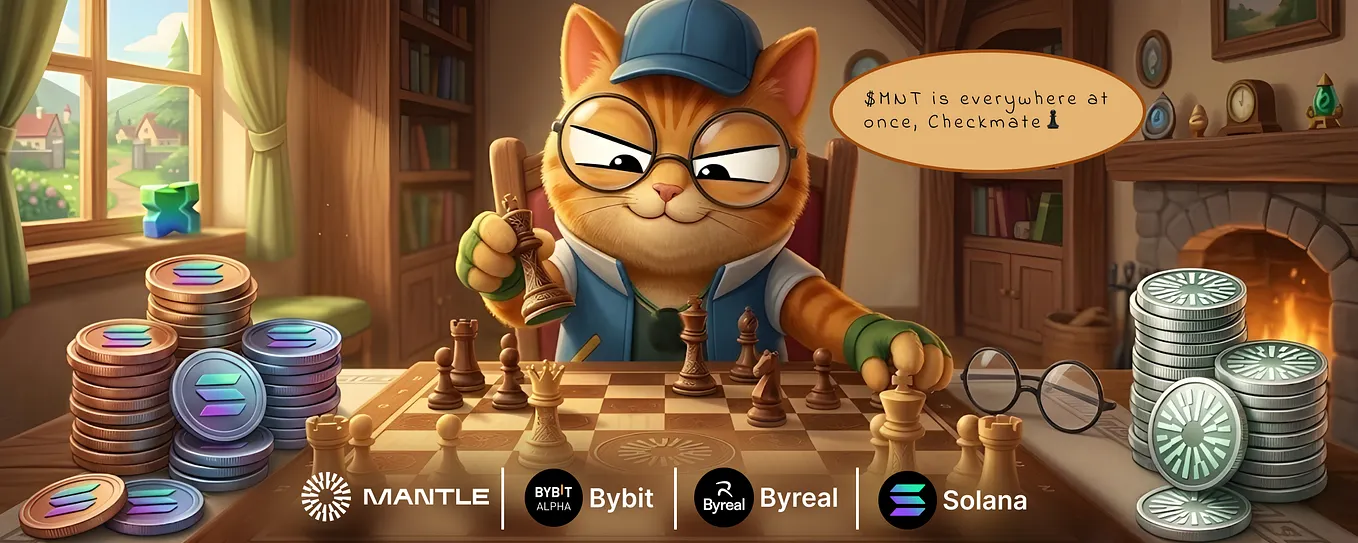
So did Mantle…
SPCXx went live for trading on Mantle the same day SpaceX started trading on Nasdaq, a working market, open the moment the stock was, with nothing to subscribe to and nothing to fail.
Trading ran through Fluxion, using a mechanism called Atomic RFQ: instead of pricing off a liquidity pool, trades mint and redeem directly against the issuer at the live market quote, settling in full or not at all.
Merchant Moe, Mantle’s main liquidity venue, opened a dedicated SPCXx pool and backed it with up to 100,000 MNT in rewards for early liquidity providers.
No refund notice followed this listing.
Get Zayd☯’s stories in your inbox
Join Medium for free to get updates from this writer.
and the rails that made this possible weren’t built for this one listing:
- xStocks first went live on Mantle in April with ten tokenized stocks.
- The Atomic RFQ system went live in May.
-> A rewards layer, xPoints, followed in June.
SPCXx landed in the middle of that sequence. Eleven days later, Franklin Templeton’s tokenized US equity index ETF (roughly $2 billion in assets) went live on the same infrastructure, tradable the day it was announced. By the end of that stretch, 155 tokenized stocks were trading on the network.
Mantle’s own H1 recap is below for more details…
Why the volume still went somewhere else
Delivering on a promise and winning the market turned out to be two different contests.
Looking at xStocks’ own network breakdown for SPCXx. Solana holds $26.2 million. Ethereum holds $1.8 million. Mantle holds $38,800. Out of $28 million in total value, Mantle’s share works out to about 0.14%.

The gap makes sense once you count how many places SpaceX showed up on Solana:
-> Trojan Trading listed xStocks’ SPCXx the same day SpaceX hit Nasdaq.
-> Backpack Securities launched its own separately structured SPCX through Sunrise, with real share redemption built in.
-> Ondo launched a third version, SPCXon.
-> Solana Foundation president Lily Liu told CNBC before the listing that tokenized SpaceX access would go live globally the moment the stock did.
Mantle ran one pipeline.
Mantle ran one pipeline, xStocks issuing, Fluxion executing, Merchant Moe providing liquidity.
Why Tokenization’s Real Battle Outlives Any Single Stock
Stepping back from SpaceX, public trackers currently put distributed on-chain asset value (the part people can actually hold and move, rather than simply observe on a balance sheet) at around $32 billion.
That number is small next to the macroeconomic forecasts. One widely cited 2030 base case places the tokenization market near $5.5 trillion.

Closing that gap requires a fundamental shift. It relies on the infrastructure beneath markets that already work at scale (equities, ETFs, Treasuries) getting rebuilt to move differently.
That migration is happening outside of crypto entirely.
The DTCC, which custodies over $114 trillion in securities, begins limited production trades this month. They are bringing Russell 1000 stocks, major ETFs, and Treasuries onto blockchain rails for the first time, with a full launch scheduled for October.
More than 50 firms are involved, including BlackRock, Goldman Sachs, and JPMorgan.

NYSE’s parent company has announced plans for a tokenized stock platform. JPMorgan’s Kinexys has already moved $1.5 trillion in notional value since its launch.

None of these institutions are settling on one blockchain and stopping.
They are actively deciding who sits in the path between the asset, the buyer, and the money that settles the trade. Issuing a token is the easy part.
Owning the execution path is the actual prize, and it remains unclaimed.
Solana captured the retail volume for SpaceX through a massive concentration of competing venues and high-velocity AMM liquidity. They won the speculative sprint.
Mantle optimized for a different set of mechanics: zero-slippage, issuer-direct execution via Atomic RFQ.
As documented in the Messari State of Mantle Q1 2026, this architecture directly advances the network’s core thesis to serve as the distribution layer for onchain finance
SpaceX proved what breaks when a headline creates retail demand. To see what holds up without a headline, look at what happened eleven days later.
Franklin Templeton’s tokenized US equity index ETF (USPXx) (holding roughly $1.98 billion in assets) landed on the exact same Mantle rails.
There was no subscription race, no retail frenzy, and no refund. The system simply executed the trades.
The trillion-dollar question is no longer who can capture the most hype for a single stock listing.
The question is who will control the settlement rails when the rest of Wall Street moves on-chain.