Lenovo’s Qira: The 20-Year Evolution from Personal Assistant to IBM’s True Heir

The technology industry has a long, frustrating history of overpromising and underdelivering when it comes to digital assistants. From the early days of voice recognition right up to the recent wave of generative AI chatbots, the fundamental architecture has remained stubbornly broken. Most digital assistants — whether we are talking about Apple’s Siri, Amazon’s Alexa, or even Microsoft’s Copilot — suffer from severe digital amnesia and hardware isolation. They treat every single device as a siloed endpoint. If you start analyzing a complex financial spreadsheet or a legal brief on your laptop, and then walk out the door with your smartphone, the assistant on your phone has no earthly idea what you were just doing on your PC. You are forced to re-prompt, re-upload, and re-explain your intent from scratch. Worse yet, most of these cloud-first systems harvest your most sensitive corporate and personal data to train their foundation models, creating a privacy nightmare that makes enterprise CIOs break out in a cold sweat.
When Lenovo formally unveiled Lenovo and Motorola Qira as a unified intelligence layer across its product portfolio, it didn’t just launch another chatbot; it introduced what it accurately calls a “Personal Ambient Intelligence.” Having watched Lenovo closely since it acquired IBM’s personal computing division over two decades ago, I see Qira as the moment Lenovo finally steps out from the shadow of pure hardware manufacturing to claim the strategic mantle that IBM once held: the master orchestrator of both enterprise and personal productivity.
Let’s look at where Qira stands today, why its architecture is fundamentally different from anything else on the market, and how this platform is positioned to evolve over the next 20 years into an omnipresent operating fabric covering everything from robotics to flying vehicles.

Where Qira Is Today — and Why It’s Different
To understand why Qira is a generational leap rather than an incremental update, you have to look under the hood at how it handles state and privacy. Unlike traditional assistants that live exclusively in a vendor’s cloud and view your hardware merely as dumb terminals, Lenovo Qira’s cross-device architecture is built right into the silicon across Lenovo ThinkPads, Yoga laptops, tablets, Motorola smartphones, and wearables like the Moto Watch Ultra.
What sets Qira apart today comes down to three architectural pillars:
- Unified Cross-Device Context (“Fused Knowledge”): Utilizing encrypted state transfer and Lenovo’s Smart Connect backbone, Qira maintains a continuous, unbroken thread of memory across every device you own. Through features like Next Move and Catch Me Up, Qira knows which documents you were editing on your workstation, which Slack or Outlook messages arrived while you were in transit, and what you were looking at through your phone’s camera in Live Mode. It anticipates your workflow without forcing you to copy, paste, or re-prompt.
- Local-First Privacy and Security: Because it leverages dedicated Neural Processing Units (NPUs) on the device, Qira keeps your local file indexes, chat histories, and meeting transcriptions stored in an encrypted local database. Under Lenovo’s stringent Qira privacy framework designed for enterprise and consumer protection, the system refuses to perform emotion inference or user profiling, nor does it siphon off your personal or corporate data to train its own foundation models.
- Ecosystem Agnosticism: Microsoft wants to lock you into Azure and Office; Google wants you locked into Workspace; Apple wants you locked in a walled garden. Because Lenovo sits at the intersection of all these ecosystems — building enterprise Windows workstations, Android-based Motorola phones, and Linux/Chrome devices — Qira was designed from day one to be application-agnostic. Through integrations with Workato, Notion’s MCP servers, Perplexity, and Expedia, Qira acts as a neutral, trusted broker that works solely for the user, not an advertising or cloud-lock-in model.
Years 1 to 5 (2026–2031): Mastering the Personal Perimeter
During the first five years of Qira’s lifecycle, the focus is on perfecting the immediate personal perimeter: the PC, tablet, smartphone, and wearable accessories. Right now, we are seeing the initial rollout across ThinkPad, Yoga, and Motorola devices, alongside early wearable integration. Over the next five years, as local NPUs scale from dozens of TOPS (Trillions of Operations Per Second) to several hundred TOPS at the edge, Qira will transition from a reactive tool you summon via a prompt bar into a truly invisible ambient layer.
In this phase, accessories become Qira’s primary sensory organs. Smart AR glasses, noise-canceling earbuds with biometric sensors, and smartwatches will feed continuous, real-time visual and auditory context into your personal “Fused Knowledge” hub. If you walk through a trade show floor wearing Lenovo smart glasses, Qira will quietly whisper the name, title, and last email exchange of the executive walking toward you, while simultaneously queuing up the relevant contract on your foldable phone. Your PC and phone will cease to feel like separate computers; they will simply be different-sized windows into the exact same persistent intelligence.

Years 6 to 10 (2031–2036): Embodied AI — Robotics and Smart Environments
By the early 2030s, a digital assistant that is trapped behind glass screens will be obsolete. To truly assist a human being in the physical world, AI must gain physical agency — what the industry calls “Embodied AI.” Many consumers don’t realize that Lenovo is already heavily invested in advanced robotics and smart infrastructure. For instance, the award-winning Lenovo Daystar Bot GS hexapod robot is already deployed in complex industrial inspections and heritage preservation, and as seen in field demonstrations of the agile six-legged Lenovo Daystar platform navigating uneven terrain, this physical mobility lays the exact groundwork needed to pair ambient intelligence with real-world automation.
Between years six and ten, Qira will migrate from personal computing devices into the physical home and office environment, serving as the central nervous system for domestic and enterprise robotics, as well as commercial and residential appliances.
Instead of having ten different apps for your robotic vacuum, your robotic lawnmower or snow blower, your smart kitchen appliances, and your office security systems, Qira will absorb their control planes. Because Qira already knows your calendar, your travel itinerary, and your work habits from your PC and phone, it can direct your home and office infrastructure with zero human micromanagement. When Qira sees on your Outlook calendar that you are boarding a flight back from New York, it won’t just adjust the thermostat; it will instruct your home maintenance robots to clear the driveway of snow, direct the smart kitchen to inventory fresh ingredients and pre-chill your preferred beverage, and configure your home office monitors and lighting for the exact presentation you were reviewing on the plane.

Years 11 to 15 (2036–2041): The Autonomous Cockpit and the Rolling Office
If there is one sector where digital assistants have failed spectacularly, it is the automobile. Today’s infotainment systems are a disjointed mess of smartphone mirroring and clunky voice commands that barely know how to change the cabin temperature. Yet, as vehicles transition to Level 4 and Level 5 autonomy, the car stops being a mechanical conveyance and becomes a high-speed rolling office and living room.
Get Rob Enderle’s stories in your inbox
Join Medium for free to get updates from this writer.
Here again, Lenovo has already laid the foundational silicon tracks. Through its Vehicle Computing division, the company has partnered deeply with NVIDIA and Arm to build Lenovo’s AD1 Level 4 autonomous driving domain controller powered by the NVIDIA DRIVE Thor architecture, which delivers over 2,000 TOPS of automotive-grade AI compute directly to the vehicle’s central nervous system.
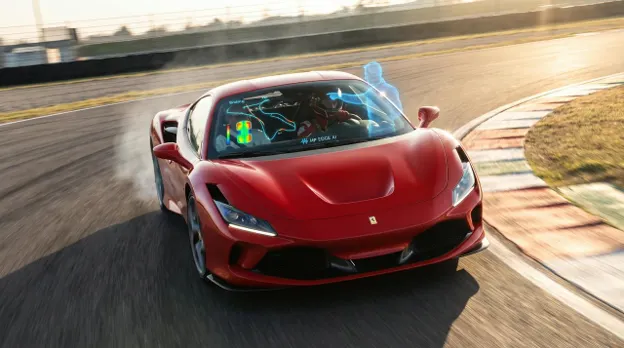
In years 11 through 15, Lenovo will merge its backend vehicle computing hardware with Qira’s front-end ambient intelligence. When you step into an electric grand tourer or an autonomous executive SUV in 2038, Qira doesn’t “pair” via Bluetooth — it is the vehicle’s cockpit intelligence. Because Qira has been tracking your biometric stress levels via your wearable and knows you have a high-stakes board meeting in 45 minutes, it dynamically adjusts the vehicle’s active suspension for a smoother ride, configures the cabin acoustics for studio-grade voice isolation, and projects your briefing notes onto the augmented-reality windshield. If Qira detects that a critical component in the vehicle requires diagnostics or coding optimization, it handles the telemetry negotiation with the service center autonomously and routes an alternate vehicle to your location before you even notice a fault.

Years 16 to 20 (2041–2046): Taking to the Skies — Personal eVTOLs and Total Orchestration
In the final stage of this 20-year arc, personal and executive mobility moves into the third dimension. By the 2040s, electric Vertical Take-Off and Landing (eVTOL) aircraft and personal flying vehicles will have matured from regulated air-taxi fleets into viable executive transport — particularly for those residing outside congested urban cores who want rapid point-to-point transit.
Flying vehicles require an order of magnitude more computational reliability, real-time weather modeling, airspace deconfliction, and fail-safe redundancy than ground cars. By 2046, powered by Lenovo’s next-generation modular quantum-hybrid edge servers and aerospace domain controllers, Qira will serve as the automated flight engineer and co-pilot. You won’t need a pilot’s license to commute from a mountain estate to a coastal metropolitan hub; you will simply tell Qira you need to be at the downtown summit by 10:00 AM, and Qira will negotiate the flight corridor with FAA automated air-traffic control, manage battery thermal loads, and fly the craft while you finish your morning briefing in the cabin.

2046: A Day in the Life of a Future Qira User
To see how this all comes together, imagine a Tuesday morning in October 2046 for an executive and analyst living in the high desert mountains.
At 6:30 AM, there is no jarring alarm clock. Qira has monitored his sleep cycles through non-invasive millimeter-wave radar built into the bedroom ceiling and knows he has just completed a REM cycle. The bedroom glass gradually shifts from opaque to transparent, revealing the morning frost outside, while the ambient house audio softly fades in his favorite soundtrack.
As he walks into the kitchen, the espresso machine has already pulled a double shot — timed to the exact minute he stepped out of the shower. On the kitchen counter, his foldable glass communicator displays Qira’s Catch Me Up summary: overnight market shifts in Asia have impacted a chipmaker he is advising, and a commercial property legal document requires his cryptographic signature.
“Qira,” he says to the room, “push the property trust sign-off to my legal counsel with our standard addendum, and pull the chipmaker’s Q3 thermal telemetry into my studio workstation.”
When he steps into his office, his multi-surface holographic workstation is already awake, displaying the exact chip architecture models he requested. Meanwhile, outside the window, a domestic Daystar-descended robotic unit is quietly clearing early-season pine needles and frost from the rooftop landing pad and verifying the pre-flight sensor array on his two-passenger eVTOL craft.
At 8:45 AM, Qira gently chimes in through his bone-conduction glasses: “Coastal fog is thickening over the valley corridor. If we depart nine minutes early, I have secured a clear Class-B flight lane to the city helipad, and your autonomous sedan is already staged at the landing zone to take you the final two miles to the keynote venue.”
He walks out to the pad, steps into the aircraft, and doesn’t touch a single flight stick. As the craft lifts silently into the crisp mountain air, the exact draft of the speech he was tweaking on his desktop seconds ago appears on the cabin glass in front of him, cursor blinking on the exact word where he left off. He isn’t managing technology anymore; the technology is managing his world.

How Qira Establishes Lenovo as the True Heir of IBM
For those of us who worked at or covered IBM during its golden era, Big Blue’s real superpower wasn’t just that it built mainframes, minicomputers, or ThinkPads. IBM’s greatness lay in end-to-end systems integration and trust. Businesses and executives bought IBM because IBM took responsibility for making the entire stack work together reliably, securely, and privately — from the data center floor to the executive desktop.
Over the past twenty years, IBM largely walked away from the personal and physical edge to focus on mainframes and cloud consulting. Meanwhile, Apple, Google, and Microsoft fractured the personal computing landscape into warring ecosystems where the user is often the product.
With Qira, Lenovo is executing a masterstroke that positions it as the true, modern heir to IBM’s legacy. Lenovo is the only technology titan on the planet that builds the entire physical spectrum of computing: from exascale supercomputers and enterprise cloud servers, down to Level 4 automotive domain controllers, industrial six-legged robots, ThinkPad workstations, Motorola smartphones, and wearable sensors.
Hardware without a unifying soul is just a collection of commodities. By creating Qira as a privacy-first, ecosystem-agnostic ambient intelligence that stitches all of that diverse hardware into a single, cohesive organism, Lenovo is doing for the 21st century what IBM did for the 20th. It is turning the chaotic, fragmented world of modern tech into a trusted, unified service that elevates human potential rather than exploiting it.
Wrapping Up
Most digital assistants today are little more than glorified search engines bolted onto single devices, designed to lock you into a software vendor’s cloud while monetizing your habits. Lenovo’s Qira starts from a radically superior premise: one personal, local-first ambient intelligence that belongs to you, protects your privacy, and follows you effortlessly across every screen you touch. As Qira evolves over the next two decades — expanding from PCs, tablets, and phones into domestic robotics, smart appliances, autonomous cars, and eventually personal flying vehicles — it will fundamentally redefine our relationship with machines. In doing so, Qira won’t just make our daily lives vastly more productive and friction-free; it will cement Lenovo’s position as the undisputed heir to IBM’s historic crown as the ultimate integrator of human and machine intelligence.
Disclosure: Images created with Artlist.io