How Agentic AI Is Transforming Home Healthcare Operations in 2026


The Quiet Crisis Happening Inside Home Healthcare Right Now
A home health nurse finishes a 10-hour shift visiting patients across three counties. She arrives home, pours a cold cup of coffee, and opens her laptop. She still has two hours of clinical documentation ahead of her. Her agency is short-staffed. Three care coordination calls fell through the cracks today. A high-risk patient did not get a follow-up call after discharge.
This is not an edge case. This is Tuesday.
The home healthcare industry is under siege from compounding pressures: a clinician workforce that is shrinking faster than it can be replaced, documentation burdens that consume nearly 35% of a nurse’s working hours, fragmented care coordination between agencies, payers, and physicians, and patient populations that are getting older and more medically complex every year.
Traditional technology has not solved these problems. It has, in many cases, made them worse by adding more systems, more logins, and more administrative friction.
Something fundamentally different is now entering the picture. And it is called agentic AI in home healthcare.
What Is Agentic AI in Home Healthcare?
Agentic AI in home healthcare refers to autonomous AI systems that can perceive clinical and operational data, reason through complex decisions, take multi-step actions, and continuously adapt without requiring human instruction at every step.
Unlike a chatbot that answers a question or a rules engine that flags a condition, an agentic AI system can independently coordinate a patient’s care schedule, identify a deterioration risk, draft clinical documentation, notify the right care team member, and update the patient record, all within a single workflow cycle.
In practical terms, agentic AI acts less like a software tool and more like a highly trained operational colleague that never sleeps, never forgets, and scales infinitely.
What Makes Agentic AI Different from Traditional Healthcare Automation

To understand why agentic AI represents a genuine inflection point, it helps to contrast it with the two generations of automation that came before it.
Generation 1: Rule-Based Automation
Rule-based systems work on fixed logic. If a patient’s blood pressure reading exceeds a threshold, send an alert. If a visit is missed, create a task. These systems are predictable but brittle. They cannot handle exceptions, learn from outcomes, or handle the messy reality of clinical workflows where context matters enormously.
Generation 2: AI Copilots
AI copilots, which became mainstream between 2022 and 2024, augment human decisions. A documentation assistant suggests clinical notes. A scheduling tool recommends optimal visit times. These tools reduce friction but they still depend on a human to review, approve, and act at every step. The bottleneck does not disappear. It just moves.
Generation 3: Agentic AI Systems
Agentic AI in home healthcare closes the loop. These systems do not wait for a human to trigger the next action. They monitor data continuously, reason through competing priorities, execute multi-step workflows, and escalate only when genuine human judgment is required. The result is not just faster automation. It is fundamentally different operational architecture.
A useful analogy: a rule-based system is a traffic light. An AI copilot is a GPS that gives directions. An agentic AI system is a self-driving vehicle that navigates the entire journey while you focus on where you are going.
5 Ways Agentic AI Is Transforming Home Healthcare Operations in 2026
A. Intelligent Patient Intake and Triage
The pain today: Home health referrals arrive through fax, phone, EMR portals, and payer platforms simultaneously. Intake coordinators manually verify eligibility, assess clinical acuity, match patients to appropriate care programs, and schedule initial assessments. During peak periods, referrals queue for 24 to 48 hours. That delay is not just inefficient. It is clinically dangerous.
How agentic AI solves it: An agentic AI system ingests referral data from every source in real time. It verifies insurance eligibility automatically, scores clinical acuity using structured and unstructured data, matches the patient to the appropriate care pathway, and schedules the intake visit without waiting for a coordinator to process the queue. When a case falls outside defined parameters, it escalates with a full summary already prepared.
Business outcome: Agencies piloting intelligent intake systems are reporting referral-to-start times reduced from 36 hours to under 4 hours, with intake coordinator capacity freed by up to 60%.
B. Automated Clinical Documentation
The pain today: Home health clinicians spend between 30 and 40% of their total working time on documentation. OASIS assessments, visit notes, care plans, physician order requests, and payer communications represent an enormous cognitive and administrative burden. Burnout rates among home health nurses consistently cite documentation as the primary driver of career exit.
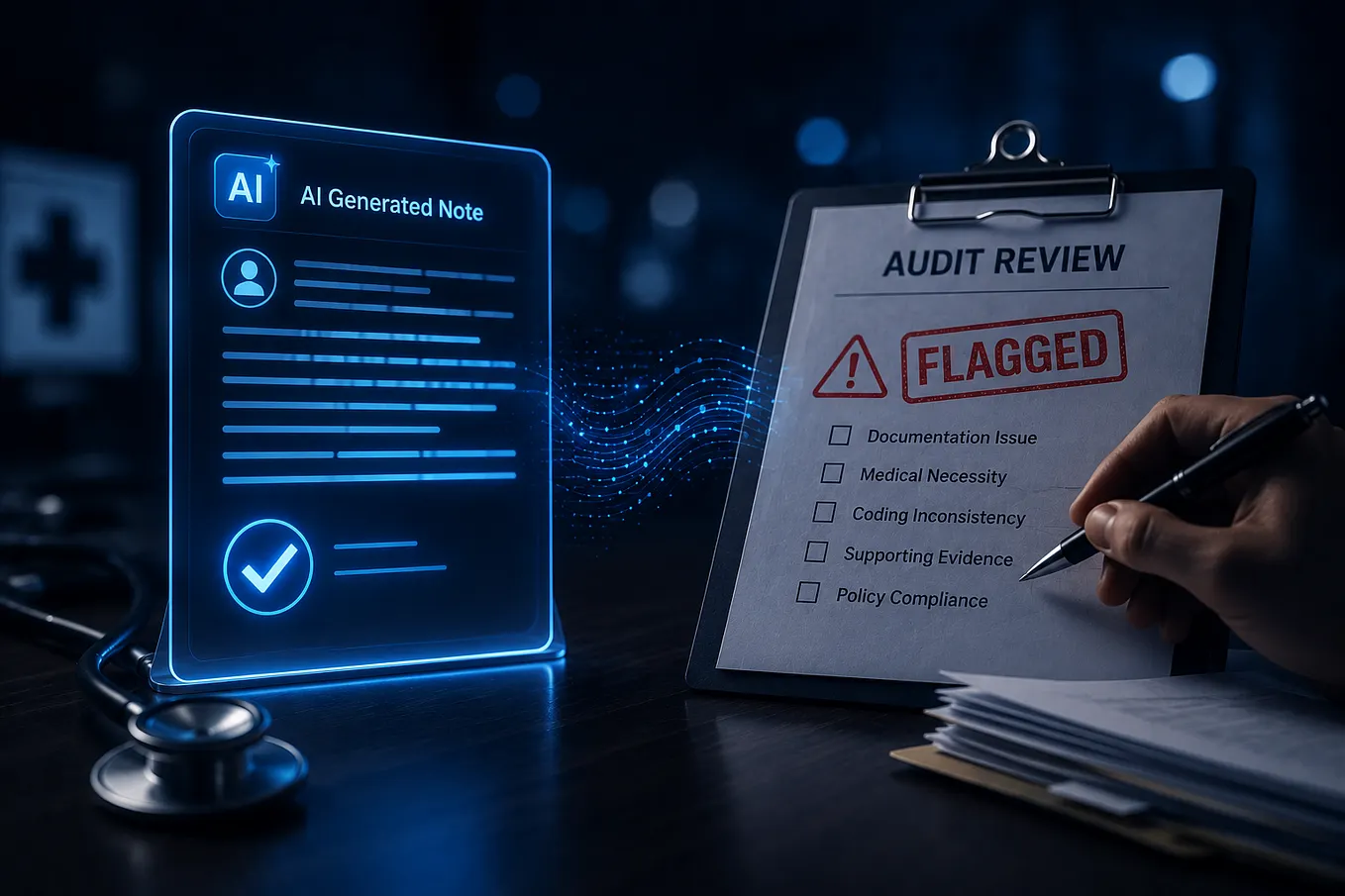
How agentic AI solves it: Agentic AI systems listen to or read clinical encounter data, generate structured documentation drafts aligned to OASIS and payer requirements, flag missing elements before submission, and route documents through approval workflows automatically. The clinician reviews and signs. She does not start from a blank page after a 10-hour shift.
Business outcome: Organizations implementing AI-powered clinical documentation automation report documentation time reductions of 40 to 55%, with significant improvements in clinician satisfaction scores and measurable reductions in documentation error rates that trigger payer denials.
C. Predictive Care Coordination
The pain today: Care coordination in home healthcare is reactive. A patient is discharged from the hospital. A home health order is issued. Somewhere between the hospital, the physician, the home health agency, the pharmacy, and the payer, critical information gets lost. Patients fall through the gaps. Hospital readmission rates remain stubbornly high, averaging around 25% for home health patients with complex conditions.
How agentic AI solves it: Intelligent home care systems built on agentic AI continuously monitor patient data streams, including vitals, medication adherence, visit compliance, and social determinants, and proactively coordinate care transitions without waiting for a human to notice a gap. When a patient’s condition pattern suggests elevated readmission risk, the system initiates outreach, schedules a physician call, and updates the care team automatically and in advance.
Business outcome: Early deployments of predictive care coordination tools show 20 to 30% reductions in 30-day hospital readmission rates for high-risk home health populations, delivering both clinical and financial value.
D. Dynamic Scheduling Optimization
The pain today: Home health scheduling is one of the most logistically complex problems in healthcare operations. Scheduling coordinators juggle visit frequency requirements, clinician skill sets, geographic territories, patient preferences, authorization windows, and last-minute cancellations simultaneously. Scheduling errors result in missed visits, authorization lapses, compliance risks, and clinician burnout from inefficient routing.
How agentic AI solves it: AI for home healthcare operations transforms scheduling from a reactive daily puzzle into a continuously optimized system. Agentic scheduling tools account for clinical acuity, authorization timelines, geography, clinician competencies, and predicted visit durations simultaneously, updating schedules in real time as conditions change. When a clinician calls out sick, the system resolves the disruption automatically, within defined escalation parameters.
Business outcome: Agencies using agentic scheduling optimization report clinician drive time reductions of 15 to 25%, visit capacity increases of 10 to 20% per clinician, and meaningful decreases in missed visit rates.
E. Proactive Risk Detection
The pain today: Home health patients are often the most medically fragile population in the healthcare system. They are being managed outside clinical settings, frequently by family caregivers with limited training, with monitoring that occurs only during scheduled visits. Deterioration events frequently go undetected until they become acute crises.
How agentic AI solves it: Proactive risk detection through agentic AI integrates data from remote patient monitoring devices, visit notes, medication records, and behavioural patterns to identify deterioration signals before they manifest as emergencies. The system does not generate a passive alert. It initiates a defined response protocol, including automated patient outreach, clinician notification, or care plan modification, without delay.
Get Inferenz’s stories in your inbox
Join Medium for free to get updates from this writer.
Business outcome: Healthcare organizations implementing proactive AI risk detection report emergency department utilization reductions of 15 to 22% among enrolled home health populations, alongside meaningful improvements in patient outcomes and family caregiver confidence.
Why 2026 Is the Inflection Point
Several forces have converged simultaneously in 2026 to make agentic AI in home healthcare not just viable but essential.
• AI maturity has reached clinical-grade reliability. Large language models and multi-agent orchestration frameworks now demonstrate the consistency and accuracy required for healthcare workflow integration.
• Healthcare data infrastructure is finally interoperable. The widespread adoption of FHIR-based data exchange standards, accelerated by the 21st Century Cures Act, has created the data pipelines that agentic AI systems require to function across organizational boundaries.
• Regulatory readiness is advancing. The FDA’s evolving framework for software as a medical device, combined with emerging guidance on AI transparency and accountability in healthcare, is giving health system leaders the compliance clarity they need to approve agentic AI deployments.
• Operational pressure has become existential. Home health agencies are operating in a margin environment where manual operational inefficiency is no longer survivable.
• The staffing shortage shows no sign of resolution. The U.S. Bureau of Labor Statistics projects demand for home health aides to grow by 22% through 2032, while training and recruitment pipelines cannot keep pace.
Real Business Impact: What the Numbers Show

Organizations that have moved beyond pilot programs and deployed agentic AI at scale are reporting consistent outcomes across several dimensions:
• Documentation burden reduction: 40 to 55% reduction in time clinicians spend on documentation, translating directly to recaptured clinical capacity.
• Care coordination speed: Referral-to-care-start times reduced from an industry average of 36 to 48 hours to under 6 hours in advanced deployments.
• Operational cost reduction: Administrative overhead costs reduced by 20 to 35% through intelligent workflow automation.
• Clinician satisfaction: Measurable improvements in clinician Net Promoter Scores and reductions in voluntary turnover following agentic AI deployment.
• Patient outcomes: 20 to 30% reductions in preventable readmissions and 15 to 22% reductions in emergency department utilization among high-risk home health populations.
How Healthcare Organizations Can Prepare
• Start with a data foundation audit. Agentic AI systems are only as effective as the data they can access. Assess the quality, completeness, and interoperability of clinical and operational data before deploying any agentic AI solution.
• Identify high-friction, high-volume workflows first. Clinical documentation, intake coordination, and scheduling represent the highest-volume, highest-friction processes in most home health agencies and deliver the fastest measurable return.
• Design for clinician trust. Successful implementations prioritize transparency, explainability, and clear escalation protocols that keep clinicians in control of consequential decisions.
• Build governance before you build automation. Healthcare AI governance frameworks must address accountability, bias monitoring, performance review cycles, and regulatory compliance before deployment.
• Partner with healthcare-specific AI expertise. Domain expertise matters. General-purpose AI platforms rarely account for the regulatory complexity, data sensitivity, and workflow specificity of home healthcare operations.
How Inferenz Enables This Transformation
Inferenz occupies a distinctive position at the intersection of healthcare AI strategy, data modernization, and intelligent workflow automation. Rather than offering a generic AI platform retrofitted for healthcare, Inferenz builds solutions engineered specifically for the operational and regulatory realities of home healthcare organizations.
The Caregence Platform from Inferenz represents a purpose-built example of agentic AI for home healthcare, combining intelligent intake, predictive care coordination, documentation automation, and proactive risk management into a unified operational intelligence layer. Learn more at.
Explore how Inferenz is helping healthcare organizations build AI-powered operational intelligence.
The Future Belongs to Autonomous Operations
The home healthcare organizations that will define the industry in 2030 are not the ones with the largest workforces or the most sophisticated EMR configurations. They are the ones that are building autonomous operational intelligence today.
Agentic AI in home healthcare is not a technology trend to monitor from a distance. It is the foundational infrastructure of a healthcare delivery model that can actually meet the demands of an aging population, a constrained clinician workforce, and a value-based reimbursement environment simultaneously.
The clinician finishing her shift at 10 PM, opening her laptop for two more hours of documentation, is not an unfortunate inevitability of home healthcare. She is a problem that already has a solution.
The question for healthcare leaders is not whether agentic AI will transform home healthcare operations. That is already happening.
The question is who will lead it, and who will spend the next five years catching up.
Frequently Asked Questions
What is Agentic AI in healthcare?
Agentic AI in healthcare refers to autonomous AI systems that can perceive clinical and operational data, reason through complex multi-step decisions, take independent actions, and adapt continuously based on outcomes. Unlike traditional automation or AI assistants, agentic AI systems execute full workflow sequences while escalating only decisions that genuinely require human judgment.
How is Agentic AI used in home healthcare?
Agentic AI in home healthcare is being applied across intake and triage, clinical documentation, care coordination, scheduling optimization, and proactive patient risk detection. These systems integrate with existing EMRs and operational platforms to automate high-volume, complex workflows that currently consume significant clinician and coordinator time.
Can Agentic AI reduce clinician burnout?
Yes, and this is one of the most significant documented benefits of agentic AI deployment in home healthcare. By eliminating documentation burden, removing administrative tasks that consume clinician time, and optimizing scheduling to reduce inefficiency, agentic AI directly addresses the primary drivers of burnout identified by home health nurses and therapists in workforce surveys.
Is Agentic AI HIPAA compliant?
Agentic AI systems designed for healthcare must be built and deployed in compliance with HIPAA requirements governing the use, storage, and transmission of protected health information. Healthcare-specific AI vendors implement encryption, audit logging, access controls, and business associate agreements as part of their compliance architecture. Organizations should evaluate any agentic AI solution against their specific HIPAA obligations before deployment.
How does Agentic AI improve care coordination?
Agentic AI improves care coordination by continuously monitoring patient data across care settings, proactively identifying coordination gaps before they become clinical events, automating communication workflows between care team members, and maintaining real-time visibility into care plan execution. This transforms coordination from a reactive, human-dependent process into a continuous, system-driven function.
What is the difference between AI automation and Agentic AI?
Traditional AI automation executes predefined tasks in response to specific triggers. Agentic AI goes significantly further: it perceives complex, dynamic environments, reasons through multi-step problems, executes sequences of actions across systems, and adjusts its approach based on evolving conditions. The difference is the difference between a thermostat and a building management system that optimizes energy use, comfort, and safety simultaneously based on real-time data.