At UNGA, Shehbaz Sharif’s Diplomacy-First Case Will Face a Test of Credibility


Arriving in New York for the 81st United Nations General Assembly, Pakistan’s prime minister is set to argue for dialogue amid a volatile Middle East. The strength of that appeal will depend on disciplined claims about mediation — and on how closely Pakistan’s domestic conduct matches its international language.
A carefully framed return to the world stage
Prime Minister Shehbaz Sharif arrived in New York on 21 September, local time, to lead Pakistan’s delegation to the 81st United Nations General Assembly (UNGA). He is scheduled to address it on Friday, 25 September. The streamlined delegation includes Deputy Prime Minister and Foreign Minister Ishaq Dar and Special Assistant Tariq Fatemi.
The General Debate runs from 22 to 26 September and resumes on 28 September, under the theme, “Restoring Trust, Managing Transformation: A United Nations That Delivers for All.” A pandemic-preparedness meeting is also scheduled for 25 September. No reviewed official source gives Sharif’s precise speaking hour or place in the day’s order: a confirmed date is not a confirmed slot.
Pakistan’s Foreign Ministry says Sharif will emphasise dialogue, diplomacy, restraint and peaceful settlement of disputes, alongside development, climate, counterterrorism, Islamophobia, economic pressures, UN reform and Global South concerns. Kashmir and Palestine will be prominent. This is an announced programme, but it clearly casts Pakistan as an advocate of multilateral rules and de-escalation.
A mediator, but not a maker of peace
That posture is most consequential in the Middle East. Pakistan has a basis for describing itself as part of diplomacy between Washington and Tehran, but little room for triumphalism. In a 17 September briefing, the Foreign Ministry said Pakistan had brought American and Iranian representatives together, producing the Islamabad talks, an Islamabad memorandum of understanding and a subsequent signing at Burgenstock. That official account does not demonstrate that the arrangements remain effective.
Independent reporting illustrates the limits. Reuters reported separate July meetings in Doha involving American and Iranian negotiators and Pakistani and Qatari mediators, focused on Hormuz navigation and Iranian funds, without visible progress towards durable peace. On 19 September, Dar told Iranian Foreign Minister Abbas Araghchi that energy supplies and safe passage for ships were vital. Qatar said two days later that it and Pakistan were trying to revive talks. These contacts confirm a live channel, not resumed direct negotiations, agreed terms or an imminent settlement.
That restraint should anchor Pakistan’s UN message. With Saudi-Houthi fighting and maritime routes vulnerable to escalation, it can credibly urge protection of shipping and energy flows while calling for diplomacy. It should not imply that mediation has solved the conflict.
Kashmir and Palestine: two enduring diplomatic files
Sharif’s address will connect regional diplomacy to self-determination and international law. Dar is due at the Organisation of Islamic Cooperation’s Contact Group on Jammu and Kashmir. Pakistan’s established position is that Kashmir’s final disposition requires a UN-supervised plebiscite under relevant Security Council resolutions. It says India’s post-5 August 2019 measures breach international law. Those are Pakistan’s positions, not agreed findings between the parties.
Get Pakistan News World’s stories in your inbox
Join Medium for free to get updates from this writer.
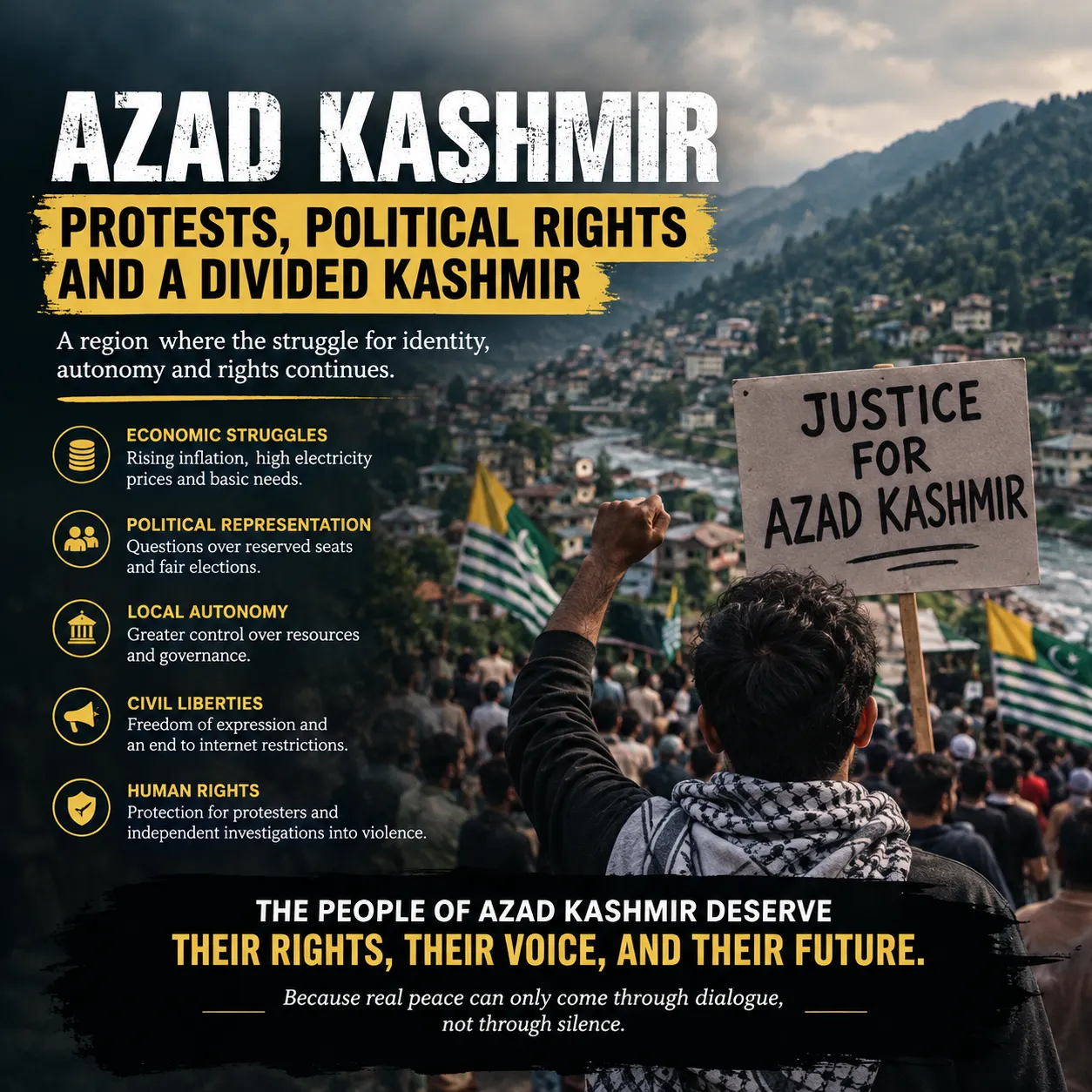
That international argument now carries an additional domestic complication. Pakistan-administered Kashmir, which Islamabad officially calls Azad Jammu and Kashmir, has experienced serious political unrest around representation, governance and economic grievances. The Jammu and Kashmir Joint Awami Action Committee led strikes and protests against 12 reserved legislative seats for Kashmiri refugees living elsewhere in Pakistan, arguing that the arrangement allows outside political influence and weakens the voice of residents. The government and courts have rejected or limited parts of that demand, while clashes, communications restrictions and delayed, phased elections deepened the crisis. Reported casualty figures have varied, and access to reliable information was constrained by an internet blackout.
They are primarily a challenge to local political representation, economic policy and administrative accountability. Yet they matter to Pakistan’s UNGA messaging because calls for self-determination abroad will be heard alongside questions about political participation and the use of force in territory it administers. A more credible presentation would acknowledge the unrest, support transparent investigations and emphasise dialogue, completed elections, restored communications and locally accountable governance rather than treating Kashmir only as an external diplomatic file. A recent peace march in Sudhnoti brought together parties, traders, lawyers and civil-society representatives who called for an end to blockades, restoration of internet and travel facilities, and elections in constituencies where polling had not taken place
On Palestine, Pakistan’s declared objective is an independent state on the 4 June 1967 lines, with Al-Quds/Jerusalem as its capital, consistent with relevant UN resolutions. Dar’s programme includes meetings of the Arab-Islamic Eight and the Global Alliance for the Implementation of the Two-State Solution. The Assembly’s decision to allow Palestine to participate virtually in the high-level debate adds visibility to a file Pakistan will push prominently.
The pairing is practical as well as rhetorical. Kashmir gives Pakistan an established platform in Islamic and UN forums; Palestine places it in a broader Arab-Islamic demand for civilian protection, humanitarian access, statehood and an end to war. In both cases, Pakistan can press for UN Charter-based diplomacy, not claim that it can impose an outcome.
Dar’s meetings turn principle into diplomatic traffic
The ministerial calendar shows how Pakistan is working UNGA’s margins. Dar has met French Foreign Minister Jean-Noël Barrot, Egyptian Foreign Minister Badr Abdelatty, Palestinian Permanent Observer Riyad Mansour and EU High Representative Kaja Kallas. The talks covered bilateral ties and de-escalation, Egypt-Pakistan cooperation and the Regional Four mechanism, Palestinian statehood and Gaza, and Pakistan’s GSP+ EU trade relationship. Egypt independently confirmed discussion of regional de-escalation and the Regional Four and Arab-Islamic Eight mechanisms.
His announced itinerary also includes OIC meetings on Kashmir, Palestine forums, the pandemic meeting, chairing the Economic Cooperation Organization Council of Ministers, a planned UN Security Council AI statement and bilateral meetings. These are scheduled engagements, not evidence that all have occurred. Together, they connect Pakistan’s security case to trade, economic cooperation and coalition-building.
The domestic credibility question
International audiences will judge this diplomacy against conditions at home. Sharif invited the opposition to “constructive dialogue” in August, arguing that lower tension would support development and democracy. Yet Pakistan Tehreek-e-Insaf plans a 27 September march demanding Imran Khan’s release. Its claim that 1,500 supporters were arrested was not independently verified in the cited reporting.
Khan’s detention remains a salient external question. Reuters reported that his party sought contempt action after authorities took him to a state-run hospital rather than the private facility ordered by the Supreme Court; the government cited security risks. He has been imprisoned since August 2023 on charges he calls politically motivated.
The external-security case is real but exacting. Pakistan recently reported strikes against militants in Afghan border provinces; Taliban and UN reporting cited civilian deaths, while Islamabad and Kabul dispute responsibility for militant violence. An International Monetary Fund programme has supported macroeconomic stabilisation, but its demands on taxes, energy, state-owned enterprises and governance leave little room for complacency.
Rights scrutiny adds another complication. Human Rights Watch has documented restrictions on dissent and concerns over Punjab’s anti-terrorism law, while UN experts have urged Pakistan to halt Afghan removals pending individual protection assessments. Such issues shape reception of Pakistan’s appeal to a rules-based international order.