Healthcare IT Solutions: The Trending Solutions in Healthcare Software Development Healthcare Leaders Are Investing In


The healthcare industry is undergoing one of the most significant digital transformations in its history. Hospitals, clinics, payers, life sciences companies, and digital health startups are no longer investing in technology simply to replace paper-based workflows or modernize outdated software. Their focus has shifted toward building connected healthcare ecosystems that improve patient outcomes, streamline operations, and support long-term business growth.
However, achieving these goals is becoming increasingly challenging. Healthcare organizations must manage rising patient expectations, growing volumes of clinical data, complex regulatory requirements, cybersecurity threats, and the need for seamless interoperability between multiple healthcare systems. Traditional software platforms that were once sufficient are now struggling to keep pace with these demands.
This is why modern Healthcare IT Solutions have become a strategic priority rather than just another technology investment. Organizations are looking beyond standalone applications and embracing intelligent, integrated platforms capable of supporting every aspect of healthcare delivery.
At the same time, several Trending Solutions in Healthcare Software Development are reshaping how healthcare technology is designed, implemented, and managed. Artificial Intelligence, cloud computing, healthcare interoperability, predictive analytics, and automation are enabling organizations to build smarter, faster, and more connected healthcare environments.
Healthcare leaders who invest in these innovations today are not only improving operational efficiency but also preparing their organizations for the future of digital healthcare.
Why Healthcare IT Solutions Are Evolving Faster Than Ever
Healthcare technology has changed dramatically over the last decade. What was once considered an advanced healthcare application is now often viewed as outdated because healthcare organizations require much more than isolated software systems.
Today’s healthcare providers need technology that connects departments, supports clinical decision-making, improves patient engagement, and ensures secure data exchange across multiple platforms.
Legacy Systems Can No Longer Support Connected Healthcare Ecosystems
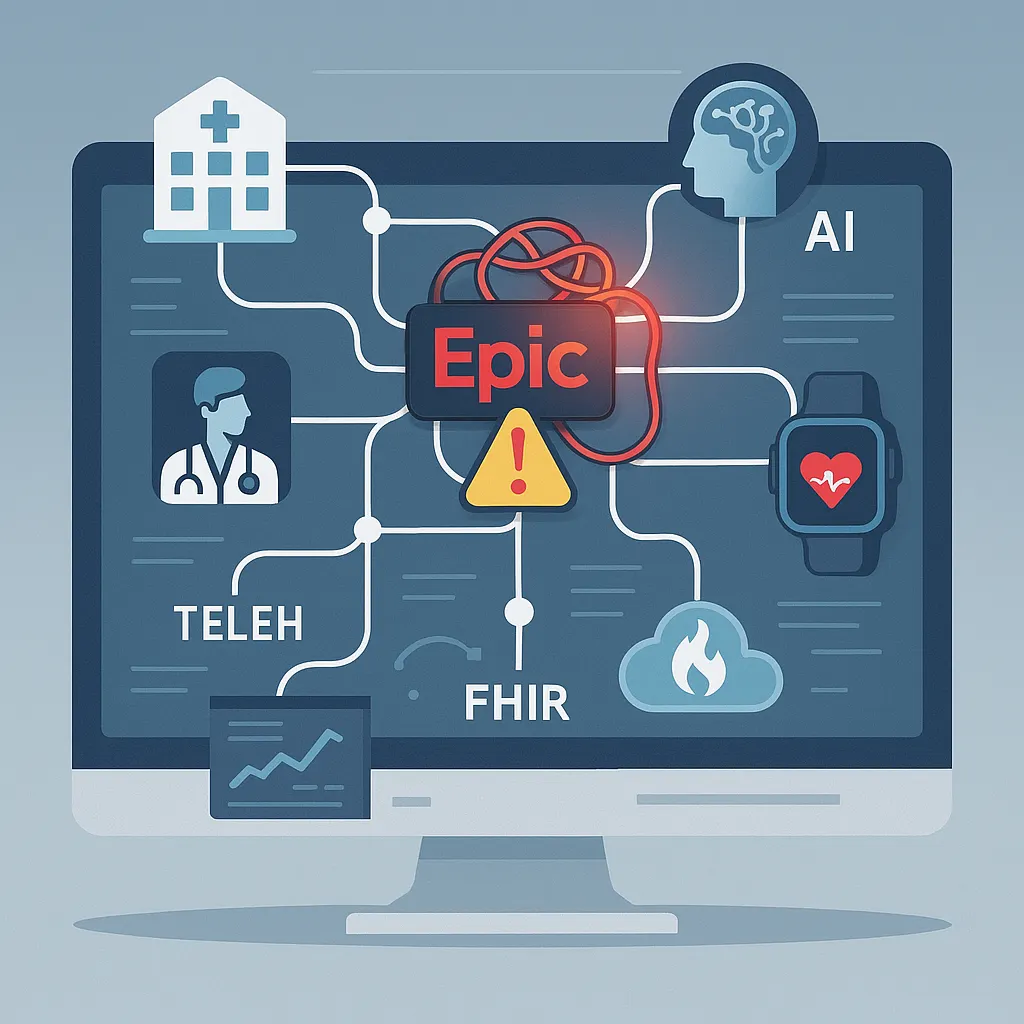
Many healthcare organizations continue relying on legacy systems that were designed years ago for a much simpler healthcare environment. These systems often operate independently, making it difficult for clinicians, administrators, and patients to access complete and accurate information when they need it.
Disconnected Electronic Health Records (EHRs), billing platforms, scheduling applications, laboratory systems, and patient portals create operational inefficiencies that affect both healthcare providers and patients.
Healthcare professionals spend valuable time switching between applications instead of focusing on patient care. Duplicate data entry increases the likelihood of errors, while delayed information sharing slows clinical decision-making.
Modern Healthcare IT Solutions eliminate these barriers by integrating multiple healthcare applications into a unified digital ecosystem. Instead of isolated systems communicating through manual processes, organizations benefit from secure, real-time information exchange that supports better care coordination and improved operational efficiency.
Rising Patient Expectations Are Accelerating Digital Transformation
Patients today expect healthcare experiences similar to those offered by banking, retail, and travel industries. They want online appointment scheduling, virtual consultations, digital prescriptions, mobile access to medical records, personalized communication, and faster responses from healthcare providers.
Healthcare organizations that cannot meet these expectations risk losing patient trust and competitive advantage.
Modern digital platforms help providers deliver convenient, patient-centered services while improving internal workflows.
Features such as patient engagement portals, mobile health applications, AI-powered virtual assistants, remote patient monitoring, and automated communication systems are no longer optional innovations. They have become essential components of high-quality healthcare delivery.
As patient expectations continue evolving, organizations investing in Healthcare IT Solutions are better positioned to deliver personalized care while maintaining operational efficiency.
Regulatory and Interoperability Requirements Are Driving Technology Investments
Healthcare organizations must comply with an expanding range of regulatory requirements while maintaining secure access to patient information.
Standards such as HIPAA, HL7 FHIR, ONC interoperability requirements, CMS mandates, and evolving cybersecurity frameworks require healthcare systems to exchange information securely while protecting sensitive patient data.
Traditional software architectures often struggle to support these evolving requirements because they were not designed for modern interoperability standards.
This is one reason why healthcare leaders continue investing in scalable, standards-based platforms capable of supporting secure data sharing across hospitals, laboratories, payers, pharmacies, and digital health applications.
These investments not only improve compliance but also prepare organizations for future innovation as healthcare ecosystems continue expanding.
Trending Solutions in Healthcare Software Development That Are Transforming Healthcare
The pace of innovation in healthcare has accelerated dramatically over the last few years. Healthcare organizations are no longer investing in technology simply to digitize existing processes. Instead, they are looking for intelligent solutions that improve decision-making, enhance patient experiences, and create a connected ecosystem capable of adapting to future challenges.
This shift has led to the rapid adoption of Trending Solutions in Healthcare Software Development, enabling providers to move beyond basic digital transformation and build platforms that deliver measurable clinical and business value.
Artificial Intelligence and Automation Improving Clinical and Operational Efficiency
Artificial Intelligence has become one of the most influential technologies for shaping modern healthcare. Healthcare providers are using AI to automate repetitive administrative tasks, assist clinicians in diagnosis, predict patient risks, and optimize operational workflows.
For example, AI-powered systems can analyze large volumes of patient data to identify high-risk individuals, recommend personalized treatment plans, and support early intervention strategies. Administrative teams benefit from automation by reducing manual documentation, streamlining appointment scheduling, and accelerating insurance claim processing.
Automation also improves operational efficiency by minimizing repetitive tasks that often consume valuable staff time. Instead of spending hours managing routine processes, healthcare professionals can focus on delivering quality patient care.
As AI capabilities continue to evolve, organizations investing in modern Healthcare IT Solutions gain access to intelligent platforms that improve productivity while supporting better clinical outcomes.
HL7 FHIR, Cloud Computing, and Interoperable Healthcare Platforms
One of the biggest challenges facing healthcare organizations is the ability to exchange patient information across multiple systems without compromising security or accuracy.
Healthcare providers typically use several applications for electronic health records, laboratory management, radiology, billing, pharmacy services, scheduling, and patient engagement. Without proper integration, valuable information remains trapped in isolated systems, making coordinated care more difficult.
This is why HL7 FHIR has become one of the most important interoperability standards in healthcare software development. It enables healthcare systems to exchange information through standardized APIs, making integration faster, more reliable, and easier to maintain.
Cloud computing further strengthens interoperability by providing secure, scalable infrastructure capable of supporting growing healthcare organizations. Cloud-native platforms simplify system maintenance, improve disaster recovery, enable remote access, and support faster deployment of new healthcare services.
Get Larisa Albanians’s stories in your inbox
Join Medium for free to get updates from this writer.
Together, interoperability and cloud technologies represent some of the most impactful Trending Solutions in Healthcare Software Development, allowing organizations to build flexible digital ecosystems that support long-term innovation.
Healthcare Analytics and Predictive Insights Enabling Smarter Decisions
Healthcare organizations generate enormous amounts of clinical, operational, and financial data every day. However, collecting data alone does not improve decision-making. The real value comes from transforming that information into meaningful insights.
Modern analytics platforms help healthcare leaders monitor key performance indicators, identify operational bottlenecks, forecast patient demand, and improve resource utilization. Predictive analytics can anticipate patient readmissions, identify population health trends, optimize staffing levels, and support preventive care initiatives.
Executives also benefit from real-time dashboards that provide visibility into hospital performance, financial metrics, patient satisfaction, and clinical outcomes.
Organizations adopting advanced analytics as part of their Healthcare IT Solutions strategy gain a significant competitive advantage by making faster, evidence-based decisions that improve both patient care and operational efficiency.
How to Choose Healthcare IT Solutions That Deliver Long-Term Business Value
Selecting the right technology is only one part of a successful digital transformation strategy. Healthcare organizations must also choose a development partner capable of delivering secure, scalable, and future-ready solutions that align with their long-term business objectives.
The right partnership can significantly reduce implementation risks while ensuring the technology continues to evolve alongside changing industry requirements.
Selecting a Healthcare Software Development Partner with Proven Domain Expertise
Healthcare software development requires more than technical expertise. It demands a deep understanding of clinical workflows, healthcare regulations, interoperability standards, patient privacy, and the unique challenges faced by providers and payers.
An experienced healthcare software development company understands how technology impacts patient care, operational efficiency, and regulatory compliance. This knowledge helps organizations avoid common implementation mistakes while accelerating project delivery.
When evaluating potential partners, healthcare leaders should consider their experience with AI, interoperability, cloud migration, custom healthcare applications, healthcare analytics, and integration with existing healthcare systems.
A partner with proven healthcare expertise can recommend solutions that support both immediate business needs and future digital transformation goals.
Building Scalable, Secure, and Compliance-Ready Healthcare Platforms
Healthcare technology investments should continue delivering value for years after implementation.
This requires platforms built with scalability, security, and compliance at their core.
Modern Healthcare IT Solutions should support organizational growth, increasing patient volumes, new service lines, and future technology integrations without requiring major architectural changes.
Security is equally important.
Healthcare organizations manage highly sensitive patient information that must remain protected through encryption, role-based access controls, audit logging, secure APIs, and continuous monitoring.
Compliance with regulations such as HIPAA, HL7 FHIR standards, ONC interoperability requirements, and CMS guidelines should be incorporated throughout the software development lifecycle rather than added later.
Organizations that prioritize scalability and compliance reduce long-term costs while creating technology platforms capable of adapting to future industry changes.
Measuring ROI Through Better Patient Outcomes, Operational Efficiency, and Future Scalability
Every healthcare technology investment should produce measurable business value.
Rather than focusing solely on implementation costs, organizations should evaluate how technology improves clinical outcomes, operational performance, and financial sustainability.
Key performance indicators may include:
- Reduced administrative workload
- Improved patient satisfaction
- Faster appointment scheduling
- Lower hospital readmission rates
- Better clinician productivity
- Increased interoperability
- Faster access to patient information
- Reduced operational costs
- Improved regulatory compliance
Organizations that consistently measure these outcomes gain a clearer understanding of how Trending Solutions in Healthcare Software Development contribute to long-term organizational success.
Conclusion
Healthcare is entering a new era where connected care, intelligent automation, and data-driven decision-making define organizational success. Legacy systems and isolated applications can no longer support the growing demands of modern healthcare delivery.
By investing in advanced Healthcare IT Solutions, organizations can improve interoperability, strengthen security, streamline clinical workflows, and deliver more personalized patient experiences.
At the same time, adopting Trending Solutions in Healthcare Software Development — including Artificial Intelligence, HL7 FHIR interoperability, cloud-native platforms, predictive analytics, and automation — creates a strong foundation for future innovation and sustainable growth.
Healthcare organizations that embrace these technologies today will be better prepared to navigate regulatory changes, improve operational efficiency, and meet the evolving expectations of patients and healthcare professionals alike.