They Killed 28 People in Belgian Supermarkets, Sometimes for Coffee. They Were Never Caught

Three years of raids on ordinary shops. Twenty-eight dead

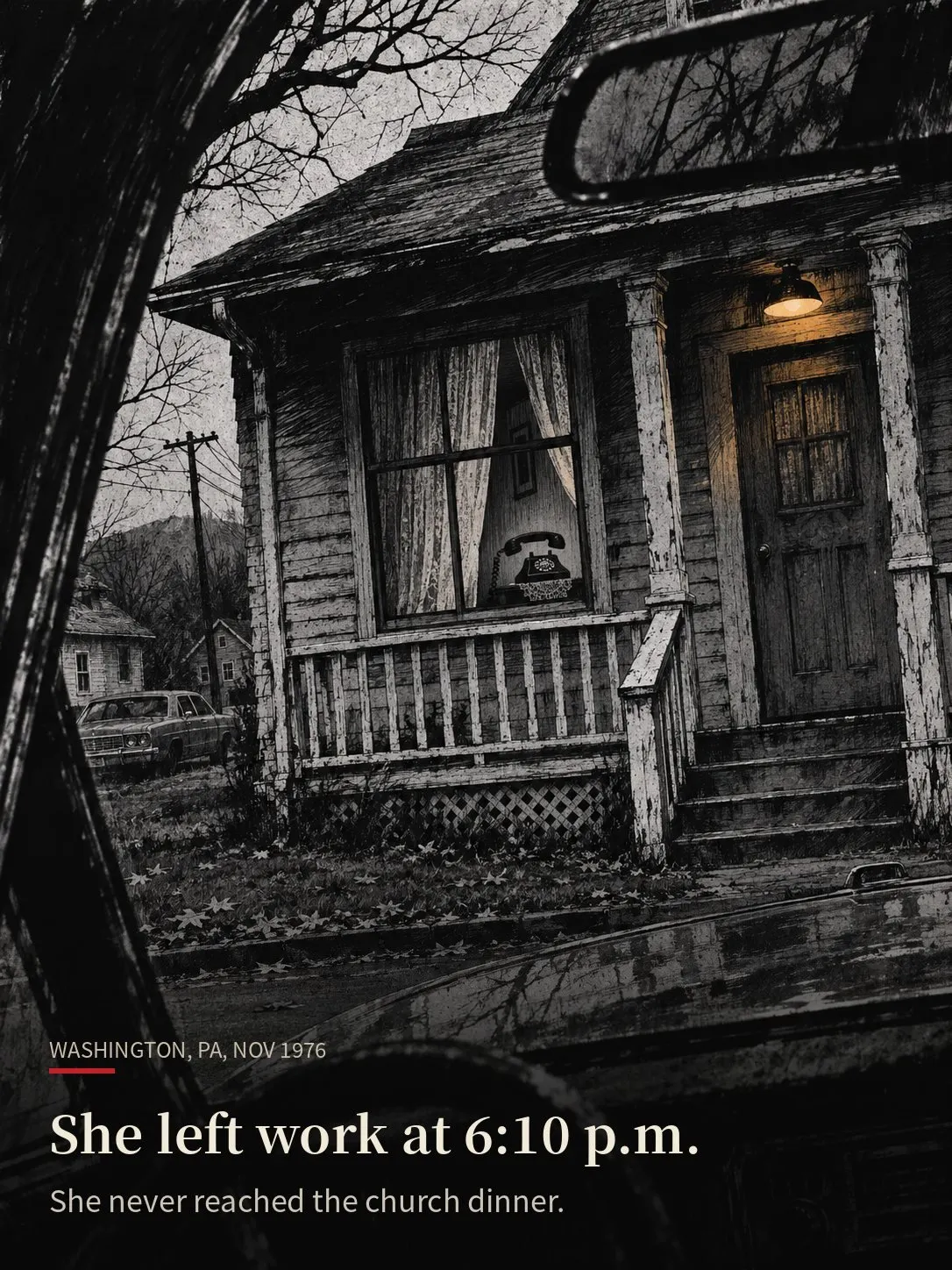
Picture a Belgian supermarket car park on a wet weekend evening in 1985. The big windows are lit. People are loading bags into the boots of their cars. Kids are messing around by the trolleys.
Then a dark car pulls in, and men with pump-action shotguns get out.
Between 1982 and 1985, a gang did this again and again across Belgium. They hit gun shops, an inn, restaurants, a jeweller’s and, above all, supermarkets.
They killed 28 people. Some of the dead were children.
In the French-speaking south they are called the Mad Killers of Brabant. In the Dutch-speaking north they are the Bende van Nijvel, the Gang of Nivelles.
More than forty years later, nobody knows who they were.
Sometimes they killed for champagne and coffee

The strangest thing about the gang is what they took.
At a country inn, they killed the night caretaker and left with champagne, coffee and delicacies. At a supermarket in Nivelles, three people died, and the loot was tea, coffee and cooking oil.
Even the bigger raids made little sense as robberies. Belgian broadcaster VRT says their two supermarket attacks on one night in 1985 brought in just over 3 million Belgian francs, about 80,000 euros. It called that wildly out of proportion to the violence.
At their last raid, the take was about 200,000 francs, roughly 5,000 euros, plus some cheques.
Professional robbers do not risk life sentences for coffee. That mismatch is why so many Belgians came to believe the robberies were a cover for something else.
But what? That question has never been answered.
Forty years later, they were still opening graves

May 27, 2026. A cemetery in Charleville-Mézières, a town in the French Ardennes, just over the border from Belgium.
White tents went up over three graves. Investigators exhumed three bodies: one of two French brothers suspected of being in the gang, and both of their parents.
It was the latest step in an investigation that had already exhumed more than 40 bodies over the years, looking for DNA that might match the killers.
The brothers had been figures in organised crime in the French Ardennes about forty years ago. Both were long dead.
The DNA results came back two months later. We’ll get to them.
First, you need to know how it started. And it started small.
It started with a stolen hunting rifle

March 13, 1982. Dinant, a small town on the river Meuse in southern Belgium.
Someone broke into the Bayard gun shop and stole a hunting rifle. That’s all. It barely made the news.
In August, a small grocery in Maubeuge, just across the French border, was looted at night. The thieves took food and wine.
Then, on September 30, 1982, the gang raided an arms dealer in Wavre. A policeman was killed and two gendarmes were wounded. About 15 weapons were taken.
Looking back, investigators would see a pattern: first weapons, then food and drink, then violence.
At the time, nobody connected them.
At a country inn, they killed the man who held the keys

December 23, 1982, two days before Christmas. L’Auberge du Chevalier, an inn in Beersel, just south of Brussels.
The night caretaker, José Vanden Eynde, was alone in the building.
The gang killed him.
Then they took champagne, coffee and delicacies. Nothing that would make anyone rich. The kind of things you’d buy for a Christmas party.
It’s the first killing in the series that shows what investigators would struggle with for decades: extreme violence for a reward that barely seemed to matter.
Less than three weeks later, they killed again.
A taxi driver found in the boot of his own cab

January 1983. A Brussels taxi driver, Constantin Angelou, was found shot dead in the boot of his own taxi, near Mons.
His cab had been taken, and he had been killed in it.
This case left one of the most important clues in the whole investigation: a cigarette butt found in his car.
For more than forty years, there have been only two DNA profiles linked to the gang. That cigarette butt is one of them.
The other came from a bulletproof vest that would surface in a canal years later.
Get Strange World Files’s stories in your inbox
Join Medium for free to get updates from this writer.
Every DNA test since, hundreds of them, has been checked against those two traces.
They took tea, coffee and cooking oil. Three people died

Through 1983, the raids kept coming. A Delhaize supermarket in Genval was held up in February. No one died. The manager of a Colruyt supermarket in Halle was shot dead in March.
In September, at a weaving firm in Temse, the gang stole seven bulletproof vests. The caretaker was killed and his wife badly wounded.
A week later, on September 17, 1983, they hit a Colruyt supermarket in Nivelles.
Two motorists and a gendarme were killed. Another gendarme was wounded.
The loot was tea, coffee and cooking oil.
Nivelles is Nijvel in Dutch. That raid gave the gang its Flemish name.
A jeweller couple killed. Then, for two years, nothing

The killing spread. On October 2, 1983, the owner of a restaurant in Ohain was shot dead. On October 7, the manager of a Delhaize supermarket in Beersel was killed.
On December 1, 1983, the gang walked into a jewellery shop in Anderlues, in Hainaut, and killed the jeweller and his wife.
And then they stopped.
For almost two years, from December 1983 to September 1985, there were no attacks.
Nobody knows why. It is one of the biggest puzzles in the case. Were they in prison for something else? Abroad? Waiting for an order?
When they came back, they were worse.
A dark Golf GTI pulled into a supermarket car park

Friday, September 27, 1985, about 8 p.m. The Delhaize supermarket in Braine-l’Alleud, south of Brussels.
A dark Volkswagen Golf GTI pulled into the car park. It had been stolen a week earlier from a VW dealer in Kortenberg.
Three men got out. Two of them wore masks that, witnesses said, looked like famous faces. The biggest one wore a green safari hat.
Belgians would come to know these three by their nicknames. The Giant, tall and possibly the leader. The Killer, the main shooter. And the Old Man, older, the driver.
They were armed with pump-action shotguns.
They walked toward the doors.
A boy was taken hostage. A man offered to take his place

A 12-year-old boy was playing in the car park. The gang grabbed him as a hostage.
A customer who knew the boy stepped forward and offered to take his place.
They shot him dead.
Three people were killed at Braine-l’Alleud that night. The boy was later released, alive.
The gang got back into the Golf and drove away.
They were not going home. They were going to the next supermarket.
35 minutes later, a second supermarket. A 14-year-old boy

The same car drove about 16 kilometers, roughly 10 miles, to another Delhaize, in Overijse. At about 8:35 p.m., they went in.
Five more people died. Among them was a 14-year-old boy who was shot in the car park, a cashier, and a 31-year-old man the gang used as a human shield.
One victim, Léon Finné, was a banker and a gendarmerie informant. He was shot twice, and then nine more times.
That detail has haunted the case. If the killings were random, why was one man shot so many times? Some people believe not every victim was chosen by chance.
It has never been proven either way.
In 35 minutes, two ordinary supermarkets had become crime scenes.
The cashier didn’t normally work Friday evenings

One of the dead at Overijse was a cashier named Rosa.
She did not normally work on Friday evenings.
Her head cashier had asked her to come in that day, just once, as a favour.
Stories like hers are why this case still hurts in Belgium. The victims were not gangsters or rivals. They were people doing their shopping, working a shift, playing in a car park.
Anyone could have been there. That was the terror of it.
After that night, many Belgians were afraid to go to the supermarket.
The rest of the file
After the second supermarket that night, the gang struck once more, in Aalst, and then vanished. A canal search turned up gear that may have been planted. A dying ex-gendarme’s brother said he had confessed to being the Giant. In 2026, the French DNA lead failed, and divers pulled pieces of a Golf GTI from a Belgian river.
Read the full case, with the ending, the timeline and every source, at Strange World Files: https://strangeworldfiles.com/brabant-killers-belgium-unsolved-supermarket-murders/