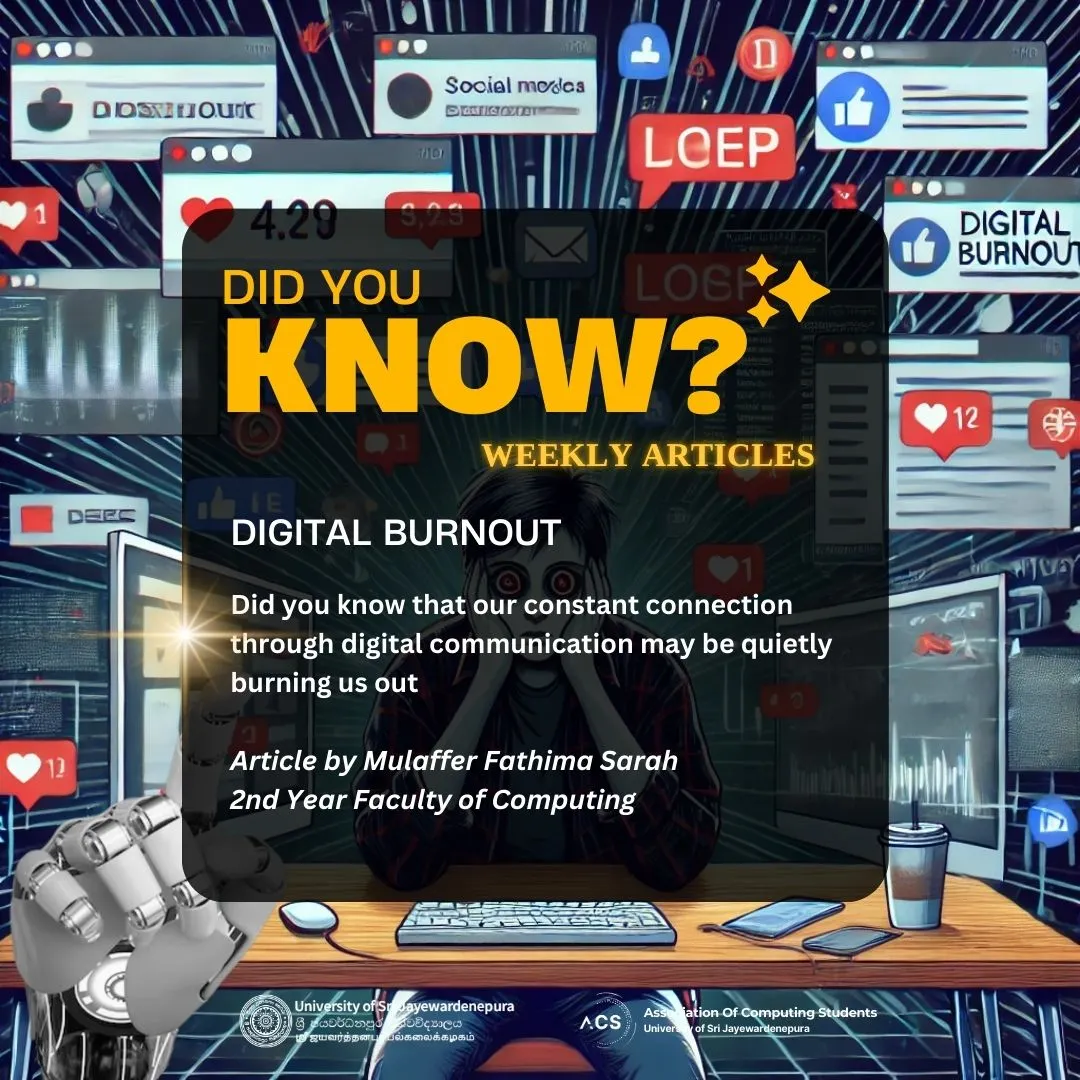
Why does everything feel so urgent in our lives?

You get a message.
You do not reply right away.
Okay cool, but why does it feel like you did something wrong?
Maybe the message sits there for a while. Maybe you read it through the notification and think you will respond later. See, now you start to feel a very quiet pressure. Not because the message is really urgent but because it feels like you should answer it immediately.
Addictively, this feeling is becoming normal in our lives. A minute turns into two hours to two days or even worse, two months!
There was a time when urgency meant something like a phone call late at night, a sudden knock at the door or even a deadline coming up. Urgency meant something needed attention — just at the right time and right away, not all the time and right away.
Now urgency is everywhere. Listen, as absurd as it sounds, it is true.
For example, urgency shows up when a notification pops up. A red badge also shows up. A message changes to “seen.” And let’s not even forget that social media platforms want you to respond, check or react as soon as you see something.
See in my opinion, these are not emergencies even though they feel like they might be. I blame technology. Technology did not just make communication faster for us, it also changed how urgent our lives are and how our attention works.
Most systems today want your attention away. That’s why notifications are bright, sounds are distinct and unread counts are highlighted in colours that grab your attention. Urgency is not just information anymore. It’s literally the design meant to hold you captive. The goal is not just to tell you something happened. The goal is to make you feel like you should act on it like NOW!
Over time, this changes how you move through your day, your month and your year. Instead of deciding when to give our attention, we start reacting to when it’s requested. The difference is small, but it adds up.
You check a notification while working because it might be important. You reply quickly because leaving someone waiting feels uncomfortable. You glance at your phone for a moment because something might need your attention.
Little by little urgency stops being situational because it starts being constant. What makes this shift complicated is how it affects relationships. The technology creates signals. You interpret them.
A message that is not answered quickly can feel loaded with meaning. Did they see it? Are they ignoring you? Did you say something? When none of those things are true, the system around you encourages those thoughts.
Read receipts. Typing indicators. Online status. These features were meant to make communication feel more connected. They also changed expectations. You started measuring attention by response time. Has it not? Be truthful.
Get Association of Computing Students (ACS)’s stories in your inbox
Join Medium for free to get updates from this writer.
Replying quickly can feel like consideration. Delayed responses can feel like distance. Silence can feel heavier than it is.
The system has been successful in making us forget life outside this screen exists. We’ve forgotten that most people are just living their lives- working, resting, thinking or not in the mood to reply. Digital communication just makes these pauses more visible. And once these pauses are visible, they become interpretable.
The result is an emotional pressure. You might reply sooner than planned just to avoid seeming distant. You might feel guilty for not answering away even when nothing urgent is happening. You might check messages again and again just to make sure you did not leave something waiting.
It’s not that people became more impatient. It’s that the systems you use reshaped what “normal” communication looks like.
This pressure does not stay inside messaging apps. It spills into work, friendships and daily life. Being reachable turned into being available. Being available turned into being “expected”.
You answer emails faster. You check updates often. You keep conversations going even when you’re tired. Rest starts to feel uncomfortable like you might be missing something.
The strange part is that few things are actually urgent. Trust me on this. Urgency, once introduced often enough, becomes something you carry within you — all the time. When the notification is not there, the expectation is. You begin to anticipate it. And it kills you quietly and slowly along with the meaning for your relevant relationships.
When everything feels urgent, something else fades: your ability to decide what truly deserves urgency.
Not every message needs a reply. Not every notification deserves to interrupt rest. Not every update is important enough to shift focus.
When systems signal urgency, constantly distinguishing between what matters and what does not, becomes harder. The pressure is quiet. It does not feel dramatic. It’s like background tension that follows you through the day.
A small sense that something might be waiting. A feeling that you should probably check.
I must agree on this though: fast communication can be helpful, meaningful and even comforting. Being able to reach someone quickly has value. But it still is worth noticing how easily urgency has expanded beyond its purpose.
When everything demands attention now the concept of “now” loses meaning. When urgency becomes constant you stop questioning whether something actually needs it.
Maybe the important question is not why technology feels so fast. Maybe it’s why everything started feeling urgent.
Take a step back and ask yourself,
“Did we ever decide for it to be this way?”
Article by: Sarah Mulaffar
22/23 Batch
Faculty of Computing
University of Sri Jayewardenepura