Enhancing the Business Capabilities Through SAP Integration

SAP is a potent tool that may completely alter how a company does business. It can accommodate a wide variety of processes and their variants right out of the box and is extremely flexible. But it still isn’t able to do all tasks. For effective company operations, SAP integration with non-SAP systems is often necessary.
This is true since SAP serves as the enterprise’s nerve center and has the data that other apps would need to access. As a result, even while other programmes are used, SAP continues to be the key component of every customer’s IT environment.
Empowering With SAP Integration
It is crucial for other apps to communicate with SAP in the present age of the digital economy.
Typically, SAP contains consolidated data that is utilized for operations, supply chain, financials, and planning. When additional programmes are integrated with SAP, information is exchanged, allowing the apps to operate more effectively.
Additionally, SAP contains a number of established checks and business rules in addition to the organization’s core master and transaction data. Rebuilding the same in the other application serves no use.
Business Cases: Why Indulge in SAP Integration?
There are several business scenarios where SAP requires integration with other programmes. Let’s examine a few of the most well-known:
Integration of SAP with Customer Relationship Management (CRM)
Get Advantco International’s stories in your inbox
Join Medium for free to get updates from this writer.
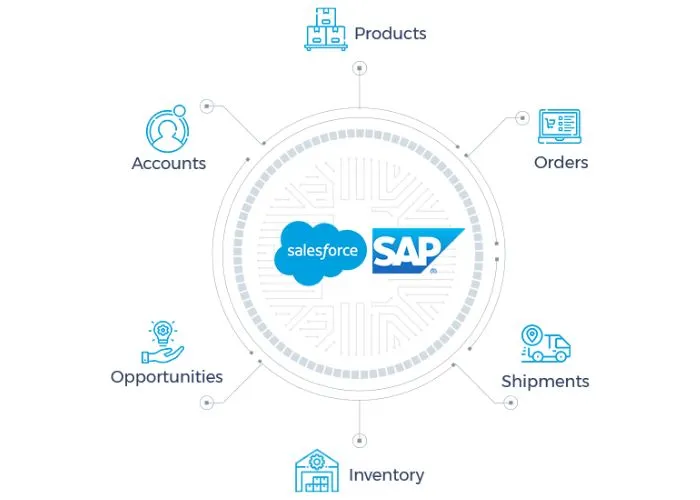
Salespeople require an SAP connection with a CRM so they can access inventory, price, and client data from the ERP to help them create precise quotations. The SAP Salesforce integration offers a best-in-class API-led connection, which also fully automates the business operations it covers. Find out how SAP Salesforce connection may improve productivity and optimize your business operations.
Integration of SAP and digital commerce
The market for digital commerce and e-commerce is rapidly expanding. Companies are changing the ways they used to get orders in the past. When making purchases, even B2B clients want a B2C experience.
Users can seamlessly integrate their systems with Magento, Shopify, WooCommerce, BigCommerce, and other e-commerce platforms using SAP on AWS to achieve automated data and process synchronization between the applications.
Integration of the Mobility Solution with SAP
Data is portable, thanks to mobile apps. Even if SAP Fiori is a fantastic solution for SAP customers, there is a huge need for hybrid apps that can communicate with both SAP and non-SAP applications and provide a better user experience.
This information flow may be smoothly automated between the apps by using SAP kafka integration real-time connectivity for SAP.
On the other hand, these third-party programmes need data from SAP since it possesses the necessary data for them to operate correctly.
Conclusion
SAP integration frameworks are increasing the capabilities of SAP Corporate One in response to changing business demands by using best practice scenarios and a range of use cases. We’ve highlighted a few of the key features of the SAP integration architecture and how they might help businesses.
Are you interested in learning how SAP integrates software tools? Call us right away! Advantco, an SAP implementation partner, has helped several clients combine SAP Business One with other products.