How to Choose the Right Fiverr Clone Script for Your Startup in 2026


Summary
Choosing a Fiverr clone script is a business decision that can influence your startup’s launch, customer experience, costs, and future growth. Before selecting software, founders should consider their niche, monetization model, buyer and seller experience, payments, customization, security, administration, scalability, and ongoing support. This guide explains what to look for when comparing Fiverr clone software and choosing a practical foundation for a growing freelance marketplace.
Launching a freelance marketplace sounds straightforward. You bring buyers and freelancers together, let people list and purchase services, and earn through commissions or other revenue streams.
The reality is more involved. Once your marketplace starts getting users, you also need to think about payments, seller management, orders, reviews, disputes, customer support, security, and growth.
That makes choosing a Fiverr clone script an important business decision. You are not simply buying software. You are choosing the foundation on which your marketplace will operate.
For a startup, the right choice can help you launch faster and use your development budget wisely. The wrong choice can leave you with software that is difficult to customize, expensive to maintain, or unable to support your plans.
So, what should you look for before making the decision?
Start With Your Business Idea
Before looking at software demos, get clear about the marketplace you want to build.
Are you planning a general freelance platform similar to Fiverr, or do you want to focus on a specific group such as designers, developers, writers, marketers, translators, or business consultants?
This distinction matters.
A niche marketplace may need different categories, filters, seller information, pricing options, and workflows than a general platform. Your technology should support that difference rather than forcing you into a fixed structure.
Think about your target users, the services they will offer, how buyers will find those services, and how your platform will make money. Once these decisions are clear, evaluating Fiverr clone software becomes much easier.
Don’t Choose Based on Appearance Alone
A polished interface can make software look impressive, but it does not tell you how well the marketplace will work.
Try to follow the complete customer journey.
What happens when someone searches for a service? How easily can they compare sellers? Can they contact a freelancer before ordering? What happens after the order is placed? Can the seller manage the work without confusion?
Then look at the process from the seller’s side.
Creating a service should be simple. Managing orders, communicating with buyers, tracking earnings, and building a profile should not feel like administrative work.
A good Fiverr-like marketplace needs to work smoothly for both sides because neither buyers nor sellers will stay on a platform that creates unnecessary friction.
Look Closely at Payments and Monetization
Payments are one area where marketplace software needs to do more than provide a checkout page.
Your platform may need to handle buyer payments, seller earnings, commissions, refunds, transaction records, and other financial activity.
You also need to think about how the business will make money.
Commission fees may be your starting point, but you could later introduce seller subscriptions, featured listings, promotional services, or other paid options. Your software should give you enough flexibility to develop your monetization strategy as the business grows.
Do not choose a platform simply because it supports your current revenue model. Consider where you may want the business to go next.
Customization Matters More Than You Think
Your goal is not to create another website that looks identical to every other freelance marketplace.
Your marketplace needs its own brand, positioning, categories, pricing structure, and customer experience.
That is why customization should be one of the first things you discuss with a software provider.
Find out what you can change. Can you customize the design, categories, commissions, user experience, notifications, and marketplace settings? Can new features be added when your requirements change?
This matters because your first version will not be perfect.
Once real users start interacting with your marketplace, you will learn what works and what needs improvement. Flexible software makes it easier to respond to those lessons.
Think Beyond Your Launch
Your marketplace might start with 50 sellers and a few hundred users. If things go well, those numbers could change quickly.
The software needs to handle that growth without becoming a bottleneck.
Get Alex Levi’s stories in your inbox
Join Medium for free to get updates from this writer.
Scalability is not only about handling more visitors. It also means being able to add new categories, markets, users, services, integrations, and administrative processes without constantly rebuilding the platform.
This is one reason founders should think beyond the first six months when choosing a freelance marketplace script.
You do not need every future feature on day one. You do need a foundation that will not hold your business back later.
The Admin Side Deserves Your Attention
Founders often spend most of their time looking at the customer-facing website. That makes sense, but the admin experience can have a major effect on your day-to-day operations.
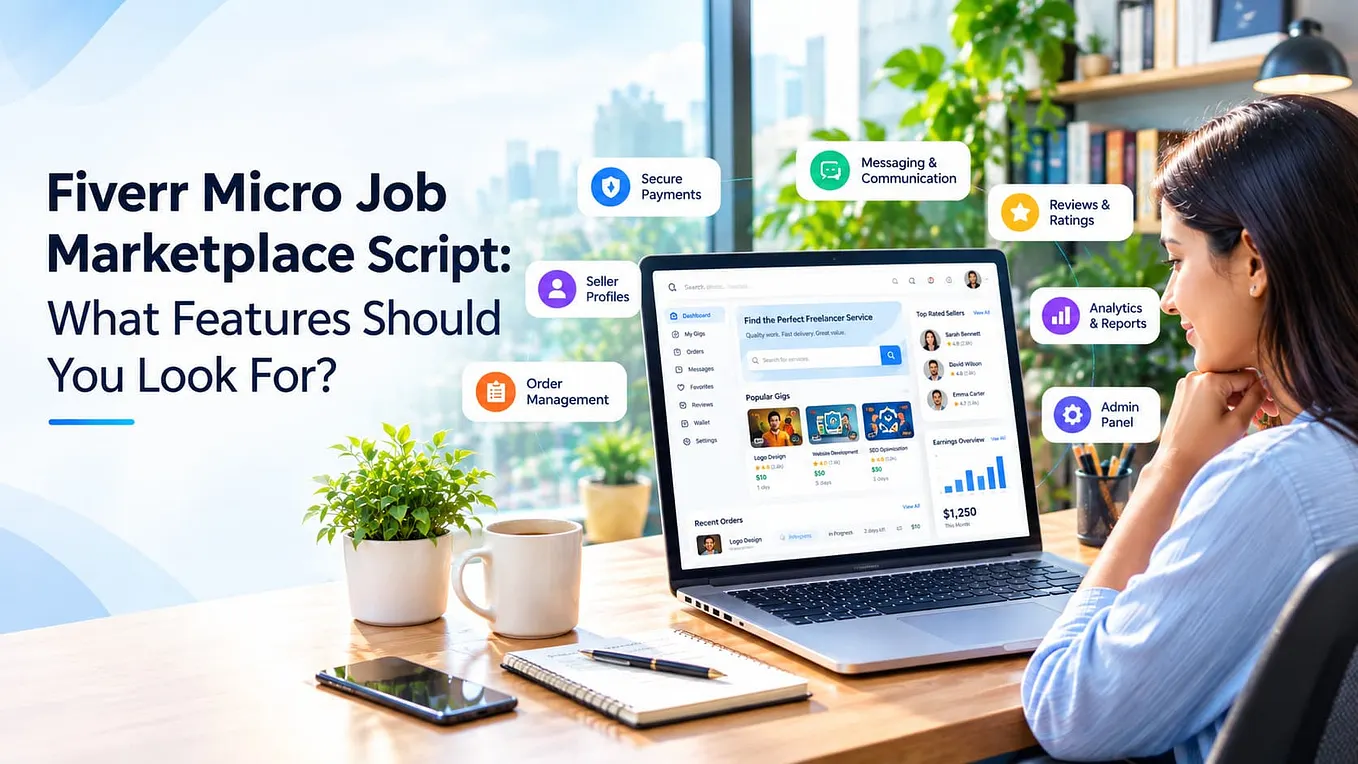
As the marketplace grows, someone needs to manage users, sellers, services, categories, orders, payments, reviews, disputes, and platform settings.
If those tasks are difficult to manage, your team will spend more time handling routine operations.
A strong admin panel should give you visibility and control without making every small change dependent on a developer.
Trust Is Part of the Product
People will only use your marketplace if they feel comfortable doing business there.
Buyers need confidence that sellers are genuine and that they can get help if something goes wrong. Sellers need confidence that buyers and payments can be trusted.
Your platform should therefore support features and processes around reviews, reporting, user management, disputes, and moderation.
Security also deserves attention. Ask the software provider how updates are handled, how security issues are addressed, and what support is available after launch.
Trust is not something you add after the marketplace becomes successful. It needs to be considered from the beginning.
Ready-Made or Custom Development?
Building a marketplace from scratch gives you complete control, but it can also require more time, development resources, testing, and investment.
For many startups, a ready-made Fiverr clone script offers a practical alternative. Instead of starting every marketplace function from zero, you begin with an existing foundation and customize it around your business.
That can allow you to put more of your energy into the parts that determine whether the marketplace succeeds: finding the right niche, attracting good sellers, bringing in buyers, building trust, and creating a reason for people to return.
The important part is making sure the ready-made software is flexible enough for your requirements.
Don’t Let a Long Feature List Make the Decision
More features do not automatically mean better software.
A platform can have dozens of functions that your startup never uses. What matters is whether the features you need work well together.
Look at the basics first. Can users find services easily? Can sellers manage orders? Are payments handled properly? Can you control commissions? Can you manage disputes? Can your team run the marketplace without unnecessary technical involvement?
Once the core experience is solid, you can add more capabilities as your users and business model develop.
Consider the Real Cost
Price is important, but the purchase price is not the whole cost.
Think about customization, hosting, maintenance, integrations, upgrades, technical support, and future development.
A cheaper solution can become expensive if every modification requires significant development work. Likewise, a higher initial investment can make sense if it gives you greater flexibility and reduces future limitations.
Look at the total cost of running the platform, not just the amount you pay to get started.
The Best Choice Is the One That Fits Your Business
There is no single best Fiverr clone script for every startup.
The right choice depends on your niche, audience, revenue model, budget, technical requirements, and growth plans.
Before making a decision, test the software from both sides of the marketplace. Search as a buyer. Create a service as a seller. Look at the ordering process. Explore the admin panel. Ask questions about customization, payments, security, support, and future development.
Those practical checks will tell you far more than a feature list.
Final Thoughts
Choosing Fiverr clone software should be approached as a business decision rather than simply a technology purchase.
Start by understanding what your marketplace is trying to achieve. Then look for software that can support the customer experience, seller operations, monetization strategy, administration, and growth you have in mind.
You do not need to build everything at once. You need a reliable foundation that lets you launch, learn from your users, and improve the marketplace as demand develops.
For founders planning to build a Fiverr-like marketplace in 2026, that flexibility can be far more valuable than simply having the longest list of features.