A Lantern, Not a Searchlight
How to build a conflict early-warning system that helps people, and refuses to become surveillance. A framework from Sri Lanka.

In 2018, the warning was already on the screen.
In the weeks before mobs moved through Ampara and then Digana, attacking Muslims, their mosques and their businesses, the signal was visible to anyone watching. Researchers later documented a rise in anti-Muslim content across hundreds of accounts just before the violence. Civil society had been warning Facebook since 2013. Facebook eventually apologised, admitting that hate speech and rumours on its platform may have led to offline violence.
So the problem was never that nobody could see it coming.
The problem was that Facebook was moderating an entire language, Sinhala, with two people. Reported posts stayed up for days. And nobody who had the standing to calm a town acted in time. The failure was human. Which means the fix is human too. That single idea is what this piece is about.
A short word on where I started

I build a live dashboard for Sri Lanka called CeylonPulse. One part of it, Sentiment Watch, tracks Reddit threads, news headlines and the general mood of the internet here. The idea seemed obviously good when I began. If a country’s anger becomes visible online before it reaches the street, surely a machine that watches that anger can warn us.
I still believe a version of that. But I spent a long time reading the research on conflict early warning, and I came out less certain and, oddly, more useful. What follows is not really about my dashboard. It is about the thing I think any of us should build instead, and the framework I now use to keep it honest. I am putting it here because Sri Lanka has smart people working on peace, cohesion and technology, and because I would rather have this argued with than admired.
Why prediction is the wrong goal
Here is the part that no one selling you an AI early-warning system will say plainly.
Violence is rare. That is a good thing, and it wrecks prediction. If you build a model to forecast whether a riot will happen in a given town in a given week, the honest answer, almost always, is no. A model that simply says “no conflict, everywhere, always” will score impressively on the standard accuracy charts. It has learned nothing except that most places, most of the time, are calm.
The field knows this. The systems we have are reasonably good at telling chronically violent places apart from stable ones. They are poor at catching new outbreaks in places that were quiet. And because the event is so rare, the models over-predict. They cry wolf. There is even a formal result from 2026 showing that for rare violent outcomes, with base rates of a few percent, a tool can look strong on paper and still be wrong most of the times it raises a flag. You cannot recalibrate your way out of it. The wall is made of statistics, not bad engineering.
So when a product promises to predict the next Digana, it is promising something the science cannot deliver. Worse, every false alarm has a cost. Tell a district that trouble is coming, be wrong, and you have spent trust you cannot easily earn back. Be wrong in a way that names a community, and you may have started the very thing you claimed to prevent.
Prediction is an output. Peacebuilding is a relationship. These are not the same work.
The trap hiding inside a good intention
Now the harder problem, and the one I think matters most for Sri Lanka.
Think about what a tension monitor actually watches. Grief. History. Land disputes. Caste. Religion. Youth anger. Say those words slowly, because they are also the exact texture of legitimate minority grievance and ordinary political dissent. A system that scores communities by their mood is not far from a system that finds the people a state might want to watch.
This is not hypothetical here. The Sri Lankan state has both taken measures against disinformation and, at the same time, used these same platforms to intimidate opposition and push ethno-nationalist narratives. Country reporting has documented authorities monitoring Tamils, Muslim activists, journalists and NGOs seen as threats. In that context, the real danger of a peacebuilding dashboard is not that it fails. It is that it works, and is then quietly repurposed. A mood-monitor is one procurement decision away from becoming a minority-surveillance tool.
I do not think the answer is to stop. If people who care stop building, the monitoring does not stop. It gets done by platforms with two moderators, or by a security apparatus, or by nobody at all. The answer is to build the tool so that it is useless for hurting people. That is a design problem, and it is solvable.
The reframe: patterns, not people. Narratives, not communities.
So drop the fantasy of the crystal ball and pick up something smaller and real.
Get Anjula Weeranayake’s stories in your inbox
Join Medium for free to get updates from this writer.
A good system does not predict violence. It detects and tracks dangerous rumours and hateful narratives faster than a human team could alone, measures how quickly they are spreading and whether they are jumping between communities, and hands the verified ones to people who can respond without force. Detection and triage. That is where AI genuinely helps, and it is exactly the gap that 2018 exposed.
Two rules keep this on the right side of the line.
The first is patterns, not people. The system should hold no profiles of individuals. It should work on public content only, strip out names and identifiers before anything is stored, coarsen locations to the district level, and report trends rather than timestamps. Build it this way and even someone who seized the whole database could not use it to find or target a person. Privacy stops being a policy you promise and becomes a wall you cannot walk through.
The second is narratives, not communities. The system assesses rumours, behaviours and tensions. It never turns an ethnicity, a religion, a caste or a region into a risk label. There is a sharp distinction here that I want to make unmissable. Tracking a rumour that targets a group is protective. Scoring a group as a source of risk is persecutory. One defends a minority. The other profiles it. And there is a technical sting in the tail: when a group is already over-observed, its recorded risk factors inflate, so profiling a minority is not only wrong, it is predictably inaccurate against them. In a country with our history, this distinction is the whole game.
The framework: LANTERN
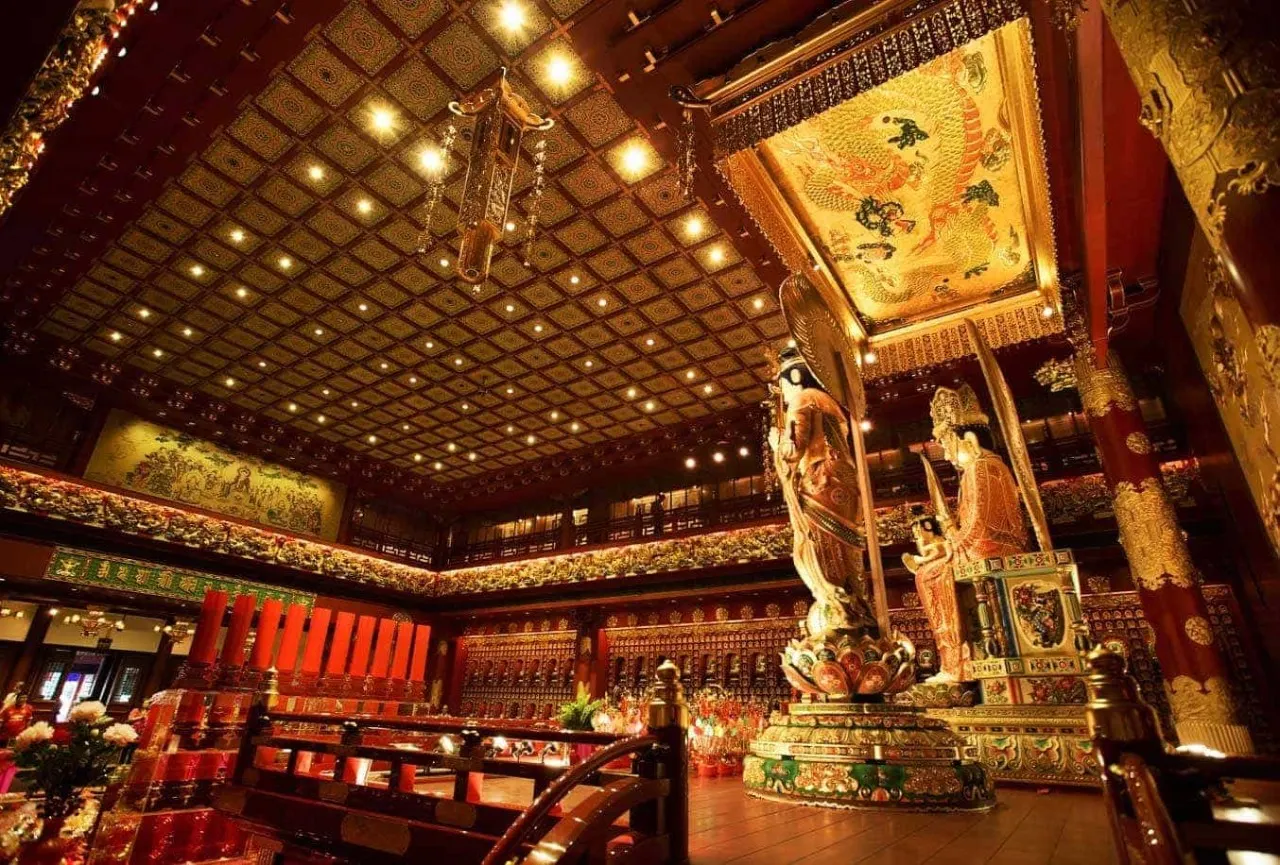
I needed a way to hold all of this in one hand, so I gave it a name. I call it LANTERN. The image is deliberate. In Sri Lanka the Vesak lantern gives light and warning, and it has never once been a weapon. That is the entire design philosophy in a single object.
L, Local ownership and governance. The system is steered by a representative coalition drawn from across communities and regions, including minorities, not by one person or one institution. Legitimacy comes from who governs it, not how clever it is.
A, Aggregate, never identify. Public sources only. Redaction at ingestion. No individual profiles. Aggregation thresholds so nothing surfaces unless enough separate sources show it. Coarse geography. The system sees patterns, not people.
N, Narratives, not communities. It watches rumours, behaviours and tensions, and it never labels a group as a threat. It tracks a rumour aimed at a community, never a community as a risk.
T, Transparent and explainable. Every alert carries a plain-language card. What changed, where the signal came from, how confident the system is, what the innocent explanation might be, what data is missing, and what a human should check. Every signal can be contested. The method is published.
E, Early, non-violent action. Signals connect to peacebuilding responses. Fact-checking, dialogue, trusted messengers, media literacy, humanitarian preparedness. Never policing, never suppression, never security targeting. Detection with no non-violent response attached is not the goal, it is just a heatmap of anxiety.
R, Rigorous uncertainty. The system quantifies and shows how little it knows. It never says conflict will happen. It says these signals may indicate rising tension and need human interpretation. False confidence is treated as a harm, not a feature.
N, Nurtured by human validation. No signal becomes an alert without a trained, representative human reviewer who holds the context the machine cannot. The AI is the fastest link in the chain, and the weakest. Humans own every decision that has a consequence.
Each of these maps cleanly onto the principles in UNESCO’s 2021 Recommendation on the Ethics of Artificial Intelligence, which is useful when you need to explain to a funder or a summit why a smaller, slower, more constrained system is the responsible one. Human oversight. Privacy. Transparency and explainability. Fairness and non-discrimination. Proportionality and do no harm. The framework is not a rejection of those standards. It is an attempt to make them buildable by someone working with a laptop and a conscience.
What this looks like in practice
You do not need to build everything at once. You need to build something useful, safe and small.
A first honest version watches public news and Reddit across Sinhala, Tamil and English. It clusters what is being discussed. It tracks rumours and shows how fast they are spreading. It plugs into a fact-checking feed. It shows a coarse regional map, an explainable alert card with the uncertainty always visible, and a human reviewer’s note attached to anything it surfaces. It holds no profiles and labels no communities. That is enough to be worth something, and constrained enough not to cause harm while you learn.
The hard, unglamorous part is not the model. It is the human interpretation layer. Native speakers who know the difference between a coded slur and a reclaimed one. Reviewers from the communities the system claims to serve, not just from the capital. A living dictionary of local tropes, like the sterilisation-pill rumour that has recurred here for over a decade, kept current by people who recognise it on sight. This is slow, relational, and impossible to automate. It is also the actual peacebuilding. The dashboard just helps people look.
And measure yourself honestly. In a problem where the dangerous event is rare, your most important number is not how many threats you caught. It is how few false alarms you raised. Every false alarm spends trust and risks inflaming the very thing you meant to cool. A system that cannot admit its own uncertainty has no business being pointed at a country’s grief.
The line I keep coming back to
I set out to prove that AI could see conflict coming. What I actually learned is that the machine is bad at seeing the future and quite decent at seeing the present, if you point it at the right thing and keep a human’s hand on it.
The real early-warning system was never the algorithm. In 2018 the warning was already there, on the screen, for anyone who cared to read it. The system that failed was the human one that could have translated it, believed it, and acted. That is the part worth fixing.
So here is the image I will keep using, because I think it decides everything. A lantern lights the path for the people walking it. A searchlight hunts for someone in the dark. The technology can be almost identical. The difference is who holds it, and who they are looking for.
I am trying very hard to build a lantern. If you are working on peace, technology or governance in Sri Lanka, or anywhere with a difficult past and a wired-up present, I would rather hear where I have this wrong than be told I have it right. So tell me. What did I miss?