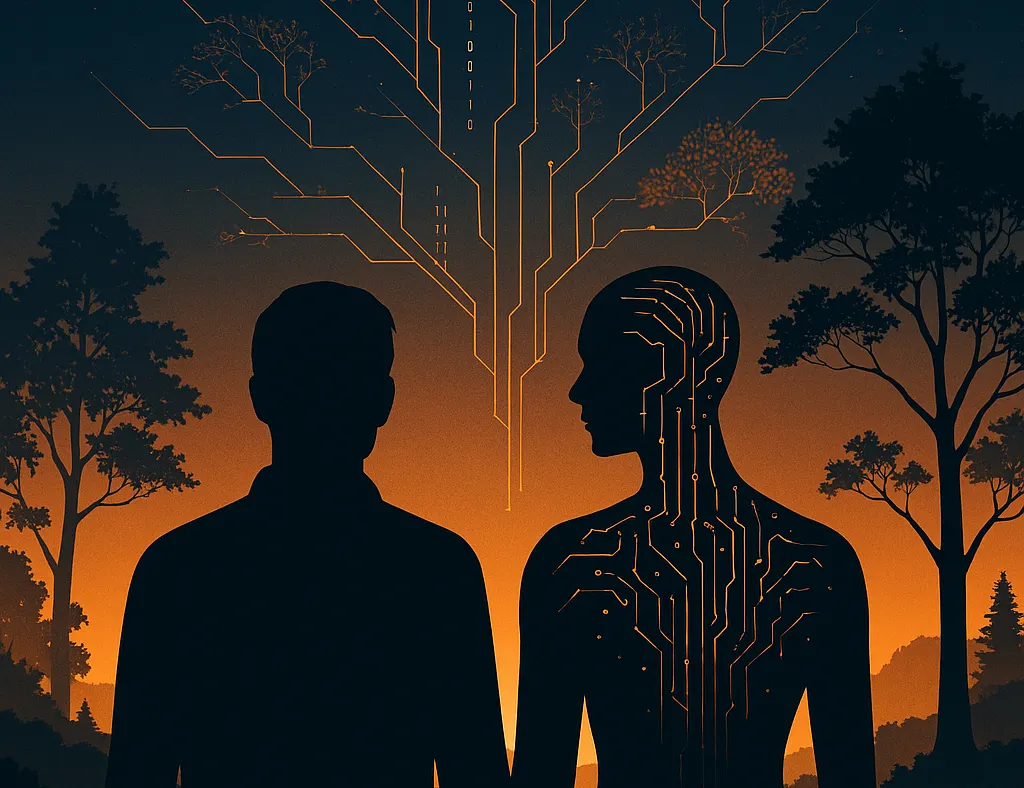
Unpacking the Ending of 404 Error Not Found (2011): Was the Ghost Real or Imagined?

A psychological thriller that blurs the line between reality, delusion, and guilt — long after the lights go out.

404 Error Not Found is a 2011 Indian psychological thriller directed by Prawaal Raman. The film takes place in a medical college where a brilliant student, Abhimanyu, insists on staying in a dorm room rumored to be haunted by the spirit of its previous occupant, Gaurav, who died by suicide.
As Abhimanyu settles in, strange occurrences begin to unfold. But what starts as a skeptical defiance of superstition soon turns into a disturbing descent into paranoia and hallucination. Overseeing this spiral is a professor with his own moral blind spots — one whose fascination with the human mind may go further than ethics would allow.
404 isn’t concerned with proving or disproving ghosts. Instead, it explores how far the human mind can be pushed before it begins to unravel — and how guilt can trigger a breakdown far scarier than any haunting.
Some films scream. 404 Error Not Found whispers — and then crawls under your skin. This 2011 psychological thriller isn’t just about ghosts or grief; it’s about the fragile boundary between reality and delusion. And when the credits roll, one question lingers like static in the mind: Was the ghost ever real — or just a reflection of madness?
In this breakdown, we’ll unpack the ending, the clues that lead to it, and why 404 might be more tragic than terrifying.
The Professor: A Mind Fractured by Guilt
Dr. Anirudh, the professor at the center of the experiment, is more than a cold academic — he’s deeply human, flawed, and morally ambiguous. He pushes the boundaries of psychology by isolating Abhimanyu to prove that ghosts are nothing but figments of guilt and unresolved trauma.
But the experiment isn’t clinical — it’s personal. His own wife reveals that the professor has a history of bipolar disorder, adding a layer of vulnerability beneath his rigid exterior. This isn’t just science; it’s obsession. And when things spiral, it’s not just Abhimanyu who begins to unravel.
The Diary and the Ghost That Took Form
Abhimanyu is haunted by Gaurav, a student who previously lived in the same room and died by suicide. But here’s the key detail: Gaurav’s ghost only begins to “speak” to Abhimanyu after he discovers and reads the dead boy’s personal diary.
Get Anshuman Pandey’s stories in your inbox
Join Medium for free to get updates from this writer.
Before that, the ghost is passive — glimpsed in mirrors, silent, distant. But once the diary is opened and absorbed, the ghost becomes vivid, talkative, and deeply personal. This suggests that Abhimanyu isn’t communing with a spirit — he’s constructing one, piece by piece, through Gaurav’s words and pain.
Shared Madness or Fractured Mind?
The turning point in 404 comes when the professor walks into Abhimanyu’s dorm room and sees his lifeless body. But here’s the twist — before this, we’re shown that he meets Abhimanyu in the corridor, has a full conversation with him, and is led into the room by him. This moment seems to confirm that Abhimanyu’s ghost is real, that he’s returned to confront his teacher one last time.
But what if that’s not the full story?
Given what we know about the professor’s deteriorating mental state — hinted at by his wife and evident in his obsession — it’s entirely plausible that this scene is not unfolding in objective reality. It’s possible the professor walked into the room alone, found Abhimanyu’s body, and in a surge of guilt, horror, and psychological collapse, reconstructed the moment in his mind to include a final encounter — one that never actually happened.
This doesn’t invalidate the scene — it reframes it. What we’re seeing could be a memory corrupted by trauma, or a hallucination shaped by overwhelming guilt. In this reading, the “ghost” is not supernatural at all — it’s the professor’s fractured psyche giving him one last confrontation he couldn’t face on his own.
Conclusion: The Real Horror of 404
So… was the ghost real?
Not in the traditional sense. The film leans heavily on psychological realism — hallucinations created by isolation, emotional instability, and obsession. But that doesn’t make it less terrifying. In fact, it’s more disturbing to consider that what we fear most might already be inside us — just waiting for the right conditions to surface.
In the end, 404 Error Not Found isn’t about the supernatural — it’s about the void left behind when truth is too painful to process.
A ghost is just data. Guilt is the glitch that brings it to life.
What’s your take on 404 Error Not Found? Was it all in their heads — or was there something more?
Let me know your interpretation in the comments.