How AI Driven Development Pipelines Could Evolve with Project Prometheus

Artificial intelligence is rapidly transforming the way software teams plan, build, test, and deploy applications. In this shifting landscape, the concept of project prometheus has emerged as a possible blueprint for the next generation of automated development pipelines.
Although the initiative has not been released publicly, the ideas associated with it represent a major step forward in how AI could influence end to end software production.
This blog explores how these potential capabilities may evolve, what they might mean for tech leaders, and how developers can prepare for an AI supported engineering future.
Understanding the Shift Toward AI Driven Development
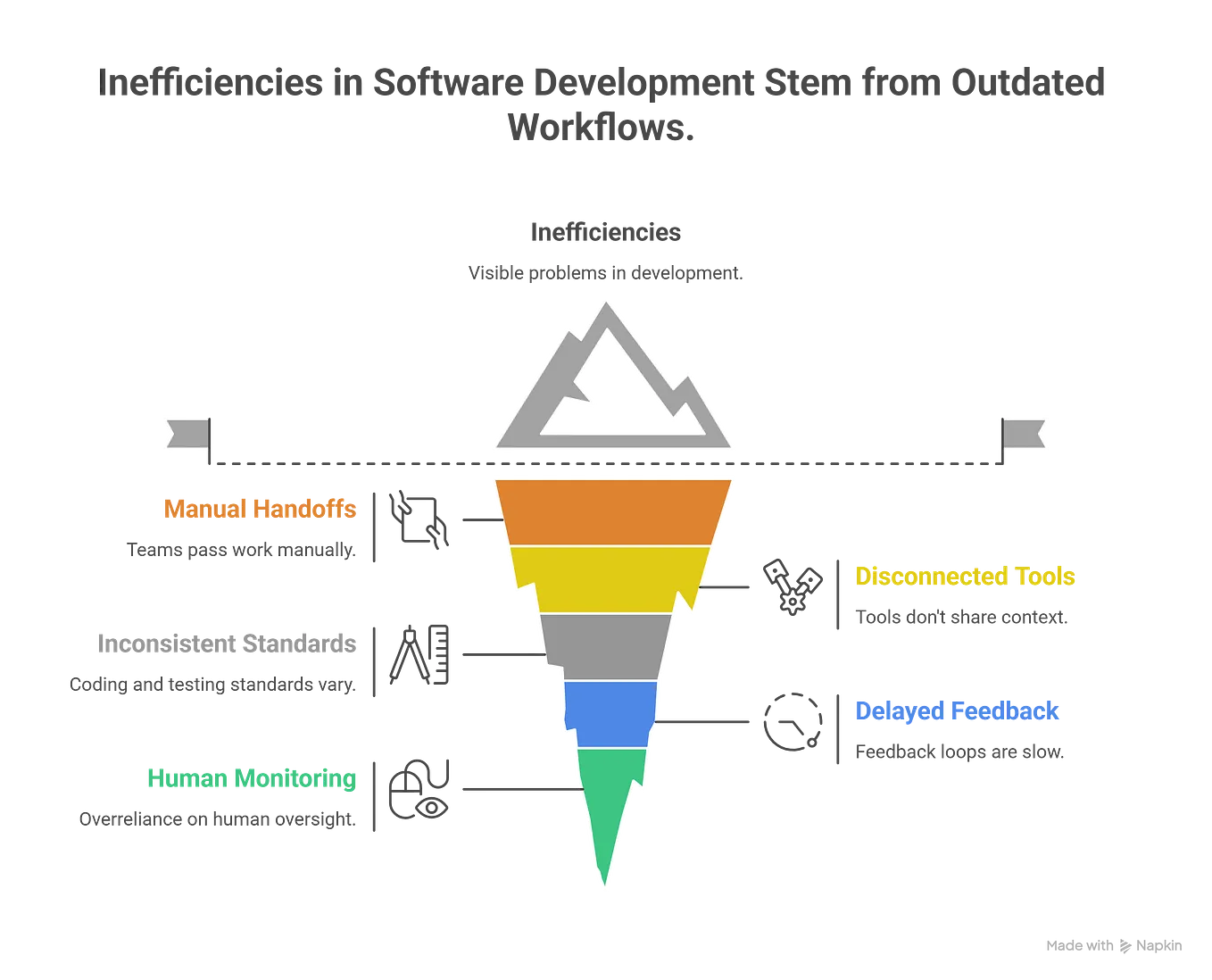
In the past decade, development pipelines have steadily evolved from simple version control systems into complex ecosystems that manage code quality, security, integrations, cloud provisioning, and automated deployment. Traditional DevOps methods improved speed and efficiency, but many organizations still face bottlenecks related to testing, environment setup, debugging, and workload balancing.
Artificial intelligence now promises to remove many of these friction points. AI enhanced development environments can already generate code snippets, identify bugs, suggest optimizations, and automate parts of the quality assurance process. As teams expand the use of predictive modeling, intelligent automation, and natural language programming, software creation becomes less about repetitive tasks and more about strategic architecture and long term planning.
This is where concepts like project prometheus become relevant. While not yet in the market, it serves as a vision for how AI might eventually orchestrate development pipelines autonomously. Instead of teams manually monitoring builds or switching between tools, the entire process could flow through a unified, intelligent engine that learns from every project executed through it.
How Project Prometheus Could Influence AI Powered Pipelines
If the core concepts behind Project Prometheus eventually take shape, they could significantly change what developers expect from modern toolchains. Future pipelines may be able to interpret intent, predict challenges, and optimize themselves without constant human intervention.
Here are some potential capabilities:
Adaptive Testing Depth
AI driven pipelines could automatically adjust testing coverage based on a project’s risk profile. High risk features may undergo deep testing, while smaller updates may pass through a lighter cycle.
Automated Code Refinement
Instead of developers manually tweaking small components, the system could rewrite certain lines of code to enhance security, performance, or efficiency before pushing them into staging.
Predictive Deployment Management
Future pipelines may detect deployment conflicts in advance, then recommend or execute alternative rollout strategies to avoid failures.
A key shift compared to conventional systems is that AI powered pipelines would not only execute tasks, but also interpret them. Models could understand developer intent, refine workflows automatically, and reduce the need for explicit, hard coded instructions. When implemented across large organizations, this could:
- Minimize engineering waste
- Shorten release cycles
- Increase the reliability of software products
Another major advancement could come from the integration of large scale analytics. Over time, intelligent pipelines might learn from historical deployment data to:
- Suggest improvements to architecture decisions
- Optimize team workflows and resource allocation
- Remove redundant steps from the delivery process
- Strengthen collaboration across departments
Together, these capabilities paint a picture of a highly efficient, adaptive, and intelligent development ecosystem that evolves with every project it handles.

The Future of DevOps with Project Prometheus
DevOps has always been about bridging the gap between development and operations. AI now acts as a multiplier for this mission. With influence from project prometheus, an AI supervised DevOps cycle could continuously refine itself based on real world performance.
Get Ava Isley’s stories in your inbox
Join Medium for free to get updates from this writer.
Other important points are as follows-
Predictive, Self Adjusting Infrastructure
Future AI supervised pipelines could identify infrastructure anomalies before humans even notice them. This would allow automated rollbacks without downtime, smarter deployment sequences, and optimized performance under varying workloads.
Intelligent Resource Management
Instead of relying on fixed scaling thresholds, learning algorithms could manage resources dynamically. Systems would anticipate traffic, adjust capacity, and maintain stability with minimal manual oversight.
Continuous and Contextual Security
Security scanning could evolve into a continuous, real time process. AI would analyze patterns, adjust scanning depth based on context, and identify potential threats faster than traditional tools.
Reduced Cognitive Load for Developers
AI supported DevOps would simplify the work environment for engineers. Instead of juggling dashboards and metrics, teams would receive summarized insights that highlight what truly matters. This allows experts to focus on complex challenges rather than repetitive operational tasks.
Human and AI Collaboration
This evolution does not aim to replace developers. The goal is a partnership where humans define strategy and AI automates execution. Together, human creativity and AI consistency form the foundation of the next phase of software engineering.

How AI May Shape the Role of Human Developers
One of the biggest questions surrounding AI driven pipelines is how they will affect developer responsibilities. Contrary to the fear that automation may eliminate roles, the reality is that new technologies often create new specialties.
In an AI enhanced development environment, engineers may spend less time writing boilerplate code and more time designing architectures, improving system resilience, and overseeing functionality. Junior developers might benefit from faster skill development because AI assisted feedback can provide continuous learning opportunities.
The rise of intelligent pipelines could also lead to specialized roles such as AI pipeline auditors, automated testing architects, pipeline behavior analysts, and AI systems integrators. These positions would ensure that automated systems behave ethically, consistently, and securely while supporting company goals.
As software teams continue to adapt, leadership will need to create policies that address transparency, accountability, and human oversight. A strong governance framework can help organizations balance innovation with safety.
Preparing Your Tech Team for the AI Pipeline Era
To adopt AI first development pipelines in the future, organizations must invest in foundational readiness today. This includes modernizing legacy systems, expanding cloud infrastructure, and strengthening internal documentation. Teams should also prioritize training developers on AI tools, automated testing methods, and continuous integration best practices.
Technical leaders should focus on creating modular architectures because AI powered pipelines perform best when working with components that can be isolated, analyzed, and deployed independently. Microservices, containerization, and API driven design will continue to play major roles in AI supported environments.
In addition, organizations may want to revise hiring strategies. For instance, when choosing to Hire website developer talent, teams should look for individuals with experience in cloud environments, automation tools, and integration workflows. These skills will be increasingly important as development ecosystems become more intelligent and interconnected.
Key Challenges That Must Be Addressed
While AI driven pipelines offer significant advantages, they also introduce new challenges. The first is ensuring transparency. When AI makes decisions about code or deployments, teams must understand the reasoning behind those decisions. This requires explainable AI models and clear visibility into internal logic.
Security is another major concern. Attackers could target AI systems to influence automated processes. Therefore, organizations must implement strong security protocols, regular audits, and continuous monitoring to prevent exploitation.
Another challenge involves managing bias. AI models trained on incomplete or inaccurate data may produce unreliable outcomes. Teams must ensure that training datasets are diverse, comprehensive, and regularly updated.
Finally, companies must consider the cost of implementation. While AI driven pipelines can reduce long term expenses, the initial investment may be significant. This includes infrastructure upgrades, training programs, and integration with existing systems.

Ethical and Governance Considerations for AI Based Pipelines
As intelligent pipelines become more influential, ethical and governance frameworks will play a crucial role. Teams must ensure that AI systems operate within legal and organizational boundaries. This includes respecting privacy laws, avoiding unauthorized data use, and ensuring that automated decisions align with company values.
Human oversight will remain essential. Developers and product managers must regularly review AI outputs and intervention logs. Establishing a human in the loop framework can help prevent unintended outcomes and promote accountability.
Organizations should also develop documentation standards for AI assisted processes. Clear guidelines help internal teams understand how automated systems function and how they can report or escalate issues. These practices build trust and encourage responsible AI adoption.
Real World Applications That Could Benefit from Intelligent Pipelines
AI enhanced pipelines will benefit many industries, especially finance, healthcare, eCommerce, and transportation, where secure and continuously updated software is essential. Automated workflows can reduce errors, strengthen compliance, and speed up innovation.
Companies that offer a software development service are likely to adopt AI driven pipelines early because automation improves code quality and helps avoid project delays. Large agencies and tech consultancies may also use these systems to streamline delivery and lower operational costs.
Mobile development will gain significantly as well. With the rise of cross platform frameworks, automated pipelines can reduce fragmentation, boost performance, and maintain consistency across devices. The growth of react native app development shows how automation supports faster and more reliable iteration cycles.
Looking Ahead: What the Next Decade Might Bring
Although AI driven pipelines are still evolving, the next decade promises major advancements in software automation. Systems inspired by project prometheus may integrate advanced reasoning, contextual understanding, and predictive modeling to orchestrate entire development lifecycles.
We can expect pipelines that learn from every build, adapt based on real world usage patterns, and optimize themselves automatically. This could lead to shorter development cycles, more resilient applications, and a global shift in how software teams operate.
Organizations that prepare early will be better positioned to leverage these breakthroughs. Investing in cloud modernization, automation tools, developer training, and ethical AI frameworks will create a strong foundation for future transformation. Teams that embrace experimentation and continuous learning will thrive in the AI first development era.
Conclusion
The evolution of AI driven development pipelines represents one of the most important shifts in modern software engineering. Although the concepts behind project prometheus are still emerging, they offer a compelling vision for the future. AI supported pipelines could streamline repetitive tasks, reduce operational complexity, improve software quality, and give developers more time to focus on innovation.
By preparing today, organizations can position themselves for a more intelligent and efficient tomorrow. As the industry continues to evolve, the partnership between human creativity and AI automation will define the next generation of digital products.