The Art of Protest: “Know Your Enemy” (feat. Maynard James Keenan)

Disclaimer: The views and interpretations presented in this article are entirely my own. This article is not written with the intent of either supporting or disparaging said artist. 100% human written, fuck Turnitin.
A very interesting social media phenomenon in recent history, particularly since Donald Trump occupied the Oval Office for the first time in 2016, has been the massive polarization between his supporters and everyone sane. This situation of ‘Us vs. Them’ has not even spared celebrities, who are at the risk of being ‘cancelled’ for their political views by either side, but in a humorous way has also exposed the way art is consumed by the masses.
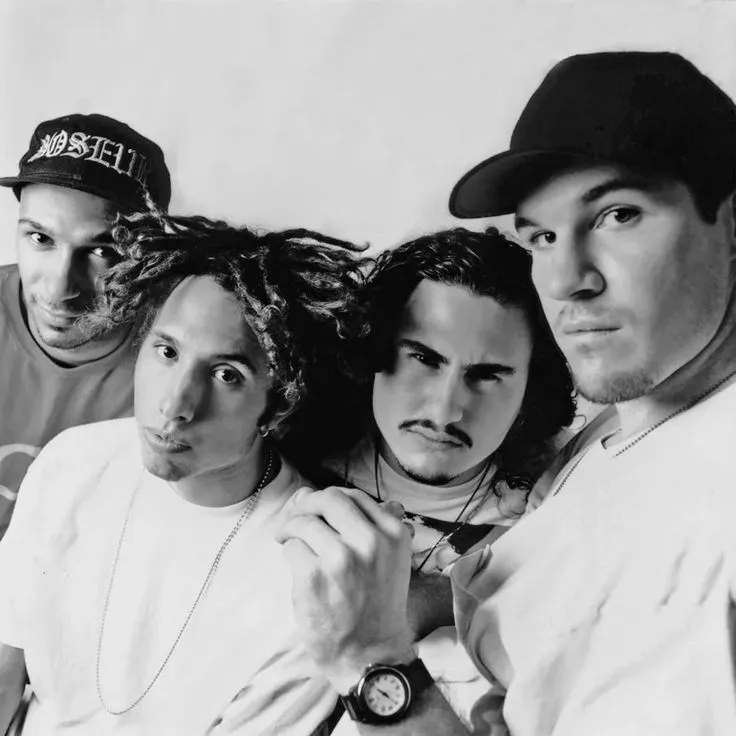
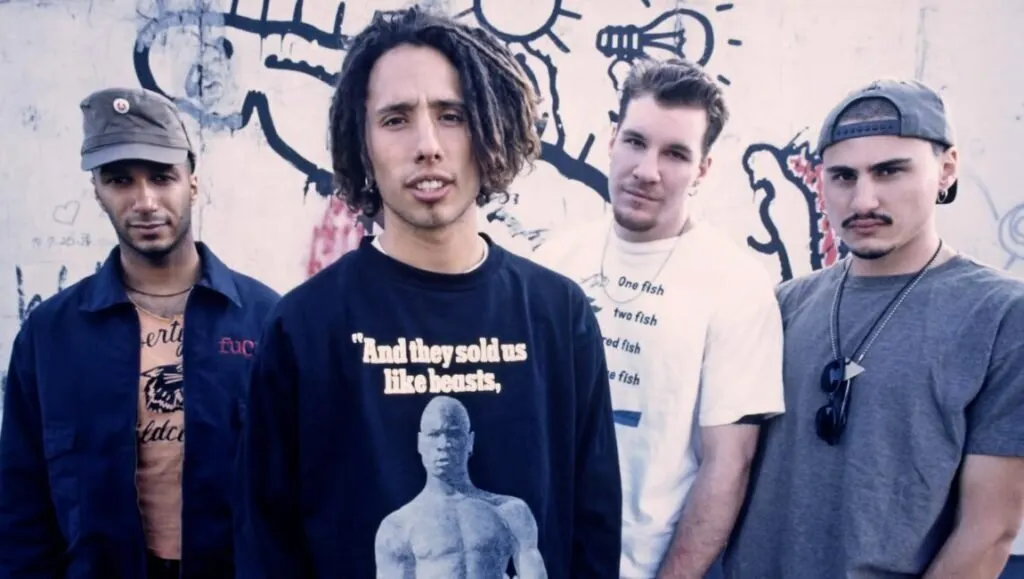
L.A. rock band Rage Against The Machine have been one of the prime targets who have been accused of becoming ‘too political’ and frequently admonished by Trumpers to ‘just stick to the music’. Such discourse has left everyone else perplexed and in stitches at the same time because to anyone paying attention, RATM’s band identity is very obviously rooted in their firebrand left-wing activism. But hey, I’m not complaining as the ignorance of Trumpers is the gift of memes that keeps on giving, see below:
So today I want to go back right to the start, and delve deeper into the band’s music and ideology from their first album — self titled Rage Against The Machine. While the album’s best known for the band’s debut single — “Killing In the Name” which instantly shot them to fame and success, the entire album is brimming with brilliance. The song I want to cover today is a hidden gem, a standout track which became a smash hit despite never even being released as a single — this is “Know Your Enemy”.
Song Background
“Know Your Enemy” is the sixth track on RATM’s debut album released in 1992. As always, the music is composed by all four band members with frontman Zack de la Rocha taking the charge on lyric writing. The song title seems to reference the popular Sun Tzu quote from his classic military strategy book “The Art of War” — “Know the enemy and know yourself; in a hundred battles you will never be in peril”.

“Know Your Enemy” starts off low and slow with a searing guitar lick and a throbbing bass intro, then comes in Morello’s electrifying guitar riff and the energy shifts. The song turns into a raging punk banger with high voltage action between the riff and the rhythm section. I particularly love just how hard Brad Wilk hits the drums on this one. He always does it, but that jolt from his cymbals right before the chorus brings the song to life. As usual, Zack de la Rocha’s vocals deliver a powerful punch with poignant poetry. Basically everything we love to hear in a Rage song!
One of the best things about the song — we got Maynard on the bridge! The Tool frontman’s mesmerizing vocal breakdown adds the kerosene in this fireball and with his gut punching scream, the song reaches crescendo, exploding in your eardrums. Much like the album cover if you think about it- I will delve into the story behind this photo in an upcoming story so stay tuned.

Before writing this story, I actually didn’t know that Maynard James Keenan and Tom Morello share a long friendship, and that Maynard almost became the Rage vocalist. Of course, the music world is thankful for the the two great bands this gave us. In fact, they even did a rare live performance of this song together. Truly a treat for rock music fans:
The song is a powerful anti-authoritarian anthem meant to alarm the listeners about the dangers they ignorantly live with and what actually poses threat to their lives. Turns out the enemy might be closer than expected. So without further ado, let’s find out who it is.
Lyrics Breakdown
Huh!
Yeah, we’re comin’ back then with another bombtrack
Think ya know what it’s all about
Huh!
Hey yo, so check this out
Yeah!
Know your enemy!
Come on!
A reference to the album’s opening track “Bombtrack” — Zack de la Rocha probably preparing us for another fierce, hard-hitting song.
Born with insight and a raised fist
A witness to the slit wrist, that’s with
As we move into ’92
Still in a room without a view
Right away de la Rocha is not mincing words. He says that he was born a rebel. He has always possessed a strong sense of justice and a keen understanding of the power systems of the world and how they subjugate the masses. In an interview with MTV Japan, he has attributed this and his interest in punk music to his early life experiences. De la Rocha, a Mexican-American, moved to Irvine, California as a six year old with his mother, and has gone on to describe the place as “one of the most racist cities imaginable” and said that “if you were a Mexican in Irvine, you were there because you had a broom or a hammer in your hand.”
He expresses frustration that even in 1992 (which yes was a long time ago, but what has even changed?), people are still falling for the lies of the establishment and blindly conforming, dissatisfied with the status quo but still not questioning the powers that be for their oppression and misery. He also makes a clever reference to E. M. Forster’s novel A Room With A View, which discusses the repression of women in early 20th century England to further illustrate his point that the future looks bleak and visionless. There could be an alternate interpretation to this which most people seem to have missed: In George Orwell’s political dystopian novel “1984”, the protagonist Winston is imprisoned in room 101, the brainwashing room where prisoners are forced into submission by exposure to their greatest fears. De la Rocha has referenced “1984" in multiple songs such as Testify .
Coming to the ‘slit wrist’ part, this imagery has also been invoked in the album’s eighth track ‘Fistful of Steel’:
Silence, something about silence makes me sick
’Cause silence can be violent sorta like a slit wrist
I believe here de la Rocha is pointing out how remaining silent in the face of atrocities is akin to self harm. By not speaking up against the injustices taking place around us and worldwide, we are just waiting for the impending doom to be unleashed upon us one day. Reminds me of German pastor Martin Niemöller’s poem “First They Came…” about Germany under the Nazi regime, which concludes with a powerful statement urging people to speak out against injustice before it’s too late: “Then they came for me — and there was no one left to speak for me.”

Ya got to know
Ya got to know
That when I say go, go, go
Amp up and amplify
Defy
I’m a brother with a furious mind
Action must be taken
We don’t need the key
We’ll break in
De la Rocha urges listeners to be aware of what’s happening around them, and raise their voices loudly for the betterment of everyone. He emphasizes the importance of defiance and righteous anger. Mere thoughts and words will not be enough, we must unite and stand up to resist the oppressive forces. People should not be waiting for an invitation or the next cycle to ‘vote out the thugs’ — highlighting the futility of electoral politics, for the rot is much deeper and changing the names and faces that rule us won’t achieve any significant change.
The ‘key’ here could also refer to the myth of ‘following due process’, which has often been used by the establishment to curb and crush any dissent in the name of ‘formality’. De la Rocha says we shouldn’t fall for the illusion that cooperating with the institutions operated by the authorities which put us through these pains could ever ensure us justice. It is time to bring out the guillotines, French style!

Despite the age of the song, the message is very relevant for current times. And evidently from ’92 to now, any progress made in this regard has gone in the drain with fascism’s comeback world over. Thanks milquetoast liberalism, they owe you one!
And for the Trumpers who think everyone against them is from the opponent party, Rage have disavowed electoral politics entirely. They’re not playing team sports and have always pointed to the dereliction of American party duopoly to address the structural failures of American democracy. Fun fact, the band performed a protest concert outside the Staples Center in Los Angeles on August 14, 2000, directly across from the Democratic National Convention. The band staged the show to protest the two-party political system, with vocalist Zack de la Rocha declaring that “our democracy has been hijacked” by corporate-controlled elections. The performance has even been made into a live album.

Something must be done
About vengeance, a badge and a gun
’Cause I’ll rip the mike, rip the stage, rip the system
I was born to rage against ’emFist in ya face, in the place
And I’ll drop the style clearly
Know your enemy…Know your enemy!
Yeah!
De la Rocha brings up the urgency of speaking up against the malpractices and authoritarianism of deceptively despotic regimes such as the U.S., and taking defiant action against its movable arms such as mass surveillance and systemic police brutality which are used to suppress mass action. This is speaking directly to systemic police brutality. American societal tensions were at a boiling point in 1992 which was the year of LA Riots, sparked by the beating of a unarmed civilian, Rodney King, by 4 on-duty members of the LAPD. The city erupted in a furious fire to avenge the persecution of innocents by a racist police department that was never held accountable for its crimes. He further sings that he wants to rip apart and uproot the existing system; that he feels it’s his life purpose to speak up. This theme is also explored in the band’s signature song, debut single Killing In The Name with bold and unabashedly revelatory lyrics such as the opening lines:
Get ManicMusic’s stories in your inbox
Join Medium for free to get updates from this writer.
Some of those that work forces, are the same that burn crosses
He again repeats that he was born to rage against this rigged system, and he would be right when you consider his background.
Zack de la Rocha’s life was shaped by heritage, adversities and art. His father Robert “Beto” de la Rocha is a renowned Mexican-American muralist and a member of Chicano art collective Los Four who have pioneered Chicano art worldwide. His mother Olivia Lorryne Carter holds a PhD in anthropology from the University of California, Irvine. De la Rocha’s great grandfather, Jose Isaac de la Rocha Acosta fought in the Mexican Revolution. His maternal grandfather, Manuel García worked as an agricultural laborer in the U.S. , whose struggles de la Rocha said inspired him to support the cause of Zapatista Army of National Liberation. Needless to say, coming from such a rich cultural background instilled the values of justice, pride and defiance in him early on. He understood that art could be used as a powerful weapon of resistance and this laid the foundation for him to blend artistry and activism in his musical journey. In fact, he has admitted that it was near impossible for him to draw the line between politics and music.
Hey yo, and dick with this…uggh!
Word is born
Fight the war, fuck the norm
Now I got no patience
So sick of complacence
With the D the E the F the I the A the N the C the E
Mind of a revolutionary
So clear the lane
The finger to the land of the chains
What? The land of the free?
Whoever told you that is your enemy?
De la Rocha says it’s time to stop sheepishly following the system designed to oppress us and fight fire with fire. He’s fed up with seeing ignorance, apathy and inaction when systemic violence and brutality is staring us right in the face. He spells out the word ‘defiance’ to show his commitment to disobeying the oppressor class and asking the important questions at a time of social complacence. Anyone who is still hesitant or complacent should make way for revolutionary minds like him.
He goes on to reject the projected image of America as the ‘Land of the Free’. Instead, he points out the hypocrisy of such whitewashing for a country whose society was built on the native American genocide as well as chattel slavery of Africans— thus finding the descriptor ‘Land of the Chains’ to be more appropriate. He warns against the powerful elites who use such deceptive glorification narratives to maintain control and keep citizens compliant.
Now something must be done
About vengeance, a badge, and a gun
’Cause I’ll rip the mic, rip the stage, rip the system
I was born to rage against ‘em
Now action must be taken
We don’t need the key, we’ll break in
De la Rocha repeats these lines targeting structural abuse of power and reminding us of the need to take action. The line about being ‘born to rage against them’ also gives me an opportunity to look into Tom Morello’s life story, since conservatives are surprised that he’s ‘suddenly turned political’.
Tom Morello has certainly had an interesting life. His dad was Kenya’s first ambassador to the United Nations. However Morello doesn’t have much contact with him and grew up with his mother, Mary Morello who was a schoolteacher from Marseilles, Illinois. Following in his mother’s footsteps, Morello developed left-leaning political proclivities early, and has described himself as a nonsectarian(i.e. secular) socialist. Apart from his musical interests, he also went on to study political science and graduated with a Bachelor of Arts degree in social studies.
After graduating Morello moved to Los Angeles, where he supported himself by working menial jobs just to survive in the city. The turning point in his life came when from 1987–88, he worked in the office of U.S. Senator Alan Cranston (D-CA); after which Morello decided to never pursue a career in politics (╥﹏╥). He said the following about his experience:
I never had any real desire to work in politics but if there was any ember burning in me, it was extinguished working in that job because of two things: one of them was the fact that 80 percent of the time I spent with the Senator, he was on the phone asking rich people for money. It just made me understand that the whole business was dirty. He had to compromise his entire being every day. The other was the time a woman phoned up to the office and wanted to complain that there were Mexicans moving into her neighborhood. I said to her, ‘Ma’am, you’re a damn racist’ and she was indignant. I thought I was representing our cause well but I got yelled at for a week by everyone for saying that! I thought to myself that if I’m in a job where I can’t call a damn racist a damn racist then it’s not for me.

Also, Morello frequently uses communist imagery, such as hammer and sickle stickers on his guitars, and Red star hats. His signature guitar adorns the words ‘Arm the Homeless’ in bright red tape. Like this was the guy people expected to be non-political? Makes me laugh. Anyway let’s carry on with the rest of the song.
[Bridge]
I’ve got no patience now
So sick of complacence now
I’ve got no patience now
So sick of complacence now
Sick of sick of sick of sick of you
Time has come to pay…
Know your enemy!
Maynard, frontman of American progressive rock band Tool provides his vocals on the bridge — a simmering interlude where he expresses pent-up emotions of rage and frustration. He reiterates de la Rocha’s words about exhaustion from the laissez faire attitude of the public, ending with a scream demanding the perpetrators of social injustice to ‘pay up’ for their crimes against humanity.
Come on!
Yes I know my enemies
They’re the teachers who taught me to fight me
Compromise, conformity, assimilation, submission
Ignorance, hypocrisy, brutality, the elite
All of which are American dreams
All of which are American dreams
All of which are American dreams
All of which are American dreams
All of which are American dreams
All of which are American dreams
All of which are American dreams
All of which are American dreams
The masterstroke to end this already awesome song! De la Rocha exclaims in joyful rage that he has found the answer to who the ‘real enemies’ are. Instead of any perceived external threats such as foreign governments or natural disasters, he says the enemy lies within. He starts with the education system, where students are taught to curb free thinking and indoctrinated into submission and conforming to American exceptionalism — romanticizing these as the ‘American Dream’. This idea has been explored in depth in other Rage songs, notably in Take The Power Back on the same album.
He goes on to list the principles deeply intertwined with the ideal of ‘American Dream’ — which is deeply rooted in pretention and destruction of sense of self. I find this to be especially true for immigrants who come in search of a better life believing in this duplicitous ideal. In turn they are expected to erase any signs of their cultural identity in the name of assimilation to ‘seamlessly blend in’. He also calls out the institutional use of force to suppress any deviance from these so called ‘American ideals’ and then still having the audacity to claim ‘freedom of independent thought’. In this way, de la Rocha exposes the “hypocrisy”- the inherent contradiction in the ‘American Dream’.

In the end, he gets to the root of it all — the evil of elitism. As John Steinbeck had once quipped : “Socialism never took root in America because the poor see themselves not as an exploited proletariat but as temporarily embarrassed millionaires”. The blind pursuit of this pipe dream has left people defeated and hopeless, yet a strange cognitive dissonance has emerged where people can’t see that the dream of individual upward mobility is a ruse, a farce preventing them from facing the bitter reality. De la Rocha ends with the repeating refrain “All of Which are American Dreams” delivered with more ferocity and angst each time, with each utterance cautioning the listener to not sheepishly follow the herd and commit to such farcical aspirations. The only way out is to abandon the selfish ways we’ve been brainwashed with and put our energies into collective action and the upliftment of all, including those who are worse off than us. As the wise ones say, a rising tide lifts all boats.
Final Thoughts
Another day, another banger from Rage - what’s not to like! The biggest asset of this song in my opinion is the energy — the sheer unbridled energy of each component from the guitar lick to the bass riff to the crashing cymbals that become the perfect vehicle for revolutionary, deep-cutting commentary. The buoyant energy it generates is so infectious, you can’t help but start bopping your head along and bouncing your body up and down to the rhythm — don’t believe me? Just notice the crowd going wild at any of the song’s live performances.
The biggest takeaway from this song is that the most threatening dangers facing us are the ones within us. The song juxtaposes the ideals of the ‘American Dream’ against the harsh ground reality faced by most Americans. The greed of elite class has rendered the dream of upward mobility meaningless in today’s day and age. Rising costs and inflation mean most of the younger generation cannot find decent paying jobs or afford a roof over their heads. Yet the cognitive dissonance is jarring; people are still brainwashed and unable to swallow the bitter pill that the elite class they aspire to be one day have been actively halting their progress.

The song’s argument is that action without analysis is easily co-opted or turned against itself. If you don’t correctly identify who holds power and how that power operates, your resistance can be redirected, defused, or made to serve the very structures you’re opposing. “Know Your Enemy” treats political education as the necessary first step, not an alternative to action but the condition that makes action effective.
So while researching (reading his Wikipedia page : P) I found out Tom Morello’s paternal family are like a Kenyan political dynasty? Apart from his dad who was Kenya’s first ambassador to the United Nations, his paternal great-uncle was the first elected president of Kenya? His paternal uncle is considered one of the founding fathers of modern Kenya? I can’t even list it all, go look up his Wikipedia if you find it interesting.
Thanks for sticking along this long ride with me. I hope this story was helpful in understanding the in-depth messaging of this song. And if there’s still any ‘experts’ out there who believe musicians shouldn’t express their political views and ‘stick to the music’, let me leave you with this badum-tiss take from Morello. Till then peace out, and we will keep raging!

If you made it so far, thank you for reading! Please follow for more musical insights