Mainland vs Free Zone vs Offshore: Which UAE Business Structure Actually Fits You?

Choosing where to register your business in the UAE isn’t just a legal decision — it shapes how you trade, grow, hire, bank and expand. Here’s a practical framework to help you make the right choice.

You Don’t Have a Business Setup Problem. You Have a Decision Problem.
Imagine a situation where you have completed your research and now are ready to launch a business in UAE. You watched multiple educational videos, went through guides, took part in forums and consulted many of the professionals in the field. Yet the question still sticks there:
Should you register the business on mainland, choose the free zone option or set up an offshore company?
At first sight, it may seem that it is an easy question to answer. However, on digging deeper you find out that the answers differ from one source to another:
For example, one article expresses a point that mainland option is the best choice since it provides a possibility to operate across the whole territory of the UAE. The other one argues that free zones represent a less expensive option with tax benefits. Offshore companies are considered to be the best option for international businesses, but there are not enough details provided on the matter that really make sense.
Comparisons that are made to help will often end up in confusing business founders even further.
The truth is that there isn’t a universally “best” business structure in the UAE. Everything is as per the structure that finely aligns with your business model, customers, growth plans you got and operational needs.
A freelance consultant who serves overseas clients has very different requirements from a retailer opening stores in Dubai. At the same time, a manufacturing company importing goods into the UAE will face different regulatory considerations than an investor holding international assets.
Selecting a wrong structure can incur extra expenses, limit the operations and the restructuring of the company arises later on. But selecting the right one will make your path easier when it comes to licensing, opening a bank account, hiring plans and even growth in the future.
This article is not yet another list of features of each structure. This is a decision-making model which will be useful for entrepreneurs who have done some research but who are still uncertain regarding the best choice.
Eventually, you will be thorough in the difference between mainland, free zone and offshore company setups and get the know-how of evaluating each of them based on your own business goals.
Why This Decision Matters More Than Most Founders Expect
Most of the entrepreneurs believe that they can just upgrade their business structure on later stages as necessary.
Although restructuring is possible sometimes, it is not quickly done and can be pricey. Changing one’s business setup may require applying for licences, opening bank accounts, moving contracts or updating agreements with suppliers and needing any necessary regulatory approval.
In other words, your initial choice affects the business long after it has been set up.
Think about a business structure as the foundation of a building. If the foundation can support the intended building, it is much simpler to build additional floors later. If it cannot, every next new floor becomes more complicated.
Real cost of business setup: The most common misunderstanding is that business setup is determined by a license fee alone. In fact, the overall cost will involve a number of expenses, many of which are dependent on the licensing authority, nature of business, type of office and visa needs.
The numbers here are estimates of general market prices, applicable yet not as fixed government fees.

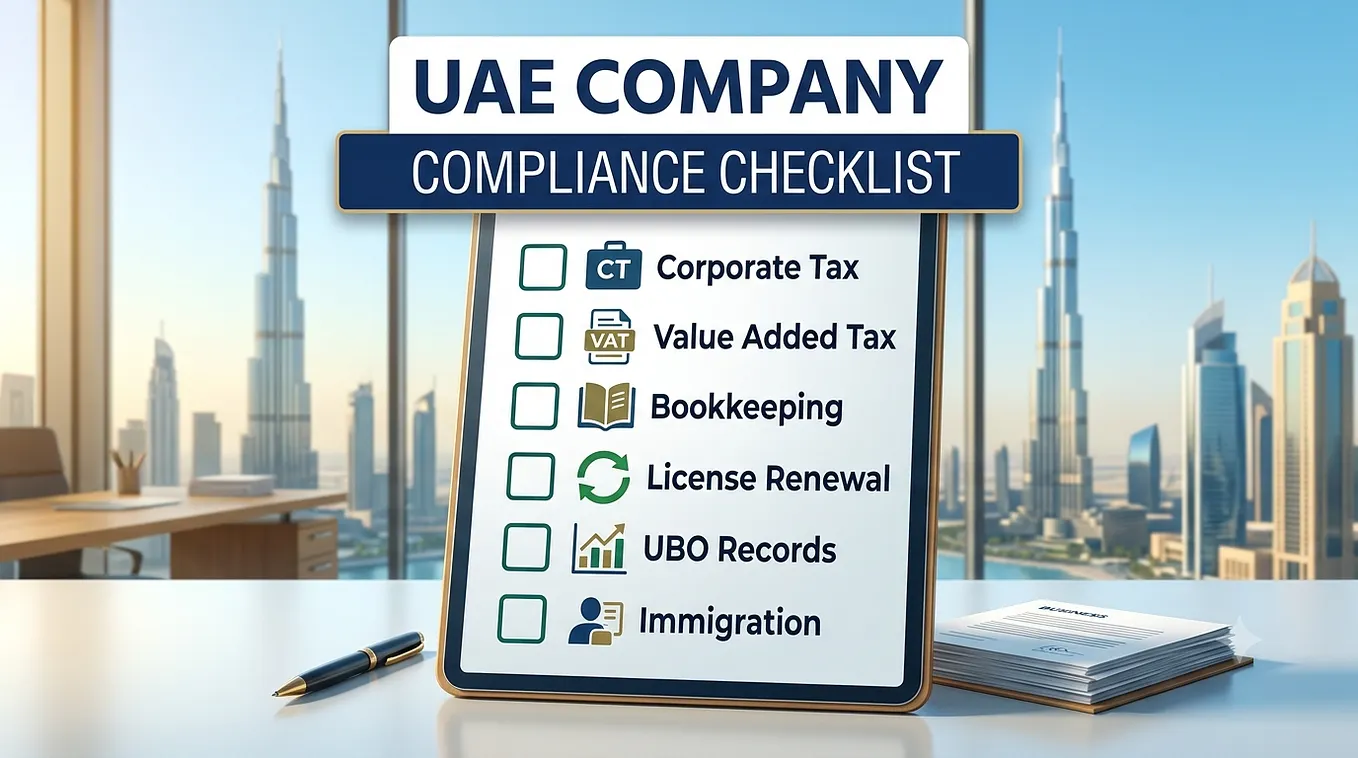
Apart from establishment, business owners also must keep in mind that they should pay for office rent renewal, license renewal, immigration, accounting and bookkeeping services, as well as, if applicable, VAT and Corporate Tax provided by the Federal Tax Authority. Looking just at the first-year licence fee might likely underestimate the true cost of operating a business in the UAE.
This is why experienced entrepreneurs do not usually begin by asking,
“What is the cheapest license?”
Instead, they ask,
“What jurisdiction is most appropriate in providing the foundation of my business in the coming five years?”
Such a shift in thinking results in the birth of much better decision.
First, Let’s Simplify the Three Business Structures
It is necessary for you to know what each structure is — and, more importantly, what it is not — before making an informed choice.
There is a lot of misunderstanding associated with these structures because they are commonly defined through legal jargon rather than practical business language.
Let’s change that.
Mainland Companies: Built for Businesses That Want to Operate Across the UAE
A Mainland company is licensed by the Department of Economy and Tourism (or the equivalent economic department in the relevant emirate). For businesses established in Dubai, this authority is the Dubai Department of Economy and Tourism (Dubai DET).
Mainland license usually permits businesses to conduct operations in the UAE local market as per the activities approved on the licence and applicable industry regulations.
Such operational flexibility of the mainland companies make them very attractive to the businesses that:
- Sell directly to UAE customers
- Open retail outlets
- Operate restaurants or cafés
- Provide professional services throughout the UAE
- Bid for government projects where eligibility requirements permit
- Need multiple branches across different emirates
The UAE Government amended the Commercial Companies Law in 2020, wherein 100% foreign ownership for many business activities is allowed. According to this, a foreign company wishing to open a branch and practice its activities in the UAE does not require the presence of a UAE national agent. Nevertheless, some regulated activities may still have specific ownership or approval requirements under applicable laws.
In simple terms:
If you set up a business that is meant to serve customers throughout the UAE, mainland can offer the greatest flexibility in operations.
That doesn’t automatically make it the best option but does explain why so many domestic businesses go forth with choosing this jurisdiction.
Free Zone Companies: Designed for Focused Business Ecosystems
Free zones are unique economic zones established to encourage investment in specific industries or business activities.
In the present time, there are more than 40 Free Zones located in different parts of the UAE that are run by individual authorities and operate under its own regulations. Some free zones focus on technology. Others specialise in logistics, media, manufacturing, healthcare, finance, education, aviation, commodities or creative industries. That is, Well-known examples like DMCC, IFZA, Dubai South, DAFZ, RAKEZ, Shams and Dubai Silicon Oasis (DSO), each catering to different industries and business needs.
Many free zones are designed around particular sectors. Instances:
- Media-focused businesses could take advantage of the free zones like Dubai Media City or twofour54 Abu Dhabi created for the creative industries.
- Technology companies are frequently on the lookout for free zones that have startup ecosystems (DIC, DMCC inclusive).
- Manufacturers are likely to look for free zones related to their industry, along with warehousing and logistics facilities.
- International trade companies usually prefer to operate out of free zones such as JAFZA, DAFZA located close to major maritime ports or airports.
Free zones seem to be appealing to businesspeople due to streamlined company formation, various business services and specific professional communities. Nevertheless, there is one widely held misconception which deserves clarification: many assume free zone companies can easily feel free to operate anywhere in the UAE without restrictions.
Indeed, the possibility to conduct any business transactions in the UAE is defined by the nature of the process itself, by the applicable laws and the way in which products or services are delivered. Enterprises looking to sell their product to the mainland UAE may be required to meet certain other criteria based on their business processes.
This does not make free zones restrictive but rather unique.
Indeed, for most international businesses, this uniqueness becomes an advantage.
Offshore Companies: Built for Ownership, Not Daily Operations
Probably the most misunderstood company setup is the offshore. It is usually mentioned alongside the mainland and free zone companies although it has quite a distinct objective.
An offshore company is used for international business outside the UAE and cannot have a physical office or sponsor visas for foreign nationals. Such structures are usually for international trading and asset protection which usually operates in areas like Jebel Ali Offshore (JAFZA Offshore), Ras Al Khaimah International Corporate Centre (RAK ICC) and Ajman Offshore. It is rarely set up with the intent of conducting its operations within the UAE’s internal market but for businesses that want the benefits of a strong legal system, low tax and global credibility.
The offshore company is usually formed to undertake the following activities amongst others:
- Holding international investments
- Owning shares in other companies
- Holding intellectual property
- Asset ownership
- Estate and succession planning
- International corporate structuring
Because of this, offshore companies typically aren’t the right choice for entrepreneurs planning to:
- Open physical offices
- Hire teams in the UAE
- Operate restaurants
- Run retail businesses
- Provide services directly within the UAE market
But rather, they are commonly employed by investors, holding groups and foreign enterprises that are seeking a corporate structure and not an operating business. This point is significant since first time entrepreneurs may erroneously think that Offshore corporations are simply because they may be relatively cheaper to incorporate. The fact of the matter is that opting for any business form just on grounds of its initial expense may lead to problems down the line.
The Five Questions That Will Tell You Which Business Structure Fits Best
Instead of comparing three company structures side by side, answer these five questions. Towards the end, you’ll have a much clearer idea of which option aligns with your business today — and where it can take you in the future.
Question 1: Where Will Your Customers Actually Be?
This question is of utmost importance because identifying your target audience helps decipher your operational model in compliance with UAE’s regulations.
In instances where your earnings are mostly accrued from customers residing in the UAE, a mainland company may be the most viable option for you. Specifically, a mainland company can be formed in the relevant emirate as per the emirate’s normative legislation system, for example, Dubai Department of Economy and Tourism (DET) in the case of Dubai and operate all over the UAE provided that they fulfill sector-specific requirements set forth in their license.
In cases when the majority of your customers do not reside in the UAE, a free zone company setup can be the optimal solution for your company. Indeed, a number of free zones were formed to cater to international businesses, technology enterprises and digital companies operating in international markets.
If your objective is simply to hold investments, intellectual property or shares in other companies, an offshore company may be appropriate. However, offshore entities are generally not established to conduct day-to-day commercial operations within the UAE.
Questions to consider:
- Will I send invoices to UAE clients on a regular basis?
- Will I import or sell goods within the UAE?
- Will I mainly deal with foreign clients?
- Am I setting up an operating company or a holding structure?
The answers to these will limit your choices greatly even before considering the licence and cost comparisons.
Typical first-year setup costs

Question 2. Does Your Business Activity Require Additional Regulatory Approvals?
Picking the right license is more than simply a matter of the sector in which you work but is also dependent on the regulators in that sector.
Get Aziend Corporate Services’s stories in your inbox
Join Medium for free to get updates from this writer.
For example, a marketing consultancy or software company may just need approval from the relevant licensing body to commence operations; yet a company in a highly regulated sector may find that it has to go through several licensing approvals before it can operate.

Likewise, certain free zones have been established around specific industries. DMCC has emerged as a leading center for commodities trading while Dubai Internet City is oriented towards technology firms. Regulated industry players prefer to work with jurisdictions that have adequate knowledge of their sector.
Also, the costs vary relative to the type of business activity. A consultancy license usually involves less governmental approval processes compared to a health or finance business where inspections and education of professionals create additional costs.
The message is clear: the type of business activity should be decided first and only thereafter, the relevant jurisdiction should be chosen.
Question 3: What Kind of Office Will Your Business Need?
Many entrepreneurs believe that every company requires an office right from day one. In actuality, the type of workspace required depends on the nature of the business activity, licensing authority and the hiring plans for the future.
In fact, your workspace needs to represent how your business works in reality.
For example:

Free zone operators have workspace solutions such as flexi-desk space, serviced offices, executive suites and warehouses to cater to growing businesses. On the other hand, the businesses operating on the mainland may require commercial premises suitable for the licensed business activity like retail, hospitality, industrial, customer-facing operations to list a few.

The office necessities are often a major hidden expense when it comes to company formation. Typical workspace costs include:

Office selection also influences:
- Visa allocation
- Employee capacity
- Business banking
- Regulatory inspections
- Future expansion costs
Opting for the most economical workspace may help save you a little money in the first year, but the future upgrade might incur extra costs related to lease contracts, administrative changes and disruptions in operations.
Question 4: Have You Calculated the Total Cost of Running the Business?
There are plenty of articles that promote just the license fee but that’s not the total you need to invest. In reality, business formation comprises various cost factors.

On top of the incorporation costs, the founders should consider annual expenses such as
- Mandatory license renewal
- Office renewal
- Employee visas
- Accounting and bookkeeping
- Corporate Tax compliance
- VAT registration and filing (where applicable)
Federal Tax Authority (FTA) is the body responsible for both VAT and Corporate Tax in the UAE. Companies providing taxable supplies that’s above AED 375,000 have to register for VAT. Also, CT of 9% is charged on taxable income above AED 375,000 but there are applicable exemptions when it comes to Qualifying Free Zone Person (QFZP).
Researching and comparing the total cost of ownership should help businesses assess their future expenses correctly.
Question 5: Will This Structure Still Work Five Years From Now?
Today’s cheapest structure could turn out to be the costliest choice in the future.
Many entrepreneurs create a business purely on the basis of the savings made in the first year, only to find out in time that for further growth, hiring more employees or opening more branches necessitates changing the structure.
Before making your decision, ask yourself:
- Am I going to hire additional personnel?
- Am I going to rent more space?
- Am I going to look for funding?
- Am I going to expand to various emirates?
- Am I going to open warehouses or stores?
- Am I going to bid for government contracts?
Each one of these milestones could decide in one way or another if your initial company structure remains relevant to you or not.
For instance, adding a new business activity often implies incurring amendment fees, while moving to a bigger office unit implies increasing your rental obligations. The process of sponsoring extra workers will also lead to higher immigration costs, which moreover, usually range from AED 3,000 to AED 7,000 per residence visa (as per the emirate and processing options used).
The choice of structure does not imply the selection of the cheapest way to incorporate; it implies avoiding future restructuring.
If your goals include long-term development, it would be better to assess your business from the position of how it should develop in five years’ time.
Mainland vs Free Zone vs Offshore: A Practical Comparison
By answering the five questions, you will have gained better insight into which structure fits your business. The table below provides a quick comparison of the major differences between the various structures so can get a quick recap in once place. Please keep in mind that while these are general guidelines, there may be other requirements for certain activities, by certain licensing authority or by particular sectors-based approvals.

Instead of thinking about which structure has the most advantages, think about which structure eliminates the most obstacles for your business structure. A company that’s made for international consulting has very different operational needs from a retailer opening multiple stores across Dubai.
Typical Business Setup Timeline
While company formation in the UAE is now easier than ever before, the duration of company set-up is determined by how complicated the business is, its quality of documentation, additional regulatory approvals (if needed), among other factors.

Companies in regulated industries such as banking, healthcare, education or financial services will experience longer processing times due to the need for approval from certain authorities.
Five Mistakes That Can Cost Entrepreneurs Time and Money
No matter how well-prepared you are, many founders make unnecessary errors during company formation.
1. Choosing the Cheapest Package Instead of the Right Structure
Low cost of company formation might seem appealing to many business owners, but shifting to another jurisdiction down the road would entail acquiring new licences, updated banking processes, setting up new offices, add-on compliance costs among others.
Analyze the comprehensive cost of running the business and not just incorporation costs.
2. Assuming Every Free Zone Offers the Same Benefits
Every free zone has a distinct licensing process, allowable activities, office options, visa policy and industrial focus. Registering in a free zone just because it is well known is not necessarily what will suit your business in the long run.
3. Ignoring Regulatory Requirements
If your business will be within the industries like virtual assets, financial services, education, health care or food services, there are additional regulatory approvals you need apart from the licensing body. Not being aware of the regulations at the early stages of the business will cause delays in starting operations.
4. Planning Only for Today
Most business owners form their businesses for only a few people without considering recruitment in the future, office expansion, or other business operations. Strategizing as to growth options early may give you an opportunity to avoid expensive transformations later on.
5. Overlooking Banking and Compliance
The acquisition of a trading license is merely the beginning. Independent due diligence checks on corporate banking accounts are conducted by banks, while companies need to be aware of their accounting, VAT and Corporate Tax responsibilities from the outset.
Your UAE Business Structure Decision Framework
If you are still unsure, use the simple framework below:
✅ Choose a mainland company if you:
- Are targeting clients all around the UAE.
- Require retail stores, restaurants, or offices.
- Will grow into more than one emirate.
- Wish to have maximal operational flexibility.
✅ Choose a free zone company if you:
- Work in the international markets.
- Have a consultancy, technology startup, digital agency or exporting business.
- Prefer flexible office solutions.
- Appreciate industry-specific business ecosystems.
✅ Choose an offshore company if you:
- Need a holding company.
- Own international assets or intellectual property.
- Do not wish to operate business in the UAE.
- Do not require UAE residence visas.
Note, however, that there is no perfect structure over any other. The best choice will be completely dependent on your goals for your business.
Win from Day One with the Right Business Setup Support
Deciding whether to go for the establishment in a mainland, free zone or offshore entity does not only depend on the selection of the option having the most inexpensive setup cost or the fastest registration procedure. It has to do with creating an entity on a solid base via which you can build your customer service, operational setup and compliance requirements and future growth plans.
This guide has pointed out that this decision entails much more than just comparing license fees. The type of your business activity, target market, office requirements visa plans, regulatory environment, banking preferences and future expansion all play a role in what structure will suit your needs best. What may appear economical may become costly if the structure needs a new set up, approvals or alterations in operation after a year or so.
That is why most business owners prefer to hire a professional UAE business setup consultancy rather than go through the process by themselves. A professional consultant will be able to evaluate your business model, select the right jurisdiction, provide information on what types of licenses you require in your sector, inform you on the cost of ownership that goes beyond licensing costs and arrange incorporation with all the necessary governmental agencies. They will help you incorporate and comply with other post-incorporation activities like corporate banking, visa applications, VAT, Corporate Tax, accounting and licence renewal processes. All in all, founders shall get past all the unnecessary delays and pricey mistakes.
In summary, the ideal business structure is not the cheapest or the most widely-used one. It rather is the one that gives your business the strongest platform in order to expand in future.
If you’re planning to establish a business in the UAE but still have questions about the right jurisdiction, licensing costs, office requirements, tax implications or the setup process, leave a comment below. Every business has unique requirements, and chances are your question will help other entrepreneurs facing the same decision.
I read every comment, and the most common questions will shape my next article — so don’t hesitate to ask.