From the Quarry to the Garden

Reflections on Isaiah 51:1–6, Psalm 138, Romans 12:1–8, and Matthew 16:13–20
By: Bryan Stites, St. James Lutheran Church — 13th Sunday after Pentecost, August 23, 2026
There is a particular kind of joy in seeking wisdom in scripture — sitting with a text, waiting to see where God leads. More often than not, the destination isn’t the one expected. It happens most Wednesday evenings during devotions: the first pass through a reading reveals one thing, and then, in God’s mercy, something gentler emerges than what could be seen at first glance. Perhaps this is the point of opening scripture at all — not simply to study it, but to listen, and to let God surprise us with what God wants to say.
That is exactly what happens in this week’s reading from Isaiah.
Look Back Before You Look Forward
Before God tells the exiles what’s coming, God tells them to look back:
“Listen to me, you who pursue righteousness, you who seek the Lord. Look to the rock from which you were hewn, and to the quarry from which you were dug.”
Not: here’s your future. First: look behind you. Remember where you came from.
Where they came from was one man and one woman — Abraham and Sarah — an old, childless couple with no business becoming a nation. “He was but one when I called him,” God says, “but I blessed him and made him many.” One became many, not because Abraham built something, but because God blessed him. That is the entire logic of the passage in a single line: God takes what looks like nothing and makes something.
Isaiah repeats the idea in different terms: “The Lord will comfort Zion; he will comfort all her waste places and will make her wilderness like Eden, her desert like the garden of the Lord.” Wilderness into Eden. Desert into garden.
It is worth sitting with that image, because it is so easy to look at a wasted place — in the world, or in a life — and see nothing but rubble. What burned down. What dried up. What didn’t work out. What was lost. The tendency is to look at wilderness, call it wilderness, and stop looking. God looks at the same ground and calls it a garden that hasn’t happened yet.
What Looking Back Actually Means
To be clear, looking back does not mean returning to the chaos itself — not the fire, not the wreckage, not the wasted place as such. It means looking at what was underneath it the whole time: the foundation. The bedrock. The solid thing that carried a person through and never moved, even while everything on top of it was falling apart.
Scripture doesn’t just say look. It says remember — over and over, especially to people who have already made it through. Moses tells Israel again and again in the wilderness to remember the God who brought them out. And notice when the warning grows loudest: not during the hard years, but right after — once the fields are full, the houses are built, and life is comfortable again. That is when it becomes easiest to forget, and easiest to credit human hands for what God did. People rarely forget God in the wilderness. They forget him once they are standing in the garden he made out of it.
Get Bryankstites’s stories in your inbox
Join Medium for free to get updates from this writer.
So the invitation is to look back — not at the tumult, but at the foundation; not at what was destroyed, but at what stayed. Somewhere behind every person is a wasted place: a stretch of life they wouldn’t choose again, wouldn’t return to, might not like to discuss. It is tempting, looking back, to see only the waste. But Isaiah insists that isn’t the whole picture. Look again — for the provision, for where there was carrying, feeding, keeping, even when there was no reason to expect it. That ground was not empty. Something was working underneath it the whole time, even when it looked like nothing. That recognition is the beginning of faith.
The Renewing of the Mind
Paul, writing to the Romans, gives this a name: the renewing of the mind.
“I appeal to you therefore, brothers and sisters, on the basis of God’s mercy, to present your bodies as a living sacrifice, holy and acceptable to God, which is your reasonable act of worship. Do not be conformed to this age, but be transformed by the renewing of the mind.”
“Conformed” is a telling word choice — shaped by whatever is around you, molded to the desert instead of transformed into a garden. Paul is describing precisely what it feels like to get lost in a wasted place and begin believing that’s all there is: to start living as though the wilderness were permanent.
The renewing of the mind is what happens when a person looks back, really looks, and sees God’s hand where they thought there was only sand. It is discernment — the ability to look at one’s own history and see provision instead of ruin. When the mind is renewed in Christ, the whole story a person has been telling about themselves changes. The narration shifts from wasteland to something Scripture has already declared: not a desert, but a child of God — loved, cherished, made new in Christ, with the one who began that work promising to finish it.
Not What Others Say, But Who You Say
This theme converges, finally, on the question underneath all of it — the one Jesus asks in this week’s Gospel: “Who do people say that the Son of Man is?”
The disciples offer a survey of public opinion — John the Baptist, Elijah, Jeremiah, one of the prophets. Jesus isn’t interested in the survey. “But who do you say that I am?” Not what everyone else thinks. Who do you say.
Simon Peter — the one who sinks in the water two chapters earlier, the one who will deny even knowing Jesus three times a few chapters later — answers: “You are the Messiah, the Son of the living God.”
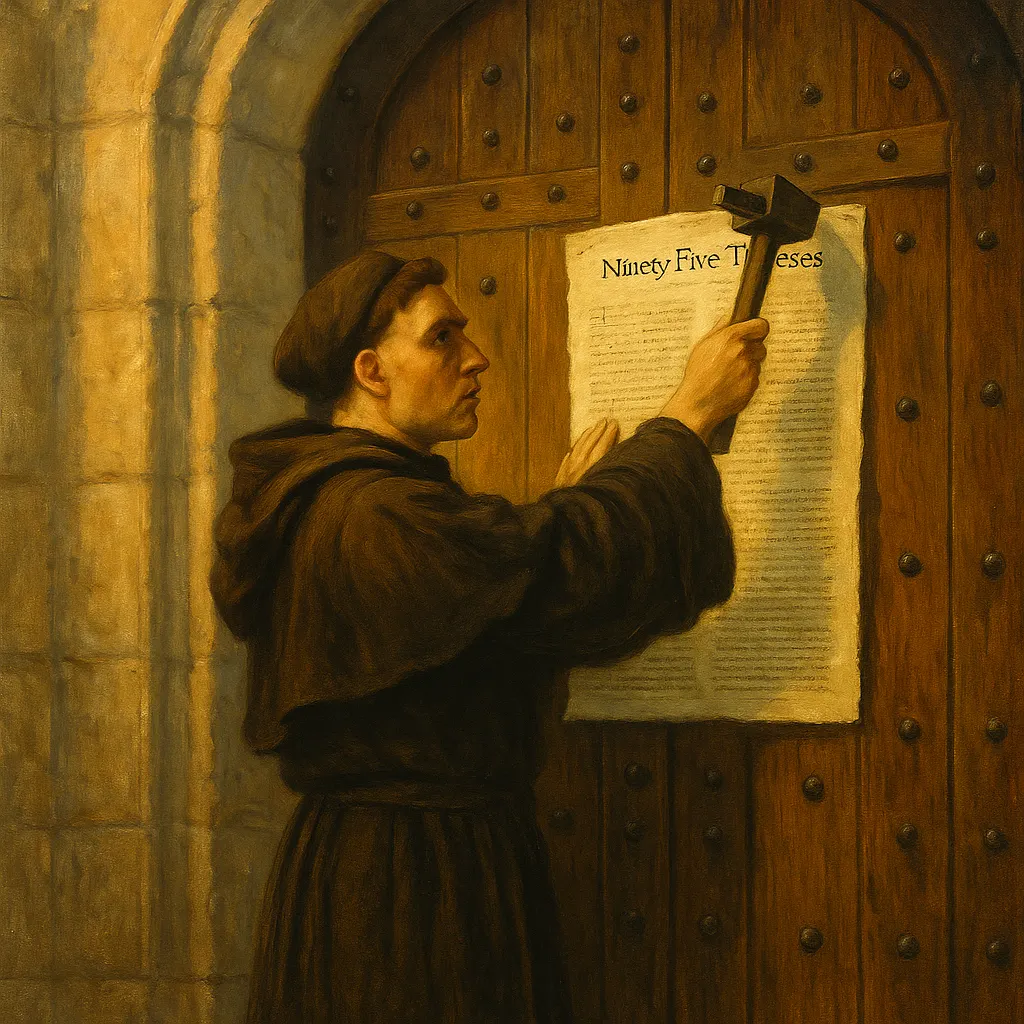
“Blessed are you, Simon son of Jonah! For flesh and blood has not revealed this to you but my Father in heaven. And I tell you, you are Peter” — Petros, a stone — ”and on this rock” — petra, bedrock — ”I will build my church, and the gates of Hades will not prevail against it.”
Those are two different words in the Greek. Peter is a stone. But the rock Jesus builds on is something underneath Peter, not Peter’s own steadiness — because Peter’s steadiness is about to fail, repeatedly, and Jesus already knows it when he says this. What Jesus builds on is the confession Peter spoke, words that, Jesus says, didn’t come from Peter’s own insight. Peter didn’t work this out. It was given to him.
That is good news for everyone else — also imperfect, differently shaped, prone to sinking and prone to denying — and still, somehow, being built into something.
Jesus adds one more thing: “I will give you the keys of the kingdom of heaven, and whatever you bind on earth will be bound in heaven, and whatever you loose on earth will be loosed in heaven.” This is the authority to forgive — to loose someone from what binds them, spoken out loud, person to person. It is echoed at the start of every service in the words: “In the name of God, Father, Son, and Holy Spirit, our sins are forgiven.” That is the keys of the kingdom, given the same way it was given to Peter — not because of steadiness, but because Christ is steady.
The Rock Beneath the Ruin
What does this mean, taken together? It means the wasted places in a person’s story are not the end. Looking back at them the way Isaiah instructs — not to relive them, but to find, underneath the wreckage, the provision that carried a person through — reframes the whole narrative. It means no one was built to be the whole body alone, and a congregation does not need any single member to be extraordinary; it needs each person to be the particular, differently-shaped person they already are. And it means that whatever feels unsteady or uncertain in any individual life, the church itself was never built on human steadiness to begin with. It was built on a confession spoken by a man who sank and denied and was still called Rock.
Isaiah says the same thing, later in the same chapter: “the heavens will vanish like smoke, the earth will wear out like a garment, and those who live on it will die like gnats.” Everything wears out. Everything vanishes. Every person, eventually, gone like smoke.
But not the rock. “My salvation will be forever,” God says, “and my deliverance will never be ended.”
Christ, the cornerstone — the gift, and the giver. Light from Light. True God from True God.