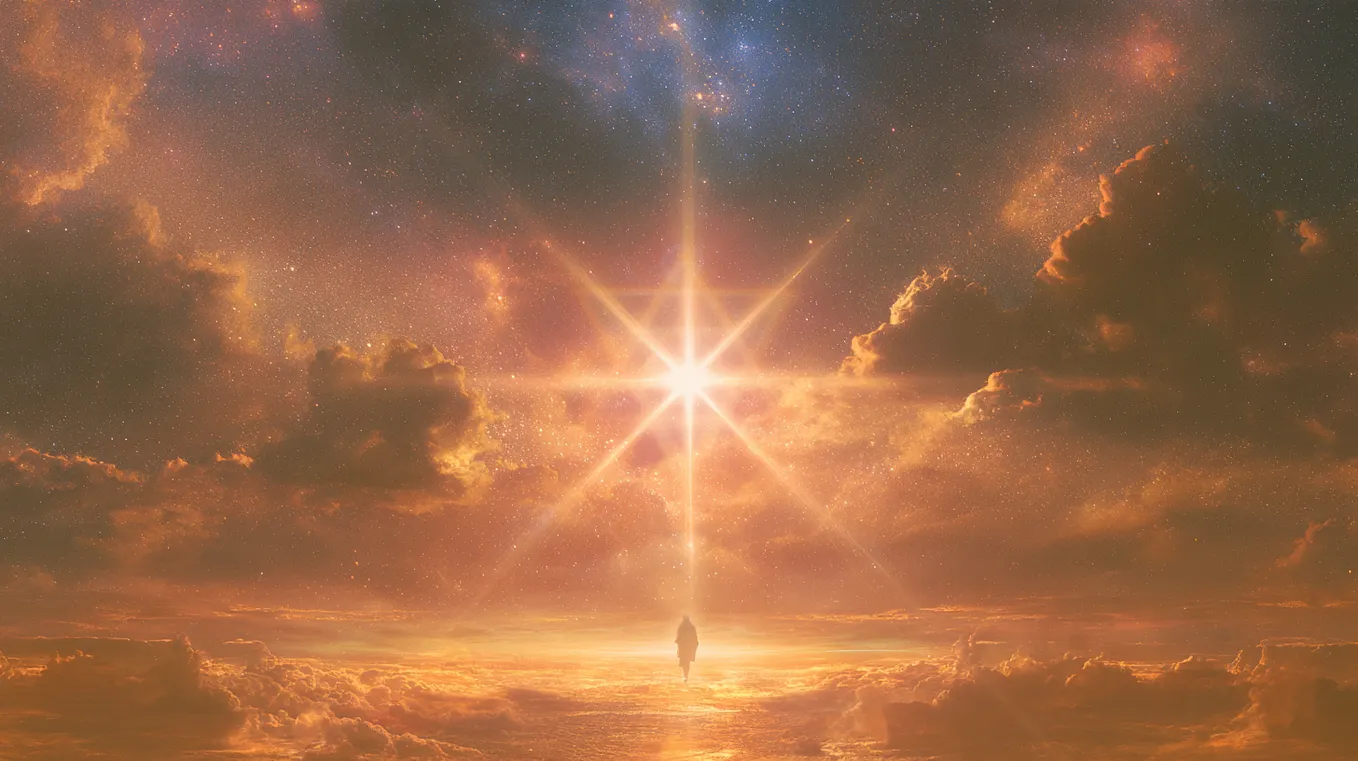
Adieu West(?), New Beginnings, and the Leper King

The end of Pax Americana, the spiritual imagination of Europe, and the mysterious figure of the leprous Messiah at the gates of Rome

Adieu, West?
Is the West coming to an end?
For nearly eight decades after the Second World War, the United States stood at the center of a Western-led international order. American military power underpinned European security. The petro dollar became the dominant currency of global finance. Western institutions, technology, universities, markets, and cultural industries helped shape the modern world.
This order was never perfect. Its history contains colonialism, exploitation, war, racism, hypocrisy, and profound moral failures. Yet it also produced extraordinary achievements: scientific discoveries, medical advances, technological revolutions, unprecedented economic growth, creativity, culture and institutions that helped expand individual rights, justice and opportunities across much of the world.
For all its contradictions, Western civilization has had a remarkable run.
And now, it seems, we are witnessing the end of an era.
A 2026 research paper from Germany’s Institute for International and Security Affairs describes the postwar Pax Americana as coming to an end, arguing that Europe can no longer simply rely on Washington for its security and prosperity. Meanwhile, the United States is reassessing its military posture in Europe, and European governments face growing pressure to take greater responsibility for their own defense. Source: SWP, With, Without, Against Washington.
The consequences extend far beyond military spending. They raise fundamental questions about Europe’s identity, the future of NATO, the balance of global power, and the survival of the political assumptions upon which the postwar West was built.
To many observers, this looks like decline. To others, it looks like the fragmentation of Western civilization itself.
But I find myself asking a different question.
What if the end of one historical order does not necessarily mean the end of civilization? What if it is also the beginning of something new?
Perhaps it is time to say adieu to the West as we have known it — not necessarily to everything it represents, but to the assumption that its existing institutions, alliances, and ideas will remain the permanent architecture of the world.
The question mark in my title is deliberate.
The West may be declining in its traditional form. But it is not dead. Its scientific, cultural, philosophical, and technological contributions will not simply disappear. Nor should we forget the people who built, defended, questioned, and improved its institutions.
A civilization can be deeply flawed and still contribute something valuable to humanity.
We can acknowledge its sins without denying its achievements. We can recognize its limits without celebrating its destruction.
And we can contemplate its transformation without assuming that the future must be a catastrophe.
Europe and the Return of Religious Conflict
One of the most striking features of the present moment is the renewed prominence of religious identity in European political discourse.
In some public commentary, protests, immigration disputes, cultural tensions, and questions about national identity are increasingly framed as a civilizational struggle between Christianity and Islam. Images of medieval knights, crusaders, crosses, and Christian Europe are invoked in arguments about the future of the continent.
The Crusades have returned to the political imagination.
This framing is powerful precisely because Europe has spent generations attempting to understand itself through secularism, liberal democracy, human rights, and the separation of religion from the state. Now, religious language is once again being used to explain political anxieties and cultural conflict.
Of course, Europe is not experiencing one unified war between Christianity and Islam. Its conflicts have multiple causes, including economics, migration, inequality, housing, national identity, security, and political polarization. Christians and Muslims are not monolithic communities, and many work together peacefully. The rhetoric of a religious war can itself intensify divisions.
Nevertheless, the symbolic language is unmistakable: some people increasingly imagine Europe’s future through the lens of an ancient confrontation between religious civilizations.
And this is where the Jewish prophetic imagination becomes interesting.
Jewish scripture contains visions of upheaval among nations, the judgment of kingdoms, and the eventual establishment of divine sovereignty. The biblical books of Ezekiel and Zechariah describe conflicts involving Jerusalem and the nations, while the prophetic tradition repeatedly insists that human empires are not the ultimate authority over history.
Ezekiel 38–39 describes Gog and a coalition of nations advancing against Israel, followed by divine judgment. Zechariah 14 describes a gathering of nations against Jerusalem and a transformation in which G-d becomes recognized as King over all the earth.
These passages have inspired generations of Jewish reflection on the end of days.
But an important distinction must be made: the biblical texts do not explicitly describe a future war between Christianity and Islam by those names. Christianity and Islam emerged centuries after the biblical prophets. Later Jewish interpreters have sometimes mapped prophetic imagery onto the powers and religious communities of their own times, but those interpretations are not the same as the plain wording of the biblical text.
The scriptures offer a vision of divine judgment and redemption. They do not provide us with an unquestionable timetable for identifying every contemporary conflict.
Still, the return of crusader imagery to European political discourse is a notable cultural phenomenon. It suggests that, even in a supposedly secular age, people continue to reach for religious symbols when trying to understand a world that feels unstable.
And perhaps that tells us something about the limits of secular explanations.
Economic models and security analyses can explain much about the world. But they cannot always satisfy humanity’s desire to understand the meaning of history itself.
For that, people often turn to stories of good and evil, exile and return, judgment and redemption.
Jewish tradition has been contemplating these questions for millennia.
And among its most intriguing images is a figure that seems almost impossible to reconcile with the popular imagination of a triumphant king.
The Leper Messiah.
King Baldwin IV: The Leper King of Jerusalem
To understand why this figure is so fascinating, we must first turn to history.
Baldwin IV of Jerusalem, who reigned from 1174 to 1185, became known as the Leper King. He inherited the throne of the Crusader Kingdom of Jerusalem as a teenager and ruled while suffering from leprosy, a chronic disease that progressively damaged his body, still leading many victorious campaigns.
He lived during a period of intense conflict between the Crusader states and the Muslim powers of the region, particularly under Saladin, the ruler who eventually conquered Jerusalem in 1187, two years after Baldwin’s death.
Baldwin’s reign was marked by political instability, military campaigns, and the difficult task of governing a vulnerable kingdom. Despite his illness, he remained a central figure in the struggle to preserve the Crusader state.
The modern popular imagination often remembers him through the 2005 film Kingdom of Heaven, directed by Ridley Scott. In the film, Baldwin is portrayed wearing a silver-colored metal mask that conceals his disfigured face. The image is haunting: a young king whose authority is expressed through a body that is gradually failing him.
The mask has become one of the most memorable visual symbols associated with the historical figure, although the film’s depiction is a dramatic interpretation rather than a reliable record of what Baldwin actually wore.
Historically, Baldwin IV was a real king, a Christian monarch, and a participant in the Crusader political and military order. His kingdom emerged from the Crusades, a movement whose history includes not only warfare against Muslim powers but also devastating attacks on Jewish communities. The First Crusade, for example, saw massacres of Jewish communities in the Rhineland in 1096.
Any romantic image of the Crusader world must reckon with that history.
The Crusades were not simply a story of heroic knights defending a sacred land. They were also a history of conquest, religious violence, and suffering inflicted upon Jews and Muslims alike.
And yet, Baldwin’s image remains compelling.
Why?
Perhaps because he embodies a paradox: a king whose power was inseparable from his vulnerability.
He occupied a throne while suffering from a disease that gradually undermined his physical strength. His face became a symbol of the distance between outward authority and inward suffering.
And this is where an extraordinary connection emerges — not as a historical link between Baldwin and Jewish messianic tradition, but as a striking parallel in imagery.
In the Babylonian Talmud, the Messiah is also depicted as a figure afflicted by illness, sitting at the entrance of Rome.

The Messiah at the Gates of Rome
One of the most intriguing passages about the Messiah appears in the Babylonian Talmud, tractate Sanhedrin 98a.
Rabbi Yehoshua ben Levi asks Elijah the prophet when the Messiah will come and where he can be found.
Elijah tells him that the Messiah is sitting at the entrance of the city of Rome, among poor people suffering from illnesses. While the others tend to their wounds by unbinding and rebandaging them all at once, the Messiah tends to his afflictions one at a time.
Why?
Because he must remain ready.
If the moment of redemption arrives, he does not want to be delayed.
The passage can be read in full here: Babylonian Talmud, Sanhedrin 98a — Sefaria.
This is a remarkable image.
The Messiah is not depicted as sitting comfortably in a palace, surrounded by an army, waiting to be crowned. He is among the afflicted, tending to his wounds, prepared to respond immediately when the moment arrives.
His suffering does not prevent him from being the redeemer. Instead, the passage places his suffering alongside his readiness to act.
The image also contains a striking geographical detail.
The Messiah is found at the entrance of Rome.
Rome, in rabbinic literature, often represents the imperial power that dominated the Jewish world. In later Jewish interpretive traditions, Rome became associated with Edom, a biblical name that came to symbolize Rome and, in some subsequent interpretations, Christendom.
This association has a long and complicated history. It should not be confused with a claim that every modern Western country, every Christian, or every institution in Europe and America is simply identical with biblical Edom.
Nevertheless, within traditional Jewish symbolism, Rome and Edom can represent a powerful civilization standing in a complex relationship with Israel.
And here the Talmud gives us a paradox worth contemplating.
The Messiah is associated with the very place (Edom) that symbolizes imperial power — and yet he appears not as an emperor displaying his strength, but as a suffering figure waiting at the threshold.
Why the gates?
The text itself says that he sits at the entrance of the city. It does not explicitly explain this as a reference to where political leaders gather or where decisions of power are made. The gate can be understood symbolically as a threshold: a boundary between inside and outside, exclusion and entry, waiting and arrival.
One might therefore interpret the image as suggesting that redemption is somehow connected to the center of the existing imperial order.
But this remains an interpretation, not a definitive prediction about the identity or nationality of a future Messiah.
The Talmud does not say that the Messiah will be a Western monarch, an American leader, or a European ruler. It does not identify the Messiah with Baldwin IV.
What it gives us is an image: the Messiah, afflicted and prepared, at the gates of Rome.
Get Souls of the Nations’s stories in your inbox
Join Medium for free to get updates from this writer.
And that image is powerful enough to stand on its own.
Baldwin and the Leper Messiah: An Extraordinary Parallel
Consider the contrast.
Baldwin IV was a Christian king ruling Jerusalem during the Crusades. His body was afflicted by leprosy, and his image has become associated with a mask concealing his face.
The Talmudic Messiah is a Jewish messianic figure, afflicted by illness, sitting at the entrance of Rome and tending to his wounds while awaiting the moment of redemption.
These are not the same figure. Their histories, identities, and religious meanings are different.
There is no historical evidence that Baldwin IV was connected to the Talmudic passage, and the Talmud was written centuries before his reign.
Yet the resemblance is striking.
Both images bring together kingship, suffering, illness, victgory, and the anticipation of a decisive historical moment.
One is a medieval king whose kingdom would eventually fall.
The other is a figure of future redemption who has not yet revealed himself to the world.
One belongs to the history of the Crusades, with all their contradictions and violence.
The other belongs to Jewish messianic hope.
And yet, in the public imagination, the image of the Leper King has a curious resonance with the ancient Jewish image of the Leper Messiah.
Why might this matter now?
I would not claim that the popularity of Kingdom of Heaven or the invocation of crusader imagery proves that a biblical prophecy is being fulfilled. Nor should we assume that a historical coincidence reveals a hidden divine timetable.
But I do think the parallel invites reflection.
At a time when the Western order is under strain, when Europe is reconsidering its identity, and when religious symbols are reappearing in political discourse, the figure of a suffering king from the Crusader era remains unusually evocative.
And Jewish tradition preserves its own image of a suffering redeemer at the gates of Rome.
Perhaps the juxtaposition is worth contemplating precisely because it does not offer an easy answer.
Is Edom Falling?
Jewish tradition contains a long history of interpreting Rome and Edom as symbols of imperial power and, in later contexts, of Christendom. Some Jewish writings also describe a struggle among the nations before the messianic age.
The biblical Book of Obadiah, for example, announces judgment against Edom. Ezekiel 35 also speaks of judgment against Mount Seir, associated with Edom. Ezekiel 38–39 describes the conflict involving Gog and the nations, while Zechariah 14 portrays a final confrontation around Jerusalem followed by the recognition of G-d’s kingship over the earth.
Sources:
These texts have inspired many interpretations of the relationship between Israel, the nations, judgment, and redemption.
Maimonides, in Mishneh Torah, Laws of Kings and Wars 12:2, cautions against treating the details of the messianic age as certain knowledge. He emphasizes that the precise sequence of events is not something people should obsessively calculate.
That caution is important.
We can study prophecy without pretending to possess the key to every current event.
We can observe the weakening of an international order without declaring that the final judgment of the nations has begun.
And we can hope for redemption without confusing hope with certainty.
However even if what is happening now is not the final judgment, it does remind us of it and prepares us for it.
Still, the question remains compelling: what does it mean for a civilization to reach the limits of its power?
If the West represents, in one strand of Jewish symbolism, a historical expression of Edom, then the instability of the Western order may naturally prompt theological reflection.
But perhaps the most important question is not whether the West is being destroyed.
Perhaps it is whether the West can be transformed.
A New Beginning for Israel and the Nations
For me, the most significant part of the messianic vision is not the downfall of the West, the defeat of Islam, or the humiliation of any particular people.
It is the transformation of humanity.
Jewish scripture does not end with Israel becoming another empire that dominates the world through military force. Its prophetic horizon includes justice, peace, the knowledge of G-d, and the restoration of a world in which violence no longer defines the relationship between nations.
Isaiah 2:2–4 describes a future in which nations seek divine instruction and swords are beaten into plowshares. Isaiah 11:1–9 depicts a righteous ruler and a transformed creation in which destruction and violence no longer prevail.
These are among the most beautiful visions in Jewish scripture.
They suggest that the ultimate purpose of redemption is not merely the replacement of one geopolitical order with another.
It is a change in the moral and spiritual character of the world.
From a Noahide perspective, this is especially meaningful. The Seven Laws of Noah express the idea that all humanity has a moral responsibility before the Creator. The nations are not required to become Israel in order to participate in a righteous world. They have their own place and responsibility within humanity’s relationship with G-d.
The hope is not uniformity, but unity without uniformity.
The Jewish people have their covenant and calling. The nations have theirs. The future imagined by the prophets is one in which the knowledge of G-d spreads throughout the world, and human power is brought under the judgment of divine justice.
This is why I do not think we should look at the weakening of the old Western order only with fear — or with satisfaction at the possibility of its collapse.
Western civilization has contributed enormously to humanity. Its achievements should not be discarded simply because its institutions are under pressure. Its failures should not be excused simply because it has accomplished great things.
The future may require the West to change, to become more honest about its history, to strengthen its moral foundations, and to find a more sustainable relationship with the rest of the world.
Perhaps the question is not whether the West deserves to survive.
Perhaps the question is what it must become.
Adieu West(?) — But Not Goodbye to Hope
The image of Baldwin IV, the masked Leper King, remains with me.
A young monarch, physically afflicted, ruling a kingdom surrounded by enemies, unable to escape the vulnerability of his own body. His image belongs to a world of crusaders and conflict, a world whose religious ambitions were often entangled with conquest and cruelty.
And yet, centuries earlier, Jewish tradition had imagined a Messiah sitting among the afflicted at the entrance of Rome, patiently tending to his wounds, ready to act when the moment of redemption arrived.
The parallel does not prove prophecy. It does not establish that the present geopolitical crisis is the final chapter of history.
But it does create a striking image through which to contemplate our times.
The old order is under pressure. Europe is questioning its security and identity. The United States is reconsidering its global role. Religious symbols are returning to public life. Israel remains central to debates about the Middle East and the wider world.
We may be witnessing the end of a particular historical arrangement.
But an ending is not necessarily an annihilation.
It can also be a transition.
The West had a remarkable run. It changed the world, for good and ill. Its institutions, discoveries, and ideas will continue to shape humanity even as its power and influence evolve.
And Israel’s story, in the Jewish imagination, is not simply the story of one nation rising while another falls. It is the story of covenant, survival, responsibility, and the hope that the knowledge of G-d will eventually illuminate all humanity.
The Messiah at the gates of Rome is not portrayed as a conqueror celebrating the collapse of an empire. He is a suffering figure, attentive to his wounds, waiting for the moment when he is needed.
That image may offer a different way to think about our own moment.
Perhaps the question is not simply which civilization will dominate the next century.
Perhaps it is whether humanity can become worthy of the power it now possesses.
Whether technological progress can be joined to wisdom.
Whether economic prosperity can be joined to justice.
Whether nations can remain distinct without becoming enemies.
And whether the old world, with all its failures and achievements, can give way to something better.
In Jewish tradition, the ultimate hope is that the Messiah will usher in an era of justice and peace, and that the nations will recognize the sovereignty of the One G-d.
I do not know when that era will arrive. No one can responsibly claim to know the exact timetable.
But I find hope in the possibility that the present moment, however unsettling, is not merely a story of decline.
It may also be an invitation to prepare for a better beginning.
Adieu, West? Perhaps. But not adieu to civilization, not adieu to hope, and certainly not adieu to the possibility of redemption.
בְּעֶזְרַת ה׳ — With the help of G-d.