The Belgian UFO Wave: Radar Ghosts, F-16s and a Polystyrene Hoax

Just after midnight on 31 March 1990, two Belgian Air Force F-16s were scrambled from Beauvechain after a triangle of lights that police on the ground could see and radar could track. Over the next hour the pilots made nine intercept attempts. Their radars locked on again and again. Neither pilot ever saw anything out of the window.
It was the most dramatic night of the Belgian UFO wave, a winter when people across a small, crowded country reported huge black triangles gliding silently over their homes.
Eupen, 29 November 1989
Two gendarmes, Heinrich Nicoll and Hubert von Montigny, reported a huge dark triangle with a bright white light at each corner near Eynatten. They followed it by patrol van for almost three hours. Reports kept coming. SOBEPS, the Belgian group that collected them, eventually received as many as 2,600, according to the sceptic Brian Dunning.
The night of the F-16s
According to the Air Force’s own report, on six occasions the F-16 radars locked on for anything from ten seconds to a minute before the lock broke. The target’s speed appeared to leap from under 300 to over 1,800 km/h. In July 1990, Colonel Wilfried De Brouwer said the Air Force could not identify what had happened.
What the radar really showed
Get Contact Aliens’s stories in your inbox
Join Medium for free to get updates from this writer.
A pilot inside something that jumped from a crawl to nearly 2,000 km/h would be crushed, a strong hint that the radar was not tracking one solid object. The Air Force’s weather notes mention a temperature inversion that night, which is known to bend radar signals and create ghost targets. Some accounts say several of the locks were the two F-16s locking onto each other.
The counting problem
For the first evening at Eupen, 143 reports were filed, but most came in more than a week afterwards, once newspapers and radio had been asking for witnesses. Even the first night may have an ordinary side: a helicopter in the area, and a light above the Gileppe dam where the planet Venus was that evening.
The photo
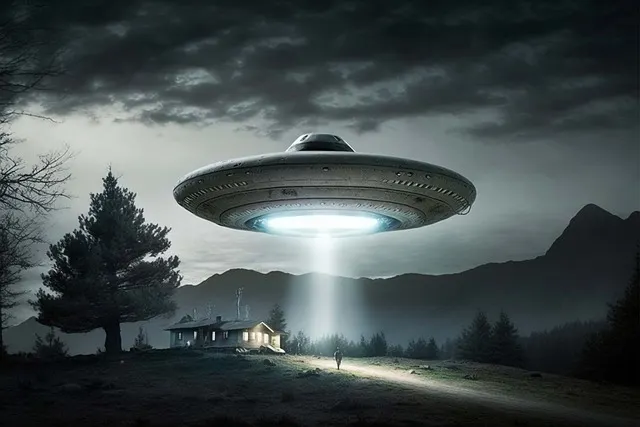
In April 1990 a photo of a black triangle with a light at each corner appeared and became the defining image of the wave. SOBEPS presented it as genuine for twenty years. In July 2011, Patrick Maréchal said on Belgian television that he made it as a teenager from polystyrene, painted black, with a light in each corner, as a prank on his workmates.
What we know
The famous photo was a hoax. The F-16 chase looks very much like radar picking up false targets on a night when the atmosphere made that likely. But thousands of people reported something over Belgium, and many of them, including police officers, were sure about what they saw. Some researchers still say a number of cases have never been explained.
Watch the full episode, with the footage and sources, on YouTube: