Oxygen, Metrics, and Inception V3: A Quantitative Refutation of the “Dead Mars” Paradigm

The academic consensus on a “sterile Mars” relies on ignoring quantitative data. Two peer-reviewed papers (Joseph et al., 2020; Armstrong, Dunne, Schild, Joseph, 2026) close the question of the planet’s biological activity, relying not on visual guesswork, but on thermodynamics, statistics, and machine learning.
Let’s look at the hard data.
1. Thermodynamic Failure of Abiotic Oxygen Models
The Curiosity rover (SAM instrument) recorded a seasonal spike in atmospheric oxygen in Gale Crater of 30% during the spring-summer period. Mainstream science tries to attribute this to perchlorate decomposition in the soil.
However, laboratory simulations (Hogancamp et al., 2018; Sutter et al., 2015) show: to release oxygen from perchlorates/chlorates, soil heating to 218–755°C is required. The maximum recorded surface temperature on Mars is about 20°C. The abiotic model is physically untenable.
Meanwhile, data from the 1976 Viking mission (Labeled Release experiment) showed: introducing a nutrient solution caused a release of radioactive gas (metabolism). Heating the control sample to 160°C completely stopped the reaction. This is a classic biological marker (enzyme denaturation) that chemical oxidizers do not demonstrate.
2. The “Big Joe” Rock and Machine Learning (Inception V3)
In 2026, Armstrong and Schild’s group conducted a quantitative analysis of the crust on the “Big Joe” rock (Viking 1 landing site, Chryse Planitia). Three methods were used: metric analysis (MA), fractal analysis (FA), and machine learning (ML).
Metric Analysis (MA): Key parameter — the ratio of the central cavity diameter of the vesicle to its overall diameter (CD/VD1).
- “Big Joe” sample: 0.43
- Earth stromatolites (Lake Thetis): 0.42
- Tafoni (abiotic weathering): 0.72
- Vesicular basalt: 0.84
Kruskal-Wallis test showed statistically significant difference: H(3,72) = 54.06, P < 0.005. Martian vesicles are mathematically identical to Earth microbial mats and statistically distinct from basalt.
Machine Learning (ML): Convolutional neural network Inception V3 (extracting 2048-dimensional feature vectors) and hierarchical clustering algorithm grouped the Martian sample with Earth stromatolites (ST2.B, ST3.B) at a distance level of 0.43. All vesicular basalt samples clustered into a separate, isolated group.


3. Subglacial Reservoirs and Isotopic Trace
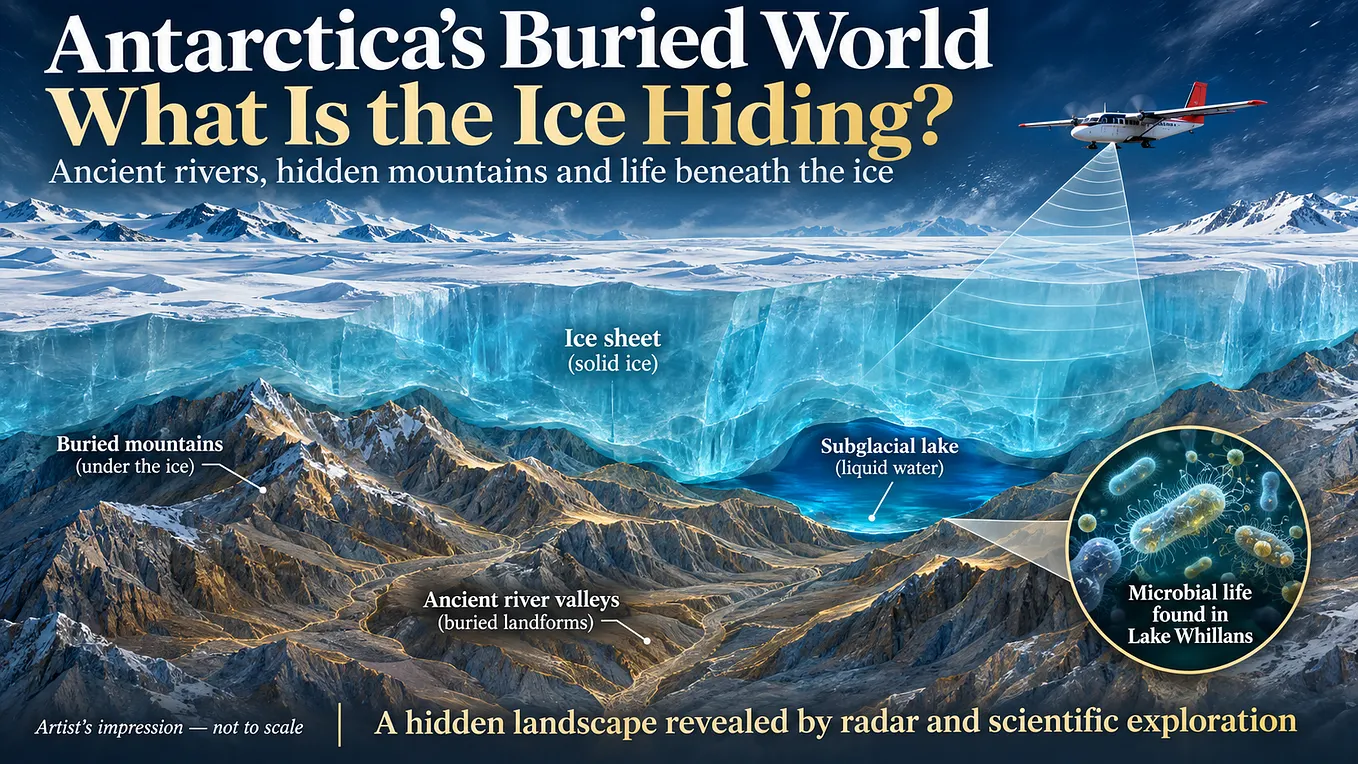
If the biosphere is active, where does the water come from? MARSIS and SHARAD radars have revealed massive ice deposits. Only in the Utopia Planitia region, 14,300 km³ of water ice is concentrated (Stuurman et al., 2016).
Get Dmitry Ryzhikh’s stories in your inbox
Join Medium for free to get updates from this writer.
The deuterium-to-hydrogen (D/H) isotopic ratio in the Martian atmosphere proves that over the last 4.5 billion years, the planet has lost a volume of water equivalent to a global ocean 137 meters deep (Villanueva et al., 2015). This water did not “evaporate” without a trace — it was split (abiotic and biotic photosynthesis), leaving free oxygen and forming subsurface brines that activate cryptoendolithic organisms.


4. Macromorphology: Lichens and Phototropism
In Eagle Crater (Meridiani Planum), thousands of mushroom-like structures 2 to 8 mm in length have been recorded, attached by thin stems to boulders. Critically, they are collectively oriented skyward, indicating phototropism.
Abiotic analog searches (salt deposits, weathering) yielded no results: thin stems (presumably hollow for capillary moisture uptake) could not have survived Martian winds or rover wheel impacts if they were fragile mineral growths. Their elasticity and orientation point to a chitin- or cellulose-containing structure.
Conclusion
We are not dealing with “pareidolia”, but with verifiable data:
- The oxygen cycle is not explained by mineral thermodynamics.
- The Inception V3 neural network and CD/VD1 metric (P < 0.005) identify Martian crusts as stromatolites, excluding basalt.
- D/H isotopes and radar data confirm the presence of a subsurface hydrosphere necessary for metabolism.
The “Dead Mars” paradigm is dead. It remains only to acknowledge this at the level of mission funding.
References:
- Armstrong, R. A., Dunne, M. C. M., Schild, R., & Joseph, R. G. (2026). Mars: Life on the Rocks. A Quantitative Biological Analysis of Chryse Planitia Specimens Employing Metric and Fractal analysis and Machine Learning. Journal of Astrobiology, 17, 1–19.
- Joseph, R. G., Duxbury, N. S., Kidron, G. J., Gibson, C. H., & Schild, R. (2020). Mars: Life, Subglacial Oceans, Abiogenic Photosynthesis, Seasonal Increases and Replenishment of Atmospheric Oxygen. Open Astronomy, 29, 189–209.