The Odyssey: Behind Ludwig Göransson’s Unconventional Score for Christopher Nolan’s Epic
A deep dive into the process behind one of the most distinctive and innovative musical scores of recent years.

Written by Dvir Ben Asuli.

Back when it was first announced that Sir Christopher Nolan and his longtime collaborator Hans Zimmer had parted ways before the production of ‘Tenet’, I wasn’t entirely sure what to expect going forward, even when it was announced that Nolan had chosen already-highly-acclaimed Swedish composer Ludwig Göransson for the soundtrack. I was initially skeptical, but it would be an understatement to say I was pleasantly surprised. The ‘Tenet’ score became one of my favorite film scores of all time, and when Nolan chose to continue working with Göransson on ‘Oppenheimer’, I was glad to learn that this was perhaps the beginning of a new collaboration that would, hopefully, span many, many films.
I can go on and on about the ‘Oppenheimer’ score, but even putting this aside, I came to discover many of the other Ludwig Göransson scores, such as ‘The Mandalorian’, ‘Black Panther’, and, most recently, the Oscar-winning ‘Sinners’, that truly cemented Göransson’s status as one of the most innovative and versatile composers working in Hollywood. Rather swiftly, Göransson became one of my personal favorite film composers, and I was very happy, yet not surprised, to learn he would be the one scoring Nolan’s ‘The Odyssey’. I didn’t know exactly what to expect, but I knew we were in for something special.

Fast-forward a few months, and I caught ‘The Odyssey’ prologue in IMAX. I was totally blown away. Putting the visuals aside, the music was some of the most nerve-wracking I had ever heard in a film, and I have been hooked and invested in what was to come ever since then. A few months later, reports surfaced that Nolan had instructed Göransson not to use an orchestra in the score whatsoever. Much like Benioff & Weiss, the visionary creators of ‘Game of Thrones’, who famously asked composer Ramin Djawadi from day one not to use flutes in order to avoid fantasy genre clichés, Nolan, as usual, took that philosophy ten steps further and essentially asked Göransson to abandon virtually every convention of the genre (whether positive or negative), and instead explore entirely new sonic territory. Stripping away the genre’s most reliable emotional shorthand could easily have left the score feeling cold or lacking. Even saying that Göransson rose to the occasion would be an understatement — and calling that an understatement would somehow still be an understatement. Göransson did not disappoint, and as expected, the score stands as one of the film’s most striking aspects.
“The first recordings to emerge from this process made it clear that [Ludwig] was embarking on his own extraordinary musical odyssey. He traveled thousands of miles and thousands of years to find a language to express a mythic, barely recorded time of apparent magic” — Sir Christopher Nolan.
At Nolan’s request, Göransson dove deep into the music of the Late Bronze Age, ultimately centering the score around ancient Greek instruments such as the aulos and the lyre, and even incorporating actual bronze as a sonic material. The score successfully departs from the generic orchestral tradition that has defined the genre, with Göransson instead using these ancient instruments, together with some modern textures, to match the film’s action-thriller sensibility. The score also incorporates vocals, at times reminiscent of Hans Zimmer, but also taking on an eerie quality on occasion. Looking at the credits, it was nice to see that the vocals were performed not only by James Blake, as previously announced, but also by Flora Nolan — Chris Nolan and producer Emma Thomas’ daughter.

After going over the liner notes of the soundtrack album, I realized there was so much effort, and most of all passion, put into the creation of the music of ‘The Odyssey’. Even more than I initially anticipated. Truly a tremendous endeavor worthy of all the possible accolades. So let’s dive a little deeper into the process behind what stands out, at least to me, as one of the most innovative and daring film scores of recent memory.
As mentioned briefly before, right at the beginning, Nolan told Göransson not to use an orchestra. Not “use it sparingly” or “only when you have to” — it was banned outright. In the aforementioned liner notes, Nolan frames this not as a demand, but as a question he posed rather casually — “what if we do this score without an orchestra?” — admitting, self-deprecatingly, that this was about all the direction he’d given Göransson, apart from a passing suggestion to try some gongs. Göransson’s response to that unhelpful brief was to go rent every gong he could find. This already shows you something about the natural flow of how the two collaborate when embarking on a new journey — Nolan might impose an absolute constraint on Göransson, and he, in turn, answers not with a compromise but with an alternative universe of material — ready to explore new sonic horizons, if that was what the task required.
Göransson saw the vision and didn’t consider the requirement unrealistic himself — telling Time Magazine: “It’s not like the orchestra existed back then… It was a challenge and also an opening to try to make something unique”. This daring requirement was also not all that surprising to Göransson, since each of their two prior collaborations, as well as his work on ‘Sinners’ with Ryan Coogler, was built in a similar way: pick one radical constraint, then build the entire sonic world outward from it.

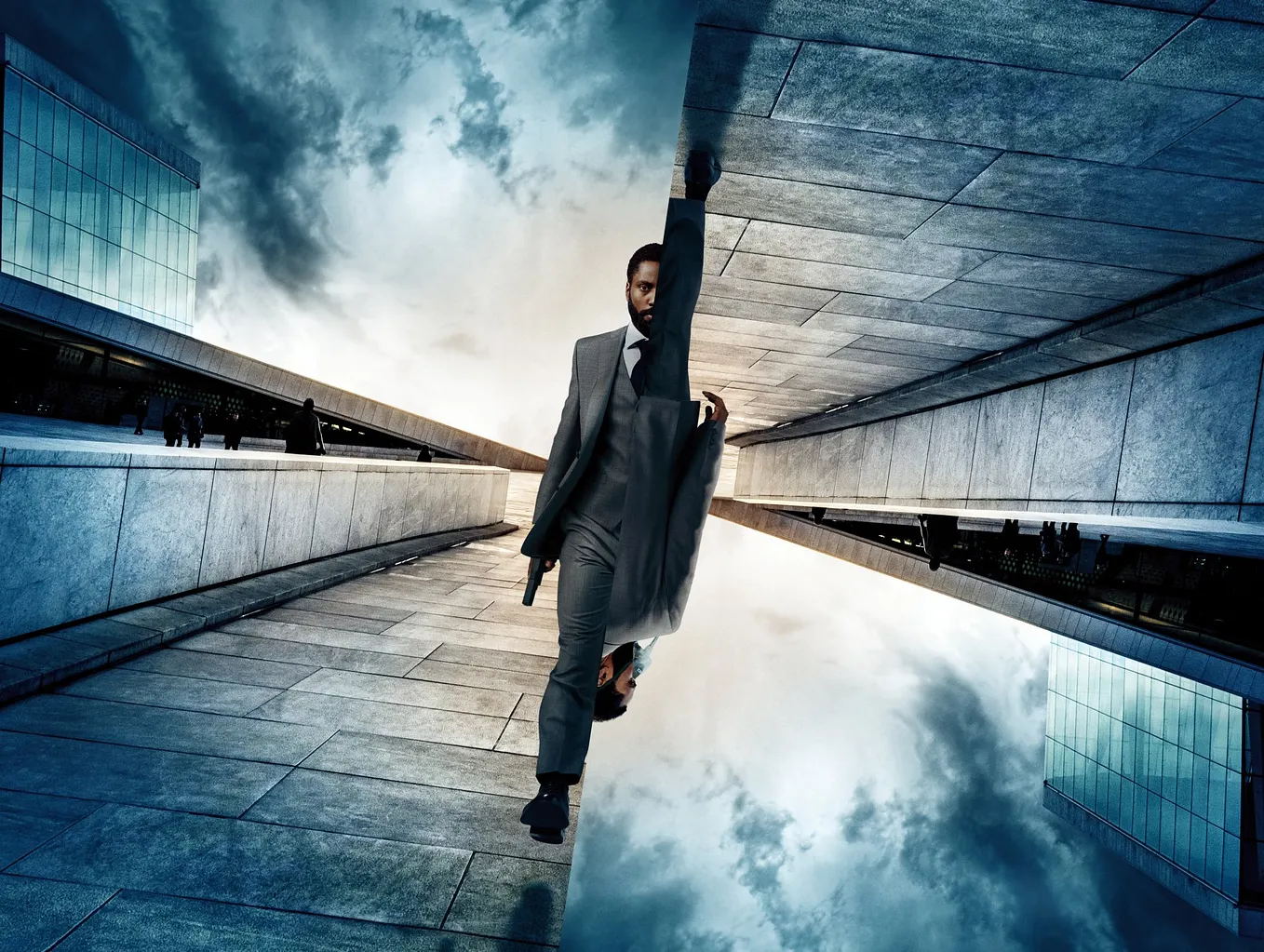
‘Tenet’ embraced reversed audio and unconventional recording techniques to echo its temporal-inversion premise, while ‘Oppenheimer’ rejected drums as Nolan and Göransson felt they carried an overly militaristic charge, finding rhythm instead in stomping feet, ticking clocks, Geiger-counter static, and cellists striking their strings. For the Grammy-nominated track ‘Can You Hear the Music’, Göransson and Nolan set themselves the challenging task of having a live orchestra navigate 21-ish major tempo changes and made it work. With ‘Sinners’, Göransson built much of its score around one character’s central 1932 resonator guitar. He and Coogler immersed themselves in the early blues recordings of the 1930s and ’40s, with Göransson heavily embedding himself in the production of the film and becoming so involved in the process he even got an Executive Producer credit for the film as a whole. Bearing that in mind, the “no orchestra” rule is not mere Oscar-bait, but the latest expression of an approach that challenges Göransson’s remarkable versatility — one that treats each film’s musical language as something rooted in its universe and story. And indeed, what Göransson and Nolan ended up doing is something that I had never quite encountered before — especially not in such a high-profile project that was intended to ultimately appeal to the masses.
Per Göransson’s own account, he finished reading the script for ‘The Odyssey’ and, hands trembling, set it down on the table as Nolan described his vision: an alarm system built from bronze sheets, its cacophony gradually evolving — as more watchguards join in — into a lament of three recurring notes, plucked on the lyre to emulate Odysseus drawing his bow.
According to Aulist and Archaeomusicologist Callum Armstrong’s note in the liner book, the aulos instruments used in the score weren’t generic modern approximations of an ancient “double pipe,” but replicas of two specific, named, physically existing artifacts. The first, the ‘Poseidonia’ aulos, is a reconstruction based on a third-century BC original discovered in Akanthos, northern Greece; the other is based on the ‘Lady Megara’ aulos, a later, larger, more expressive Hellenistic-period instrument. Göransson himself has called it “the most popular rock star instrument for a thousand years” — fitting, given that its actual reeds don’t survive archaeologically, meaning the “voice” of the instrument is itself an informed reconstruction, drawing on philological sources for how the double-reed, double-pipe mechanism would have functioned.

A standout track that showcases the might of the aulos is ‘Sirens’. It opens with simplistic ethereal textures, then moves into an elaborate exploitation of the instrument’s double-pipe construction — with one pipe holding a droning pedal tone while the other carries a melody — one that traces two rising notes into two falling notes that correspond beautifully with the monologue spoken in the scene.
Get Dvir Ben Asuli’s stories in your inbox
Join Medium for free to get updates from this writer.
Lyrist and Archaeomusicologist Rosa Fragorapti’s note traces the lyre instrument back to the Homeric Hymn to Hermes: the infant god steals Apollo’s cattle, then, almost as an afterthought or a peace offering, crafts the first lyre from a tortoise shell strung with gut from the very cattle he stole, and gives it to Apollo as recompense. This creates a brilliant fusion of the lyre’s origin myth with Odysseus and the themes of the story — an instrument whose backstory is about trading crime for song is a fitting emblem for a hero whose whole arc is deception, disguise, and a slow return to a truthful identity. Practically, the score’s lyre was reconstructed as a seven-stringed Testudo graeca (tortoise-shell) model, built from surviving archaeological and iconographic evidence.
“’Tell me, O Muse…’ With these words the Odyssey begins, words born to be sung, inseparable from the strings of the lyre and the voice of the aoidos. In the ancient Greek world, there was no story without song, no song without the lyre” — Rosa Fragorapti

One of my favorite tracks in the score is one of the first, ‘Ithaca’, that showcases this enchanting harmony of the woodwinds and strings; it opens with the aulos, swirling around gentle string plucks that introduce a descending motif. A little later, the lyre plays a melody building to the motif tied to Odysseus’s bow, then proceeds to state the Ithaca theme itself. Underneath, lyres and soft percussion establish the historic sound world. This track is rather minimalistic, yet I find it very moving, while very efficiently setting the tone of the album and establishing the sonic world of the film.
This brings us to one of my personal favorite parts of the score — both theoretically and based on its effect on me as a viewer. Nolan himself broke this down in a separate interview about the film — and to understand what makes the musical piece for the sacking of Troy land the way it does, it’s worth a brief detour into the background of the audio illusion underpinning it. A Shepard Tone is an auditory trick of sorts — a tone that seems to endlessly ascend in pitch without ever actually leaving its register. Practically, it’s mostly achieved by layering multiple octaves of the same note and gradually fading each one in and out so the ear never catches the “reset”. Quite similarly, a Risset Rhythm is its tempo-based cousin: instead of pitch endlessly rising, tempo endlessly accelerates, again through layered, crossfaded repetitions that hide their own seams. The effect, in both cases, is a mounting, inescapable tension that never resolves — which is precisely why Nolan is practically obsessed with it.
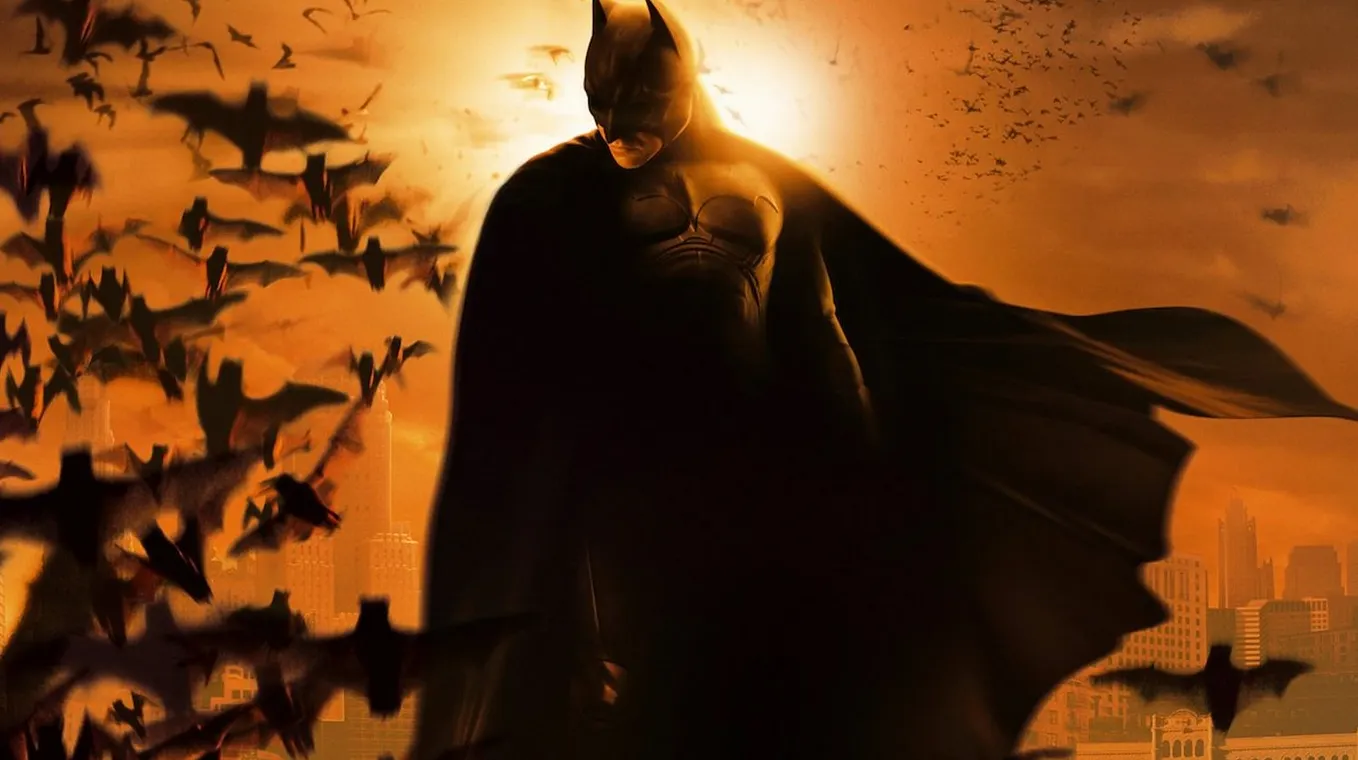
Shepard Tones have threaded through his filmography since ‘The Prestige’, through the Batpod’s engine in ‘The Dark Knight’ before becoming a full-blown principle in ‘Dunkirk’ — a film whose three interwoven timelines Nolan built around the Shepard Tone’s logic itself. Nolan also confirmed that the Risset Rhythm specifically was something he and Zimmer “came up with” in ‘Dunkirk’ — and the ‘Troy’ track marks its glorious return, this time passed down to Göransson.
Fan breakdowns of the actual track bear this out with even more precision: multiple layered rhythmic voices entering at staggered tempo offsets, crossfaded in and out of prominence as they accelerate, with meter shifts folded in between layers specifically to disguise the loop point. It is a small miracle that Göransson manages to sustain the already complicated effect using the same bronze instruments and scrap-metal percussion that define the score’s ancient, unorchestrated palette. Göransson engineered this effect to perfection, making the sacking of Troy one of the most anxiety-inducing stretches of cinema I ever experienced.

While working in his studio in early 2025, Göransson found himself preparing for a possible evacuation as a wildfire loomed just beyond the freeway — writing, in that state, with a strange stillness he likened to ‘almost like a vacuum,’ a mood that shaped the sound of that first set of demos he presented to Nolan. Later on, while sailing around the coast of Lipari watching Nolan and Van Hoytema film, he was, in his own words, searching for “sounds that Odysseus could have been exposed to”. In a later stage of the process, Göransson mentioned recording with aulos player Callum Armstrong and Lyrist Rosa Fragorapti while simultaneously tracking four drummers in the “wood room” with assistant Noah Gorelick, recording Risset Rhythms in real time — in a process he calls both “meticulous and mathematical” but which in the movie becomes “visceral and energizing”.
As mentioned earlier, vocals are also a key part of the score. Whoever read the credits closely, might have found a familiar surname in them. And it’s not by chance. That surname isn’t the only piece of unexpected authenticity in the vocals. Much of the score’s vocal writing draws on iso-polyphony, a centuries-old Albanian folk singing tradition built on interlocking solo voices set against a sustained collective drone. Göransson traveled into villages in southern Albania to record it firsthand — the sound of vocal tradition that is thousands of years old, sung by strong men unafraid of their vulnerability. When looking for the sound of a female vocalist that would ultimately represent a goddess in his work, he asked producer Emma Thomas to bring her and Nolan’s daughter Flora into the studio. She sang a melody, and Göransson immediately recognized it as the voice he wanted for Athena singing Odysseus’ Lament — perhaps carrying the same fearless and unguarded vulnerability Göransson elsewhere associates with iso-polyphonic singing traditionally performed by men.
The track ‘Odysseus’ is perhaps the most elaborate showcase of the aulos-and-lyre symbiosis, bringing together the vocals and percussion in a climactic crescendo. It states Odysseus’s four-note theme in its standard loop on the aulos, while the lyre supplies the devastating undercurrent, the vocal handling the emotional collapse, and the gongs/bronze percussion from the ‘Troy’ motif interjecting gently, symbolizing the lament of the massacre. The scene in which this music plays is widely considered the thematic climax of the film, and as such, the music magically brings together all the motifs and different instruments into the musical catharsis of the entire project.
The genre and era-spanning fusions don’t stop there, and one additional track I want to address is ‘Hades’ — perhaps the most anomalous entry in the musical soundscape of the score. Clocking in at over ten minutes, the track establishes an eerie atmosphere using 808s and other markedly modern sounds compared to the rest of the soundtrack, while carrying a haunting vocalized keen throughout. Even being the most sonically modern track on the album, an outlier of sorts, it does not feel out of place, and feels perfectly aligned with the chthonic atmosphere of Hades in the movie, weaving another unique texture into the rich musical fabric of this project.
Another prominent voice on the vocals is James Blake — whose involvement runs deeper than his billing as featured vocalist suggests. The liner notes credit him as a Score Coordinator, a role that implies real hands in shaping the score rather than simply lending his voice to a finished cue. In outside coverage, his contribution has been described, fittingly, as one of “emotional pacing”. An additional vocal collaborator, who also appeared in the film, is Hip-Hop artist Travis Scott. In the same Time Magazine interview, Nolan explained his logic for casting Scott in the role of a Bard: he “wanted to nod towards the idea that this story has been handed down as oral poetry, which is analogous to rap”. The score’s connective tissue resolves, at the very end of the album, into an original song — “When I’m Home,” co-written by Blake, Scott, Göransson, and even Nolan himself. Placed as the album’s closing, it functions as the moment the “ancient reconstruction vs. contemporary voice” tension resolves into a single modern song.
“At the very end, when the screen turns black, with the loud banging of a stick, their voices carry on, propelling the story further, letting one of the most incredible cinematic experiences sink in and wash over the audience through the voices, lyrics, and melodies of our greatest living bards. Carrying on the oral tradition of The Odyssey” — Ludwig Göransson

Combined with the resonance of ancient bronze and the pulses driven by percussion, haunting vocals, modern 808s and the nerve-wracking Shepard Tone/Risset Rhythm, rather than traditional orchestral soundscape, the music forces the audience out of any familiar and comfortable cinematic territories. Instead, Göransson grounds us in the unique sonic topography of the Bronze Age, translating Odysseus’ millennia-old myth into a thoroughly vibrant and rich musical landscape.
In ‘The Odyssey’, Göransson proves once again that his greatest strength is his willingness to venture into the unknown. On his very own odyssey, and with Sir Christopher Nolan lighting the way, Göransson navigates uncharted sonic waters and braves unmapped territory to forge something refreshingly distinctive in modern film scoring. The result is a score that, on top of accompanying the epic and enriching the cinematic experience, helps anchor its ancient mythos firmly in the modern world, securing its place as one of the most daring cinematic soundscapes of our time.
It stands as a testament to what happens when master artists refuse to play it safe. Göransson didn’t just meet the challenge; he created a modern, timeless classic of his own.
“Ludwig took nothing off the table except the rules, then wandered through time and space with open mind and heart. By the time he found his way home he had quite the tale to tell” — Sir Christopher Nolan