How I Run a One-Person Business With Muse (My Exact Daily Workflow in 2026)
No team, no VA, no chaos — just one AI agent, three daily blocks, and a system that ships every day.


I run a one-person business. No team. No virtual assistant. No office.
And yet, every day, something ships. A Medium article. A blog post. A video. A product update. A reply to a reader who actually needed an answer.
People ask me how. The honest answer is not hustle. It is not waking up at 5 a.m. It is not working 14 hours a day.
The honest answer is that I stopped trying to do everything myself, and I started running one clear system — with Muse doing the boring, repeatable work, and me doing the only work that actually needs me: deciding, judging, and shipping.
This is that exact workflow. Not theory. The one I use every day in 2026.
What Muse Actually Does for Me
First, let me be clear about what Muse is in my business, because most people get this wrong.
Muse is not my boss. It is not my replacement. It is not a magic button that writes perfect articles while I drink coffee.
Muse is my operator. I give it a clear outcome, it does the research, the drafting, the checking, and the publishing prep — and then I review it like an editor, not like a spectator.
Here is the split that works:
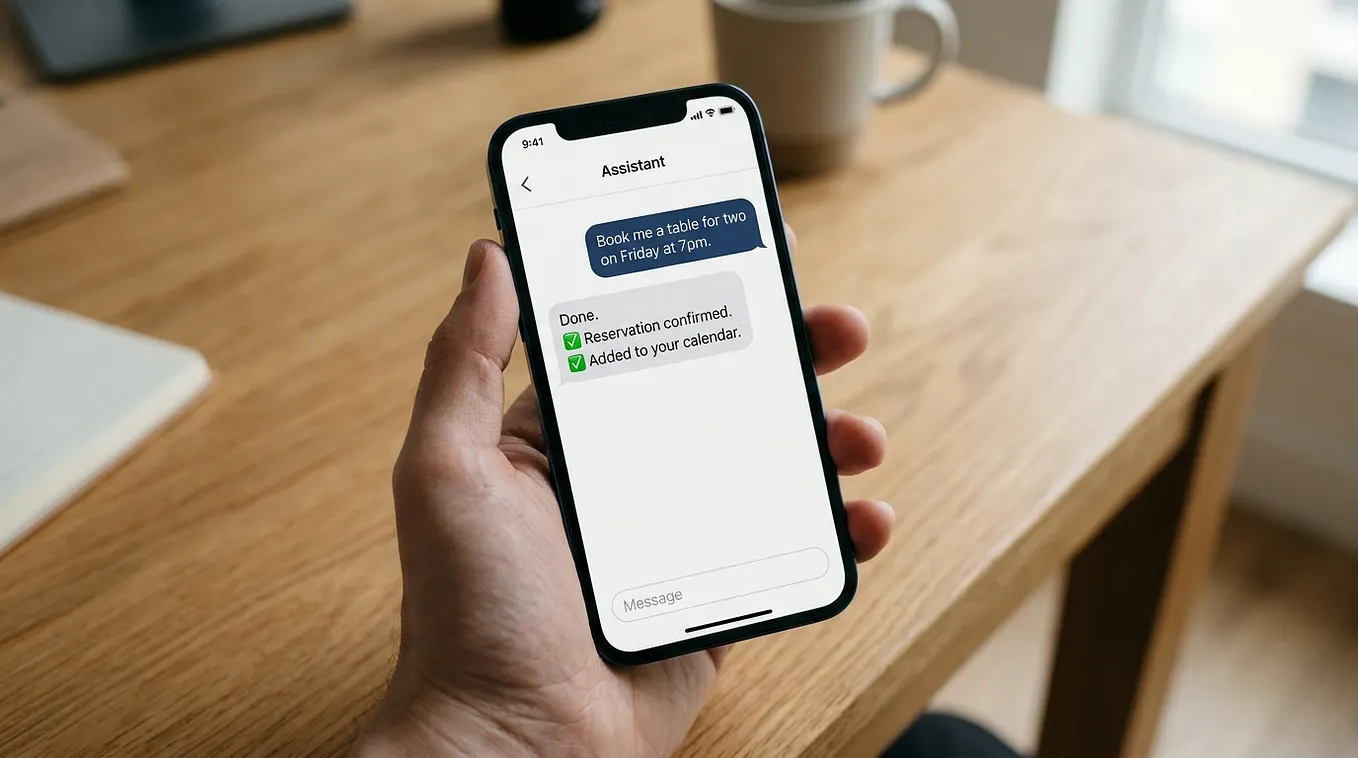
Muse does the research, the first drafts, the formatting, the SEO checks, the image generation, the scheduling, and the boring follow-ups. It remembers my rules so I do not have to repeat them every day.
I do the decisions. Which topic. Which angle. What is true and what is not. What goes out today and what gets killed. What sounds like me and what does not.
That split is the whole system. If you flip it — if you let the AI decide and you just click publish — you get generic content, zero readers, and zero trust. I know, because I have published 226 stories on Medium, and I can tell you exactly which ones flopped: the ones where I stopped deciding.
The System in One Line
Three blocks. One ship per day. One queue.
That is it. Everything else is detail.
I do not keep ten to-do lists. I do not keep ideas in five apps. I keep one queue of what is next, and I work through it in three blocks: morning, midday, and evening.
If a task does not fit in a block, it waits until tomorrow. If an idea does not fit in the queue, it does not exist yet. That sounds strict, and it is — that is why it works.
Block 1: Morning — Decide (60–90 minutes)
My morning is for thinking, not for typing.
I open my queue and I ask three questions: What is the one thing that must ship today? What did yesterday’s numbers actually say? What am I avoiding?
Most days, the answer is simple. One article. One video. One fix to the store or the blog. Not five things. One.
Then I do the research with Muse. Not “write me an article about AI” — that is how you get a generic article nobody reads. I ask for specifics: what is ranking, what are readers actually asking, what did my own best-performing stories have in common, what is missing?
My best stories were never the ones with the cleverest title. They were the ones with a real number, a real mistake, or a real decision in them. “I said no to a client and got a bigger deal 48 hours later” worked because it was a real decision with a real outcome. “I fed a model its own output for three weeks” worked because it was a real experiment.
So in the morning, I lock the topic, the angle, and the payoff. The payoff first, then the hook. If I cannot say in one sentence what the reader will walk away with, I do not write it yet.
By the end of Block 1, I have a one-line brief: topic, reader, payoff, and the three points that prove it. That brief goes to Muse. No brief, no draft. That rule alone saved me from dozens of weak articles.
Block 2: Midday — Produce (2–3 hours)

This is the build block. No meetings. No inbox. No scrolling.
Muse takes the brief and builds the first version: research, outline, draft, images. I treat that draft like a rough cut, not a finished product. I read it end to end and I ask the same question I ask about my videos: would I read this to the end if I did not write it?
If a paragraph feels flat, it gets cut or rewritten. If a claim has no proof, it gets proof or it gets deleted. If the opening does not earn the next paragraph, the opening changes.
This is where most one-person businesses break. They either write everything themselves and burn out, or they publish the AI draft untouched and wonder why nobody reads it. The middle is the job: AI for speed, human for taste.
Images work the same way. I generate three images for an article — one hero, one in the middle, one near the end — and every image has to show what the words are saying. No stock-photo filler. No random laptop-on-a-desk shot that could belong to any article. If the section is about the morning decision block, the image should feel like a quiet morning desk, not a generic office.
Then I do the boring-but-important part: title, subtitle, SEO title, SEO description, and five tags. Not ten tags. Five, and the same core tags across stories so Medium learns what I write about. My tags are simple: Muse, Artificial Intelligence, Entrepreneurship, Solopreneur, Productivity.
Get Farhad’s stories in your inbox
Join Medium for free to get updates from this writer.
I also set the story to member-only. That is a business decision, not a vanity one. Free stories earn nothing in the Partner Program. I learned that the hard way — my last five stories before this system were free, and they earned exactly zero, no matter how many people opened them.
Block 3: Evening — Publish, Engage, Review (45–60 minutes)
Nothing is “done” until it is published and checked live.
In the evening, I publish. I open the live link. I check the title, the images, the formatting on mobile, and the links. If something is broken, I fix it now, not tomorrow, because tomorrow has its own ship.
Then I engage — and I mean genuinely engage, not spam. I reply to every comment on my stories. I read two or three stories in my niche and leave a specific comment, not “great post.” I follow one writer who actually writes well in my lane.
That 15 minutes of engagement does more for distribution than any growth hack I have tried. Medium is not a dumping ground. It is a network. If you never talk to anyone, no one talks back.
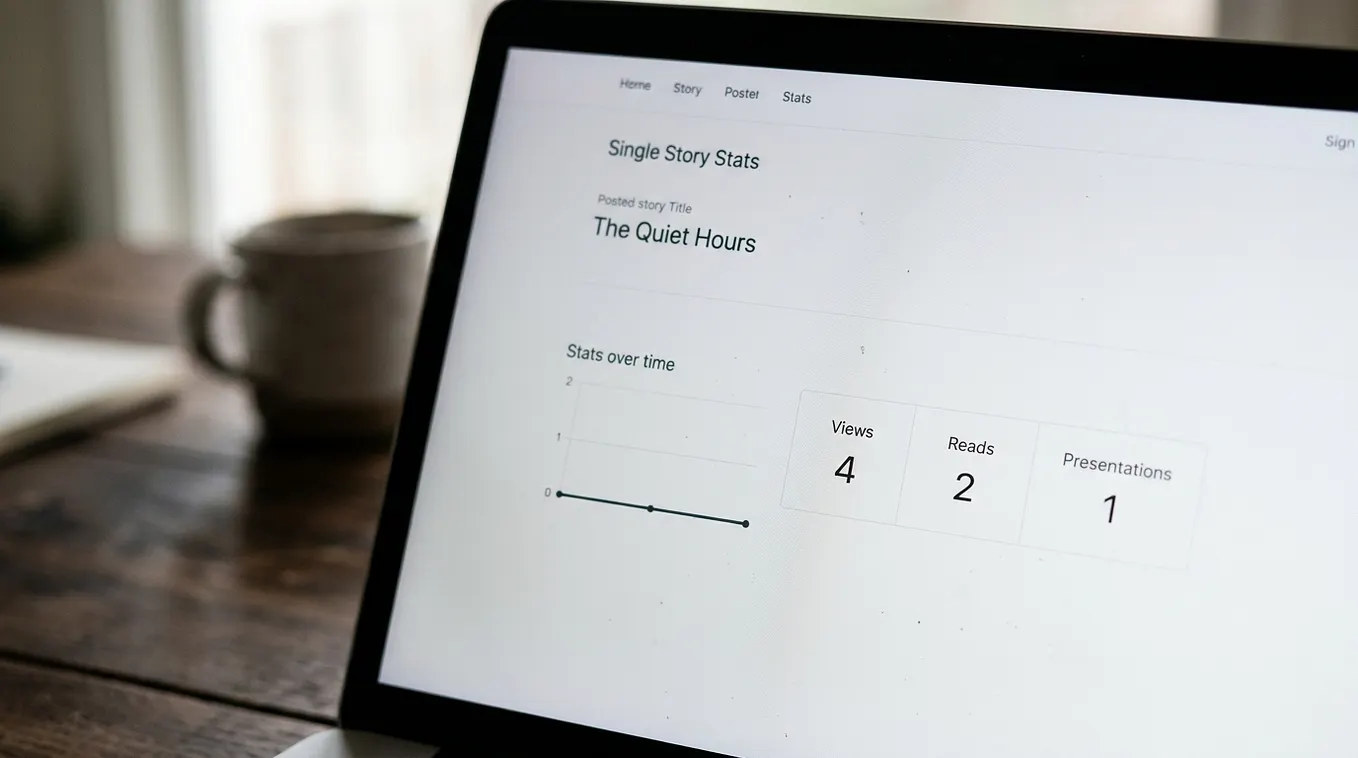
Finally, I review the numbers for five minutes. Not for an hour. Five minutes. Views, reads, read ratio, followers. Read ratio matters more than views — a story with 200 views and a high read ratio earns more and gets distributed more than a story with 2,000 views that everyone abandons in ten seconds.
Then I write tomorrow’s one line in the queue, and I stop. The business closes for the day. That boundary is part of the system. A one-person business without a stopping rule becomes a 24-hour anxiety machine.
The Three Rules That Hold It Together
Everything above only works because of three rules I do not break.
Rule 1: One inbox. Every idea, request, and task goes into one queue. Not in my head, not in three apps, not in a chat I will never re-open. If it is not in the queue, it does not get done — and that is a feature, not a bug.
Rule 2: One ship per day. Not three ships. Not zero. One. On a bad day, one small ship still counts. On a good day, I do not add a second ship just because I have energy left — I use that energy to make tomorrow’s ship better.
Rule 3: Decide, then delegate. I never hand Muse a vague task. “Grow my Medium” is not a task. “Draft a 1,800-word article from this brief, with these three points, in this voice, for Startup Stash readers” is a task. The clearer the brief, the better the output. Every time the output was weak, the brief was vague. Every time.
What I Stopped Doing
A workflow is also a list of things you stop doing.
I stopped publishing every day just to publish. Volume without distribution is just noise — 226 stories taught me that. Two or three strong stories a week beat seven rushed ones.
I stopped writing about five different niches in the same month. Readers follow you because they know what you write about. If they like your AI workflow article and your next article is a personal essay about something unrelated, they do not follow. They forget.
I stopped putting “friend links” at the top of stories and chasing loopholes. Medium has been clear about that, and loopholes do not build a business. Good stories, published consistently, in the right publication, do.
I stopped checking stats all day. Stats are a lagging indicator. The work is the leading indicator. Check once, in the evening, then go and live your life.
How to Copy This in 7 Days
You do not need my exact tools to copy this. You need the shape.
- Day 1: Pick one niche. One. Write it down. Everything this week serves that niche.
- Day 2: Write your one-line brief format — topic, reader, payoff, three points. Use it for every piece.
- Day 3: Set up your three blocks. Even if each block is only 45 minutes, protect them.
- Day 4: Publish one story, member-only, with five tags and three images. Check it live.
- Day 5: Reply to every comment you get, and leave three specific comments on other writers’ stories.
- Day 6: Review your read ratio, not just your views. Ask: where did readers stop? Fix that spot in your next story.
- Day 7: Write next week’s queue — three ships, one per day, no more. Then stop and rest. You are running a business, not a sprint.

The Point Is Not Muse
Here is the part I want you to remember.
The point is not Muse. The point is not AI. In a year, the tool will have a different name and a different interface, and the people who built their whole business around one tool will have to start again.
The point is the system: decide clearly, produce in one focused block, publish and check live, engage like a human, review the numbers once, and ship one thing a day.
Muse just makes that system affordable for one person. It takes the boring work off my plate so I can spend my hours on the only work that compounds: good decisions, good taste, and showing up again tomorrow.
I am still a one-person business. I just do not do it alone anymore.
If you run a one-person business too, tell me in the comments: what is the one boring task you would hand to an AI first? I read every reply.
Follow for the next one — I am turning this workflow into a weekly series, with real numbers from my own Medium, blog, and store.