The Moral Field: Infinite Potential and the Unfinished Universe

What if morality begins not with a command, an instinct for goodness, or even well-being, but the moment one consciousness encounters another?
By Gary Mazeffa
I keep returning to the cathedral.
Part of that is literal. Cathedrals have found their way into my filmmaking and writing for years. But the cathedral has also become a way for me to think. It contains accumulated longing, ritual, beauty, authority, contradiction, certainty, mystery, and thousands of years of people asking questions that refuse to go away.
Then I walk outside.
That second movement matters. I want to know whether an idea continues to work when the cathedral is no longer necessary to support it. Can it survive without revelation, divine command, eternal reward, or fear of punishment? Can it speak to a believer, an atheist, an agnostic, and someone who has never felt the slightest need to enter a church?
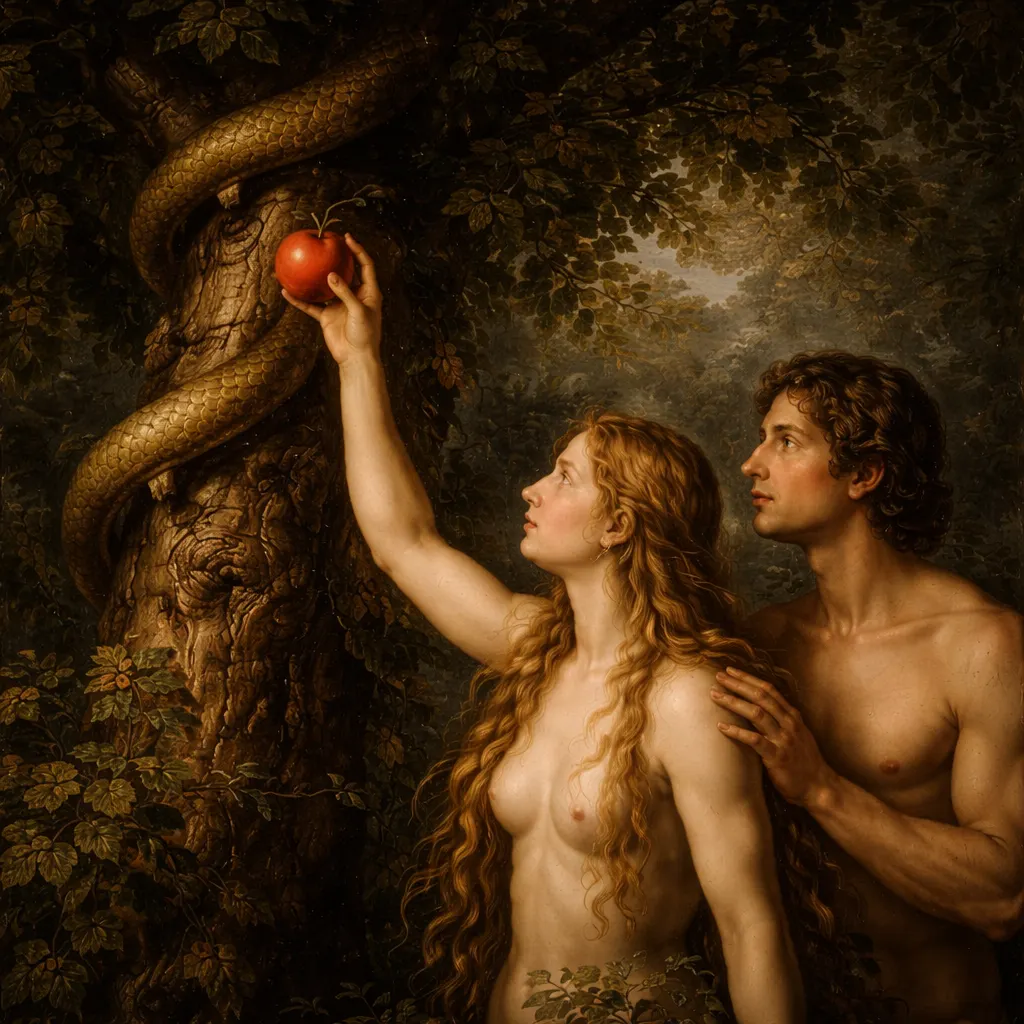
The path that brought me here did not begin with morality. It began with the sacred feminine and with Asherah: A Love Odyssey, the film I have spent years writing and making. I began by asking what happens when the feminine is diminished, erased, or treated as secondary inside a religious story that nevertheless depends upon the feminine for birth, relationship, continuity, and creation.
I thought I was making a film about Asherah. Somewhere along the way, Asherah began leading me toward a larger question: What does any genuine relationship require of the beings within it?
That distinction has become important. The Moral Field does not require one man and one woman. Put two men in the room, two women, a human being and some other genuinely conscious creature, or — if one wants to move into theology — a creator and a created being. Gender is not the logical prerequisite.
The Moral Field does not depend upon sexual difference. It depends upon relational difference.
The sacred feminine was the doorway because its absence made the problem visible. What happens when relationship becomes hierarchy and one center of being is no longer allowed to answer back?
My academic credentials for attempting any of this are not especially intimidating. My master’s degree is in business, which is not usually where one goes looking for metaphysics, although anyone who has spent enough time in a corporate boardroom has probably witnessed several competing theories of human nature. I am a filmmaker and writer, not a professional philosopher or theologian. I tend to approach an idea as I would a scene: place the characters somewhere, introduce a change, and watch what happens.
So let us begin with the least theological setting imaginable.
Put one person in a room.
When One Becomes Two
The person may sit, stand, think, pray, sing, sleep, inspect a tooth in the mirror, or contemplate the universe. There are consequences to what this person does, certainly, but most of those consequences remain private. The room contains one center of experience and one claim — spoken or unspoken — that what happens here matters to someone.
Now open the door and allow a second person to enter.
Nothing supernatural has occurred. No commandment has descended. Neither person has suddenly become kind, generous, honest, or wise. They may be strangers. They may dislike one another immediately. Either may be selfish, manipulative, frightened, loving, dangerous, or simply trying to get through the day.
Yet the room has changed.
Anyone who has ever been alone in an elevator when the doors open and another person steps in understands the principle immediately. Posture changes. Distance matters. Silence has a different meaning. The possible actions have been reorganized simply because another center of experience is present.
The room gives us a cleaner experiment, so I will stay with it.
The first person carries a claim: I matter. The second carries the same claim: I matter. By this I do not mean that everyone necessarily feels valuable or even wishes to survive at every moment. I mean that experience has an inside. Pain, relief, fear, longing, pleasure, grief, and possibility happen to someone, from a point of view no one else can completely occupy.
Between the two people appears a word that did not exist in quite the same way before:
And.
This is where I believe the Moral Field begins — not when a rule is announced, but when mattering becomes plural. Consciousness creates mattering. Relationship pluralizes it.
The field does not make either person good. It does something more basic. Whatever either person chooses can now enter another interior life. One can help, deceive, frighten, protect, exploit, teach, love, injure, ignore, forgive, or change the other.
Morality may therefore begin before goodness. It may begin with answerability.

Why Call It a Field?
I use the word field deliberately.
A landscape already has contours. There are peaks and valleys, higher places and lower places, and directions that appear better or worse before anyone takes the first step. A field, at least as I am using the metaphor, begins more openly. What matters is what enters it, what relationships form, and what possibilities appear or disappear because of those relationships.
Physics makes the word tempting because modern physics does not describe reality simply as a collection of isolated little objects. Quantum field theory describes particles as excitations or waves in fields, and interactions among physical systems change the states available to them. CERN itself uses field language this way when explaining the quantum world.
Quantum mechanics makes the analogy even more tempting, so some discipline is necessary here. I am not claiming that quantum mechanics proves morality, that particles possess moral responsibility, or that human consciousness is required to produce an ordinary quantum measurement. The Moral Field is a philosophical model, not a newly discovered physical force.
The double-slit experiment gives us a useful example of the distinction. When information about which path a quantum system takes is unavailable, interference can be observed. When the system interacts with a measuring apparatus in a way that makes the path distinguishable, interference is reduced or lost. A conscious person does not have to be staring at the apparatus. The relevant physical point is that interaction and information have changed what can be observed from the system.
That interests me for a much simpler reason:
Interaction changes what remains possible.
Nature appears to be relational long before anything we would call morality enters the picture. Physical systems affect other physical systems. Their histories become connected. What happens next can depend upon what they encounter.
Then move upward to our room.
One conscious being is present. A second enters. Nothing quantum has been demonstrated by that event, and no wave function needs to collapse for the analogy to work. Yet again, the range of possibilities changes. Each person has become part of the conditions under which the other now acts.
Something additional has appeared, however, that the particle analogy does not contain in any ordinary scientific account: experience. The consequences now happen to someone.
That is where the analogy stops and the Moral Field begins.
Nature may be relational before consciousness appears, but conscious relationship introduces experience, agency, consequence, and eventually answerability. Responsibility will not be equal in every relationship; it grows with knowledge, power, capacity, and freedom. But once experience can be affected, morality has somewhere to occur.
Perhaps the simplest formulation is this:
Nature is relational before it becomes moral. The Moral Field begins when relationship becomes capable of experiencing consequence.
Before the Moral Landscape
Sam Harris has argued that morality can be understood through the well-being of conscious creatures. In The Moral Landscape, he imagines peaks and valleys corresponding to greater flourishing and greater suffering. He has also directly addressed the objection that choosing well-being already assumes a value before science begins its work.
I am sympathetic to much of the project. I have often preferred talking about what works and what does not work rather than beginning with the inherited language of good and evil.
But I think the Moral Field begins one step earlier.
Before we ask what improves another person’s well-being, something has already happened that makes the question possible. Another center of experience has entered my world. Before I decide whether I care about your flourishing, my actions can already affect it.
Why should I care? That remains a legitimate philosophical challenge. But the Moral Field is not initially asking me to care. It is identifying the relationship in which caring, indifference, exploitation, cooperation, and every other response become consequential.
Two conscious beings occupy a shared reality. That is the first event. Each can now change the possibilities available to the other. No mountain has yet been declared good. No valley has been declared evil. No destination has been selected.
There is simply more than one center of experience inside the same field of consequence.
So before there is a moral landscape, there may have to be a moral field.
The Field Has a Tilt
For a while I thought the field’s tilt was simply toward preserving the and — preserving more than one center of mattering instead of allowing one to absorb, own, silence, or destroy the other.
I still think that is useful. But the idea has moved one level deeper.
The Moral Field may have a structural tilt toward generative possibility.
I do not mean that the universe rewards nice behavior or possesses a hidden preference for cooperation. I mean that if a field is to remain genuinely relational, enough agency, difference, openness, and response must remain for something new still to be possible.
Some choices enlarge that space. Others narrow it. Some close it almost entirely.
That gives me a question I now find more useful than asking whether an action fits a predetermined definition of good:
Which choices preserve and enlarge the possibilities for relationship, participation, and becoming?
Cooperation often does that. Trust can do it. Honest disagreement can do it. Education, art, friendship, forgiveness, scientific inquiry, shared work, and even competition — when the participants retain meaningful agency — can create possibilities neither party possessed alone.
Self-interest is not automatically excluded. A person may behave decently because of compassion, principle, love, enlightened self-interest, or simply because treating people reasonably turns out to be a remarkably effective way of getting more of what one wants.
The field does not inspect the purity of every motive before consequences appear. It reveals what our choices do to the possibilities available within the relationship.
That is why tyranny can “work” for the tyrant while failing the field. It may enlarge one person’s options by collapsing those of many others. Slavery does the same thing with terrible efficiency: one center of agency converts another into property.
The question is not how many possibilities the strongest participant possesses. It is whether the relational field remains capable of generating possibility among genuinely participating centers of experience.
The Moral Field therefore has no predetermined moral destination. Its tilt is toward preserving and enlarging the capacity for relationship, participation, agency, correction, and shared becoming.
Does an “Is” Become an “Ought”?
There is an obvious philosophical objection. David Hume famously warned against moving carelessly from statements about what is to statements about what ought to be. The fact that another person exists does not logically force me to value that person. Description cannot be turned into obligation merely by changing the punctuation.
The Moral Field does not solve that problem by magic, nor does it guarantee good behavior. No moral system has ever eliminated refusal. A command can be disobeyed. A law can be broken. Empathy can be suppressed. Even sincere belief in divine punishment has never prevented human beings from doing terrible things.
What the field establishes is not compulsory goodness but unavoidable moral location.
Once I recognize another as a center of experience, my indifference is no longer neutral in quite the same way. It becomes one possible response to someone whose life can be changed by what I do. I may still choose domination, withdrawal, deception, or violence, but I cannot honestly say that only one center of consequence existed.
The “ought” may therefore arise not as some invisible substance hidden inside the facts, but as the answerability created by relationship. Your existence does not physically compel my care. It makes my refusal to care intelligible as a choice with consequences beyond myself.
The Moral Field is therefore less a rulebook than a description of the shape within which moral questions become possible:
Otherness → Relationship → Consequence → Responsibility → Reciprocity → Becoming
The sequence does not tell us everything we should do. It tells us why what we do can no longer belong entirely to ourselves.
Relationship, Responsibility, Reciprocity
The Moral Field has three movements at its center.
Relationship is shared existence. Before two people agree to share anything, they already share the room. Their differences do not prevent relationship; difference gives relationship something to cross. If there were no otherness at all, there would be no genuine encounter — only repetition.
Responsibility is shared consequence. Once either person can alter the other’s possibilities, freedom is no longer entirely private. Responsibility does not mean equal blame or equal power. A child and an adult may share a room, but they do not carry the same burden for what occurs within it. Greater power, knowledge, freedom, and capacity create greater potential consequence and therefore greater responsibility.
Reciprocity is shared becoming. Reciprocity is not a commercial exchange in which every kindness must be repaid at equal value. It means that each participant can answer, resist, contribute, surprise, teach, wound, forgive, and change the other.
Responsibility makes love accountable. Reciprocity makes love mutual.
This is why responsibility must never be confused with blaming people for what has happened to them. Victimization is real. Power can be brutally unequal. Some people enter the field with choices already narrowed by violence, poverty, discrimination, trauma, illness, or the actions of others. The field distributes responsibility according to power, capacity, knowledge, and consequence. It does not flatten everyone into equal guilt.
But wherever meaningful agency remains, even in damaged form, possibility remains as well. A person may have been acted upon and still become an actor. Responsibility does not erase the past; it changes what the past is permitted to become.

The Sacrament of Sharing
There is a word hidden inside all three movements of the Moral Field.
Shared.
Relationship is shared existence. Responsibility is shared consequence. Reciprocity is shared becoming.
But what does it actually mean to share?
Federico Faggin’s thinking about consciousness makes the question more interesting for me. Whatever consciousness ultimately is, my experience remains mine from the inside. I cannot enter another person’s consciousness and experience a color, a memory, a grief, or a moment of joy exactly as that person experiences it. I can listen. I can observe. I can empathize. I can recognize something familiar in myself.
But I cannot literally become the other.
And yet human beings spend much of their lives trying to cross that distance.
We tell stories. We make art. We sit across tables. We hold hands. We confess things we have never told anyone else. Sometimes two people simply sit on a bench watching dogs play in a park, and something passes between them that neither could quite reproduce later in words.
Nothing has been transferred like an object. Neither consciousness has absorbed the other.
But something has been shared.
Perhaps this is one of the deepest forms of intimacy available to us. Sexual intimacy can certainly become an expression of profound mutual sharing, but it can also remain remarkably self-contained. Another person can become the source of my pleasure, my sensation, my release. Physical closeness does not by itself guarantee that either person has traveled very far beyond the self.
Sharing asks for another kind of movement.
It asks me to make some portion of my interior life available to you and to become receptive to some portion of yours. Attention moves outward. For a moment, the question is not simply What am I experiencing? but What are you experiencing, and can I meet you there?
I still cannot feel precisely what you feel.
But sometimes I can feel with you.
The distinction matters. If I could completely enter your consciousness, the boundary between us would disappear. There would no longer be two centers of experience participating in relationship. Communion would become absorption.
Sharing does something more delicate.
It allows the boundary to remain while making the boundary permeable.
What was private becomes participatory without ceasing to be private. Your grief remains your grief, but after you share it with me, it has consequences inside my experience too. Your laughter may begin in you and end with both of us laughing. A memory I never lived can nevertheless change me because you trusted me enough to tell it.
This is why sharing has always felt sacramental to me.
I do not mean sacrament here as a formal religious claim. I mean an outward act through which something inward and otherwise inaccessible becomes present between people. A meal can do it. A conversation can do it. Silence can do it. Grief can do it. Art can do it.
The sacredness, if that word belongs anywhere, may not lie in eliminating the distance between us.
It may lie in crossing the distance without destroying it.
That is communion without sameness.
The Architecture of the Moral Field
As the idea developed, it began arranging itself into three inner relationships and three outer disciplines.
At the center are Relationship — shared existence; Responsibility — shared consequence; and Reciprocity — shared becoming. Around them are Creation — without control; Communion — without sameness; and Completion — without finality.
These six phrases now seem to grow from the same underlying principle.
Creation without control preserves unforeseen possibility. A child, a work of art, an idea, a community, or any genuinely independent creation may carry the creator’s imprint without remaining the creator’s property. Complete control keeps the future trapped inside what the creator already knows.
Communion without sameness preserves the possibilities contained in difference. We can share a meal, a life, a country, a planet, or a future without becoming identical. Difference can be irritating, inconvenient, and sometimes dangerous. It can also bring something into the relationship that no single participant possessed alone.
Completion without finality preserves the possibility of further becoming. A film can be completed and still acquire meanings its creator never intended. A relationship can reach commitment without reaching an ending. A society can accomplish something real without pretending history has arrived at its final form.
The six terms describe an open moral system. Relationship establishes the field. Responsibility makes consequence accountable. Reciprocity gives the field movement. The three outer disciplines protect the openness through which new possibilities can continue to emerge.

Where the Sacred Feminine Entered
This framework can stand without assuming a particular theology, but I do not want to pretend I arrived at it from nowhere.
The journey began with the sacred feminine.
Asherah: A Love Odyssey forced me to keep asking what is lost when the feminine is treated as secondary to the masculine, or when the created is expected only to obey the creator. At first I thought I was asking a question about religion, mythology, and the recovery of a missing feminine voice.
Eventually I realized I was looking at a more general structure.
The problem was not simply that a woman had been left out. The deeper problem was that otherness had been denied full participation. Once one side of a relationship becomes the unquestioned center and the other becomes an object, helper, possession, symbol, or obedient extension, reciprocity begins to disappear.
The field contracts.
That is why the sacred feminine remains essential to the story even though the Moral Field itself does not require sexual difference. The feminine revealed the field because its exclusion revealed what happens when relationship becomes hierarchy.
Asherah was the doorway, not the boundary.
A tradition does not become whole by making the feminine identical to the masculine. It becomes more whole by allowing the feminine to remain genuinely other and still fully present.
That is communion without sameness.

Asymmetry: The Little Imbalance That Keeps Things Moving
Once possibility became central to the Moral Field, another idea returned with more force: asymmetry.
Perhaps the disruptive ingredient necessary for becoming is not what we traditionally call evil. It may be something much more basic: difference, tension, instability, interruption, or imbalance.
In many physical systems, change is driven by differences — temperature, pressure, concentration, energy. When meaningful gradients disappear, less remains available to drive further change.
Physics provides some beautiful analogies, and I mean analogies, not evidence for a moral theory.
CERN explains spontaneous symmetry breaking with the image of a pencil balanced perfectly on its tip. The setup is symmetrical but unstable. When the pencil falls, it selects a direction. The underlying laws remain symmetrical, but the physical system now has a particular history.
The matter-antimatter puzzle offers another striking image. CERN explains that the observable universe appears to have survived because of a tiny excess of matter — roughly one extra matter particle for every billion antiparticles — after most matter and antimatter annihilated. Physicists still do not know what produced that imbalance.
None of this proves a moral philosophy. But the image is difficult for me to ignore:
Something did not cancel out.
Perhaps the Moral Field likewise does not require perfect balance. It requires enough difference for relationship to remain active, enough stability for something to exist, and enough openness for something else still to happen.
Complete enough to exist. Unbalanced enough to continue.
Destruction Is Not the Same as Foreclosure
This is also where the language of good and evil begins to feel too blunt for me.
A collapsing star is not evil. A forest fire is not evil. An old institution breaking apart is not automatically evil. Destruction can close possibilities, but it can also release new ones. Stars die and contribute material to later systems. An unjust structure can collapse and leave space for something more open. A failed idea can make a better one possible.
So I no longer think the opposite of creation is destruction.
The Moral Field does not oppose destruction. It opposes foreclosure.
Foreclosure is the closing down of another center’s capacity to participate, answer, choose, correct, and become. Murder is an extreme foreclosure because it ends that person’s future agency. Slavery forecloses by converting agency into ownership. Totalitarianism forecloses by collapsing many possible voices into one permitted voice. Absolute control forecloses surprise.
Even here we have to be careful. Human beings can create possibilities in response to terrible destruction. War can accelerate technologies. Oppression can produce resistance. Atrocity can provoke institutions intended to prevent repetition.
But that does not make the atrocity necessary or retroactively good.
Get Gary Mazeffa’s stories in your inbox
Join Medium for free to get updates from this writer.
The field can recover possibility from destruction without requiring the destruction. The creative achievement belongs to the response.
That distinction matters because any philosophy of becoming can become morally dangerous very quickly if every horror is declared “necessary for growth.” Responsibility would disappear. The Moral Field has to hold two truths at once: destruction can sometimes become generative, and the person who destroys remains answerable for the possibilities that were closed.
Infinite Potential and Federico Faggin
This is where Federico Faggin returns to the conversation for me.
Faggin is the physicist and inventor who helped create the first commercial microprocessor and later turned much of his attention toward consciousness. With physicist Giacomo Mauro D’Ariano, he has proposed a speculative quantum-information model in which consciousness is fundamental rather than merely something classical matter eventually produces. I do not use that model as proof of the Moral Field. It is a controversial metaphysical and scientific proposal, not settled physics.
What interests me is the pattern he keeps following.
In his 2023 paper Possibilities are quantum, Faggin describes a conscious agent confronting what he calls a “near-infinite combinatorial sea” of possible patterns. His larger claim that genuine creative possibility belongs fundamentally to the quantum level is his own theory, but the emphasis on possibility caught my attention.
There is also a simpler pattern in nature that requires much less speculation. At the quantum level, interactions change the possible states of systems. At the biological level, tens of trillions of differentiated cells communicate, constrain one another, specialize, and cooperate to sustain a living organism that no cell could produce alone.
Then move outward again.
Two conscious beings enter relationship.
Again, what becomes possible is not merely the arithmetic sum of what each could have done alone. Conversation can produce an idea neither person possessed beforehand. Cooperation can accomplish something neither could do independently. Conflict can alter both participants. Love can change the lover as well as the beloved. Creation can return something to its creator that the creator did not know was there.
Across radically different scales, I keep encountering a similar structural pattern:
Relationship changes what becomes possible.
The scales should not be confused. Quantum particles are not moral agents. Cellular cooperation does not prove that consciousness is fundamental. Human beings are not giant quantum experiments.
But the recurrence makes the Moral Field feel less arbitrary to me. It does not invent relationship at the human level. It asks what happens when a universe already filled with interaction produces beings capable of experiencing those interactions, choosing among possibilities, and understanding something about their consequences.
The progression can be stated simply:
Matter interacts. Life cooperates. Consciousness becomes responsible.
That last movement changes everything.
Possibility now has an inside. A choice does not merely alter a physical arrangement; it can alter another being’s experience and future. The more freedom a conscious participant possesses, the more possibilities that participant can open or close for others.
Relationship becomes consequence, and consequence becomes answerability.
Faggin takes his thinking farther. In his recent discussions he describes the One as knowing itself through distinct conscious centers, and he has speculated that spacetime and matter might even be understood as a lasting memory of that continuing self-knowing. He explicitly presents this as speculative cosmology.
I cannot know whether that is true.
What interests me is the direction of the idea: the One does not become many merely to arrive at a final answer. Difference creates additional experience. Experience creates additional knowledge. New knowledge creates new relationships and therefore further possibilities.
The more there is to know, the more there may be left to become.
The Moral Field makes a narrower claim. Once distinct centers of consciousness exist, their relationships can generate possibilities unavailable to either in isolation. Those possibilities carry consequences, and with consequence comes responsibility.
One consciousness encounters another. Possibility multiplies, but so does consequence.
That is where possibility becomes moral.
Nature does not prove the Moral Field.
But the Moral Field may not be alien to nature either.
The Feel of the Field
Something is still missing if all of this is described only in terms of interaction, possibility, and consequence.
A relationship does not merely happen.
It feels like something from within.
This is another place where Faggin’s work interests me. He draws a sharp distinction between processing information about an experience and actually having the experience. A computer may process symbols associated with color, pain, love, grief, or beauty. His argument is that this does not explain the private, lived quality — the feel — of seeing red, suffering pain, or loving another person. That remains part of the larger unsolved problem of consciousness, and Faggin’s own answer to it is controversial.
But the mystery itself is familiar.
The description is not the experience.
Sharing does not solve that mystery. I still cannot possess another person’s experience as my own. But sharing allows one private interior life to become consequential within another. That may be why it can feel so intimate — and why the line between intimacy and spirituality sometimes becomes difficult to locate.
I could record everything externally observable about two people in love — their words, gestures, heart rates, histories, brain activity, frequency of contact — and still not possess what it is like to be either one of them.
Perhaps this is where spirituality enters the Moral Field.
I do not mean spirituality as proof of another world or as a doctrine that must be believed. I mean something simpler: the felt depth of participation in relationship.
Another conscious being is not merely information arriving from outside me. That person can enter my experience, alter what I feel, change what I understand, and participate in who I become.
Morality asks what relationship requires of me because my actions have consequences. Spirituality may begin with a different recognition: relationship itself has an interior dimension. Being connected to another person, to nature, to life, or perhaps to something larger than ourselves can be felt before it can be fully explained.
Not every feeling is spiritual. A toothache is a feeling. Irritation is a feeling. Nor does spirituality require another person standing in front of us; solitude, music, nature, grief, wonder, and silence can all produce experiences people describe as spiritual.
But within the Moral Field, spirituality has a recognizable place.
If morality is the responsibility created by relationship, spirituality may be the experience of relationship from within.
That does not place spirituality above the field as another authority. It may simply be what participation in the field feels like.
Perhaps oneness begins there — not as sameness and not as a scientific claim that everything is literally one substance, but as the recognition that our separate lives can participate in realities larger than either one alone.
The Created Changes the Creator
We commonly imagine creation moving in one direction. The creator acts; the creation receives. The parent shapes the child. The writer shapes the story. God shapes the universe.
Yet every serious act of creation eventually seems to reverse the current.
A child changes the parent. A character begins resisting the outline. Actors return something the writer did not know was present. An audience interprets a film through experiences the filmmaker does not possess. Once a work is shared, it remains the creator’s and no longer belongs only to the creator.
I have seen a smaller version of this while developing scenes with artificial intelligence that may later be reinterpreted in live action. I begin with the subject, dialogue, intention, and scene, but the process can return timing, reactions, juxtapositions, or emotional rhythms I had not explicitly anticipated. I remain responsible for selection and meaning. The tool does not need to be conscious for the creative process itself to become recursive.
Creator becomes creation; creation becomes creator.
The highest act of creation may be to produce something capable of creating in turn. The child eventually holds the keys. The student teaches. The audience carries the story somewhere the artist never expected.
A creation that can never surprise or resist remains an extension of control.
That is why the Moral Field applies to the creator as well. To create another center of genuine agency is to enter a relationship whose consequences cannot belong only to the created. The creator becomes answerable for what has been brought into the world and vulnerable to what the created may become.
The Problem With a Finished God
This leads back toward the cathedral.
Religious language often describes God as perfect, all-knowing, all-powerful, unchanging, and lacking nothing. I understand why. Perfection sounds like the highest possible praise.
But the Moral Field raises a difficult question:
What kind of relationship is possible with a being for whom nothing can ever be genuinely new?
A being that lacks nothing has no need to create. A being that knows every outcome before the first movement begins cannot be surprised by creation. Traditional theology answers that God creates from love rather than need, but love itself is relational.
If the beloved cannot refuse, surprise, wound, teach, or change the lover, then something we ordinarily associate with genuine relationship has been removed.
So I find myself drawn toward a different formulation:
Infinite potential rather than finished perfection.
Infinite potential does not imply defect. It implies inexhaustibility.
The source creates not because something is wrong, but because something remains possible. The future can be genuinely open without the universe being abandoned. The creator can release control without withdrawing from relationship.
Presence without domination.
If the source of love cannot be affected by the beloved, I am not sure the word love retains its full meaning. Love shares risk. Love accepts consequence. Love permits an answer it does not control.
In Asherah: A Love Odyssey, Ash turns toward the presence above her and asks, “I’m willing to take the risk. Are you?”
For me, that question now sits directly inside the Moral Field. If the created carries genuine freedom, the creator cannot reasonably ask creation to carry all the uncertainty while remaining entirely outside the consequences.
Greater power creates greater responsibility because greater power creates greater consequence.
If that principle applies to an adult rather than a child and a government rather than a citizen, why should it disappear when we move from creation to Creator?
From Victim to Participant
An unfinished universe offers less comfort than a completed plan. It prevents us from assuming history is safely moving toward justice regardless of what we do. It also makes it harder to wait indefinitely for rescue from above.
But it offers something in return: participation.
Human beings are not merely products of forces acting upon us. We are also centers through which new consequences enter the world. Our freedom is never absolute, and it is distributed unjustly, but wherever meaningful choice remains, the future is not entirely closed.
The future passes through us.
This is not a denial of victimization. A person may have been acted upon in terrible ways, and responsibility for that harm remains with those who caused it. But victimhood need not become the final definition of a human being.
A person may have been acted upon and still become an actor. A society may inherit injustice and still alter what it transmits.
That is why the Moral Field is ultimately a positive argument about human potential rather than merely a warning against harm. Cooperation, art, science, friendship, education, forgiveness, resistance, love, and shared courage are ways conscious beings enlarge what can happen next.
A More Perfect Union
The phrase “a more perfect union” contains a productive impossibility.
If perfection were a completed state, nothing could become more perfect. Yet the phrase has endured because it describes direction without claiming arrival.
I keep returning to a sequence in American civic rhetoric. At the end of his 1961 inaugural address, John F. Kennedy acknowledged that the work would not be finished in a hundred days, a thousand days, an administration, or perhaps even a lifetime, and then concluded: “But let us begin.” Five days after Kennedy’s death in 1963, Lyndon Johnson deliberately picked up that unfinished thought before Congress: “Let us continue.”
The movement matters: begin, continue, hand forward.
No generation receives a finished union, and none is released from responsibility for what it passes to the next.
This is completion without finality. We complete enough to share, but sharing reopens what we have made. A film is finished and then becomes part of an audience’s life. A law is enacted and then tested by consequences its authors did not foresee. A relationship reaches commitment and then begins the work commitment makes possible.
The Moral Field is not trying to produce a final civilization in which difference disappears. That would be communion through sameness, and sameness would impoverish relationship.
The aim is a field capable of holding unresolved difference without converting difference into domination.
The Unfinished Universe
The universe may be an impersonal physical system in which consciousness eventually emerges from matter, experiences briefly, and disappears.
If so, the Moral Field still matters because finite conscious lives may be the only places in which mattering ever occurs.
Or consciousness may be fundamental. The One may be infinite potential encountering itself through distinct lives. Creation may remain open even to its source, with creator and created changing one another across an unfinished future.
I cannot prove the second possibility. I am not sure anyone can.
The important thing is that both possibilities eventually arrive at the same room.
One person stands inside it carrying an I. Another enters carrying another I. The universe may issue no command. No divine hand may write upon the wall. Neither person has been made good by the encounter.
But and has entered the room.
From that moment, relationship creates shared consequence. Shared consequence creates responsibility. Responsibility makes reciprocity possible. Reciprocity allows two centers of experience to participate in what neither could become alone.
This may be the simplest form of the Moral Field and perhaps the smallest image of an unfinished universe: not one consciousness absorbing another and not two consciousnesses sealed forever apart, but difference held in relationship while possibility remains open.
Creation without control. Communion without sameness. Completion without finality.
One Field, Different Languages
Somewhere along this path, something happened that I had not intended.
I began by taking morality outside the cathedral to see whether it could stand without religion. It could. But following relationship farther — downward toward physical interaction, outward through life, inward toward consciousness and experience, and then into morality and spirituality — did not carry me farther away from the questions religion has tried to answer.
It eventually brought me back toward them from another direction.
I am not claiming that science and religion have secretly been saying the same thing. They have not. Science asks what happens and how. Morality asks what conscious beings owe one another when their actions have consequences. Spirituality names something about the felt depth of participation. Religion gathers human experiences of meaning, mystery, obligation, transcendence, suffering, and hope into stories, rituals, symbols, communities, and interpretations.
Problems begin when any one of these claims the whole field for itself.
Science need not reduce every human experience to a material description before that experience is allowed to matter. Spirituality need not pretend to be science. Religion need not turn mystery into certainty. Morality need not depend upon a throne before responsibility can exist.
They can remain different without becoming enemies.
Perhaps that is another expression of communion without sameness.
What appears to connect them is not a common doctrine but a recurring relational structure. Things interact. Life participates. Consciousness experiences. Actions acquire consequence. Consequence creates responsibility. Human beings feel the depth of their participation and try to understand what any of it means.
Religion is one language through which humanity has attempted that understanding. Science is another way of approaching the reality in which the experience occurs. Spirituality attends to what participation feels like from within. Morality asks what that participation requires of us once other centers of experience are involved.
None needs to absorb the others.
They can share the room.
And perhaps the unifying factor is simpler than any of the systems built around it:
Relationship changes what becomes possible.
Not a final answer.
A place where the questions can continue meeting.

Returning to the Cathedral
I began inside a cathedral and walked outside because the order matters. Religious traditions have carried enormous moral insight across centuries. They have taught restraint, sacrifice, forgiveness, service, and obligations larger than the individual. But I wanted to know whether morality could survive without that authority standing behind it.
Outside the cathedral, two conscious beings were enough. Each experienced life from within. Each could affect the other. Once those two centers of experience occupied a shared world, relationship existed. Relationship created consequence, and consequence created responsibility.
No commandment had to arrive first. No priest had to declare the relationship morally significant. No threat of punishment was required before one person could deceive, injure, protect, exploit, love, teach, forgive, or change the other.
The consequences were already present because the relationship was already present.
That does not make religion meaningless. Religion can strengthen the Moral Field when it teaches responsibility and concern for others. But it can weaken the field when obedience becomes a substitute for responsibility. A rule may tell me what not to do. A priest may hear my confession. A theology may assure me that I have been forgiven. Yet none of those things removes what my actions have done to another person.
The injured person remains in the room.
Perhaps this is part of a larger pattern of development. Organizations often change the way they are led as they mature. The people and structures essential at the beginning may not be the ones best suited to every later stage. What once provided necessary direction can eventually become a constraint if authority never gives way to judgment, initiative, and distributed responsibility.
Civilization may not be entirely different. A moral structure that helped an emerging society survive and organize itself need not have been mistaken in order to become insufficient for what that society later becomes.
The same thing happens in a family. At first a child may need to hear, Don’t do that because I said so. Later the explanation becomes, Don’t do that because someone could get hurt. Eventually the parent has to hand over the keys. The hope is that responsibility has become sufficiently internal that it travels with the child when the parent is no longer standing nearby.
Perhaps moral traditions face a similar transition. There may have been periods in human development when the throne — the lawgiver above, the Father who rewarded obedience and punished transgression — provided necessary structure. But something that assists growth at one stage can inhibit it at another if responsibility is never handed back.
That is why I find myself wondering whether the time for thrones may be passing.
Not the time for God, mystery, ritual, community, or the wisdom accumulated within religious traditions. The question is whether morality must continue to be understood primarily as a vertical relationship between authority above and obedience below.
A throne concentrates moral authority. A field distributes moral responsibility.
Inside the Moral Field, I eventually have to stop looking only upward and begin looking across. What have my choices done to the people with whom I share existence? What possibilities have I enlarged, and which have I closed? Have I preserved another person’s ability to answer, participate, resist, correct, and continue becoming?
Responsibility cannot finally be outsourced to an institution, a law, a priest, a government, a philosophy, or even God. Guidance may come from all of them. Wisdom may come from all of them. But the consequences of my freedom remain within the relationships my choices have affected.
Forgiveness may release guilt. It does not erase consequence.
If there is a Creator, none of this requires removing the Creator from the picture. It simply means the Creator cannot remain outside relationship either. Greater power creates greater consequence, and greater consequence carries greater responsibility. Creation without control may therefore require something familiar to every parent: eventually allowing the created to answer for itself, even when the answer cannot be guaranteed.
When I return to the cathedral now, I see it differently. I no longer need it to manufacture morality. I can see it instead as one human attempt to understand the field we already occupy, preserve what generations have learned within it, give language to its mystery, and perhaps prepare us to carry more of its responsibility ourselves.
And I return with the feminine still beside me.
The journey that began with Asherah did not end when the philosophy widened beyond gender. It clarified why her presence mattered. She represents the other who cannot be absorbed without diminishing the relationship, the voice whose return enlarges what the field can become.
I walked outside to discover whether morality could survive without the cathedral.
It did.
And when I return, the question I carry with me is no longer simply what I have been commanded to do, but what my choices make possible for those who share the field with me.
Epilogue: Creation Remains Alive
Perhaps this is what an unfinished universe finally means. A creation whose future has already been completely determined may continue to unfold in time, but nothing genuinely new can enter it. Every apparent possibility is only a destination not yet reached. Every choice arrives somewhere that was already waiting for it. The book may still have pages left to turn, but the ending has already been written.
I find another possibility more compelling. Creation may remain unfinished not because something went wrong, but because unfinishedness is what keeps creation alive. Relationship introduces what one consciousness could not produce alone. Choice alters what follows. The created changes the creator, the future reaches backward and changes the meaning of the past, and every completion releases something capable of becoming again. Infinite potential would then mean more than an infinite God standing above creation. It would mean that creation itself can never exhaust what is possible.
Perhaps that is why there can be creation without control, communion without sameness, and completion without finality. They are not three separate propositions. They are three ways of protecting the same thing: the possibility of what comes next.
A finished creation is a closed creation. And when possibility ends, creation ends.
Creation remains alive.
Author’s Note
The questions explored here have precedents in philosophy, theology, and ethics, and those traditions deserve acknowledgment. This framework, however, was not assembled from existing schools of thought. It emerged from lived experience, artistic exploration, and a sustained consideration of the sacred feminine within creation. Its significance lies not in claiming that its individual elements are new, but in how relationship, responsibility, reciprocity, and an unfinished creation come together to form a larger moral framework. Science, religion, and spirituality each have a place within that conversation, without any one of them defining its limits. A familiar starting point should not be mistaken for a familiar destination.