Nobody Told Me You Shouldn’t Learn This from a Video


What I wish someone had explained to me before my first conscious connected breathing session
You are already breathing. That’s usually where I start when I try to explain conscious connected breathwork to someone who’s never heard of it, because it makes the whole thing sound deceptively simple. Just let the breath run continuously, no pause between the inhale and the exhale, the gap most of us place there out of habit without ever noticing. Mechanically, that’s really all it is.
Get Hannah Kendaru’s stories in your inbox
Join Medium for free to get updates from this writer.
What I didn’t understand at first is that how you learn this matters almost as much as what you’re learning. This isn’t a stretch you can pick up wrong and just adjust next time. It shifts your physiology, and it can bring up real emotional intensity, so the path in is worth taking seriously.
Understand the shape of the thing before you try it
I think a lot of people skip this step, myself included the first time. Conscious connected breathing, CCB for short, rests on four components: the breath stays connected, the inhale is active and comes from the diaphragm, the exhale is passive rather than controlled, and the breath moves through one consistent channel the whole way through. Knowing that in advance changes the experience. You’re not just following a voice telling you what to do next, you actually understand what your own body is doing and why.
Don’t skip the foundation
CCB isn’t a starting point, it’s a layer built on top of something simpler. Before you add in continuous, connected breath, it genuinely helps to already be comfortable with basic diaphragmatic breathing, letting the belly lead instead of breathing shallow and high in the chest. If that still feels unfamiliar to you, that’s worth some time on its own first. I skipped this step once and could feel the difference.
Here’s the part that actually matters
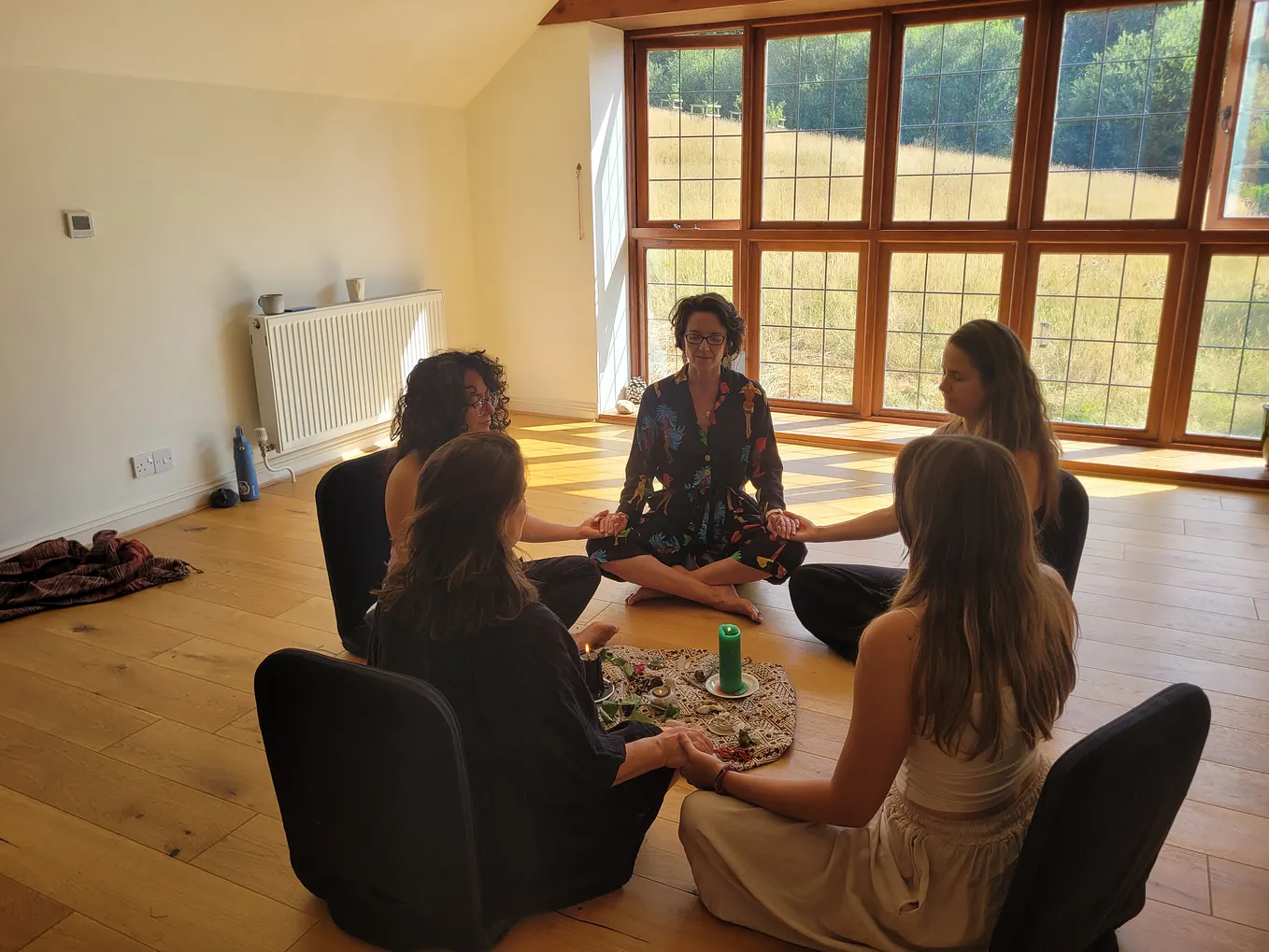
Research on CCB has found it produces measurable altered states of consciousness, in some studies described as comparable in intensity to what people report during psychedelic experiences, through a genuine shift in the body’s carbon dioxide levels. That’s not a small thing to invite into your own nervous system alone in your bedroom with a YouTube video playing. An altered state, by definition, is a state where you’re not fully positioned to monitor your own safety in the moment. That’s exactly why this practice is best learned with a trained facilitator present, at least until you know your own responses to it well.
What a sensible path actually looks like
Start with a single guided session, ideally free or low-stakes, just to feel what the pattern does in your particular body. From there, build consistency rather than chasing intensity, a structured, several-week container does more for real familiarity than one dramatic session ever will. Pay attention to what shows up for you physically and emotionally each time, that noticing is not separate from learning the practice, it is the practice. Let sessions deepen gradually as your comfort grows, always with support nearby. And if you ever find yourself wanting to hold this space for someone else, understand that’s a genuinely different undertaking than learning it for yourself, one that calls for real facilitator training, not just enough personal experience to feel confident.
A few things worth knowing before you start
CCB isn’t right for everyone, and it’s worth being honest about that rather than treating it as universally safe. A history of epilepsy, panic disorder, fainting, or certain cardiovascular and respiratory conditions calls for real caution, sometimes avoiding the more intense forms of it entirely. Pregnancy calls for extra care too. None of this is meant to scare you off. It’s meant to say plainly that if any of it applies to you, a conversation with a doctor and a trauma-informed facilitator before you begin is not overcautious, it’s just sensible.
This was never something to rush
There’s no fast track here, and no version of “getting good” at this that looks like flawless execution. What you’re actually building, session by session, is trust. Trust with your own body, and trust in your own ability to stay present through whatever the breath brings up. That takes the time it takes.
If you’d like to try this with real guidance rather than working it out alone, Free Guided Breathwork is a no-cost way to experience a first session held by an experienced facilitator. And if you’re ready to build something more consistent from the start, Breathing Beyond Empire offers three weeks of live, guided practice.