Who Should the Utah Jazz Pick?


On May 10, 2026, the Utah Jazz’s fortunes took a huge swing at the McCormick Place convention center in Chicago, IL. In their 52-year franchise history, Utah had never once moved up in the NBA Draft Lottery. A few weeks prior, the Jazz (22–60) won a tiebreaker for lottery position with the Sacramento Kings (22–60) — slotting themselves in 4th, a crucial first step. Suspense was in the air as NBA deputy commissioner Mark Tatum announced the lottery order team-by-team. The first few spots were revealed as expected, but the drama ramped up soon after.
“The 9th pick in the NBA Draft belongs to… the Dallas Mavericks.”
The Chicago Bulls move into the top four.
“Pick number seven will be made by… the Sacramento Kings.”
The Memphis Grizzlies also move into the top four.
Two teams have already jumped in the order. Not great for the Jazz. But then…
“Picking sixth is… the Brooklyn Nets.”
The Utah Jazz officially move into the top four.
For the first time ever, Utah moves up in the lotto. After picks 5–14 are announced, Tatum moves on to reveal the top four. The Bulls slot in at fourth. The Grizzlies settle into third. Could the Jazz really do it? Could they pick first?
“Picking second will be… the Utah Jazz.”
OK! Not bad. Any pick in the top three would guarantee an elite, blue-chip talent. The second overall selection means that Utah would get to select the best prospect in the class behind whoever the Washington Wizards decided to pick.
Who that player is, however, is up for debate. This freshman class put up eye-popping numbers throughout the 2025–2026 college basketball season. AJ Dybantsa, Darryn Peterson, and Cameron Boozer were seen as the clear top-three, but they each made their case for the top spot with some unbelievable performances.
So now, the media and fans alike are begging the question: “Who should the Utah Jazz pick?”
Get Harrison Do’s stories in your inbox
Join Medium for free to get updates from this writer.
Let’s dive in.

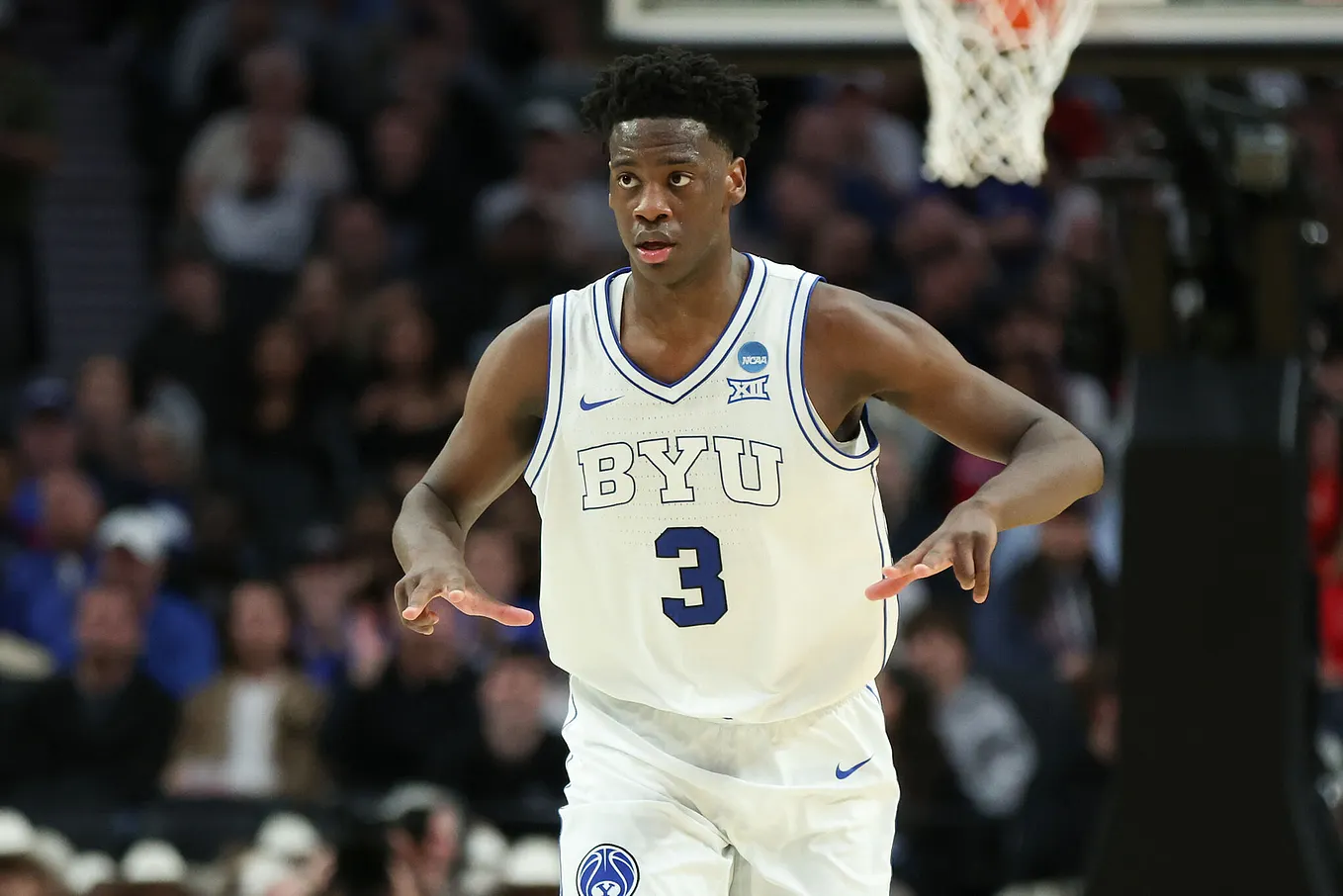
AJ Dybantsa
Wing, BYU
- 6'8.5" (without shoes), 217 lbs., 7'0.5" wingspan
- 25.5 PTS, 6.8 REB, 3.7 AST, 1.1 STL, 0.3 BLK (34.8 mpg)
- 1.4/4.2 threes (33.1% 3P)
- 0.49 FTA rate (77.4% FT)
AJ Dybantsa moves different. At first glance, Dybantsa looks like a giraffe on the court. He is lanky with long legs and long arms. He covers an absurd amount of ground without having to take too many steps. But unlike a giraffe, Dybantsa is extremely dynamic and explosive. His herky-jerky movements are far from smooth, but his ability to accelerate and decelerate on a dime is special. The Boston, MA native led all of college basketball in scoring (25.5 points per game) as a freshman. That’s no fluke. There is simply no one in this draft class that is as gifted of a slasher as he is. When Dybantsa gets in the lane, it’s all but guaranteed that he will throw down a thunderous dunk or make a tough finish look effortless. Outside of the paint, he can make a living from the high post and midrange. A minor concern with Dybantsa, however, is his lack of three-point efficiency on relatively low volume. He should continue to develop as a perimeter threat at the next level as he possesses a good-looking, consistent jumper and a solid free throw percentage (77%) to back it up. He projects to be a primary option in the NBA with good handles for his size. Defensively, Dybantsa has room for improvement. He only had 12 blocks all season, despite touting a seven-foot wingspan. Against better offensive assignments, Dybantsa always seemed like a split-second late on shot contests. He could also stand to play better team defense. If Dybantsa can maximize his physical tools and athleticism on the defensive end, he will be one of the best players in the entire league.

Darryn Peterson
Guard, Kansas
- 6'4.5" (without shoes), 198.8 lbs., 6'9.75" wingspan
- 20.2 PTS, 4.2 REB, 1.6 AST, 1.4 STL, 0.6 BLK (29.0 mpg)
- 2.6/6.9 threes (38.2% 3P)
- 0.37 FTA rate (82.6% FT)
Darryn Peterson makes the game of basketball look like poetry. Every move is smooth, yet calculated. He plays like a “stone-cold killer”, exhibiting a composed demeanor and knowing exactly how to attack defenses. There is no prospect in the entire class that comes close to Peterson when it comes to making shots at all three levels. At Kansas, he was utilized more as an off-ball scorer and he was damn good at it. He made 43.0% of his catch-and-shoot 3s and actually had a higher shooting percentage while being guarded versus unguarded. But in the NBA, Peterson projects to be a lead guard with plenty of on-ball usage and opportunities. While he does need to clean up his handle a tiny bit, he has demonstrated that he can create his own shot in a number of ways. Peterson has a deep “bag”, unleashing moves in his arsenal to split defenses and create separation for good looks. He can be a strong slasher and finish at the rim in a variety of ways. Questions, however, exist about Peterson’s lack of playmaking (1.6 assists per game) and lackluster decision-making at times (1.0 assist/turnover ratio). On the the defensive end, Peterson has shown that he can be a plus-defender from day one. His length (6'10" wingspan) and opportune instincts (1.4 steals per game) make him the best perimeter defender out of the prospects in this article. During the college season, Peterson found himself mired in controversy due to his tendency to pull himself early from games. Recently, he revealed that he suffered a full-body cramping episode prior to the season that led him to be hospitalized. For Peterson, it was a traumatic event and would later cause him to exit games once any discomfort started to mount (notably in his hamstring and quadriceps). Even while he was playing, the injury seemed to affect his downhill speed and leaping ability. The hope is that he is now fully recovered and that the cramping issues have been resolved. When healthy, Peterson is a complete and polished star who will have a huge impact on both ends of the floor in the NBA.
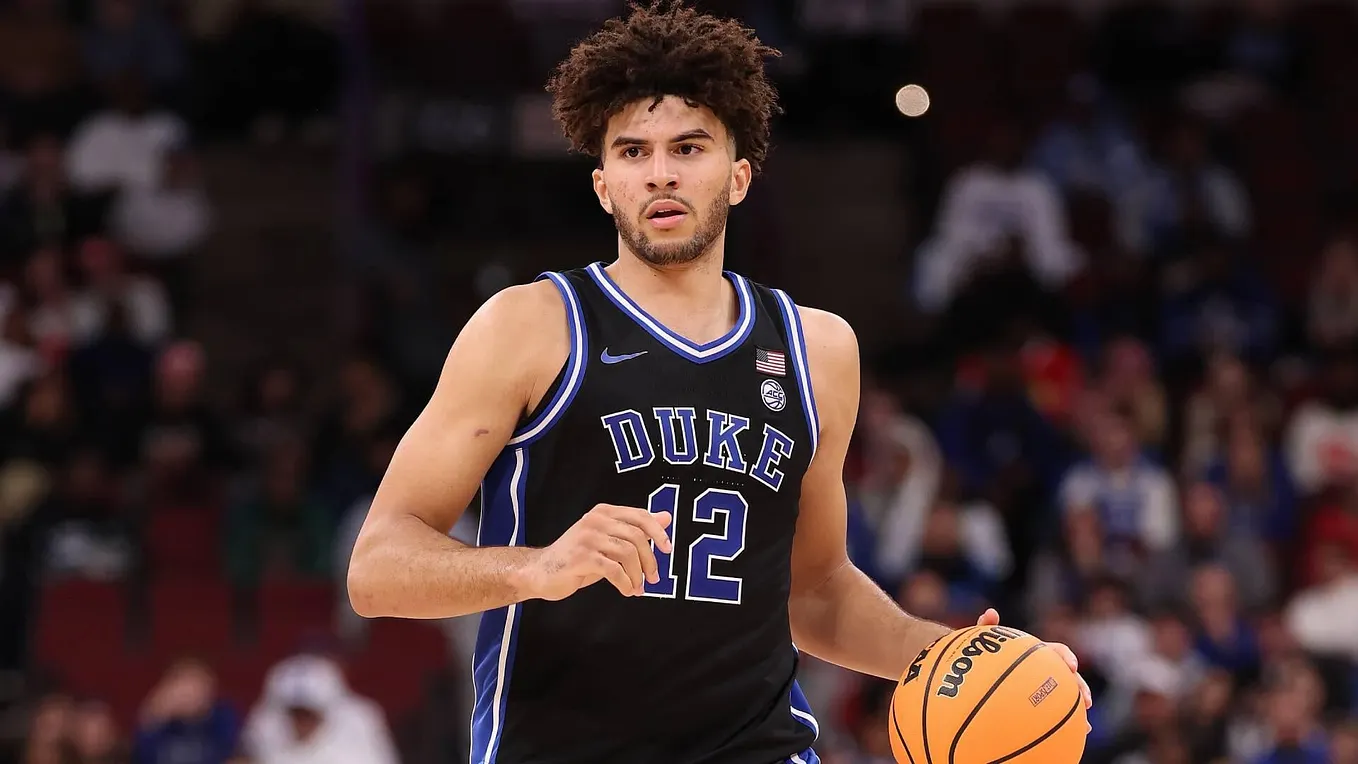
Cameron Boozer
Forward, Duke
- 6'8.25" (without shoes), 252.8 lbs., 7'1.5" wingspan
- 22.5 PTS, 10.2 REB, 4.1 AST, 1.4 STL, 0.6 BLK (33.4 mpg)
- 1.4/3.6 threes (39.1% 3P)
- 0.54 FTA rate (78.9% FT)
Cameron Boozer has an NBA-ready body. The 2026 Naismith College Player of the Year has a strong frame and good length for his position. At Duke, Boozer was constantly bullying guys down low in the paint. He knows how to create an advantage using his strength and is crafty enough to find separation for tough buckets. The way Boozer plays reminds me of a locomotive coming with a full head of steam. But playing downhill isn’t all that he does. Boozer shot 39.1% from three on 3.6 attempts per game. He is a catch-and-shoot threat and gets to his spots off the ball with ease. Boozer arguably has the best feel for the game out of any draft prospect right now. For most of the college season, Boozer was my top prospect simply because he projects to be a nightly triple-double in the NBA. He averaged 4.1 assists per game, showing legitimate playmaking talent and point forward ability. He is a monster on the boards, collecting an ACC-best 10.2 rebounds per game. As good as Boozer is, he isn’t the perfect prospect. Because he has an NBA-ready body, his frame will be virtually maxed out at 19-years-old when the season starts. And while he is a solid athlete, he is just average when it comes to vertical explosiveness. That limits his effectiveness as a true rim protector at the next level. Boozer also struggles with shooting off the dribble from outside. Questions about his upside are overblown, though. Boozer will play winning basketball for an NBA team from day one and could play for two decades simply because he does all the little things right.
The Decision
If all three prospects were — by some miracle — available for the Utah Jazz to select… my pick would be AJ Dybantsa. When a team is picking that high, they are not picking for roster fit. They are picking a talent that would transcend any roster construction or philosophy. And I’m confident that Dybantsa can certainly become that kind of superstar. I have no doubt that he will be able to reach his incredible offensive ceiling with the kind of spacing he will have around him in the NBA. To reach MVP-caliber heights, however, Dybantsa will need to take advantage of his length and athleticism on the defensive end.
But unfortunately, the Jazz do not have the first overall pick. They pick second. And Dybantsa to the Washington Wizards feels set in stone at this point. So then the choice becomes even simpler for Utah. Darryn Peterson or Cameron Boozer?
I grew up watching Carlos Boozer star for the Utah Jazz alongside Deron Williams. I remember going to Jazz games as a kid with my dad and hearing the PA announcer shout “Carlos BOOOOOOOOOZERRRR!!!” after every thunderous basket by the two-time All-Star. Those years were my introduction to basketball and formed memories that I will always carry with me for the rest of my life. How cool would it be if Utah picked the second generation Boozer (and Salt Lake City, UT native) to become their next franchise centerpiece?
Pretty damn cool.
But this isn’t Disney. I love a sweet, full-circle moment, but this is the highest the Jazz are picking in 42 years. They might not have an opportunity like this for a very long time. A small market team like Utah cannot lure in prized free agents. After tanking for four seasons, they are nearing the end of their extra draft assets obtained in the Donovan Mitchell and Rudy Gobert trades. They made a win-now move in February by trading for Jaren Jackson Jr., the former Defensive Player of the Year. And the cherry on top — the NBA changed their lottery rules to discourage “tanking” effective next year (in large part due to Utah’s antics).
What does this mean?
The Utah Jazz should, unequivocally, pick Darryn Peterson. This should be a slam dunk for Salt Lake City. Peterson has rare basketball talent at the guard position that hasn’t been seen in years. He has consistently exhibited high basketball IQ on both the offensive and defensive side of the floor. His dynamic scoring should give him a runway to eclipse, on average, 30 points per game throughout his career in the NBA.
Earlier, I mentioned that roster fit should not be considered this high in the draft. Peterson, however, just so happens to fit like a glove for the Jazz. Their frontcourt is set in stone with Jackson Jr. and Walker Kessler. Veteran Lauri Markkanen returns as a starting wing after averaging a career-high 26.7 points per game this past year. And at point guard, Keyonte George will look to build off of a breakout 2025–2026 season where he established himself as one of the best young guards in the league. That leaves Utah with the need for another ball-handler and playmaker in the backcourt, preferably with decent perimeter defense. The ceiling of the lineup would significantly increase if this player could also alleviate the scoring burden off of Markkanen and George. Peterson can immediately contribute by doing just that — wielding his phenomenal scoring gifts to get buckets in head coach Will Hardy’s system. He will also have the opportunity to develop into a secondary creator early on. And last but certainly not least, Peterson proved that he can hold his own as a plus-defender — which will be crucial if Utah wants to be competitive from this season onward.
If durability doesn’t become an issue, Peterson can become the kind of superstar that makes Utah a perennial contender in the Western conference for years to come. The Jazz have never won a championship. Nor have they sniffed a Conference Finals in nearly twenty years. That can all change for the city and the organization with the selection of the 19-year-old from Canton, Ohio.