How Renaissance Painters and Flying Theatre Inspired Hail Regina’s Aerial Stage Show
From the page to the stage: the long road to making a satire


Hail Regina is a satirical novel series set in the Capital in 2037, a city run by oligarchs, a church and an ever-watchful State. From the start it was written to leave the page, and one day to become a stage show. Much of that show would happen in the air. This piece is about where that idea came from.
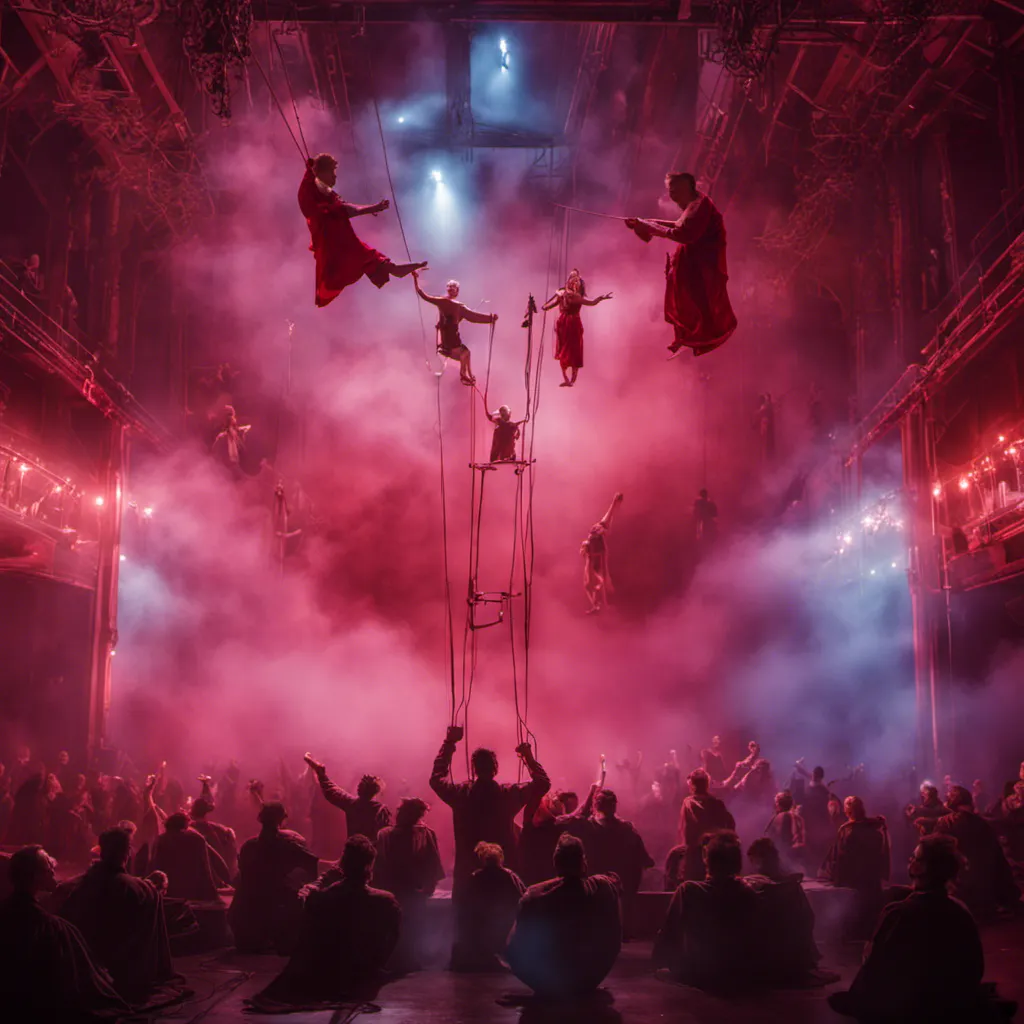
At the gala ball in the story, the performers are as likely to be above the guests as beside them. Servants, actors and inferiors glide on wires through the rafters as cupids and other beings, and a flying pulpit priest preaches in mid-air. Monks peep down from inside the high walls.
Two painters
Two painters from the Low Countries sit behind the story: Hieronymus Bosch (c. 1450–1516) and Pieter Bruegel the Elder (c. 1525–1569), working some five hundred years ago. Their crowded canvases show dozens of small dramas unfolding at once and at every height, from cellars to skies. While Episodes 4 to 8 of Season One were being written, their paintings served as a kind of cyclorama in the background, and the scenes were then set in the dystopia of the futuristic Capital. That way of seeing, with everything happening at once and on many levels, turns out to be very close to the way an aerial show is built.

A world in (aerial) layers
The Capital in the story is a vertical world. Beneath it run tunnels and chambers, while on the ground there are gala balls, servants in leotards and atomic pigs. Above them rise bell towers, bunkers where officials wait for the next military test, and a control tower looking out over the Capital. Higher still come the weather balloons, Tarot cards hung in the gala ball rafters, and a scaffold of puppeteers whose strings mirror the ones being pulled on the State’s officials below.

An early note for the stage reads almost like a running order: harvest the children, put them in the state redistribution centre, let the dogs give them unconditional love. Let the tourists be entertained by the flying pulpit priest, polish the carillon bells and ‘suggest’ the atomic test programme is safe.
Scenes written for the stage

Some chapters are already written as if for a theatre production. At a gala ball, a stage manager in a headset calls the cues:
“Standby — curtains up in 2 minutes… Check tormentors are lowered to the correct height.”
Elsewhere, a cathedral keeps the only aerial choir in the state, with rows of hoisters standing by to fly each chorister “through the rehearsed formations — and land them back safely at the end of the final chorus.” And at the close of one show, a donkey called Sir Nigel is lifted into the air in a harness, while cupids and fairies fly in from the wings to join him:
“No one knew or cared what the thematic purpose of his elevation was for… As odd as it was, it made a perfect ending.”

There are, in fact, more aerial scenes across the books than a 90-minute show could hold, so the task for a stage version is one of choosing rather than inventing.
Cirque du Soleil showed the path
It would be easy to call all this unstageable, but Cirque du Soleil has shown otherwise. Its majestic productions have proved, night after night, that strange, wordless and airborne theatre can fill a house. That example is what turned Hail Regina’s set pieces from scenes on a page into a working idea for the stage show.
The stage version
The stage concept is a flying musical comedy of about 90 minutes. It is still being built, and will be until around 2028–30, when the specifications, engineering drawings and cues are settled. The plans include projected backdrops with effects, a mix of pantomime and spoken storyline, and performers on wires. This sits alongside the three novels and the twelve-episode screen adaptation as another way into the same world.
Get HR Arts Factory’s stories in your inbox
Join Medium for free to get updates from this writer.
The show could reach an audience in two stages. A workshop production could first be filmed and streamed online, which keeps costs down and lets the concept grow step by step. Platforms such as Digital Theatre have shown that audiences and drama schools will watch new work this way. The full live aerial show, with its rigging, lighting and stage plans, would follow later, in modules, as funding allows.
The first tentative drafts of a stage play came in 2006: a courtroom satire set at an inquiry into the Royal Docklands Centre, with Karmalade already in the cast as Clerk of the Court. Its opening page set the tone:
“…No one messed with Lady Melrose: certainly not an incontinent Merlo-stained Marino ewe, dressed in kinky leg-warmers; chased by skimpy men wearing glitter-beaded harness fandangles — and powdered breastplates!”
Patience in theatrical productions
George Bernard Shaw’s Pygmalion was written in 1912 and first staged in 1913. It finally reached the cinema in 1938. The musical, My Fair Lady, opened in 1956, six years after Shaw’s death, and ran for 2,717 performances in New York and 2,281 in London, with the film of the musical following in 1964. Good work can take decades to find its full form, which is a reason to keep everything properly preserved. Waiting for future opportunity is integral to the journey.
A cameo
The author has even been written in as a cameo, at the piano. Karmalade, a cheerful performer who sings through a voice aid, turns up whenever he is allowed to. As the notes to Season One put it:
“I suspect his character will probably adapt more easily to a theatre stage, rather than being confined to the page. Time will tell.”
The Hail Regina books are due in 2027. More at hailregina.com