Designing Exhibits and Tours for the Public: A HumanitiesX Guide

by 2026 HumanitiesX Student Fellows, Gigi Lara and Natalie Silvfast
Introduction
Museums and exhibits are integral to humanities education. From childhood, we are taken on field trips to different cultural institutions, which are places of communing and learning. How often, though, do students get the chance to create exhibits and tours as part of their classroom experience? Not very often! In most humanities courses, students are asked to write papers or prepare presentations. However, in the Designing Exhibits and Tours for the Public workshop, offered as part of the 2025 Teaching the Publicly Engaged Humanities to Undergraduates Summer Workshop Series, four presenters demonstrated that creating exhibits and tours is not only doable in the classroom, but exciting and beneficial to students, faculty, and community partners.
Through the presenters’ shared successes and challenges, we learn about the various elements necessary to create a public-facing exhibition or tour. These projects evidence the necessity and immense value of creating sustainable community-oriented humanities projects. This is especially applicable to the preservation and sharing of important local stories.
This guide will highlight some of the most important ideas, processes, and outcomes to keep in mind when creating public-facing interactive humanities projects in a college classroom.
The Presenters

The workshop began with a presentation from Associate Professor of Art History and Distinguished Scholar in the Public Humanities, Dr. Erin Benay, who discussed her course at Case Western University — The City As Museum: Monuments and Memory. In this course, Benay and her students partnered with local nonprofit LAND Studio and their app The City is Our Museum, which provides self-guided tours of Cleveland and encourages people to engage with public art and community spaces. After completing an auditing assignment of the app’s existing tours, students produced oral histories and audio tours to amplify diverse histories and center lived experiences of the city’s monuments.
Following this, Dr. David Trowbridge, the William T. Kemper Research Professor of Digital and Public Humanities at University of Missouri-Kansas City, led a presentation on his ongoing app and tour-building project, Clio. Dr. Trowbridge created Clio as a free and publicly accessible website and mobile app that allows users to create articles about and tours of their surrounding landmarks. Clio currently features over 40,000 individual entries of public landmarks and over 1,800 trails and walking tours that allow audiences to easily explore and learn more about their local history and new places.
Next, Associate Professor of History at Trinity University, Dr. Lauren Turek shared insights from her experiences teaching an undergraduate course that led students “From the Archives to Digital Exhibition” as they created their own digital archive exhibit using their school’s library archives. The purpose of this project was to teach students new ways to engage with and create public history that is accessible. Students also gained valuable skills in archival research, analysis, and exhibit design.
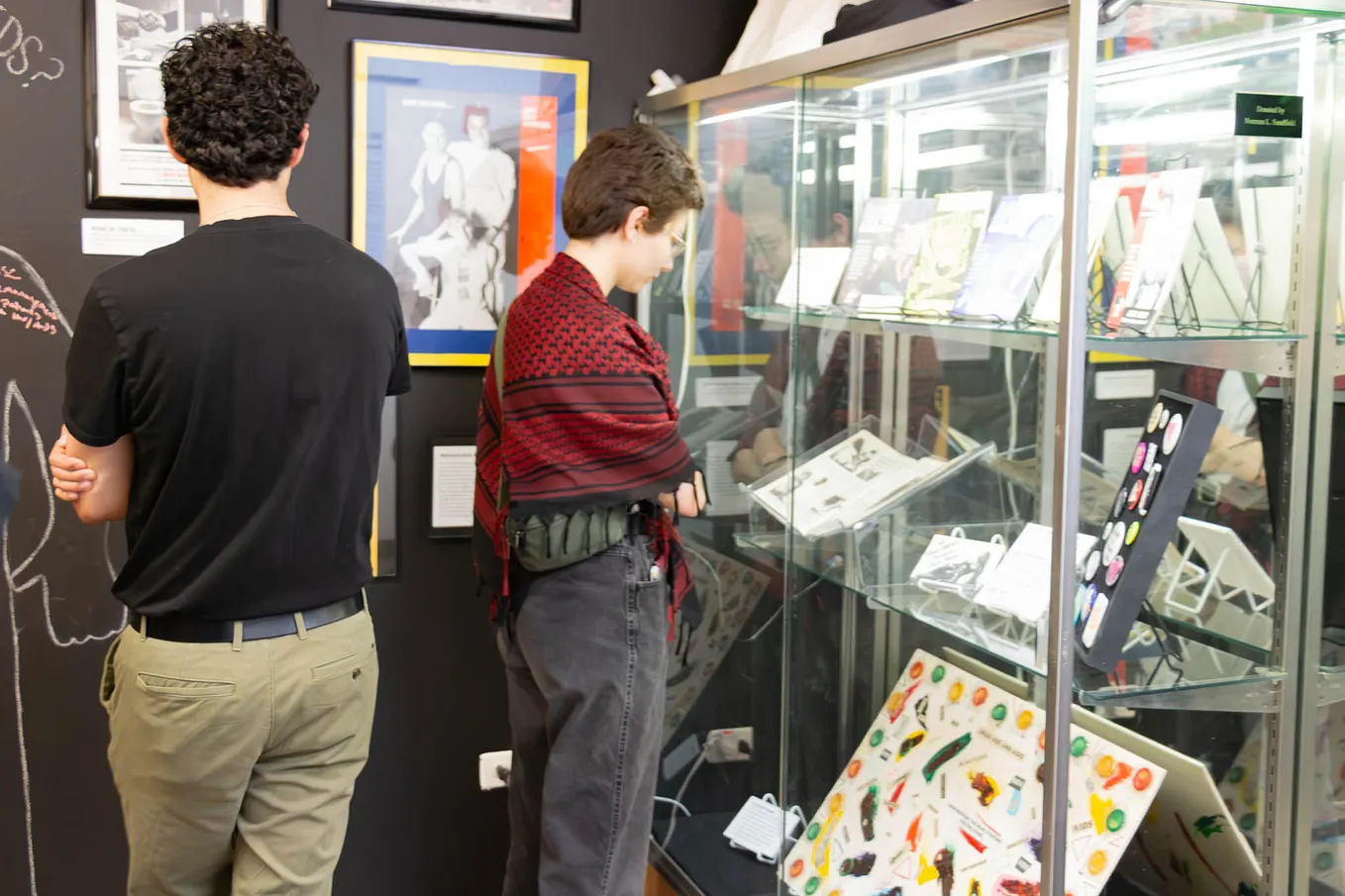
The presentation concluded with a practitioner perspective from Erin Bell, the Operations Director for Gerber/Hart Library and Archives, who shared her experiences partnering with HumanitiesX at DePaul University on the course DO SAY GAY: Banned Books and LGBTQ+ Freedoms. Students in the course worked closely with Gerber/Hart to design a new exhibit for the library, which attracted visitors for over a year. Bell explained that the students were able to teach her and the library creative ways to imagine an exhibit and that the students took a lot from being entirely in charge of generating their own displays aligned with the four themes identified from the class.
Key Insights
Insight #1: Tours and exhibits bridge student work from the classroom into real-world contexts.
In traditional classroom settings, students’ work is usually only seen by the professor and occasionally their peers. However, the presenters demonstrated the benefits and excitement that comes from expanding your students’ work to a public audience, and they shared how these projects answer the question asked by Dr. Benay and many humanities practitioners: How do we translate our “disciplinary content” into community-engaged projects?
Public-facing tours and exhibits allow for students’ assignments to reach beyond the classroom and serve as valuable resources for their local communities. By contributing to meaningful and lasting projects for the public, students feel an increased sense of responsibility, pride, and ownership in their work. Dr. Benay explained how integrating students’ work into communities also expands access to the humanities and creates more opportunities for co-creation, public address, and community collaboration in our scholarship, teaching, and curation.
Dr. Turek also emphasized the practical value of authentic projects, and how they allow students to design real products for real partners that continue to be used even after the course ends. Not only can this experience build your students’ skills and investment in the project, but it also provides them with a practical example of their work that they can use as a portfolio piece in future job or graduate school applications. As a result, these projects have valuable and long-lasting impacts both for students and the community partners and public audiences that continue to use them.
Insight #2: Creating projects with accessible software and resources is a requirement!
Though a public-facing project might seem intimidating within the constraints of a course, the presenters made clear that you do not need expensive software or vast resources to create an exhibit or tour.
Get HumanitiesX’s stories in your inbox
Join Medium for free to get updates from this writer.
Dr. Trowbridge emphasized this as he discussed why he created Clio as a completely free resource for any user to explore and create with. He explained how this accessibility inspires both viewers and creators to explore their curiosity by blending education with experience and actively promoting the good work of students and colleagues to the greater public.
Similarly, Dr. Turek used Omeka, an open-access exhibit-building platform, in her courses for students to co-curate accessible, digital exhibits for the university’s library. She explained how Omeka’s user-friendly interface allows for flexibility and creative control for students, while also providing a clear structure and consistency for the library’s site. She shared several examples of students’ work that utilized the platform in creative ways to design interactive exhibits that engage and excite users.
Erin Bell also shared insights from her experience creating a physical exhibit on a limited timeframe and budget. She shared the course’s total cost breakdown and provided several budget-safe exhibit solutions, like using materials that you might already have. These approaches help make creating exhibits more accessible for smaller organizations or classes, while also building students’ creativity and adaptability.
Insight #3: Student investment fosters connection and creativity.
Creating a public facing exhibit or tour requires an investment — intellectually, emotionally, and time-wise — from all participating parties. When designing a course in collaboration with a community partner site or archival collection, it is important that students, faculty, and community members share investment in and connection to the project.
Dr. Turek explained how students become engaged with the stories being told in her class project. Students were included in the selection process of specific archival material and themes very early on. Those who became invested in the stories being told in their Digital Exhibits were excited about their agency within the project. Learning throughout the semester was grounded in leveraging students’ strengths and fostering these strengths to empower decision making. Despite working in a group setting, students were graded individually on their contributions. This got students excited about the possibilities — whether it be designing the webpage with different colors or fonts, plug-ins like timelines or interactive maps, or writing a compelling description suitable for an arrangement of audiences. Students who feel that their contribution is important and valuable create impactful work.
Another excellent example of this is the interactive exhibit curated at the Gerber/Hart library by students in the “Do Say Gay: Banned Books and LGBTQ+ Freedoms” HumanitiesX course. Erin Bell detailed how important it was that students felt a stake in the message, curation, and construction of the exhibition, “Seeing the ownership of research and seeing students creating the exhibit […] it was really beautiful.”
Students were extremely thoughtful in how the Gerber/Hart exhibit was curated, taking lead on what was necessary to include, like a “SAVE OUR CHILDREN: Queer Young Adult & Kid Lit” sub-thematic section, which responded to a harmful political climate that classifies LGBTQ+ folk and youth as a “threat” to children. This part of the exhibit was extremely heartfelt, intentional, and personal to the students. They constructed what a child-oriented queer space could be and demonstrated how the archives can be used to imagine a safe, nurturing environment for children and LGBTQ+ youth.
Insight #4: Sometimes things don’t go according to plan . . .
Creating a public-facing exhibit or tour is reliant on many people’s information, effort, ideas, and resources. Given all of the moving parts, challenges will inevitably arise. It is important for everyone involved to prepare for and work around common obstacles, like scheduling, interpersonal conflicts, scarce resources, and platform or interface difficulties.
To address these challenges, Dr. Lauren Turek from Trinity University discussed what happens when things don’t go as planned. One year, the digital exhibits she asked students to create from community archival materials were underdeveloped due to lack of student engagement. While this was not ideal, it happens. Dr. Turek worked with the course partner to fill in the gaps. It is important to honor the stories being told by telling and sharing them completely and with care.
As issues arise, students, faculty, and community partners should keep an open mind and problem-solve as a team. Everyone has stakes in the project and should feel part of the bigger picture. Communication, collaboration, flexibility, and creativity are all key!

Conclusion
Integrating a publicly-engaged project like an exhibit or tour into your class can help students build practical skills in research and design while also contributing meaningful work to the community. Though these projects might seem ambitious at first, these presenters demonstrated how using accessible tools, fostering intentional collaboration, and staying adaptable to potential obstacles makes creating exhibits and tours both achievable and rewarding.
Resources
Detailed Guides for Utilizing Clio for Institutions and in Classrooms
HumanitiesX Exhibit Showcase: DO SAY GAY: Banned Books and LGBTQ+ Freedoms
This workshop summary is part of a series of instructional documents designed to support the work of the HumanitiesX fellows and students at DePaul University. For additional pedagogical readings and resources, check out the HumanitiesX Resources page and be sure to subscribe to our newsletter to be first to learn about about future events and workshops.