Why Are Japanese Trains So Quiet? 7 Train Etiquette Rules Tourists Should Know


1. Introduction: Did Someone Turn Down the Volume on Japan?
You step onto a Tokyo train during the morning rush. Dozens of people are packed together, shoulder to shoulder, and yet the car sounds like a library with a good air conditioner. You can hear the rails. You can hear a page turn. You can hear your own heartbeat, and it seems very loud.
Then your phone lights up with a notification: DING-DING-DING-DING! Every head stays perfectly still, but you can feel the collective eyebrow raise. You dive into your pocket like a diver chasing a lost wallet, jab the volume button, and pretend nothing happened. (Everyone knows it was you. It’s okay.)
Here’s the first thing to know: talking on Japanese trains isn’t banned. You can chat with your travel partner in a low voice. What people generally avoid is loud talking and phone calls. This guide to Japan train etiquette explains why, and gives you seven simple rules to ride like you’ve done it for years.
2. Why Are Japanese Trains Generally So Quiet?
The short answer is shared space. Trains in Japan are used by huge numbers of people every day, and during busy hours you may be standing very close to strangers. In a setting like that, many people see keeping noise down as a simple way to make the ride more comfortable for everyone. Railway companies reinforce the habit with posters and announcements asking passengers to set their phones to silent and to avoid calls.
Still, “quiet” doesn’t mean “silent.” It’s a myth that Japanese people never speak on trains. Friends chat, families talk, and students whisper about homework or last night’s TV. The Japan National Tourism Organization (JNTO) says quiet conversation is generally fine, while phone calls are best avoided.
Think of it less as a strict law and more as a shared agreement: we’re all in this metal tube together, so let’s keep it pleasant.
3. 7 Train Etiquette Rules Every Visitor Should Know
Here are the seven rules that will cover most of your journeys.
Rule 1: Keep Your Conversations Quiet
Talking is fine. Broadcasting is not. A good test: if the person two seats away can follow your story, turn it down a notch. Small voices work well, especially when you’re sharing something dramatic, like your opinion on the best convenience store sandwich.
Rule 2: Avoid Phone Calls
Set your phone to silent, known in Japan as “manner mode.” Then save calls for later. If you must answer, many people step off the train at the next station, or reply by text instead.
The Shinkansen is a little different. On many bullet trains, there’s an area between the cars (the deck) where you can take a call. Look for signs, or ask a staff member if you’re unsure.
Rule 3: Let People Exit Before You Board
At the platform, you’ll often see marked spots where people line up. When the doors open, let passengers get off first, then step on calmly. It’s a tiny dance, and once you learn the steps, it becomes strangely satisfying.
Rule 4: Don’t Block the Doors
Once you’re on, move toward the middle if there’s space. Standing right in the doorway can make it hard for others to get on or off. If you’re near the door and a lot of people need to get out, simply step aside, then step back in. No drama, no bowing required.
Rule 5: Be Mindful of Your Bags
During busy hours, a big backpack can feel like a surprise elbow to everyone around you. Take it off, hold it in front, or place it on the overhead rack if there is one. Large suitcases belong near your feet or in a luggage space, not in the aisle. On the Tokaido, Sanyo, Kyushu, and Nishi-Kyushu Shinkansen lines, luggage measuring more than 160 cm and up to 250 cm in combined height, width, and depth generally requires an advance reservation for appropriate baggage space. Check your train operator’s rules before traveling, especially if you’re carrying a large suitcase.
Rule 6: Respect Priority Seating
Priority seats are for older adults, pregnant passengers, people with disabilities or injuries, and those with small children. If the train isn’t crowded, anyone may sit there, but be ready to give up the seat if someone needs it. Keep your phone on silent throughout the train. On services such as Tokyo Metro and JR East, passengers are also asked to switch off their phones near priority seats during crowded periods. Follow the signs and announcements on your particular train.
Rule 7: Know When Eating Is Appropriate
On crowded commuter trains in cities, people generally avoid eating, mostly because of smells, crumbs, and crowded elbows. On local and commuter trains, it’s best to avoid eating and drinking when possible, especially in crowded cars. Check the situation and follow any posted rules. On the other hand, long-distance trains such as the Shinkansen are a different story, and eating at your seat is common. That brings us to the next section.
4. But Wait: What About the Shinkansen?
If commuter trains are a library, the Shinkansen is more like a cafe with excellent legroom. It’s still polite, but the atmosphere is more relaxed.
Get Japan in the Details’s stories in your inbox
Join Medium for free to get updates from this writer.
Eating: Bento boxes, snacks, and drinks are a classic part of the trip. Many travelers buy a meal before boarding, and the seat tables are made for exactly this. Just choose foods that won’t leave a strong smell, and take your trash with you or use the bins.
Talking: Conversation is normal, but keep your voices at a considerate level, especially in the morning and late evening when people may be sleeping or working.
Phone calls: Use the deck area between cars rather than your seat.
Luggage: Overhead racks, space behind the last row, and designated areas are all options. Larger suitcases may need special arrangements on some lines, so check before you go.
The takeaway: don’t judge every train by the same rule. A short subway ride and a three-hour bullet train are different situations.
5. What If You Accidentally Break the Rules?
Congratulations, you’re human. It happens to everyone, including locals.
Talked too loudly? Lower your voice. Phone rang? Silence it, give a small nod if you caught someone’s eye, and move on. Bag blocking the aisle? Pick it up and move it. A quiet “sumimasen” (excuse me) works as a universal reset button.
You don’t need to apologize ten times, and nobody expects a speech. In most cases, the situation ends the moment you fix it. The best response is calm, small, and quick, like turning down the volume on a laptop in a quiet cafe.
6. FAQ: Japanese Train Etiquette
Is talking on Japanese trains allowed?
Yes. Quiet conversation is generally fine, but loud talking and phone calls are best avoided. See Rules 1 and 2 above for more detail.
Can I eat on a Japanese train?
It depends on the train. On commuter trains, people usually avoid eating, while on the Shinkansen and other long-distance trains, eating at your seat is common. See Rule 7 and the Shinkansen section for the details.
Can I make a phone call on the Shinkansen?
Phone calls should be avoided at your seat. If you need to make a call, use the deck area between cars where permitted. Follow onboard signs and announcements for your particular service.
7. Conclusion: It’s Not About Silence. It’s About Sharing Space.
Japanese trains aren’t quiet because someone is enforcing a mysterious vow of silence. They’re quiet because many people are trying, in small ways, to make a crowded space easier for everyone. Once you notice that, the rules feel less like homework and more like common sense with good manners.
So set your phone to silent, let people off first, and keep your suitcase out of the doorway. You’ll glide through Tokyo and Kyoto like a quiet, well-prepared ghost with a rail pass.
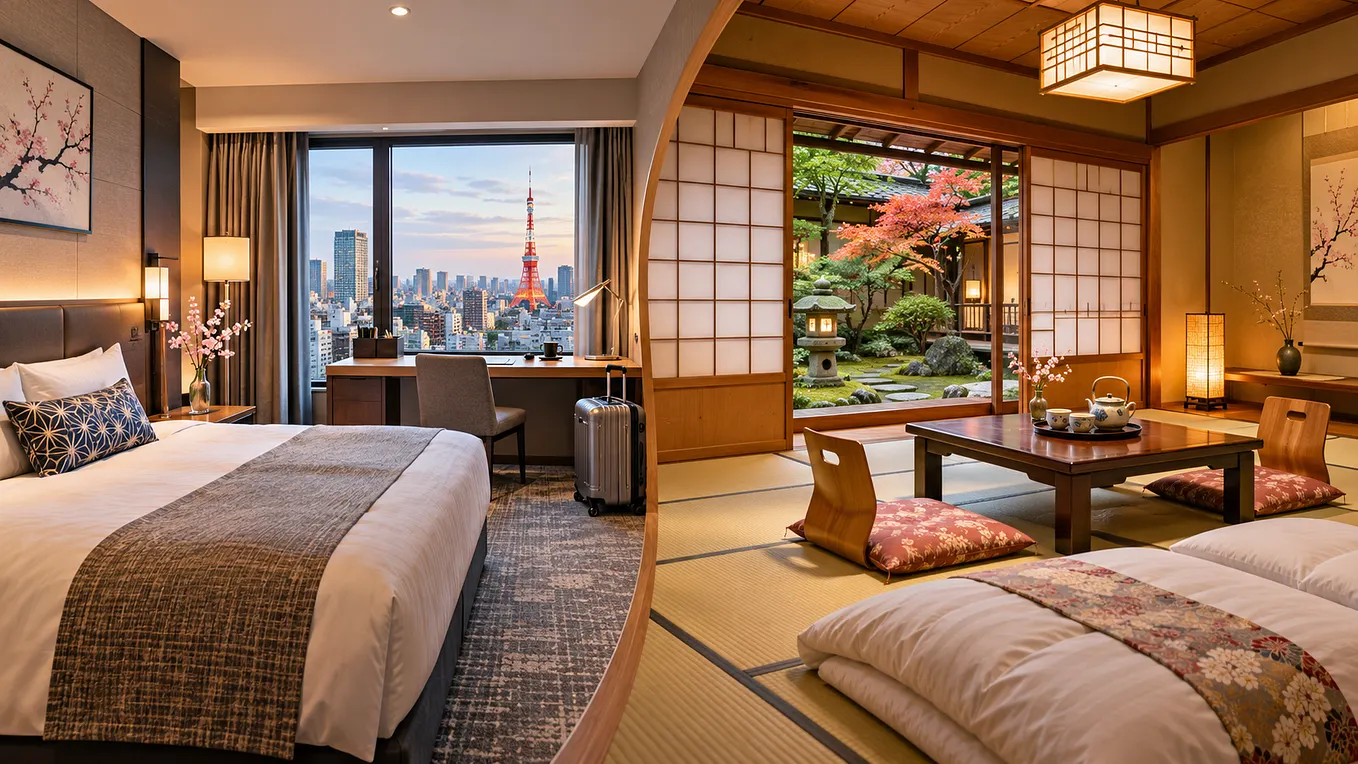
And once you know how to ride, you’ll need a good place to rest between trains. Planning your hotel? Read Where to Stay in Tokyo for First-Time Visitors: Shinjuku, Shibuya, Ginza, or Asakusa? and Where Should You Stay in Kyoto? Gion, Kyoto Station, Kawaramachi, or Arashiyama? to find the area that fits your trip.
Planning Your Japan Trip?
Now that you know how to navigate Japan’s trains, the next question is where to stay.
If Tokyo is on your itinerary, read my guide: Where to Stay in Tokyo for First-Time Visitors: Shinjuku, Shibuya, Ginza, or Asakusa?
Heading to Kyoto? Check out Where Should You Stay in Kyoto? Gion, Kyoto Station, Kawaramachi, or Arashiyama?
Choosing a convenient hotel base can make exploring Japan by train much easier.