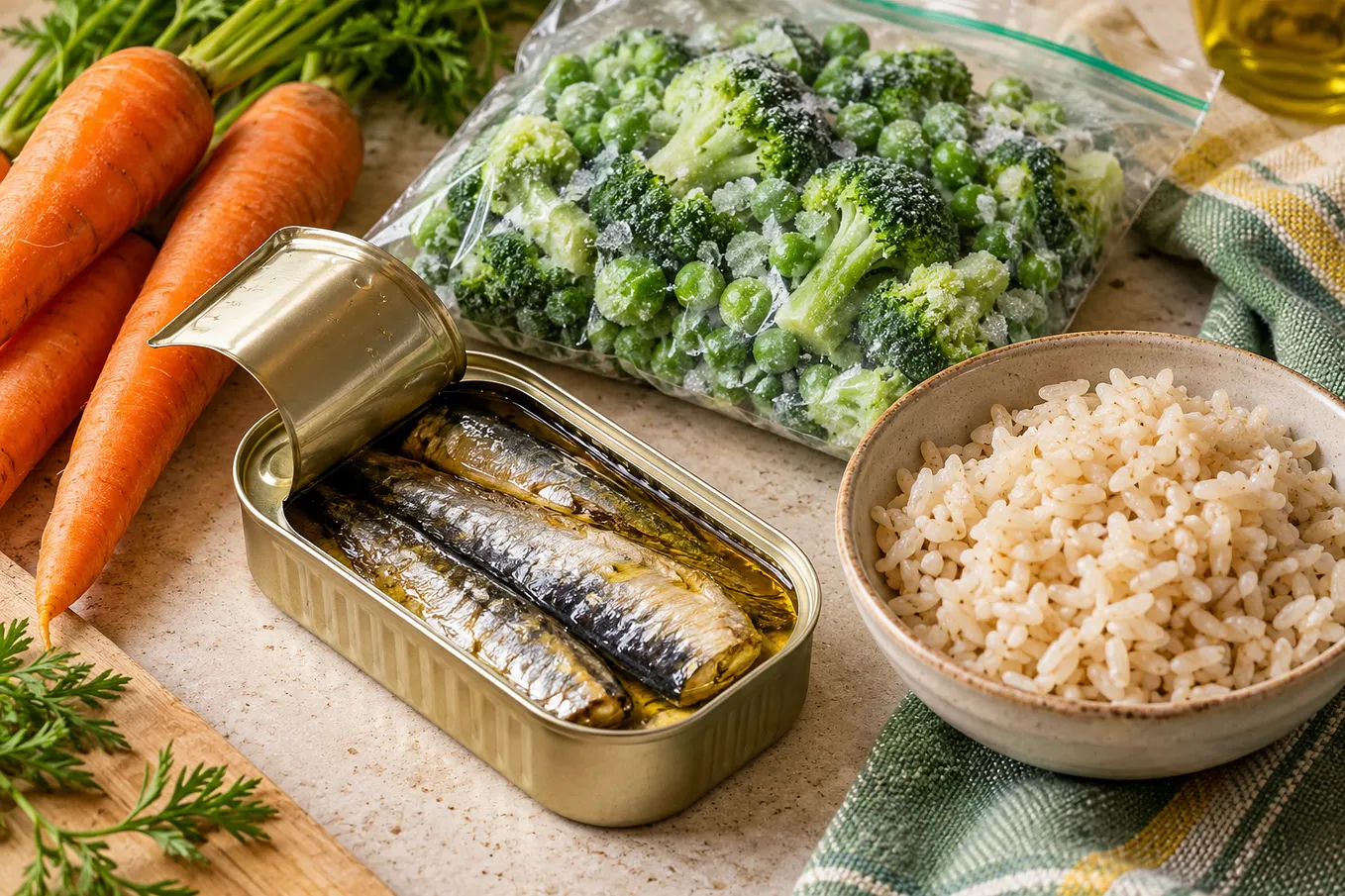
How to Choose Frozen Vegetables, Canned Fish, and Prepared Meals

A practical way to read the label without turning every purchase into a research project.

The smallest number on the front of a package is not necessarily the smallest amount you will eat.
One label may describe 100 grams. Another may describe a serving. A container that looks like dinner for one might hold two labeled servings.
My starting point is to identify the food, check what quantity the numbers describe, and work out how much I expect to eat. Then I can decide whether it fits the meal I need.
That is more useful to me than rejecting everything packaged. Frozen vegetables, canned fish, and prepared dishes can save preparation. I would check different things for each.
Frozen vegetables: what else is in the bag?
A bag of plain broccoli and broccoli in a cheese sauce have different ingredients. Both may sit in the frozen aisle.
If I want vegetables to add to a meal, I would first check whether the bag contains vegetables alone or includes a sauce, seasoning, or other ingredients. A seasoned product may still suit the meal; its additions need to be part of the decision.
The UK’s National Health Service explains in its guide, “Food labels,” that ingredients are listed in descending order by weight. That helps identify the main ingredients. Counting the ingredients, or judging how familiar their names sound, does not tell me everything I need to know about the food.
I would also read the cooking instructions. The UK Food Standards Agency’s guidance, “Cooking your food,” advises checking the packaging instructions before using frozen vegetables in cold salads or smoothies. Frozen does not automatically mean ready to eat. A product that needs cooking should be prepared as directed.
Canned fish: check the liquid as well as the fish
Fish packed in water, oil, brine, or a sauce can have different ingredients and nutrition information. I would not rank them just by the words “canned fish.”
First, I would look at the ingredients and the nutrients relevant to the comparison. Then I would check whether the label refers to the food with its liquid or after draining, where that is specified.
This matters if I plan to use the liquid in a dish, or discard it. If the basis of the label is unclear, I cannot calculate an exact nutrient intake simply by guessing how much oil or liquid I removed.
There is also a practical difference between a tin I can finish and a larger tin that will leave food to store. Food Standards Australia New Zealand’s guidance, “Canned foods: purchasing and storing,” advises transferring unused contents to a clean, covered container and refrigerating them after opening.
The long storage life of an unopened can does not carry over unchanged once it is open. Follow the product’s instructions and the relevant local food-safety guidance.
Prepared dishes: a whole meal or one part of it?
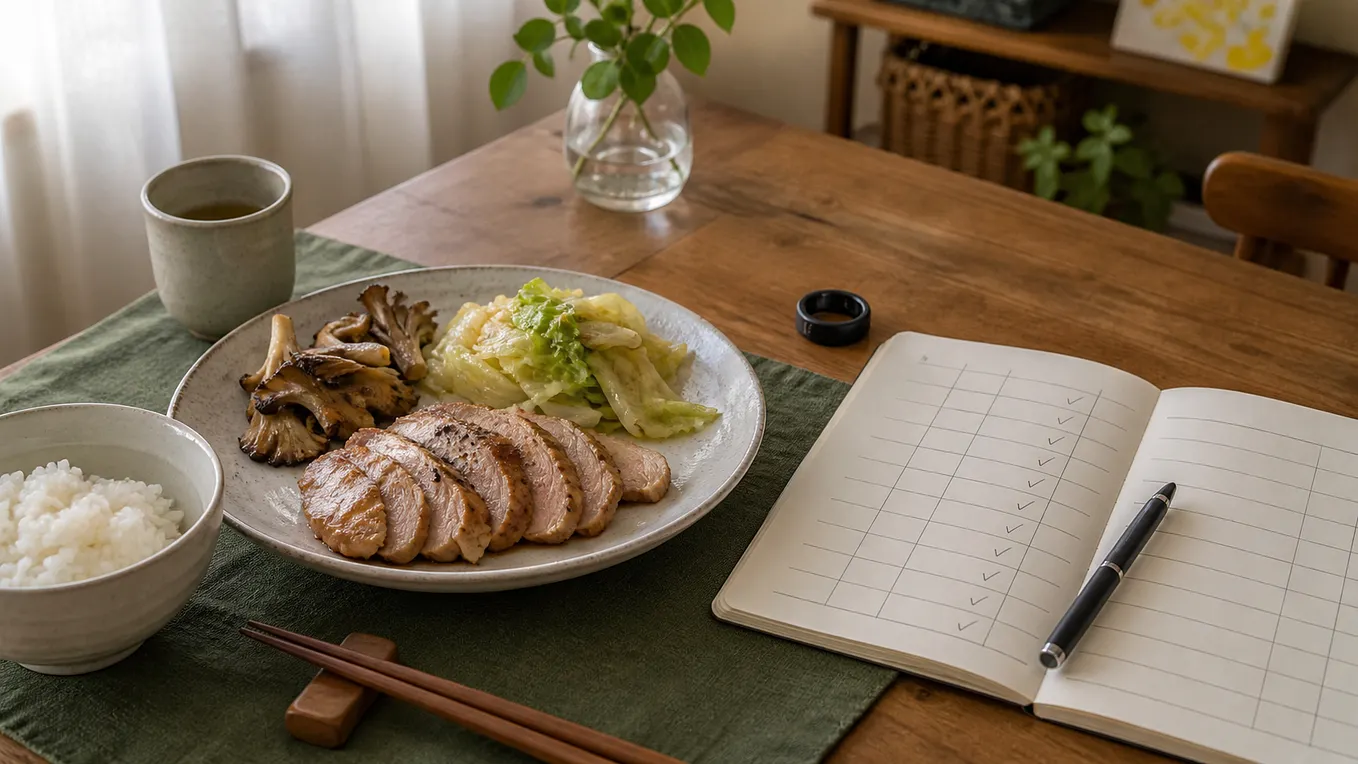
A container of cooked chicken and a tray with rice, chicken, and vegetables serve different purposes. “Prepared food” alone tells me very little about what I am buying.
I would start with its role in the meal. Is it the main dish? Does it include vegetables? Will I need something alongside it, or do I already have that at home?
Where nutrition information is available, it can help compare similar dishes. Where it is missing, I would not turn the appearance of the food into an invented sodium or calorie figure. Information on deli and takeaway foods varies by place and seller.
A prepared dish can be useful as one part of dinner. I would still decide what vegetables or staple food to eat with it.
Read the quantity before comparing the number
Nutrition labels are not identical across countries.
Get Diet Investment Lab’s stories in your inbox
Join Medium for free to get updates from this writer.
The US Food and Drug Administration’s guide, “Serving Size on the Nutrition Facts Label,” explains that US nutrition information is usually given per serving. Some packages also show information for the whole container. The serving size describes an amount people typically consume; it is not a recommendation of how much to eat.
In the UK, the NHS explains that nutrition information is provided per 100 grams or 100 millilitres, sometimes with a portion figure as well. The manufacturer’s portion may differ from yours.
For similar products, comparing the same weight helps separate differences in the food from differences in the stated portion. To understand what I will actually eat, I then use my own portion.
Comparing products and calculating my portion answer different questions. I need both.
A label example, not a real product
Imagine a prepared-food package with this label excerpt:
- Pack size: 300 grams.
- Serving size: 150 grams.
- Servings per pack: two.
- Sodium: 400 milligrams per serving.
These figures are made up to demonstrate the calculation, not taken from a product.
If you eat 225 grams, you eat 1.5 labeled servings. Multiply 400 milligrams by 1.5 and the result is **600 milligrams of sodium**. Eating the whole 300-gram pack would mean two servings, or 800 milligrams.
The point is not that this example is a good or bad meal. It is that the number beside “sodium” only makes sense alongside the amount of food it describes.

Also check the nutrient name and unit. A sodium value in milligrams and a salt value in grams are not interchangeable numbers. Sodium is a component of salt. The FDA discusses this distinction in “Sodium in Your Diet.”
Choose what you need to compare
I would not try to find the lowest number for every nutrient. That would not answer whether the food suits the meal.
If I am comparing two similar fish products while trying to reduce sodium, I would compare their sodium figures on the same basis. If I am choosing vegetables, I would first check whether the products are plain vegetables or include a sauce. For a prepared dish, I would look at what it supplies and what I would eat alongside it.
These are shopping decisions, not a formula tested in a clinical trial. The appropriate amount also depends on the person and the rest of their diet.
Storage can settle a choice that nutrition information alone cannot. A product I cannot refrigerate or use in time may not suit the occasion, whatever its label says.
Start with one product you already buy
On your next shopping trip, choose one familiar packaged food and check:
1. What is in it, including sauces or seasonings?
2. What quantity does the nutrition information describe?
3. How much will you eat?
4. Can you prepare and store it as directed?
You do not have to classify the whole shop. Start with the item in your hand.
In the next article, I will use convenient foods to build breakfast, lunch, and dinner for days when cooking is not practical.
References
- US Food and Drug Administration. Serving Size on the Nutrition Facts Label.
- National Health Service. Food labels.
- US Food and Drug Administration. Sodium in Your Diet.
- Food Standards Australia New Zealand. Canned foods: purchasing and storing.
Food Standards Agency. Cooking your food.