The Man Who Walked Out of History: Enoch’s Vanishing and the Files He Left Behind

The Book of Enoch reads like declassified intelligence files explaining what Genesis 6 deliberately left cryptic — detailing how 200 rebellious divine beings conspired on Mount Hermon to corrupt humanity through forbidden knowledge and hybrid offspring, necessitating the Flood as a cosmic reset. Enoch himself was uniquely qualified to document this supernatural rebellion because he was repeatedly taken to heaven as a shuttle witness between realms, interviewing the imprisoned Watchers and recording their crimes before being permanently translated out of history. The text’s disappearance from mainstream circulation for over a millennium and its sudden reemergence in the 1947 Dead Sea Scrolls discovery — precisely as humanity developed technologies enabling genetic manipulation, global unification, and civilizational self-destruction — suggests a deliberate declassification timed for the generation that would need to recognize these ancient patterns repeating in modern form.

There’s a peculiar silence surrounding Enoch in Scripture — a silence that becomes more deafening the more you notice it.
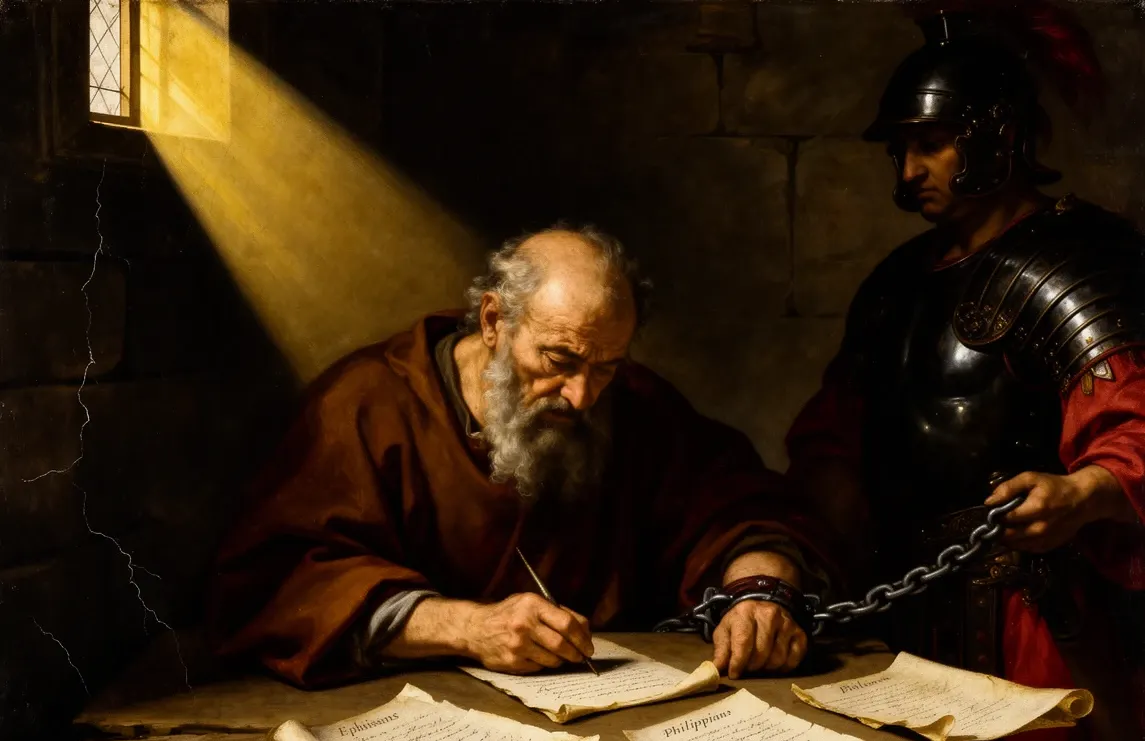
Genesis gives him five verses. He lived 365 years. He walked with God. Then “he was not, because God took him.” That’s it. No death. No burial. No lingering illness or final words. One moment he existed in terrestrial reality; the next, he simply wasn’t there anymore. The Hebrew phrase is stark: einennu — “he is not.” Not “he died,” not “he passed away” — he is not.
For a figure who never experienced death, Enoch is strangely absent from the rest of Scripture. Moses doesn’t reference him. The Psalms never mention him. Isaiah’s prophecies ignore him completely. In a textual tradition obsessed with genealogies and patriarchal lineages, where Abraham is invoked constantly and Noah becomes the reset point for all humanity, Enoch — the man who skipped death entirely — barely registers.
Until suddenly, in the intertestamental period, an entire library appears under his name. Not just one book, but a corpus: 1 Enoch, 2 Enoch, 3 Enoch — texts brimming with specific details about heaven’s architecture, angelic hierarchies, cosmic geography, the fate of the Watchers, and the mechanisms of divine judgment. These aren’t vague spiritual allegories. They read like field reports from someone who actually went somewhere, saw something, and wrote it down with the precision of a court stenographer.
The question isn’t whether Enoch wrote these texts — scholars debate authorship endlessly. The question is: why does a figure so minimally present in canonical Scripture become the attributed source for the most detailed supernatural intelligence we possess?
The answer lies in what happened to him.
The Man Who Went There and Came Back — Almost
Enoch’s translation is unique in Scripture. Only two men avoided death: Enoch and Elijah. But their departures serve different purposes. Elijah’s ascent is public, spectacular, witnessed by Elisha — a chariot of fire, a whirlwind, a prophetic mantle falling to his successor. It’s theater, a divine statement to Israel that this prophet’s authority transfers to the next.
Enoch’s translation is the opposite. No witnesses. No fanfare. No successor. He simply ceases to be present in the terrestrial realm. The text suggests an ongoing process: “Enoch walked with God” — not “Enoch walked with God once,” but a continuous action. Walking implies movement, companionship, conversation over distance and time. Then the walking led somewhere that required he not return.
But here’s the crucial detail embedded in the Enochian texts themselves: before his final translation, Enoch made multiple trips. The Book of Enoch describes him being taken to heaven repeatedly, shown the cosmic architecture, educated in angelic knowledge, then returned to earth to record what he’d learned and teach his children. He functioned as a shuttle diplomat, moving between realms, carrying messages both directions.
Think of the operational necessity: God is about to destroy the world. The corruption has become total. The Watchers’ rebellion has produced hybrid offspring who rule as tyrant-kings. Humanity itself can barely be called human anymore — “all flesh had corrupted its way.” The situation requires a witness, someone who can explain to future generations what actually happened, because the survivors of the flood won’t have seen it. Noah will preserve physical life, but who will preserve the institutional memory?
Enoch becomes that archive. He’s extracted before the corruption reaches him, educated in heaven about the nature of the rebellion he’s witnessing on earth, then sent back repeatedly to document it. He interviews the imprisoned Watchers — the text describes him confronting them with God’s judgment, hearing their pleas for mercy, delivering heaven’s verdict. He’s shown the places of punishment being prepared, the mechanisms of the coming flood, the cosmic courtroom where sentence is pronounced.
He writes it all down. Then, his documentation complete, he’s extracted permanently. “He was not.”
The Prequel That Explains the Plot
This is why the Enochian texts read like declassified intelligence files: because that’s functionally what they are. Genesis 6 gives us the outcome — wickedness so complete that God regrets making humanity. But it doesn’t explain the mechanism. How does an entire species become unanimously evil? How does corruption spread so completely, so quickly?
Enoch provides the operational history. The 200 Watchers descending on Mount Hermon. The oath they swore because they knew they were committing cosmic treason. The specific knowledge each one taught: Azazel instructing weapons manufacturing, Semjaza teaching enchantments, Kokabel revealing astrology, Baraqijal exposing the secrets of lightning. The hybrid offspring they produced — the Nephilim — who grew to monstrous size and appetites, consuming first the produce of human labor, then livestock, then humans, then each other.
Get Izaak Maine’s stories in your inbox
Join Medium for free to get updates from this writer.
This isn’t mythological embellishment. This is the missing context that makes Genesis 6’s terse summary comprehensible. Without Enoch, we’re left asking: “Why was the flood necessary? Couldn’t God have used a less drastic measure?” With Enoch, the answer becomes clear: the corruption wasn’t merely moral but genetic, not merely cultural but ontological. The very category of “human” was being erased. If God didn’t reset the system, there would be no uncorrupted seed through which the promised Redeemer could come.
Enoch documents the crime so that when judgment falls, no one can claim it was arbitrary or excessive. The files exist. The evidence is preserved. The testimony is recorded.
And then, crucially, those files disappear from circulation for over a thousand years.
The Dangerous Knowledge Problem
Here’s where Enoch’s minimal presence in canonical Scripture becomes theologically significant. The biblical authors knew about him — Hebrews 11:5 mentions his translation, Jude quotes directly from 1 Enoch 1:9. But they don’t expand on him. They don’t elaborate. They reference him the way intelligence officers reference classified operations: acknowledgment without exposition, confirmation without detail.
Why the restraint? Because Enoch’s texts create a dangerous knowledge problem. They explain too much about supernatural mechanics. They name names. They describe methods. They provide templates that could be reverse-engineered by those seeking to replicate the Watchers’ rebellion.
Think about what the Book of Enoch contains: detailed descriptions of how divine beings interacted with humans to produce hybrid offspring. Specific knowledge categories that, when taught prematurely, corrupt civilization. Mechanisms for contacting and potentially manipulating spiritual entities. The organizational structure of heaven’s bureaucracy and where its vulnerabilities lie.
This is precisely the kind of knowledge the Watchers were condemned for teaching. Enoch’s texts preserve that knowledge — not to enable its use, but to document its danger. But the line between documentation and instruction is perilously thin. In the wrong hands, a warning becomes a manual.
So the texts circulate only among communities that understand their purpose: not as guides for practice but as warnings of consequence. The Qumran sectarians preserved Enoch because they grasped that they were living in ongoing spiritual warfare and needed to understand the enemy’s historical tactics. The Ethiopian church maintained the tradition because their isolation protected them from the theological controversies that made Enoch politically inconvenient elsewhere.
But mainstream Judaism and Christianity let Enoch fade. Not because he was false, but because he was too true in ways that couldn’t be safely managed in popular religion.
The Return at the Appointed Time
Then 1947 arrives, and the scrolls emerge from desert caves. Multiple copies of Enoch among them, confirming that the Ethiopian text wasn’t a late fabrication but preserved something genuinely ancient. And the timing — just as humanity developed nuclear weapons, began discussing genetic engineering, started building global communication systems that could enable the “one language, one purpose” scenario of Babel.
From heaven’s perspective, this is declassification at the operationally necessary moment. The pattern is recurring. The conditions Genesis 6 describes are being rebuilt with modern tools. The faithful remnant needs to recognize what they’re facing.
Enoch returns to public awareness precisely when his warnings become immediately relevant: when humanity once again possesses the knowledge and capability to corrupt itself comprehensively, when genetic boundaries can be violated technologically, when unified global systems can accelerate rebellion exponentially.
The man who was taken out of history before the flood comes back into history before the fire. His files, preserved in darkness for two millennia, surface exactly when the generation that needs them most can finally understand why they were written.
Enoch walked with God into realms we cannot access, saw things we are not shown, and returned — temporarily — to write it down. Then he was taken permanently, his documentation complete.
But the files remained, waiting in caves and Ethiopian monasteries, for the moment when humanity would need to remember: we’ve been here before, we were judged before, and those who know the pattern can recognize when it returns.
The silence surrounding Enoch in Scripture isn’t absence. It’s operational security. He’s mentioned just enough to establish his authority, just sparingly enough to prevent casual curiosity from accessing knowledge that requires serious preparation to handle safely.
He’s the witness to what happened. The archivist of the rebellion. The prophet who documented the disaster so that when we face it again, we won’t be able to claim we weren’t warned.
“He was not” — but what he wrote remains.
And now, we understand why.