I Wasn’t a Difficult Student. I Was a Sick One.

I spent four years being judged by people who had no idea what I was going through.
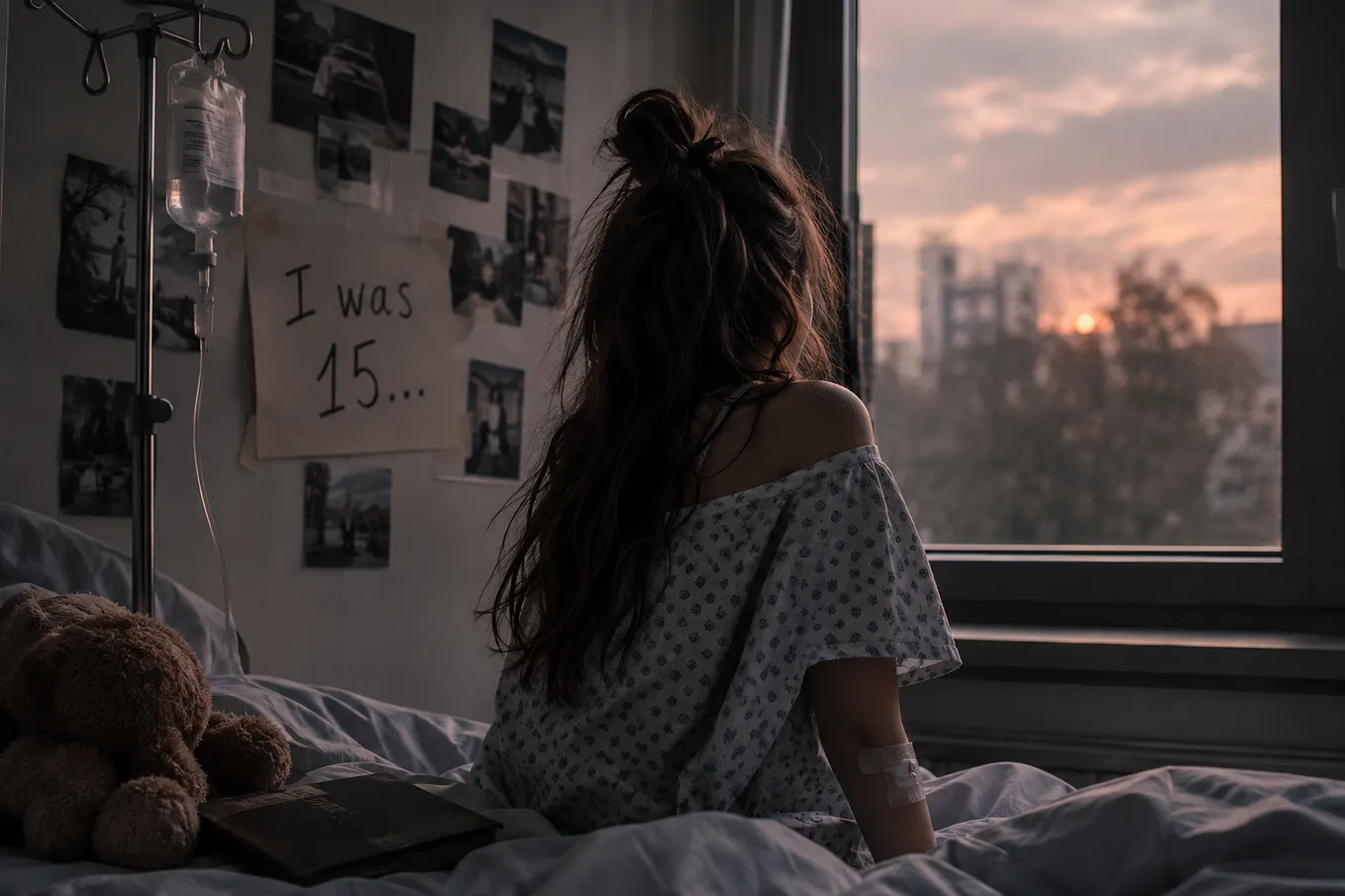
I was fifteen when I had a stroke. I was also fifteen when I discovered how little empathy some people had for someone who was barely holding herself together.
Before that, I had been a good student. Not just academically successful, but involved in everything. I was creative, outspoken, confident, and always looking for something to do. I loved being part of projects, school plays and activities. I had friends, interests, ambitions, and a pretty clear idea that I wanted a life bigger than the small hometown I grew up in.
Then I started high school, suffered a stroke, and slowly became the girl who sat alone in the classroom.
Not because I liked being alone.
Because, eventually, I stopped trying to make myself welcome in places where nobody seemed interested in welcoming me.
Coming back before I was ready
I first returned to school in the middle of December 2013, after being released from the hospital in my hometown. Looking back, I wish I hadn’t gone back so soon. I was still recovering, but at the time I wanted one thing: to continue with my life. I wanted to be a normal teenager who went to school, saw her classmates, and did ordinary teenage things.
I was back for approximately a week. During that week, I was expected to take all the exams just like everyone else.
I failed them. Of course I did. My grades suffered even more, but I wasn’t exactly in a position to care about academic performance. I was barely able to move properly.
After that, I was transferred to another clinic in Belgrade. While other kids were celebrating the holidays and enjoying the first three weeks of January, I was spending the winter break in another hospital bed.
I finally returned to school for good after being released from the clinic, immediately after the winter break. I’m pretty sure most of my classmates and teachers didn’t even know I had spent that time in Belgrade, fighting for my life.
My first return had already been a disaster.
I remember walking into the school hallway and seeing a group of classmates standing in front of our classroom. I simply said hello.
Nobody said hello back.
I was still barely walking. My left hand wasn’t moving properly either, although the tremor wasn’t particularly visible yet. Since I’m right-handed, I could easily hide the problem by using my right hand for most things.
Apparently, it was possible to be visibly struggling and still go unnoticed.
During one literature class, our teacher divided us into groups. I had to move to the other end of the classroom and join a few girls. I was barely able to move my arm and my leg, but I still had to carry my chair.
Nobody offered to help.
Nobody seemed to notice.
A few girls asked what had happened to me. I told them I hadn’t been able to walk or move my hand. One of them asked whether I could walk now.
I said yes.
And that was pretty much the end of the conversation.
At that point, I didn’t even know I had suffered a stroke. Months later, when I finally received the diagnosis, I still didn’t announce it to the class. Nobody asked, so I never explained. I suppose they assumed I had recovered completely after leaving the hospital.
They had no idea I was still struggling.
Being different was already a problem
I want to make something clear: I wasn’t bullied because of my illness. I was already considered different long before the stroke.
I didn’t fit in from the beginning.
My classmates judged me for my music taste. I liked punk and metal, which apparently made me a weirdo and a Satanist. Their interests were mostly uninteresting to me, and I had very little desire to pretend otherwise.
During recovery, I just wanted to be left alone. I didn’t have the patience or energy to listen to conversations that meant absolutely nothing to me.
But being alone wasn’t what I wanted.
I’m naturally extroverted. I enjoy people, conversation, connection, and having a group of friends around me. I simply don’t enjoy fake friendships. I would rather be alone than surround myself with people who don’t genuinely like me.
And that’s what happened.
I spent practically every class and every break alone. Nobody wanted to sit next to me. Nobody helped me with studying. I had to figure everything out by myself.
My closest friends had gone to different schools, so we couldn’t see each other every day. At least I had people outside school I could count on, people I could talk to honestly about what I was experiencing.
Inside that school, however, I had nobody.
The situation improved slightly over the years, but none of my classmates became a true friend. I was either ignored or judged. Nobody from my class ever stood up for me.
And the strangest part is that I don’t think most of them understood how serious my situation had been. They were concerned with exams, grades, and studying. They would ask how I did on a test, what answers I gave, or what grade I received.
I couldn’t have cared less.
My life was falling apart, and they wanted to compare test answers.
Apparently, I was the problem
Some teachers had already decided what kind of student I was before I ever had the chance to show them otherwise.
There was an older, conservative economics teacher who disliked me from the beginning. I had been failing one of his subjects before the stroke, and he seemed to have formed an opinion about my intelligence and work ethic based on that alone.
After the winter break, he asked me whether I had recovered.
As if I had been away with the flu.
I simply answered that I hadn’t recovered yet.
Another teacher, my geography teacher, had also disliked me from the beginning. On my first day back, she asked us to stand in front of a map and point out certain locations. When it was my turn, she yelled at me to get up because I was apparently hiding.
I had been sitting at the back of the classroom, minding my own business.
My vision was blurry, my head was dizzy, and I was barely able to stand in front of that map. I genuinely thought I might pass out.
She didn’t notice how unwell I was.
I still remember how infuriating that felt. You are teaching geography at an economics school. Why are you making a recovering teenager feel like she’s deliberately avoiding your lesson?
The older economics teacher was particularly interesting because he was apparently everyone’s favourite. I couldn’t stand him.
At the end of our first year, we had group presentations. I was assigned to a group with some of the biggest nerds in the class. Our teacher complimented our work and gave everyone excellent grades.
Then he added that he hadn’t expected me to do so well.
Yes, he actually said that.
Naturally, he couldn’t leave it at that. He also pointed out that I should have spoken louder and that I shouldn’t have crossed my arms.
He knew nothing about my recovery. He didn’t know about my tremor or how I was adjusting to living with a new disability. Crossing my arms was simply the most comfortable position for me.
Get Jay Dee’s stories in your inbox
Join Medium for free to get updates from this writer.
But apparently, even that needed to be criticized.
I had teachers who told me I wouldn’t accomplish anything in life. They treated me like I was stupid, lazy, and incapable. One even suggested that I needed to change myself so other students would like and accept me.
Imagine telling a teenager who has survived a stroke that she is unlikely to achieve anything.
They saw my grades, my isolation, and my lack of interest in their subjects. They didn’t see the person behind them.
And they certainly didn’t see my potential.
Friendship is not a school assignment
At some point, the school psychologist and the headmaster became concerned about my grades and the fact that I was a loner.
They didn’t know I had been in the hospital. They didn’t understand what had happened to me, and apparently they didn’t think to ask.
Instead, they suggested that I join school activities, such as drama and art clubs.
I wasn’t interested.
I was already spending seven hours a day at school. That was more than enough. I wanted to go home. I wanted free time. I wanted to see my actual friends and do things I enjoyed.
But the most ridiculous suggestion was that I should name a few classmates I would like to become friends with.
I still don’t understand that logic.
What were they going to do? Assign me some friends?
Were we in kindergarten? Were they going to force a few teenagers into a friendship with me and expect it to work?
If somebody wanted to be my friend, they could have approached me themselves. I didn’t need the school administration to organize a social life for me.
Friendship isn’t a school assignment. You can’t force people to like each other.
And I didn’t want pity friendships either.
I was doing more than they knew
The irony is that, despite everything, I managed to remain a very good student throughout those four years.
My grades varied. Some were good, some were bad, and I genuinely believe certain teachers lowered them because they simply didn’t like me.
But I graduated. I did what I needed to do.
I also had a life outside that classroom, one that my teachers probably knew very little about.
I was writing on Wattpad, publishing music reviews on Facebook pages, singing, researching music, taking photographs, and learning photo and video editing. During my third year, I attended a private English school and earned a certificate. I was the only person in my class who spoke English fluently.
There were so many things I was learning that had nothing to do with the traditional school curriculum.
I wasn’t particularly interested in becoming the perfect economics student. I wanted to write. I wanted to work with music. I wanted to become a journalist.
I was already building those interests while sitting in classrooms where some teachers had decided I was going nowhere.
They kept telling us that we were just kids and that studying should be our number one priority.
Well, it wasn’t mine.
Some of us had to grow up faster. Some of us had things to deal with that made grades seem almost irrelevant.
I didn’t need another lecture about my responsibilities as a student. I needed people to understand that I was recovering from a life-threatening medical event.
I needed empathy.
Instead, I was treated like a problem that needed to be corrected.
The girl who refused to become what they expected
I didn’t become a completely different person after the stroke. I was still ambitious. I was still creative. I still had opinions, interests, and plans for my future.
But by the end of high school, I had become a silent loner. I had learned to hide parts of myself because expressing them in that environment rarely brought anything good.
I never felt embarrassed about my disability. I am proud of myself and what I managed to overcome. I wasn’t ashamed of my grades or my circumstances either.
But I was rejected, and eventually I stopped trying to connect with people who had already made up their minds about me.
I regained my confidence at university and through my work. Once I left my hometown, I finally had the space to become myself again.
I got into the university I wanted. I pursued journalism. I became a music journalist at nineteen, at the beginning of my university journey.
Most of the classmates who had seemed so concerned with being better students than me stayed in our hometown or moved elsewhere without pursuing the kind of life I had wanted for myself.
I don’t say that because I think their lives are worth less than mine. I say it because the people who once treated me as if I had no future had absolutely no idea what I was capable of.
I wish I could go back and tell that fifteen-year-old girl that she wouldn’t spend her entire life sitting alone in a classroom, being judged by people who didn’t know her.
I wish I could tell her that she would eventually find people who shared her interests, that she would write about music, work in journalism, and build a life beyond that small town.
And if I could say one thing to those teachers who predicted that I wouldn’t accomplish anything, it would be:
Look at me now, bitch!
It isn’t hard forever
I don’t know whether my former classmates or teachers remember me. I doubt most of them even remember that I was ill.
I left my hometown immediately after graduating, and I never really crossed paths with those people again.
For a while, university and my music journalism career helped me put those years behind me. I had a new environment, new opportunities, and a chance to rebuild the confidence I had lost.
But those old feelings came back later, after another near-death experience, more personal tragedies, discrimination, and problems at work. Sometimes, being treated unfairly as an adult brings back the feeling of being that teenager who couldn’t get anyone to listen.
Perhaps that’s why I wanted to write about high school now.
Not because I want those people back in my life. Not because I need their apologies. And certainly not because I want to convince anyone that I was a perfect student or a perfect teenager.
I wasn’t.
I was a fifteen-year-old who had survived a stroke and needed a little understanding. I was an extrovert who ended up sitting alone. I was a creative person who wanted a future in music and journalism, while people around me were busy deciding that I wasn’t good enough.
I didn’t need them to like me. I needed them to stop making an already difficult period of my life even harder.
If there’s one thing I would tell someone going through something similar, it’s this:
Life is like a dick. Sometimes it’s up, sometimes it’s down, but it’s not hard forever.
And if the people around you can’t see your potential, that doesn’t mean you don’t have any.
Sometimes you just need to get out of that classroom.