Artificial Intelligence and the End Times


Is Technology Making the World of Revelation Possible?
For nearly two thousand years, Christians have read the extraordinary prophecies contained in Daniel, Revelation, and the words of Jesus concerning the end times. They have read about a future world in which enormous political and economic power becomes concentrated, people can be prevented from buying or selling, events occurring in Jerusalem are witnessed throughout the world, deception becomes extraordinarily powerful, and an image somehow appears to speak and exercise authority.
Christians believed these passages because they believed the Bible. But for most of history, there was an obvious question: How could any of this actually happen? They had to take their belief totally on blind faith.
How could a government know whether an individual in another city — or another country — was permitted to buy food? How could the entire world watch something happening in Jerusalem? How could anyone monitor hundreds of millions, much less billions, of people? How could an image appear to speak and interact with people as though it were alive? For most of history, there were no obvious answers.
Today there are.
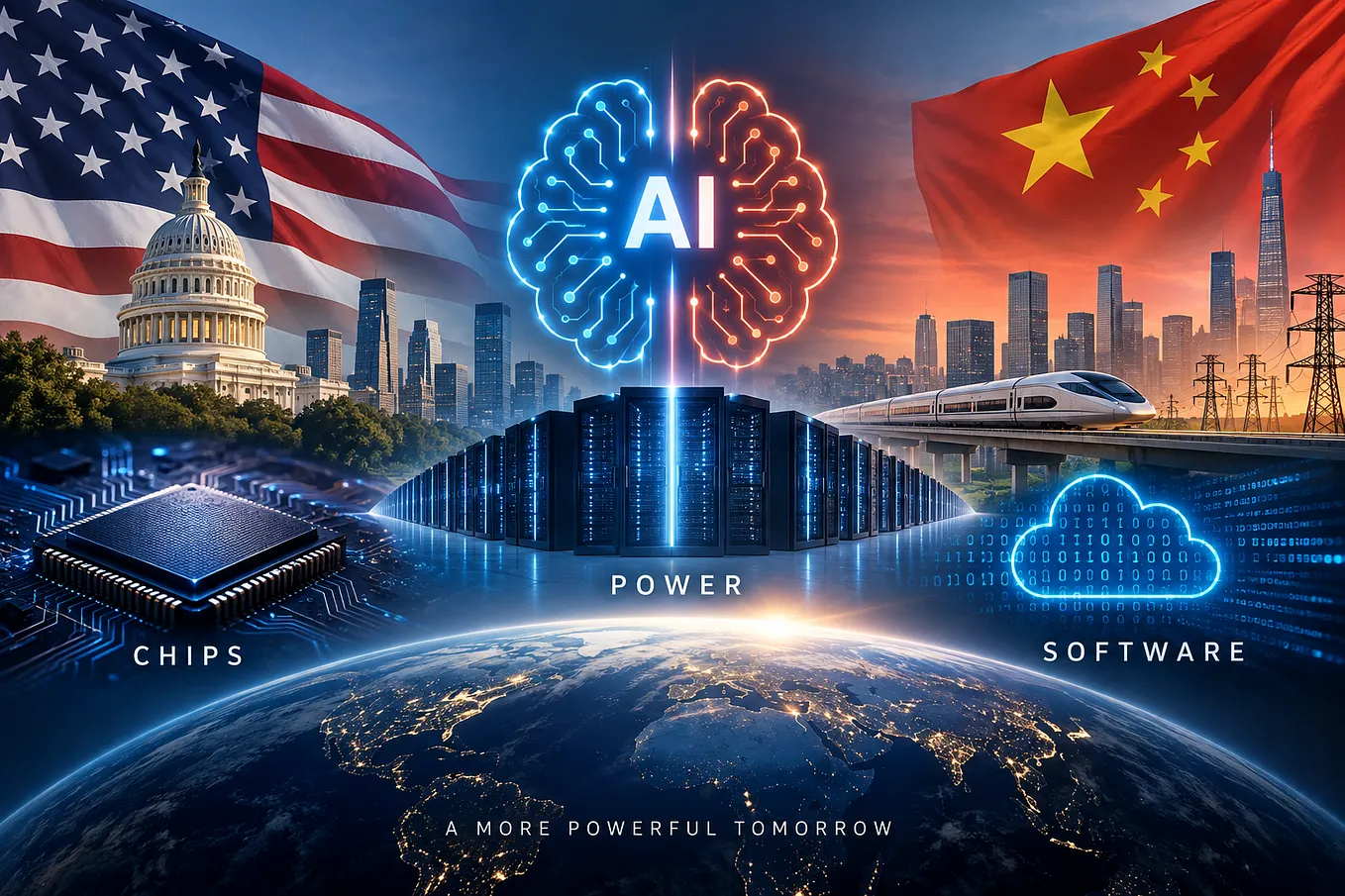
Obviously the Bible never mentions artificial intelligence, computers, facial recognition, digital currency, or the Internet. It did not need to. It told us what the world would look like when these prophecies were fulfilled, not the engineering details of how mankind would get there. Today, for the first time in history, the technological infrastructure capable of producing that world is being built around us.
We are no longer simply wondering how these extraordinary prophecies will someday be fulfilled. We are watching the conditions necessary for their fulfillment taking shape before our eyes.
A World Where Buying and Selling Can Be Controlled
Revelation describes a future economic system with an extraordinary degree of control:
“And he causeth all, both small and great, rich and poor, free and bond, to receive a mark in their right hand, or in their foreheads: And that no man might buy or sell, save he that had the mark, or the name of the beast, or the number of his name.” — Revelation 13:16–17 (KJV)
In other words: participation in ordinary economic life will be controlled. Those who do not meet the required condition will be unable to buy or sell.
Think about what would actually be required to enforce something like that. A system would have to identify individuals and determine whether each person was authorized to participate in ordinary economic life. For most of human history, controlling commerce at the individual level across enormous populations would have been virtually impossible.
It isn’t anymore.
We already have digital banking, electronic payments, biometric identification, facial recognition, enormous interconnected databases, smartphones capable of identifying their owners, and artificial intelligence capable of analyzing tremendous quantities of information almost instantaneously. The technological capability to identify individuals and control their participation in an economic system now exists.
An Image That Speaks
Revelation contains another description that must have seemed almost incomprehensible for most of history:
“And deceiveth them that dwell on the earth by the means of those miracles which he had power to do… saying to them that dwell on the earth, that they should make an image to the beast… And he had power to give life unto the image of the beast, that the image of the beast should both speak and cause that as many as would not worship the image of the beast should be killed.” — Revelation 13:14–15 (KJV)
In other words: an image is created that appears to come alive and speak.
Imagine reading that five hundred years ago. Or even fifty years ago.
Today we can create a digital representation of a person that looks like that person, sounds like that person, speaks words the person never actually spoke, answers questions, and carries on conversations. AI-generated people can appear on a screen and interact with us in ways that would have seemed like science fiction only a few years ago.
An image that speaks no longer sounds technologically impossible.
A World of Extraordinary Deception
When Jesus described the end times, one warning appeared repeatedly:
“Take heed that no man deceive you. For many shall come in my name, saying, I am Christ; and shall deceive many… And many false prophets shall rise, and shall deceive many… For there shall arise false Christs, and false prophets, and shall shew great signs and wonders; insomuch that, if it were possible, they shall deceive the very elect.” — Matthew 24:4–5, 11, 24 (KJV)
Jesus repeatedly warned about deception.
Artificial intelligence has given mankind tools of deception previous generations could scarcely have imagined. We can create realistic photographs of events that never occurred, reproduce a person’s voice saying words that person never spoke, and generate convincing video showing people doing things they never did.
We are approaching a world in which seeing something with our own eyes may no longer establish that it actually happened.
AI adds another dimension. Traditional propaganda sends essentially the same message to everyone. Artificial intelligence can analyze what an individual reads, watches, purchases, fears, believes, and responds to, and then tailor a message specifically to that person. Mass persuasion can become personal persuasion on a worldwide scale.
The Whole World Can Watch
Revelation describes another remarkable event involving two witnesses who are killed in Jerusalem:
“And they of the people and kindreds and tongues and nations shall see their dead bodies three days and an half… And they that dwell upon the earth shall rejoice over them, and make merry, and shall send gifts one to another; because these two prophets tormented them that dwelt on the earth.” — Revelation 11:9–10 (KJV)
In other words: people from different nations and languages throughout the world will be able to observe an event taking place in Jerusalem during the same three-and-a-half-day period.
For most of human history, how could that possibly happen?
Today we hardly need to ask the question. Satellites, smartphones, global networks, streaming video, social media, and instant translation can distribute an event occurring in Jerusalem around the planet within seconds.
Billions of people can potentially watch the same event at virtually the same time.
Surveillance on a Scale Never Before Possible
There is another requirement hidden within the prophecy about buying and selling. If particular people can be excluded from the economic system, the system has to know who they are.
For most of history, surveillance of hundreds of millions or billions of people would have required an impossible number of human beings watching other human beings.
Artificial intelligence changes that.
Millions of cameras can be analyzed automatically. Faces can be recognized. Vehicles can be identified. Financial transactions can be examined. Online activity can be analyzed. Enormous databases can be searched and correlated almost instantly.
The important change is scale. Computers do not have to watch one person at a time. AI can examine enormous quantities of information simultaneously and identify patterns that no human organization could possibly process on its own.
Power Over Nations and Peoples
Revelation describes authority extending far beyond a single nation:
“And there was given unto him a mouth speaking great things and blasphemies… And it was given unto him to make war with the saints, and to overcome them: and power was given him over all kindreds, and tongues, and nations.” — Revelation 13:5, 7 (KJV)
For most of history, geography itself limited political power. Oceans, mountains, borders, distance, language, slow communication, and the inability to identify or monitor distant populations placed practical limits on how much control any ruler could exercise.
Those barriers are disappearing.
Global communications overcome distance. AI translates languages. Digital financial systems move money instantly. Biometric systems identify people. Massive databases store information. Artificial intelligence can analyze that information at a scale no human bureaucracy could manage.
Get Jespaulding’s stories in your inbox
Join Medium for free to get updates from this writer.
The technological pieces necessary for an extraordinary concentration of power are coming together.
And that brings us to something much deeper than technology.
What Does God Really Want From Us?
One of the most moving illustrations I have heard of what God desires from us comes from neurosurgeon Dr. Michael Egnor. Today Egnor is a Christian and an outspoken defender of the existence of the human soul, but earlier in his life he was an unbeliever.
Egnor tells the story of a frightening period when his young son was showing signs that he feared might indicate autism. What particularly devastated him was the possibility that his son might never really know him or relate to him as a father. Egnor desperately wanted the relationship every loving father wants with his child. He wanted his son to know him, respond to him, and love him.
Although Egnor did not really believe in God at the time, his desperation eventually drove him into a hospital chapel. He knelt before the altar and prayed. In essence, he told God that he did not even know whether God existed, but he needed help.
Then something happened that Egnor says had never happened to him before and has never happened to him since. He heard a voice.
The message was only seven words:
“But that’s what you’re doing to me.”
Suddenly Egnor understood.
He was heartbroken by the possibility that his own child might never really know his father or return his father’s love. Yet Egnor himself had spent much of his life doing essentially that to God. If God was truly his Creator and Father, God desired a relationship with him — yet Egnor had lived as though his Father were not there.
The experience overwhelmed him. Egnor has described collapsing before the altar and realizing that the God he had doubted knew him intimately and had loved him throughout his life. He prayed not only for his son, but for himself. He asked God to heal his child — and to heal him as well.
Whatever one makes of the experience itself, the lesson Egnor drew from it is profoundly biblical. A loving father does not merely want his child to acknowledge that he exists. He wants his child to know him, trust him, love him, and share a relationship with him.
That gives us an important way of understanding God’s relationship with mankind. God does not simply demand that we admit He exists. He created us for a relationship with Him. He wants us to know Him, love Him, trust Him, and choose Him.
Yet when we look across human history, we repeatedly see mankind doing exactly the opposite.
Rather than drawing closer to our Creator, we repeatedly attempt to become independent of Him. We accumulate knowledge, power, wealth, and technology and eventually convince ourselves that we can build our own world without God.
That struggle did not begin with artificial intelligence.
It is almost as old as mankind itself.
And one of the clearest examples occurred thousands of years ago at a place called Babel.
Babel in Reverse
Near the beginning of the Bible, Genesis tells us about another time when humanity became united, increasingly capable, and extraordinarily confident in itself.
“And the whole earth was of one language, and of one speech. And it came to pass, as they journeyed from the east, that they found a plain in the land of Shinar; and they dwelt there. And they said one to another, Go to, let us make brick, and burn them throughly. And they had brick for stone, and slime had they for morter. And they said, Go to, let us build us a city and a tower, whose top may reach unto heaven; and let us make us a name, lest we be scattered abroad upon the face of the whole earth.” — Genesis 11:1–4 (KJV)
In other words: humanity was united by a common language and increasingly confident in what it could build and accomplish. Rather than depending upon God, they determined to establish their own greatness, security, and identity: “Let us make us a name.” They would build their world their way.
The problem was not architecture. It was what their growing confidence in themselves had become. They were a unified people with a common language, increasingly capable of accomplishing whatever they set out to do. Their response was not to honor God, but to exalt themselves. The enormous tower they proposed to build became a visible expression of that ambition. Humanity believed that through its own unity, knowledge, and abilities, there was very little it could not accomplish.
Then God said:
“Behold, the people is one, and they have all one language; and this they begin to do: and now nothing will be restrained from them, which they have imagined to do.” — Genesis 11:6 (KJV)
God’s response was to confuse their language and scatter them across the earth.
For thousands of years, those two barriers — language and geographical separation — divided mankind.
Today both barriers are being torn down.
Modern transportation and global communications have largely overcome geographical separation. A person in Florida can communicate instantly with someone in Israel, China, India, or almost anywhere else on earth. Information can travel around the planet in seconds.
And now artificial intelligence is overcoming the other great barrier created at Babel: language. AI can translate written words almost instantly. It can translate spoken conversations as they occur. It can reproduce a person’s voice speaking a language that person has never learned. Increasingly, two people who share no common language can communicate almost as though they do.
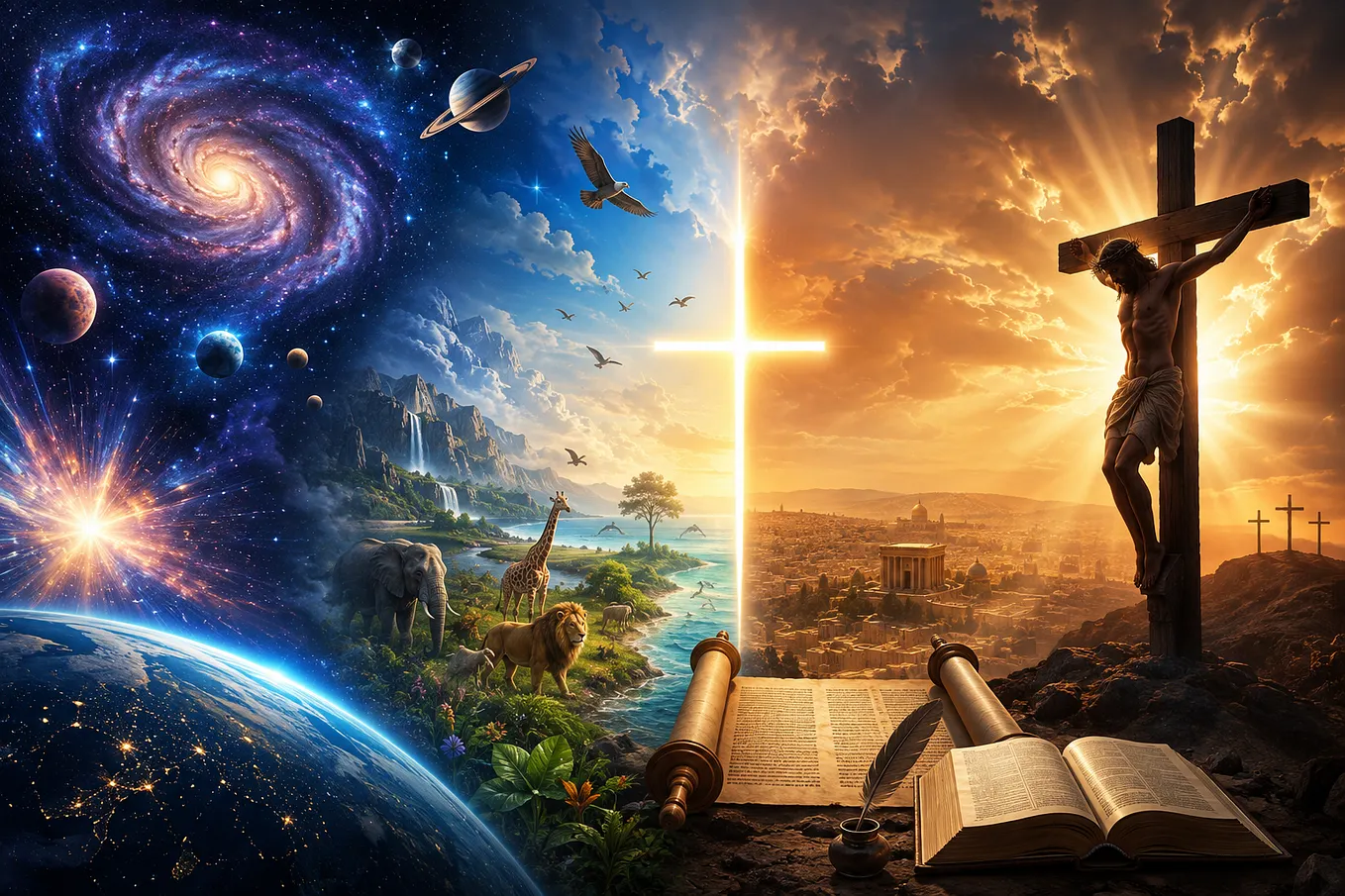
In a remarkable sense, mankind is reversing Babel.
But the parallel goes much deeper than communication.
Once again mankind is becoming extraordinarily confident in its own knowledge and abilities. We explore the universe, manipulate genes, create machines that imitate human intelligence, and increasingly teach that science can explain existence without a Creator and technology can solve mankind’s problems without God.
The tower has changed. The attitude has not.
At Babel, mankind effectively said, “We can do this ourselves.”
Much of the modern world is saying the same thing.
This Time God Gathers Rather Than Scatters
At Babel, God responded to mankind’s rebellion by scattering humanity. Human civilization continued, divided into different peoples and languages.
But the Bible tells us that mankind’s rebellion will not continue forever.
Jesus promised that He would return for those who belong to Him. Paul described what will happen to the Church:
“For the Lord himself shall descend from heaven with a shout, with the voice of the archangel, and with the trump of God… Then we which are alive and remain shall be caught up together with them in the clouds, to meet the Lord in the air: and so shall we ever be with the Lord.” — 1 Thessalonians 4:16–17 (KJV)
In other words: Christ will gather those who belong to Him. The Church — His Bride — will be taken to be with Him.
There is a remarkable contrast here.
At Babel, mankind united in rebellion and God scattered the people.
At the end of the age, God gathers His own.
Those who have rejected God are left to experience the consequences of a world that has chosen rebellion against Him. The Tribulation described in Scripture follows, human rebellion reaches its culmination, Christ returns, evil is judged, and mankind’s long attempt to build a world without its Creator comes to an end.
For nearly two thousand years, Christians read these prophecies and believed them because they trusted the Word of God, even though much of what they described seemed impossible. Today it no longer does. The technology needed for worldwide surveillance, economic control, instantaneous global communication, convincing deception, and intelligent images that appear to speak already exists. At the same time, mankind is becoming increasingly interconnected and increasingly confident that it can build its future without God. The world described in biblical prophecy is no longer difficult to imagine. We are watching it take shape around us — and the Bible described it thousands of years before mankind possessed the technology to make it possible.
NOTE: The Author developed the ideas, arguments, and conclusions in this article, with AI assistance in research, fact checking, editing, and presentation