TimeLine Theatre Explores Early Contraception in World Premiere The Birth of the Pill


In the early 1950s, widow Sanger, who drank a bottle of champagne daily, secured research funding from philanthropist Katharine Dexter McCormick (confident, formidable Mary Beth Fisher) and recruited biologist Gregory “Goody” Pincus (amiable Mitchell J. Fain), who wanted to decouple sex from procreation because intercourse is instinctual and normal, not degrading or sacrosanct, at a time when medicine for family planning, and not illness, was new, as this living history lesson explores.
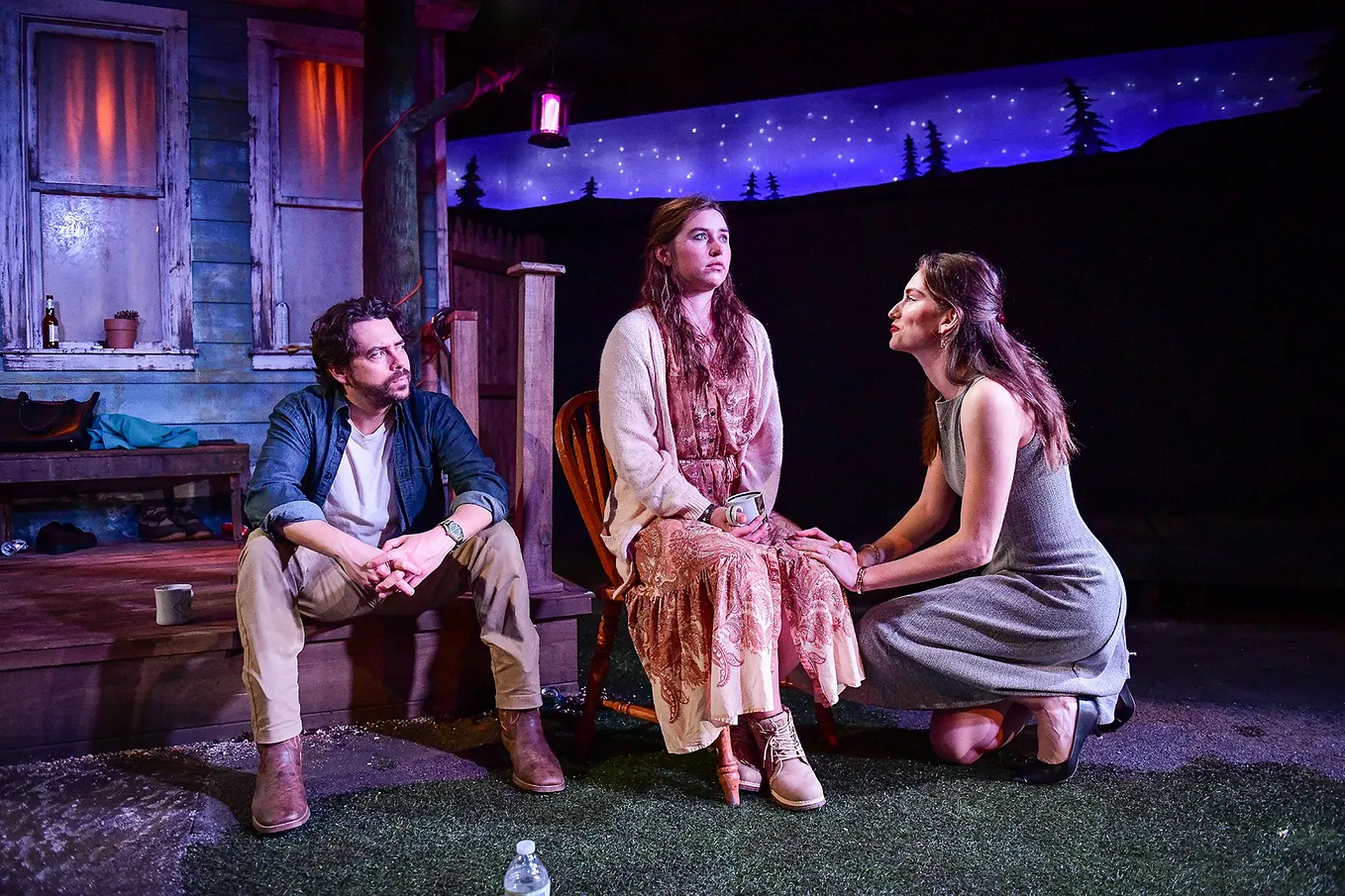
Pincus researched alongside Min Chueh Chang (a compelling Rammel Chan), a Chinese-born American scientist who showed that synthetic progesterone could reliably stop ovulation in rats and rabbits (stunt vivisection bunny and more by prop designer Saskia Bakker), and John Rock (gruff and lovable David Parkes), a prominent Catholic gynecologist who led the human clinical trials as science-forward since “religion is a poor scientist.” These experiments provide a “training montage” of scenes to cover a decade of trials and errors as the team battles the clock as well as legality issues and public perception.
That’s where narrator Ramona Delgado (energetic San Juan-born María Victoria Martínez) comes in. She’s the glue between the character’s narratives, switching scenes and times using a Thanos snap, and gives some lectures about human reproduction (remember that the egg chooses the sperm, not vice versa), as well as being the representative for her Puerto Rican ancestors, many of whom became human lab rats for testing this pill, mostly with extremely large doses of chemicals in the early days, plus invasive surgeries like sterilization, which some subjects were unaware of or weren’t told the procedure was permanent.
Get Karin McKie’s stories in your inbox
Join Medium for free to get updates from this writer.
Using projected scenery (by Mike Tutaj), the play shows that Puerto Rico was selected for human trials since it was close enough to the Eastern Seaboard laboratory, but without some legal hurdles found in the contiguous United States. And this is where more uncomfortable truths about Sanger’s white feminism are exposed in the narrative: people of color were test subjects because they were considered less human and more expendable (“breaking a few eggs to make an omelet” is referenced here several times), along with the eugenics-forward sentiment that perhaps “less-desirable people” shouldn’t procreate and maybe we need to “reduce undesirable populations worldwide.”
This racist activist schism happened with first wave feminists in the suffrage movement and with Gloria Steinem in the second wave since she wasn’t consistently intersectional, as well as at the climax of this intermission-less story. In addition to participating in clinical trials that were not really explained, Puerto Rican women were also given massive doses of hormones, far more than today’s formulations, which caused spotting, lactating, headaches, vertigo, vomiting, fainting and more. The production considers actions like prisoner testing during the Holocaust: Are scientific advancements truly worth the outcome when derived from involuntary, incalculable and/or hidden human suffering?
The play covers the decade-long research and trial process, culminating with the FDA’s approval of Enovid in 1960. What starts as zippy repartee among folks trying to improve the lives of women ends at the inevitable exploitation of certain populations to benefit the white ruling class, also evocative of the Henrietta Lacks medical saga (her cells were not used to help the cervical cancer that killed her, but only for experiments that continue today). This work was indeed groundbreaking, resulting in a medicine so important it’s simply called The Pill (yet, of course, women’s reproductive freedom still needs defending today). This oxymoronic title — using Birth and Pill in the same sentence — underscores the fraught nature of the subject and its portrayal.
TimeLine’s The Birth of the Pill runs through October 4 at 5035 N. Broadway. Post-show talkbacks, audio and captioned performances are available. The long, second floor hallway is the perfect runway for TimeLine’s famous dramaturgical displays, including a signage wall with white paper and pens for audiences to add their own notes, if desired. In addition to the 250-seat theater, TimeLine’s new five-story building also has soft-launched their first-floor bar and café, serving coffee and drinks.
https://thirdcoastreview.com/stages/2026/09/14/review-timeline-theatre-the-birth-of-the-pill