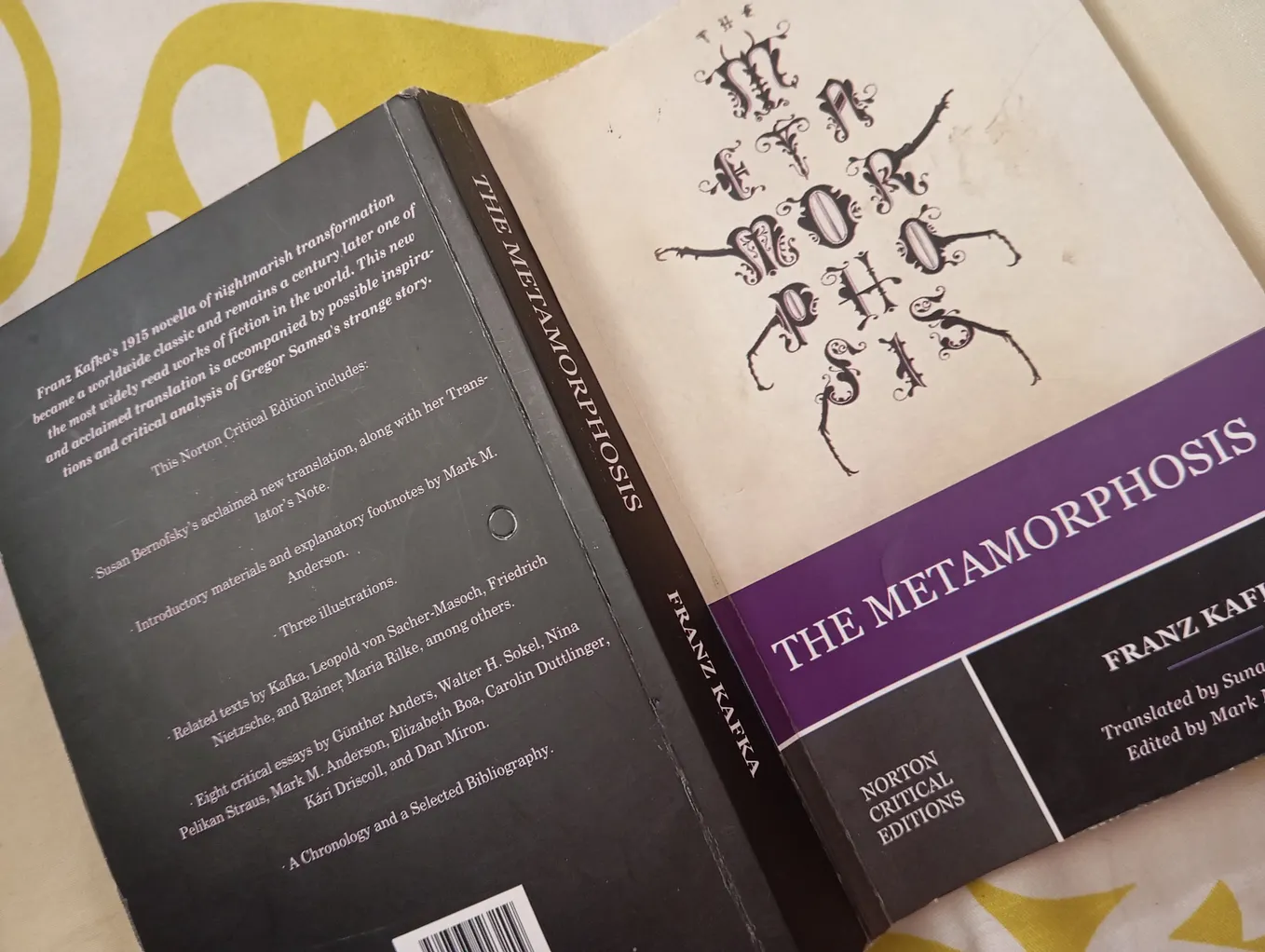
Book Review — Franz Kafka’s “Metamorphosis”
The horror of becoming a bug, and the tragedy of being a human

I understand that there’s a specific kind of dread that comes with waking up and realizing something has gone terribly wrong. Perhaps it’s a missed alarm, a forgotten deadline, or the vague, sinking feeling that your life has slipped into a routine you never chose to begin with. Franz Kafka takes that everyday dread and stretches it to its most absurd, bizarre, and somewhat horrifying extreme. In The Metamorphosis, his protagonist wakes up to discover he has become a giant insect. But the real nightmare isn’t the transformation itself. The real nightmare is how quickly the people around him decide he no longer matters.
Published in 1915, this novella has become one of the most analyzed and debated works of modernist literature. You know, it’s the kind of book that gets assigned in high school classrooms, dissected in university seminars, and mentioned in countless pop culture references. But beneath all that academic weight lies a story that is surprisingly intimate, painfully human, and deeply unsettling. It’s a short read, barely over a hundred pages, yet its impact is massive. You can finish it in a single afternoon, but expect yourself to be processing it for the following weeks.
Short Review of The Plot
The story opens with one of the most famous first lines in literary history. Gregor Samsa, a traveling salesman, wakes up one morning to find himself transformed into a monstrous vermin. Kafka never gives us a clear description of what Gregor actually looks like. We know he has a hard, shell-like back, numerous legs that twitch helplessly in the air, and a dark brown, segmented body. But the details remain frustratingly vague.
Gregor’s first instinct isn’t to panic. It’s not horror or even self-pity. His immediate concern is that he has overslept and will miss his train to work at 8. He lies in his bed, staring at his unfamiliar body, and his mind races through the logistics of his job. He thinks about the early mornings, the exhausting travel, the terrible food, and the fleeting, shallow relationships he forms with strangers on the road. He hates his job. He hates his boss, a man who sits atop a desk and lectures his employees from a great height. But Gregor endures it all because he has no choice. His parents are drowning in debt, and he is their only lifeline.
This opening sequence tells us pretty much everything we need to know about Gregor. He is a man who has been reduced to his utility. He exists solely to work, to earn money, and to keep his family afloat. His own sense of self has been buried so deep beneath obligation that even a physical metamorphosis cannot shake. He is less frightened by his new body than by the prospect of disappointing his employer.
Once Gregor’s family discovers his condition, the story settles into its rhythm. His father, mother, and sister Grete all react differently, but their responses share a common thread. They are all, in their own ways, more concerned with themselves than with Gregor.
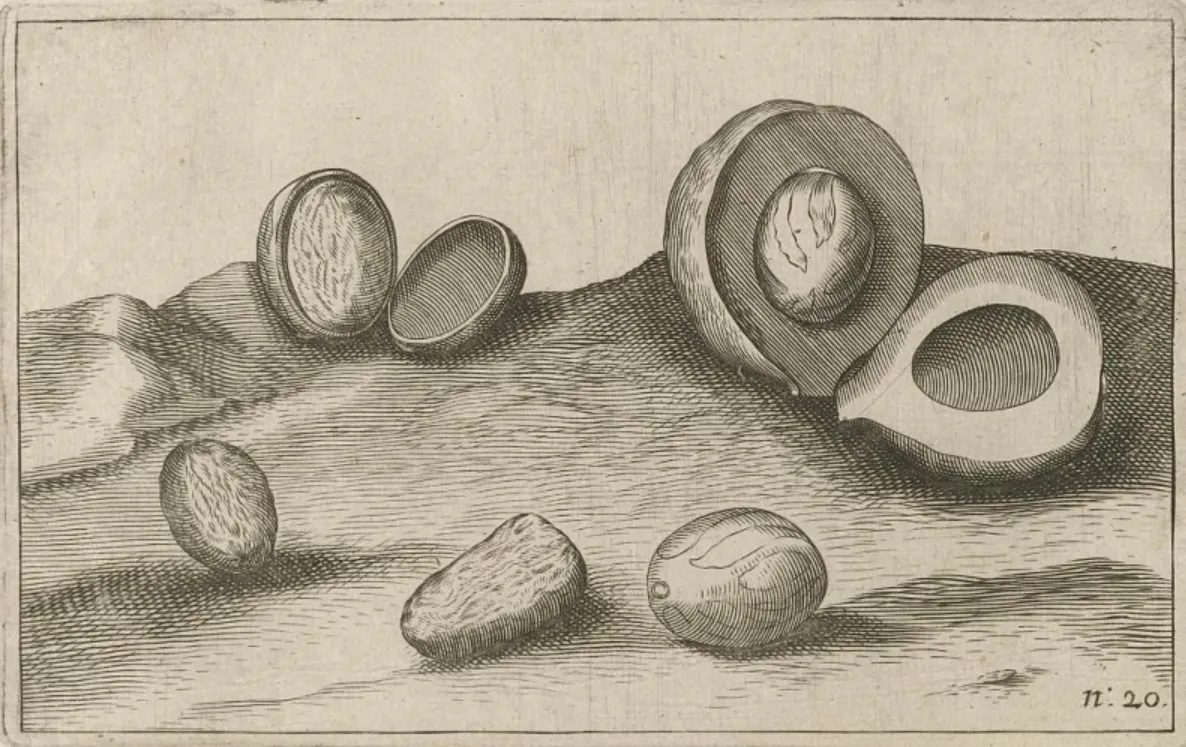
His father, a man who has been living off Gregor’s labor for years, reacts with immediate hostility. He drives Gregor back into his room with a walking stick and a rolled-up newspaper, hissing and stamping his feet as if chasing away a stray animal. This aggression only escalates as the story progresses. When Gregor eventually ventures out of his room, his father pelts him with apples, one of which becomes lodged in his back and causes a painful, festering wound. The image is quite brutal. Gregor’s father, who has contributed nothing to the household for years, suddenly finds his strength and authority by becoming Gregor’s punisher.
His mother is more sympathetic, but her compassion is fragile. She faints at the sight of him, and her fear prevents her from offering any real help. She wants to believe that Gregor is still her son, but she cannot bring herself to look at him. Her love is indeed real, but it is easily overwhelmed by her disgust.
Then there is Grete, the sister. She starts as Gregor’s only ally. She takes on the responsibility of feeding him and cleaning his room. She brings him leftover food and removes the furniture from his chamber, believing he needs more space to crawl around. In the early weeks, Grete is the one person who seems to see the human being trapped inside the insect’s body. She shows him kindness when no one else will.
But here is where Kafka delivers his most devastating blow. Grete’s compassion doesn’t last. As the family’s financial situation deteriorates and they are forced to take in boarders, Grete grows weary of her burden. The daily chore of tending to Gregor becomes a source of resentment. She stops caring about what he likes to eat. She leaves his room dirty and neglected. And eventually, she becomes the loudest voice calling for his removal. She tells her parents they must get rid of “it,” and she insists that if this creature were truly Gregor, he would have understood that he cannot stay with them.
Get Keanu Dasha Harison’s stories in your inbox
Join Medium for free to get updates from this writer.
This transformation in Grete is arguably more unsettling than Gregor’s own physical change. It suggests that kindness is conditional, that love can be exhausted, and that even the strongest bonds can shatter under the weight of inconvenience. Grete isn’t a villain. She is a young woman who has been forced to grow up too fast, who has lost her brother and her childhood in the span of a few months. Her cruelty is born from exhaustion and desperation, but that clearly doesn’t make it any less painful to witness.
Modern Alienation
One of the reasons The Metamorphosis remains so relevant is its critique of the modern work culture. Gregor’s job is a soul-crushing grind. He travels constantly, eats terrible food, and has no meaningful relationships. His boss is a tyrant who never trusts his employees and always assumes the worst. Gregor dreams of quitting, of telling his boss exactly what he thinks of him, but he cannot afford to. His family depends on his income.
This dynamic will feel familiar to anyone who has ever been stuck in a job they hate. The fear of financial ruin, the pressure to provide for loved ones, the exhaustion that comes from endless obligation — these are universal experiences. Kafka captures them with painful accuracy. Gregor’s transformation into an insect is just a literal expression of what he already feels. He is already treated like a pest, like a cog in a machine, like something to be used and discarded. The bug body simply makes that reality visible to the world.
What makes this even more tragic is that Gregor’s family does not mourn his loss as a person. They mourn his loss as a breadwinner. They do not grieve for the brother or son they loved. They grieve for the money he can no longer earn. This is the cruelest aspect of the story. Gregor has spent years sacrificing his happiness for his family’s comfort, and the moment he stops being useful, he stops being a person in their eyes.
The Ending
The final section of the novella is both heartbreaking and strangely peaceful. After being injured by his father’s apple and neglected by his family, Gregor stops eating. He wastes away, and one morning, the cleaning woman finds his body. He is dead.
The family’s reaction is telling. They don’t weep, nor do they mourn. Instead, they feel a tremendous sense of relief. They take the day off from their jobs and decide to take a trip to the countryside. They sit together on the train, and they talk about their future. The story ends with Grete, their young daughter, stretching her body and basking in the sun. Her parents notice how beautiful she has become, and they begin to think about finding her a husband.
This ending is often read as a commentary of the family’s selfishness, and that interpretation is certainly valid in many ways. But there is another way to look at it. Gregor’s death can also be seen as his final act of love. He realizes that his presence is nothing but a burden to his family, and he makes the choice to let go. He frees them from the shame and inconvenience of caring for him, and in doing so, he allows them to move on with their lives. It is a sacrifice, but it is also a release. Gregor has been trapped in his own body, in his own room, in his own miserable existence. Death offers him the peace that life never could.
This does not excuse the family’s cruelty, but it does complicate the narrative. Kafka is not simply condemning Gregor’s family. He is showing us a complex, uncomfortable truth: that relationships are indeed often messy, that love can coexist with resentment, and that sometimes, the best thing we can do for the people we love is to just disappear.
Why This Book Still and Should Matter
The Metamorphosis was published over a century ago, but frankly it feels more relevant than ever. We live in a world where work often defines our worth, where family relationships can become transactional, and where the pressure to be useful can feel suffocating. Gregor’s story echoed because it reflects so many of our own anxieties.
The book also speaks to the fragility of identity. Who are we when we can no longer perform our roles? What happens to our relationships when we can no longer contribute? Gregor’s transformation strips away all the superficial markers of his identity — his job, his status, his appearance — and leaves only his essential self. And the people around him, sorrowfully, can’t handle that. They only want the Gregor who earns money and pays the bills. They don’t want the lonely, frightened creature beneath.
This should serve as a powerful reminder that our worth is often conditional. It is a reminder that we are valued for what we do, not for who we are. And it is a reminder that this conditionality can be woefully devastating.