Can We Trust AI With Our Health?
AI can help us navigate thousands of products and explain complicated health information. But when does a helpful assistant become a risky adviser?
There are thousands of products, Where Do You Start?
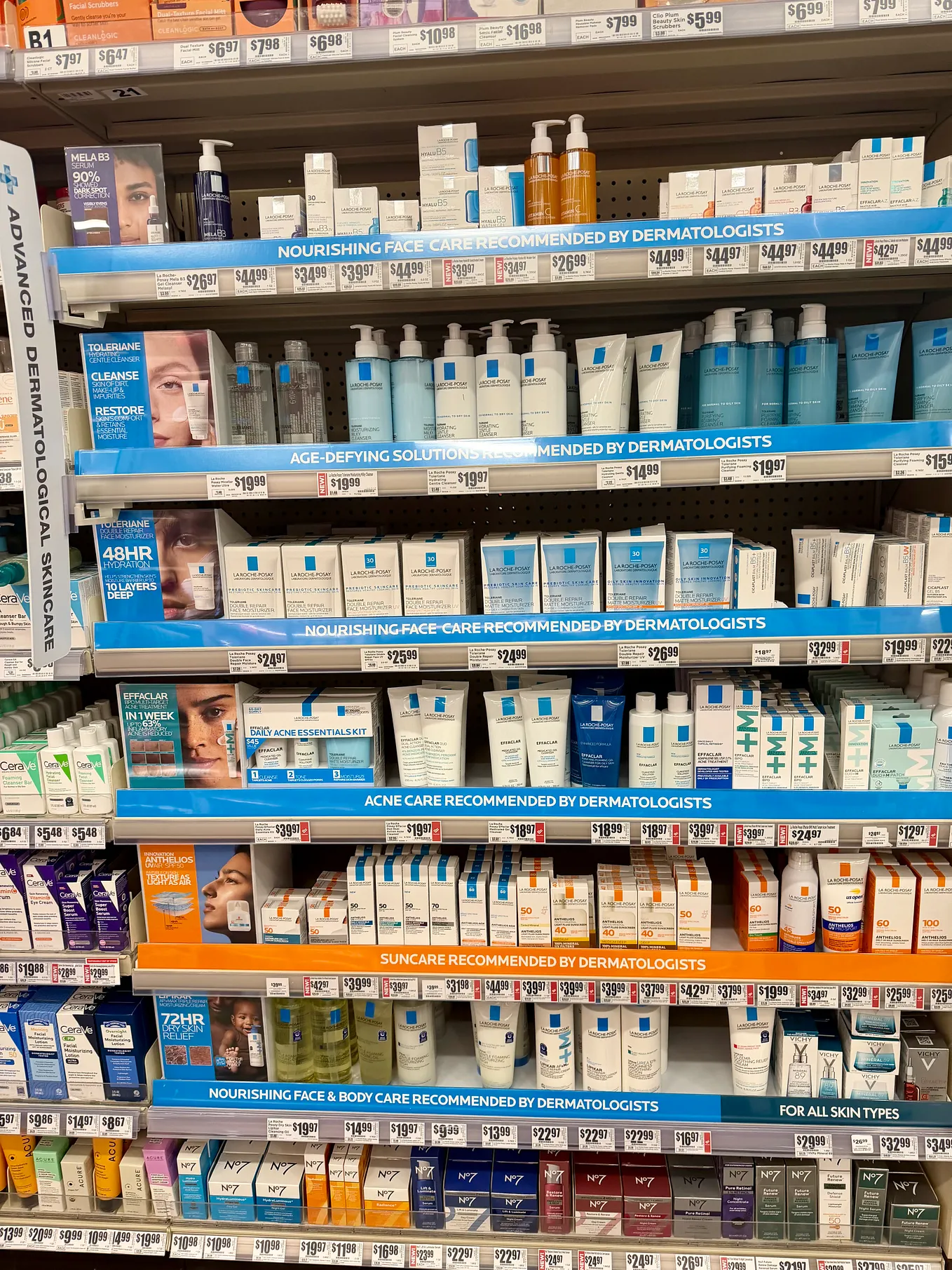
There are thousands of skincare products available today.
Different cleansers, moisturizers, serums, sunscreens, and treatments. Each promises something different. Some target acne, others dark spots, uneven skin tone, dryness, or a damaged skin barrier.
And then comes the difficult part: choosing.
You have a specific problem you want to solve, but you don’t necessarily know which ingredients to look for, which products are suitable for your skin, or whether an expensive product is actually worth buying.
This is one situation where I find AI useful.
I can explain my skincare concern, describe what I am looking for, and ask AI to help me understand ingredients, compare products, and narrow down my options. Instead of trying to evaluate hundreds of products individually, I can use AI to create a shortlist and understand what makes one product different from another.
For me, this is a practical use of technology. I am not asking AI to make a medical diagnosis. I am using it to help me navigate an overwhelming number of choices.
But recently, I started thinking about where I would draw the line.
If I can ask AI which skincare product might suit my needs,
What about asking it why my skin suddenly developed a rash?
What if I have persistent stomach pain?
What if I want to know whether a medicine is safe for me?
What if I describe symptoms and ask AI to tell me what condition I have?
The same tool that helps me compare products can also generate an explanation that sounds remarkably like medical advice.
But just because AI can answer a health question doesn’t mean it can safely answer it. And that distinction deserves more attention.
When AI Makes Choosing Easier
One of the biggest advantages of AI is its ability to simplify information.
Imagine that you want to buy a sunscreen. You have several options, but the product descriptions are full of terms you don’t fully understand. AI can explain SPF, broad-spectrum protection, and the differences between common sunscreen formulations.
You can ask it to compare the ingredient lists of two products, identify ingredients that may be relevant to your stated concerns, and help you understand what additional information you should check.
It can also help you distinguish between what a product claims to do and what its ingredients are generally used for.
That doesn’t guarantee the recommendation will be right for you. AI may misunderstand an ingredient, overlook a potential irritant, or recommend a product that is unsuitable for your particular skin condition. Still, it can be a useful starting point.
In this situation, AI helps me narrow down the choices. It doesn’t need to become the final authority. But health questions are different because the consequences of a wrong answer can be much more serious.
The Moment Product Advice Becomes Medical Advice
Let’s return to the skincare example. There is a meaningful difference between asking:
Which of these two moisturizers is fragrance-free and better suited to dry skin?
And asking:
I have a red, itchy patch on my face. What is it, and which medicine should I use?
The first question is primarily about comparing products and understanding ingredients. The second asks AI to identify a medical problem and recommend treatment.
A red, itchy patch might have several possible causes. An image may help describe what is visible, but it cannot necessarily reveal the underlying cause. The correct treatment may depend on the location, duration, other symptoms, medical history, and many details that aren’t apparent from a photograph. A product recommended for one condition might be ineffective or even worsen another.
The problem is that AI can produce a clear, organized answer even when the available information isn’t sufficient to reach a reliable conclusion.
The more a question depends on diagnosing a person rather than explaining information, the less comfortable we should be treating an AI answer as a final decision.
What Does the Research Actually Tell Us?
I wanted to look beyond personal opinions and understand what research says about using AI for medical advice. The findings are more complicated than simply saying that AI is good or bad at healthcare. Some studies show that AI can identify possible medical conditions or provide appropriate treatment suggestions. Others reveal that the same systems can make serious mistakes, even when parts of their answers are correct.
1. AI can recognize symptoms, but that doesn’t mean it can diagnose you reliably.
A 2024 study in the Journal of the American Medical Informatics Association tested ChatGPT on symptoms associated with 194 diseases. GPT-4 achieved a 78.8% relative comparative score, compared with 68.3% for GPT-3.5-turbo. The researchers compared the models’ suggested possibilities with a reference symptom checker; this was not a real-world diagnostic success rate.
At first, 78.8% sounds reassuring. But this score measured how closely the model’s lists of possible causes matched a benchmark, not proof that it could correctly diagnose 78.8% of real patients. Real people may describe symptoms incompletely, leave out important details, or have several conditions with similar symptoms.
AI may help us explore possible explanations for a symptom, but this study does not establish that we can safely use it to diagnose ourselves.
Study: Benchmarking the symptom-checking capabilities of ChatGPT for a broad range of diseases, Journal of the American Medical Informatics Association (2024).
2. AI can recommend appropriate medicines and still suggest potentially harmful ones.
A 2024 study in the Journal of Medical Internet Research examined ChatGPT’s responses to simulated consultations involving nine common diseases in low- and middle-income countries.
- 74% of the 27 simulated trials included at least one correct diagnosis.
- 82% included at least one appropriate medication recommendation.
- 85% included unnecessary or potentially harmful medication suggestions.
These figures came from only 27 simulated consultations, not thousands of real patients. The categories also overlapped: a response could include an appropriate medication and still suggest another drug that was unnecessary or potentially harmful.
That overlap is what makes the findings particularly interesting. An AI answer doesn’t have to be entirely wrong to create a risk. It may correctly identify a condition and recommend an appropriate treatment while also including advice that could lead someone to take an unnecessary medicine.
Get Labyba Ferdous’s stories in your inbox
Join Medium for free to get updates from this writer.
The study does not mean that
85% of all AI medication advice is harmful.
It does show why getting part of an answer right is not enough to establish that the whole response is safe.
Study: Quality and Accountability of ChatGPT in Health Care in Low- and Middle-Income Countries: Simulated Patient Study, Journal of Medical Internet Research (2024).
3. Mental health support has its own risks.
The American Psychological Association’s 2025 health advisory notes that general-purpose AI chatbots and wellness apps often lack the scientific validation, oversight, and safety protocols needed to provide clinical mental health care. The advisory recognizes that these tools can be accessible and appealing but says they should not replace a qualified mental health professional.
This is not a single accuracy percentage. It is guidance based on the current evidence and concerns about safety, privacy, overreliance, and the limits of general-purpose chatbots.
Guidance: American Psychological Association health advisory on generative AI chatbots and wellness applications for mental health (2025).
These studies examined different tasks, so their percentages cannot be directly compared or treated as the overall accuracy of every AI system. The lesson is more nuanced: AI’s usefulness and risk depend on the task, the information available, the system being used, and the consequences of getting the answer wrong.
A correct answer in one situation does not guarantee a safe answer in another.

The Problem With Asking AI Which Medicine to Take
Suppose I have a headache and ask AI what medicine I should take. It might explain common options and their general uses. That information can be helpful.
But choosing a medicine safely can require information that a chatbot doesn’t have. Do I have an allergy? Am I taking another medicine that could interact with it? Do I have a condition that changes which medicines are appropriate? Could the headache be a symptom of something that needs urgent assessment?
Even if I describe my symptoms in detail, I might not know which details are medically important enough to include. And if I don’t mention something relevant, AI may not recognize that it is missing.
This is why I would distinguish between asking AI to explain a medicine and asking AI to decide whether I should take it.
I would be comfortable using it to learn what a medicine is generally used for, understand common terms in its patient information leaflet, or prepare questions for a pharmacist or doctor.
I would be much more cautious about relying on it to choose a prescription medicine, determine a personal dosage, combine medicines, stop an existing treatment, or decide that a concerning symptom doesn’t need medical attention. The same caution applies to antibiotics, steroids, and other medicines that can cause harm when used inappropriately.
Knowing what a medicine does is not the same as knowing whether it is right for you.
What About Mental Health?
Health isn’t limited to physical symptoms. People also turn to AI when they feel anxious, overwhelmed, lonely, or confused about their emotions. Sometimes, it may feel easier to write down feelings to a chatbot than to speak to another person.
I can understand the appeal. AI is available at any time, doesn’t require an appointment, and can help someone organize their thoughts. It may suggest journaling prompts, explain common psychological concepts, or help someone prepare to discuss a difficult experience with a professional.
Those can be useful forms of support. But there is a difference between helping someone reflect on their feelings and acting as their therapist.
AI can misunderstand context, reinforce an inaccurate interpretation, or respond too agreeably to a harmful belief. It may not recognize the seriousness of a person’s condition or respond appropriately during a crisis.
The American Psychological Association’s 2025 health advisory cautions that general-purpose AI chatbots are not substitutes for qualified mental health care. Some tools designed for specific wellness or clinical purposes may help in certain contexts, but that evidence should not automatically be applied to every general-purpose chatbot.
I think AI can help someone find words for what they are experiencing. But it shouldn’t be the only source of support when someone is struggling with persistent or severe mental health symptoms. In a crisis involving immediate danger or thoughts of self-harm, seeking immediate human help is essential.
Feeling understood by a chatbot can be comforting. It doesn’t necessarily mean the advice is clinically sound.
There Is Another Risk: Privacy
When I ask AI to compare skincare products, I might share a list of ingredients or describe a general concern. But health conversations can become much more personal.
People may upload photographs of skin conditions, share medical reports, describe intimate symptoms, or discuss deeply personal mental health experiences.
Before sharing this information, we should understand the privacy settings and data policies of the service we are using. We shouldn’t assume that a conversation with an AI chatbot has the same confidentiality protections as a consultation with a healthcare professional.
This matters even when the advice itself seems harmless. We are not only trusting AI with a question. Sometimes, we are trusting a technology platform with information about our bodies and lives.
So, How Should We Use AI for Health?
I don’t think the answer is to stop asking AI health-related questions altogether. It can make complex information easier to understand, especially for people who have limited access to healthcare resources.
First, use AI to understand.
Ask it to explain medical terminology, summarize general health information, compare product ingredients, or help you understand what a medicine’s official information says. Check important claims against reliable medical sources.
Second, use AI to prepare.
If you have symptoms, use it to organize what you’ve experienced and prepare questions for a doctor. You can ask what information might be useful to mention during an appointment. Don’t let the conversation delay urgent care.
Third, don’t make AI the final decision-maker for high-stakes health choices.
Don’t rely on a general-purpose chatbot to diagnose a medical condition, prescribe treatment, determine a personal medication dose, or rule out an emergency. Consult a qualified healthcare professional who can assess your circumstances.
For skincare, AI can help you compare products, but persistent rashes, painful or rapidly changing skin problems, and suspected infections deserve appropriate medical assessment. For mental health, AI can support reflection, but it should not replace professional care when that care is needed. And for medicines, a doctor or pharmacist is a better source for individualized advice about safety, dosage, interactions, and whether a treatment is appropriate.
The Real Question Isn’t Whether AI Is Good or Bad
I started thinking about this because I find AI useful for a very ordinary problem: choosing skincare products from an overwhelming number of options. It saves time, helps me understand unfamiliar ingredients, and gives me a starting point.
But I don’t want to confuse that convenience with a guarantee of accuracy. The same technology can be useful for explaining a concept and unreliable when asked to make a decision that depends on a person’s complete medical circumstances.
That distinction extends far beyond skincare. AI is becoming a source of information for our bodies, our emotions, and our everyday decisions. The easier it becomes to ask questions, the more important it becomes to understand what kind of answer we are receiving.
We should also remember that an answer can sound confident, detailed, and reassuring without being correct.
Perhaps the skill we need is not learning to trust AI or learning to distrust it. It is learning to recognize the difference between using AI to understand our options and allowing it to make decisions it isn’t qualified to make.
I will probably continue using AI to help me compare skincare products. But if I have a medical problem or need to decide which medicine to take, I want to treat AI as a source of questions and general information — not as my doctor.
Because when the consequences involve our health, convenience should never be the only thing guiding our decisions.
AI can help us become more informed about our health. But being informed is not the same as being diagnosed, and a plausible answer is not the same as safe treatment.
The more we rely on AI, the more important it becomes to know when an answer is enough — and when we need a human professional.
Note: This article is for general information and reflection, not personal medical advice. AI-generated health information can be wrong or incomplete. For diagnosis, treatment, medicine decisions, or urgent symptoms, consult an appropriately qualified healthcare professional.
Research sources
1. Benchmarking the symptom-checking capabilities of ChatGPT for a broad range of diseases. Journal of the American Medical Informatics Association (2024).
2. Quality and Accountability of ChatGPT in Health Care in Low- and Middle-Income Countries: Simulated Patient Study. Journal of Medical Internet Research (2024).
3. Health advisory: Use of generative AI chatbots and wellness applications for mental health. American Psychological Association (2025).