How I Get Free Roblox Gift Cards for the Cozy Games I Actually Play

The best cozy management games I found this year were free on Roblox, and yes, you can get a free Roblox gift card without paying out of pocket by using passive-earning apps that turn idle bandwidth into gift-card money for optional extras.

I am not the target demographic for Roblox. I’d assumed, in the lazy way you assume things you haven’t examined, that it was a platform for children and that there was nothing on it for me.
That lasted until a particularly flat Tuesday evening when I wanted a very specific thing and couldn’t find it: a game with no stakes, no opponents, nothing to lose, that I could play with one eye while a video essay ran on the other screen.
What I found instead of a Steam purchase was a free minigame where you run a small craft shop. Three hours disappeared. I have thought about it a great deal since, mostly about why nobody is charging me for it.
This guide is for people in that same lane: players who like free-to-play cozy or management games on Roblox, want the occasional paid item or upgrade, and would rather fund it with spare devices and unlimited home internet than with their salary.
So this is not just a list of good Roblox games. It also gets into the tycoon and management loops that make these games work, the passive-income idea behind sharing unused bandwidth, and the practical, beginner-friendly way apps like Bixberry or Honeygain can help cover Roblox gift cards with very little effort.
What I Was Actually Looking For
There’s a whole mood that games rarely cater to deliberately.
I don’t always want to be tested. Some evenings I want something gentle and slightly repetitive that occupies the restless part of my brain while the rest of it listens to someone explain the collapse of a 19th-century shipping company.
Competitive games are the opposite of this. They demand everything, punish inattention and leave me more wound up than when I started. Nobody watches YouTube while playing ranked anything.
What I wanted was a management loop. Something to build, tidy, upgrade and arrange, where the worst possible outcome is that progress is slow.
What I Actually Found
Roblox turns out to be absolutely full of this, and the quantity is genuinely difficult to overstate.
The genre that got me is the small business sim — you run a shop, a café, a farm, a workshop. You serve customers, restock, expand, decorate, hire. There’s a whole ecosystem of what the platform calls tycoon games, which is exactly the loop I was looking for, built by thousands of different people with wildly different sensibilities.
My favourite is still a craft shop. You make things, price them, arrange the displays, slowly expand from a market stall into something resembling an actual business. It is not sophisticated. It is enormously satisfying, and it demands precisely as much attention as I have spare on a Tuesday.
Alongside it: decorating games, farming loops, café management, island builders. All free. All made, in many cases, by very young developers with more design instinct than a lot of studios.
Why I’d Happily Pay for Several of These on Steam
Here’s the part that keeps bothering me.
If you put three or four of these on Steam at €15 or €20 each, with slightly nicer art and a trailer, I’d buy them without hesitating. Some of the loops are tighter than paid games I’ve finished. The craft shop one in particular has a progression curve that someone has clearly thought hard about.
The art is simpler, obviously, and there’s no voice acting or orchestral score. But the thing that makes a cozy management game work isn’t production value. It’s whether the loop is well-tuned, and quite a few of these are.
The economics are just strange. The same design, sold as a standalone indie game, would have a price, a storefront, reviews, and a developer with a livelihood. On Roblox it’s free, and buried among thousands of others.
So Why Spend Anything?
Because free isn’t quite free, and I’d rather be straight about that.
These games make their money from optional purchases — cosmetics, shortcuts, expansions, the usual. You can play most of them indefinitely without spending anything, and I did for a while. But eventually I wanted the thing I’d been eyeing for three evenings, and that runs on Robux.
Two honest notes before anyone follows me into this.
First, the monetisation is designed to be tempting, and a good deal of this platform is aimed at people much younger and less sceptical than me. If you’ve got children playing, the spending controls are worth understanding properly rather than assuming.
Second, decide your budget before you open the shop, not after. I set mine at “whatever arrives from somewhere other than my salary”, which turns out to be a rather effective constraint.
How I Get Free Roblox Gift Cards
That constraint is the actual reason I’m writing this, because it resolved neatly.
I should be precise about the word “free”, because I’ve written before about how misleading it is in this corner of the internet. These cards don’t cost me money. They do cost me something — bandwidth I’m already paying for and never use, which is the one resource I had genuinely spare. That’s the honest version of free, and it’s the only one that works, especially when a free roblox gift card comes through official rewards programs rather than giveaways promising instant Robux.
Get Leni’s stories in your inbox
Join Medium for free to get updates from this writer.
Bixberry is a passive earning app that pays out in gift cards. The reward is a Roblox gift card you later redeem on the Roblox website. Rather than asking you to do tasks, watch ads or log into anything, it shares your unused internet bandwidth with businesses that need real residential connections for legitimate work — price comparison, ad verification, market research.
You install it, pick your reward, and leave it alone. There’s nothing to maintain. Each one includes a unique code or PIN, and when you redeem it, the balance is added as credit to your account. It never asks for credentials to any other account, which matters given how much of the “free Robux” internet exists to steal them, so never share your password on external sites. It doesn’t look at browsing history or anything personal either, which I checked before installing. Unofficial browser extensions and free Robux generators are red flags to avoid.
So the craft shop is now funded by bandwidth I was already paying for and never using. Which is, I’ll admit, a slightly absurd sentence, but it works.
What It Pays
My earnings land in the €15–30 per month range, moving with how much of the time my device is actually on.
For this particular habit that’s close to ideal. It’s not enough to spend thoughtlessly, which is rather the point, and it’s enough that the occasional purchase stops being a decision I have to justify to myself.
Your first payout unlocks at $10 and each one after that at $20. I’ve cashed out several times now and the codes have arrived every time.
To be plain about scale: this is not income. It funds a hobby at the margins. Anyone pitching an app like this as life-changing isn’t being honest with you.
The Detail That Decides Whether It Works
The app only earns from a device that’s awake and connected, which is the single thing most people miss.
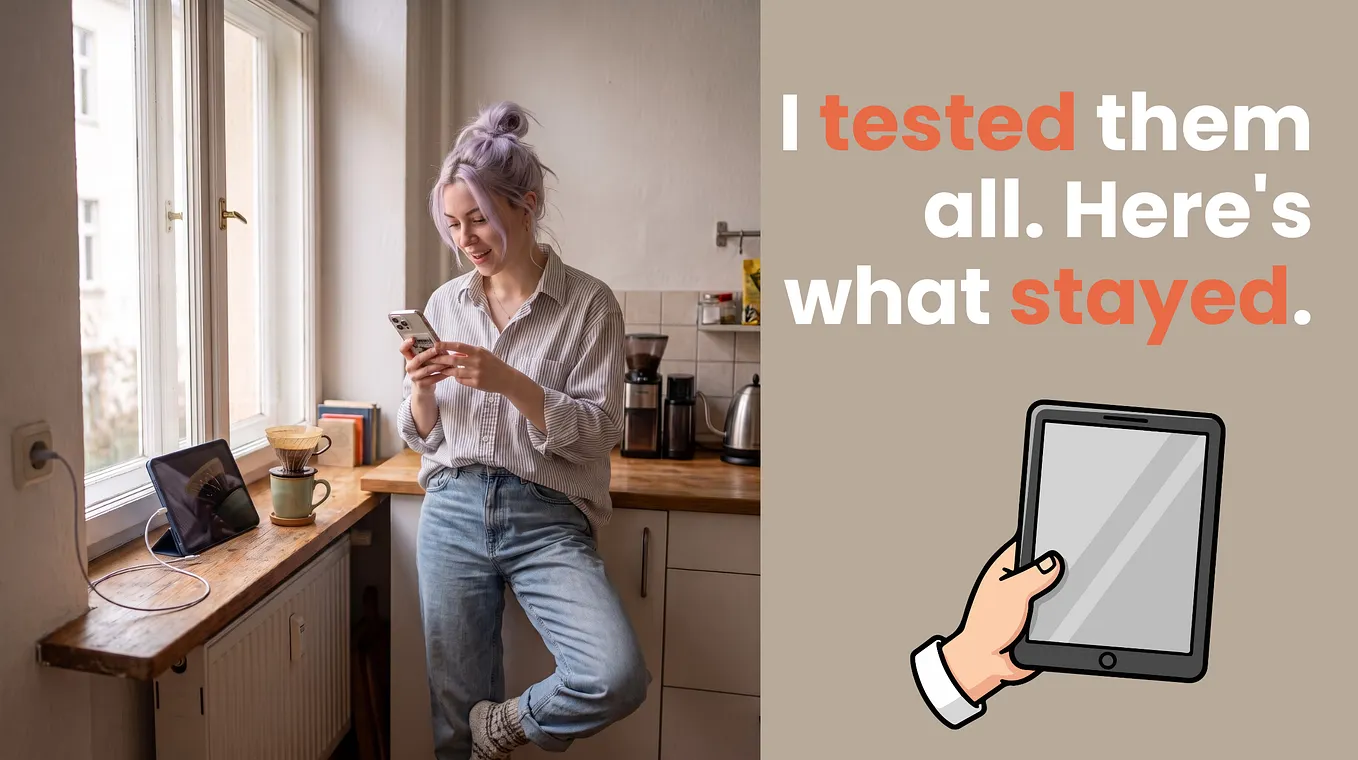
Mine runs on one old tablet, plugged in permanently on the windowsill and left on. It never sleeps, so it earns continuously and asks nothing of me. Before this it was headed for a drawer.
What I Like, and What Gave Me Pause
Having run this a while, honestly:
What I like:
- My spending on an optional hobby now comes from somewhere other than my salary, which removes the guilt entirely.
- Nothing in the process asks for logins to anything else.
- Zero ongoing effort after setup. Unlike apps where you complete tasks, do surveys, try playing mobile games, or watch videos to earn rewards, this mostly runs on its own.
- Microsoft Rewards lets users earn points for Roblox digital gift cards, so that’s another legitimate option if you prefer an active route.
- A dead tablet has a job.
What gave me pause:
- You need an unlimited home internet plan. On capped data it isn’t worth it.
- Earnings vary by month and location with no lever to pull.
- Buying a device specifically for this doesn’t pay back fast enough.
- Reputable survey platforms can work, and paid surveys, videos, and paid offers may help you get rewards or points toward Roblox gift cards, but they take more active effort.
- Something running continuously in the background has to be fine with you. It is with me, having read how it works. Plenty of people will say no, reasonably.
Who This Is For
This works if you’ve got a spare device, an unlimited connection, and some small optional spending you’d rather didn’t come out of your own money. It also makes sense if you’d otherwise buy a Roblox gift card online or in stores.
It’s a particularly good fit for free-to-play games specifically, because the amounts involved are small and irregular. A slow trickle matches that pattern much better than a subscription would. Roblox gift cards are available in physical and digital formats, and digital options commonly range from $10 to $500. For example, you can visit Walmart and Target for physical options, along with other major retailers and pharmacies.
Not for you if you’re on metered data, want earnings you can grow, or need real money.
Final Verdict
The actual discovery here wasn’t a way to fund Robux. It was that a platform I’d written off contains dozens of genuinely well-made cozy management games, built by people who in many cases aren’t old enough to vote, given away for nothing.
I’d pay for several of them. Since nobody’s asking me to, I settled for funding the optional extras out of bandwidth I wasn’t using — a tablet on a windowsill quietly underwriting a fictional craft shop.
As optimisations go, that’s among the more ridiculous ones I’ve arranged. It’s also one of my favourites.