7 Hair Extension Placement Mistakes That Make Your Whole Hairstyle Look Off


You paid for good hair, sat through the appointment, and walked out happy. A week later you tie your hair up, or a breeze catches it, and you can see exactly where your own hair stops and the extensions start.
Most of the time the hair isn’t the problem. The problem is hair extension placement: where the extensions were attached, and in what pattern. Hair hangs from its anchor point, so a small difference in where that point sits changes the weight, the shape, and the movement of the whole style.
Here are the seven mistakes we would check first.
1. Placing the extensions too high
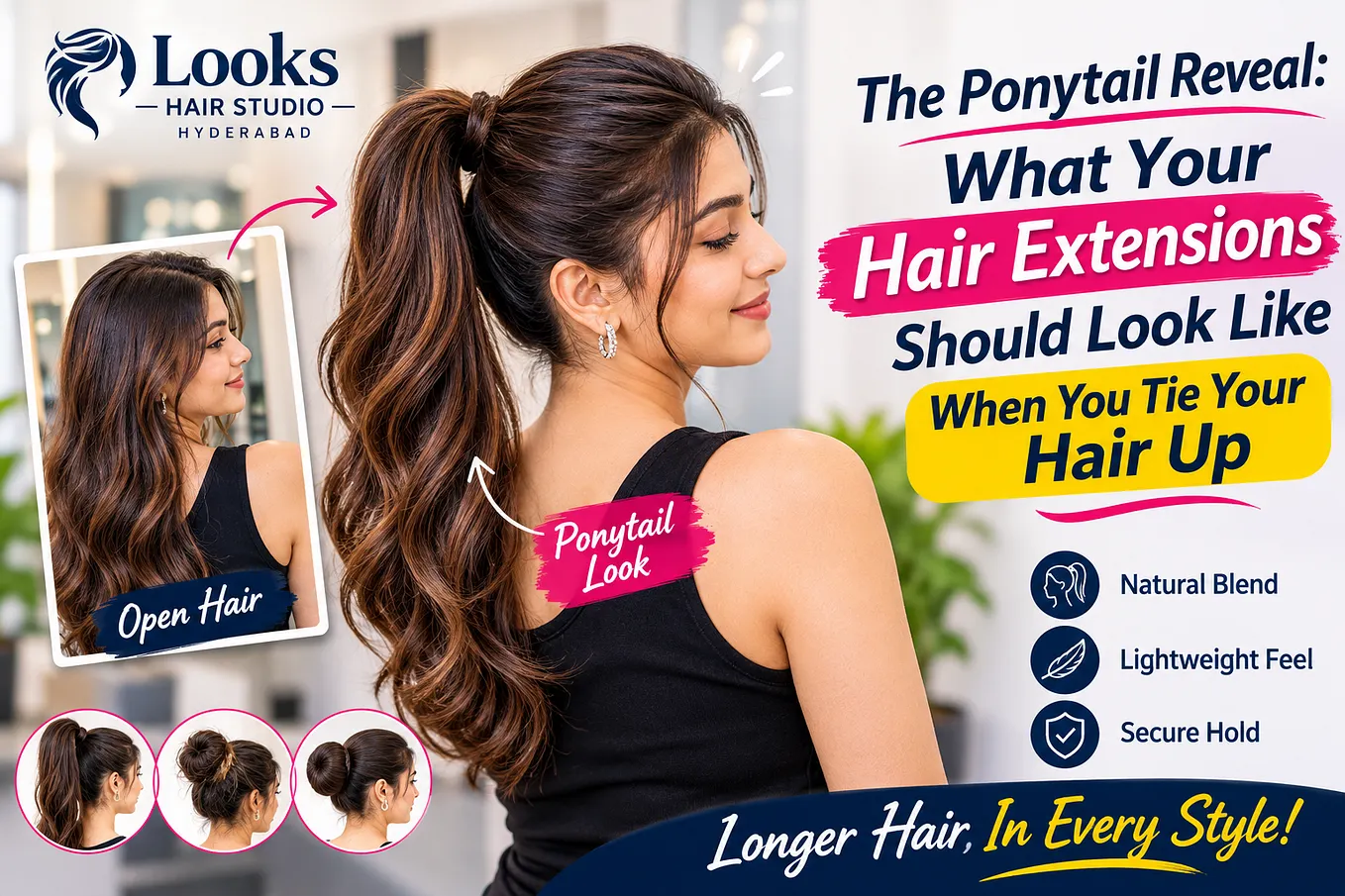
This is the big one. When the attachments sit near the crown, the curve of the head leaves your natural hair with nothing to cover them. They show when you move, and they show even more in a ponytail.
Many stylists treat the occipital bone, the ridge at the back of the skull, as the general upper limit. It isn’t a law. Your hair length and density change the answer, so treat it as a starting point for the conversation with your stylist.
How you’ll notice it: a visible line or bump at the back when your hair moves.
2. Using one straight row
Even when the height is right, a single flat band creates a shelf. Your natural hair ends in a line, and the extension hair starts right on it.
Staggered rows fix this. Each attachment sits at a slightly different height, so natural hair from above covers the one below.
How you’ll notice it: a hard edge instead of a smooth fall.
3. Going too close to the parting
The hair around your part and face is fine and sits in plain view. Attachments there are easy to spot and put tension on your most delicate hair. Most careful placements leave this area untouched.
How you’ll notice it: small lumps near the parting, or a tight feeling at the front.
4. Leaving no space at the root
With tape-ins and wefts, the attachment needs a little breathing room from the scalp. Without it, the weft presses down, feels uncomfortable, and starts to lift as your hair grows. Many tape-in guides suggest somewhere around a quarter to half an inch, but brands differ, so check the instructions for the product being used.
How you’ll notice it: bumps at the roots and wefts that lift early.
5. Spreading density evenly across the head
Heads aren’t even, so the hair shouldn’t be either. Some people need extra fullness at the sides or the back and almost nothing at the front. Equal density everywhere gives you that heavy, uniform look people describe as wig-like.
Get Looks Hair studio’s stories in your inbox
Join Medium for free to get updates from this writer.
How you’ll notice it: thin front, heavy back, or a bulky shape that doesn’t match your own hair.
6. Skipping the cut and blend
Placement is half the job. The other half is cutting the extensions into your natural layers. Even good placement can look stiff if the ends and layers don’t match your own hair.
How you’ll notice it: the extension ends look thicker or blunter than your natural ends.
7. Not planning around how you wear your hair
If you live in a high ponytail, the layout has to work with one. If you wear your hair down every day, you have more room. Neither is wrong, but the stylist needs to know before the first attachment goes in.
How you’ll notice it: the extensions look fine open and obvious tied up.
A quick note for Hyderabad
Hot summers and humid monsoon months make heavy, bunched-up attachments feel worse on the scalp, and frizz makes any visible line stand out more. Lighter, well-spread placement and a proper blend tend to cope better. Texture and tone matching matters too, since Indian hair often has a thickness and shine that a mismatched extension makes obvious.
[Looks Hair Studio: add one or two honest lines here from your own stylists about what you see most often in the studio. Use real observations only.]
Can a bad placement be fixed?
Sometimes with a trim and a blend, if the issue is mild. If the attachments are too high or sit in one flat row, they usually need to be taken out and reinstalled. If you feel pain or tightness, or notice hair breaking near the roots, get them checked soon. Ongoing tension can damage your own hair.
Questions to ask before you book
- Where will the first row sit, and how many rows will you use?
- How will you keep my parting and face-framing hair free?
- Will it still hide when I tie my hair up?
- Will you cut and blend the extensions after installing them?
If the answers are specific, that’s a good sign. If it’s “don’t worry, I’ll handle it,” ask again.
Not sure if yours are placed right?
Take three photos: back, side, and with your hair tied up. Bring them to a consultation at Looks Hair Studio and our stylists will tell you honestly whether to adjust, redo, or leave them as they are.
Related: Tape-in vs sew-in vs clip-in | How to care for extensions | Hair extension services in Hyderabad