Oracle Cards: Comparing Popular 19th Century Decks

Could you tell your Kippers from your Sibillas, your Lenormands from your Austro-Hungarian Bohemian or “Gypsy” Cards, and know if the French Sibylle tallies with La Vera Sibilla Italiana? If not, I’m here to help!

Card-reading, as most diviners will know by now, is NOT just about Tarot, excellent as Tarot is. With the resurgence in interest in non-Tarot card reading systems like the Lenormand, Sibillas and Kipper over the last decade or so, many card readers—and would-be readers— are getting curious about every kind of oracle card and method of fortune-telling out there.
I use several different oracle decks frequently over at my substack, The Daily Oracle, where I have spent the last few years experimenting with doing regular readings on current events and people. And as my readers there will know, I absolutely LOVE me a 19th-century deck!
So as a reader of multiple 19th century (or 19th-century-based) oracle systems, I commonly get questions about the differences between them. What do they look like? What are the key features of each? Where are they similar and different?
And most importantly, what kinds of readings and questions are each of those decks good for?
In answer to that, I want to take a look at the most common “classic” card reading decks or systems you may be running into. The Lenormand (aka the Petit Jeu de Mlle Lenormand) , the Italian La Vera Sibilla and its derivative the Sibilla della Zingara or “Gypsy” Oracle Cards, and the French Sibylle des Salons, sometimes referred to as both the Parlour Sibyl and usually marketed in the US as Sibilla Indovina. We also have the Austro-Hungarian “Gypsy” or Zigeuner Fortune Telling decks, sometimes referred to as the Bohemian Cards and, of course, the extremely popular German Kipperkarten or “Kipper Cards.”
Let’s begin…
Lenormand Cards
The Lenormand (or the Petit Jeu de Mlle Lenormand version of it, which is the most familiar) has probably become the most well-known of the revived classic fortune-telling decks after Tarot. And it differs extensively from both Tarot and other oracle decks in both symbolism and the way it is used and read. Here’s what the two main character cards in the classic Petit Lenormand look like:

It’s worth noting too that there is another deck that bears the name of Mlle Lenormand: the Grand Jeu de Mlle Lenormand, which, despite the name, bears no resemblance, and crucially, has no connection whatsoever to the far more popular and famous Petit Lenormand. It’s an interesting, but extremely complicated deck, so I won’t be covering it in this post, though may take a look at it another time.
Funnily enough, it is FAR more likely than the “Petit Lenormand” cards to actually represent the methods the infamous French fortune teller herself used. But just so you can recognise it if you see it, this is what it looks like:

Number of Cards in Petit Lenormand Decks
36 (some modern decks contain additional cards)
Deck & Reading Features
Rather than depicting grand themes, like the Tarot, or recognisable everyday situations and people directly like the Sibillas or Kipper, the Petit Lenormand is a deck that relies on simplicity and on universal symbols and concepts, which are then combined into meanings and applied to situations and stories. As such, it has a very different feel and reading method than both Tarot and Sibilla-type decks, although you can use similar layouts with all of them.
And despite its name, the Petit Lenormand deck has very little to do with its namesake, the infamous French fortune teller of Napoleonic times, Mlle Marie LeNormand. Her name was added to the later iterations of a German deck released in 1799 called The Game of Hope (Der Spiel das Hoffnung), created by German card manufacturer Johann Kasper Hechtel who died in that year, almost certainly as a marketing ploy in the mid 19th century, just after the real Mlle Lenormand’s death.
In turn, the Game of Hope deck appears to have been derived from common symbolic card games of the 18th century such as the Viennese Coffee Cards (which use many of the same symbols, possibly themselves coming from tasseomancy/tea leaf reading) as well as other decks like various English Conversation cards, which use very similar symbols but have more of a Christian ‘take’ on the game.
The images used are simple and universal; a Lady and Gentleman for the people cards as well as the Rider or Cavalier and Child, with numerous animals, symbols from nature and common objects (like Ring, Key, Tree, Mountain, Bear), all of which have conceptual meanings you can then combine into new meanings and apply to questions and situations.
Divinatory Features
Lenormand is a storytelling system but its conceptual symbols work very like a language in a way that’s quite different from the more direct situational oracles like Sibillas, with the symbols or concepts working together to create full meanings in much the same way as combined words do in a sentence.

So, for instance, in the image above, the Storks broadly mean “Change/New Beginnings” and the Ring means “Bond/Commitment or Marriage.” Combined, the meaning of these two cards together put most simply is “A committed or agreed change or new start.”
The Child, meanwhile, while traditionally meaning kindness or being around kind people, is generally taken to refer to actual children and young people, to innocence and/or naivety, and to small beginnings. You can combine it in this spread with both the Storks — where it may refer to an actual birth, but also to the early beginnings of a brand new start, house move or change from one situation to another, and to the Ring, where it suggests early days for a commitment or a youthful commitment, even an agreement to have a child.
You can then apply those combinations in answer to any question or context you ask about, from love (say, the earliest days of a change in status involving a marriage, like getting engaged, or making a renewed go of a marriage, or even just one party promising to change in small ways) to business (the start of a deal or commitment to making significant changes to the business) to the wider or sociopolitical world (a political policy or manifesto, or a deal between countries that makes an agreed change that’s a “start” for the birth of a new situation).
In terms of card meanings, Lenormand cards do not usually have reversed meanings.
As for Lenormand layouts, the most famous is the Grand Tableau, a large layout using all 36 cards and which is based on the old French playing card game of Piquet.
The layout centres on the “story”(or the “Big Picture”) in the life of either a male or female consultant. Most classic shorter Lenormand layouts, like lines of 3, 5 or the 3x3 9 card or “Box” spread, are essentially just smaller sections of a Grand Tableau.
Here’s an example of one of my own Lenormand GT readings so you can see what a Grand Tableau layout looks like:

There is a particular method of reading The Grand Tableau that many would say is “Lenormand” itself. This, known as the Method of Distance, uses either the Lady or Gentleman card, depending on who is asking, as the centre of the reading, and constructs the story of the tableau based on how near or far every card is to the querent card.
Now, it is often claimed that Tarot is “the deeper and more psychological” divinatory deck, and Lenormand and others the “everyday” which, by implication, is then seen as shallow or superficial in some way. I’m not sure I agree, although the Tarot has much wider applications.
It’s true that Lenormand focuses more on the day-to-day, but its symbols, while simple, are also very universal in their human concerns and can, outside of the Grand Tableau, be applied easily to all sorts of situations, from the routine and mundane, to the more psychological and worldly. You are still likely to get fairly simple answers, however, and not as in-depth as with the Tarot. But Lenormand cards are far less direct and ‘exact’ than the other oracle cards we’ll be looking at next.
You can find out more about Lenormand cards on the Daily Oracle Website or in even more detail over at my Lozzy’s Lenormand website
La Vera Sibilla Italiana & “Sibilla della Zingara” or “Gypsy” Oracle Cards
The first and most important thing is that the term “Sibilla “ isn’t just one deck; it refers to the many decks that were commonly in use in ladies’ parlour games throughout this era, particularly in Austria, Italy and France. They are named after the “Sibyls”, the female oracles, the prophetesses of Ancient Greece.
And although there are several decks that could be termed “Sibillas”, there are two entirely separate systems of “Sibilla” cards in circulation and common use currently. One originates in Italy, La Vera Sibilla, and has a simplified version known as the Sibilla della Zingara or the “Gypsy Oracle Cards” (also linked with the Bohemian deck). But there is also the entirely different deck and system , the French Sibylle des Salons. So in this section, I’m going to look at the first two, which I am treating as sister decks.
The reason for this is that the central images and general meanings are the same for both decks, although they also have important differences. Here’s, for example, how the “Frivolity” card looks for the Sibilla della Zingara or “Gypsy” Oracle Cards on the left, and in La Vera Sibilla Italiana on the right.

So what’s the difference?
The Italian (on the right here) is La Vera Sibilla Italiana (“The true Sibyl), the more complex version of the Gypsy Oracle Cards aka La Sibilla della Zingara, which is also very popular.
La Vera Sibilla has playing card references and lottery numbers printed on each card, while the “Gypsy” Oracle Cards/Sibilla della Zingara just have different versions of the same cards and images, but the two do otherwise correspond throughout in meaning.
Number of Cards In Both Decks: 52
In La Vera Sibilla, these correspond to the 52 cards in playing card decks, with four suits (Hearts, Clubs, Spades, Diamonds) and card numbers from 1–13 (or Ace to King), as you can see from the image. The “F” stands for Fiori, aka Clubs, and Frivolity, with its butterfly image, is the 10 of Clubs.
The Sibilla della Zingara or “Gypsy Oracle Cards” utilises all the same images, in a different style, but without any playing card references or other numbers. Both decks include reverse meanings, so there are ultimately 104 possible meanings within the deck!
Deck & Reading Features
With multiple character cards, such as the Priest, the Soldier, The Lord, The Old Woman, the Wife, the Widow, male AND female Enemy cards (the Enemy and the Foe) in addition to the main characters, the Sweetheart and Lover, these two Sibillas are highly populated decks.
They also contain many key life events, such as reunions, disasters, deaths, gifts, messages, as well as cards for human characteristics such as “frivolity”, “pride”, “despair”, “mob foolishness”, for instance. As such, both of these Sibilla decks tend to be direct rather than symbolic. The cards are talking very pointedly and clearly about people, places, events and issues a querent is expected to encounter in their real, everyday life. So yes, the decks do lend themselves to all sorts of everyday drama!
Get Oracle Cards With Lozzy’s stories in your inbox
Join Medium for free to get updates from this writer.
This distinguishes them from the Lenormand, which, while it can do similar, is still much more conceptual and symbolic. A lot of the concrete events and people in these two Italian Sibilla decks, however, will seem at least superficially reminiscent of those in, say, the Minor Arcana in the Tarot.
Divinatory Features
There are specific layouts that are commonly used with these Sibilla decks, such, for instance, the Cross, the Crescent, the Reversed Pyramid, as well as standard chain readings such as lines of three, five and seven and similar 9-Card Box Spreads as you’d see in the Lenormand. Readings using these cards are less about combining cards to make a specific concept, and more about storytelling that is populated with key familiar events and people. For example, we can look at this 3-card layout from La Vera Sibilla:

This could be read simply from left to right: A celebration (Cheerfulness) in the household or family (House) of a young lady (Young Woman).
We could also add nuance by seeing how each card impacts the others, for instance, cards on the right influencing the cards on the left. Here, from left to right, this would suggest a family celebration or great cheer within the family (Cheerfulness, House) regarding a young female member of this household (House, Young Woman). Or, to read the first and last card around the centre, with the last card being the main influence, “Celebration of a young woman within a household or close neighbourhood” (Cheerfulness, Young Woman around House).
Note, though, how much more direct and exact it is than a system like Lenormand.
You can check out more on the La Vera Sibilla/Sibilla della Zingara via the Daily Oracle substack.
But wait!
As Yoda might gasp on his deathbed in a Star Wars movie… “There is… another…. Sibilla…”
I found this very confusing indeed when I first started looking into Sibilla cards. Which were the correct decks? Was the deck I had the one that ‘counted’ as Sibilla… and if so, why were the playing card references and images entirely different from what I’d been told to expect?
La Sibylle des Salons (aka The Parlour Sibyl or Sibilla Indovina)
Meanwhile, from France comes La Sibylle des Salons (aka The Parlour Sibyl),first produced around 1840, with highly distinctive illustrations by French artist Jean-Jacques Granville . His illustrations are also used in the reproduction of it published by US Games called the Sibilla Indovina.
Crucially the cards in this Sibilla deck, although similar in the sorts of things and people they depict, do NOT tally in ANY way with La Vera Sibilla: they are two completely different decks and systems, although they work in a very similar way. Here’s how they look:

And who was the Sibyl, the prophetess of the parlours, said to be being depicted therein (see the doubtless overly flattering illustration in the “Thought” card above)? Why, none other than our very favourite French fortune teller to the stars, Parisian superstar Mlle LeNormand, of course!
Number of Cards In Sibylle des Salons: 52
Like La Vera Sibilla, the Sibylle des Salons cards have playing card references, although it’s crucial to note that across the Italian and French decks, they do NOT tally with each other at all in terms of meanings, which are likely to be from very different playing card systems, although the suits are also the familiar four suits (Hearts, Spades, Clubs, Diamonds) as standard playing card decks.
For example, card references are different even when the names of the cards demonstrate similar concepts. Both decks do have a “Thought” card as above, for instance, but in Sibylle des Salons, as you can see, it is the 7 of Hearts, whereas in La Vera Sibilla, the “Thought” card is the 6 of Diamonds, or Quadri. Likewise, La Vera Sibilla has a “Soldier” card, which is designated the 10 of Spades, but Sybille des Salons designates its “Soldier” the King of Diamonds. (The majority of the cards are different in any case).
As with La Vera Sibilla, the playing cards can be used in Sibylle des Salons to deepen the meanings of the cards.
Deck & Reading Features
This is another deck which is populated by many characters and situations, although they tend to have quite a “French” cultural and refined air, with plenty of romance and flirtation
The images in the deck, which are still the versions painted by Granville, s are highly evocative, and, like other sibillas, depict everyday, situations, people and concepts. The people cards include a sincere friend and an enemy lying in wait to trip up an unsuspecting target, senior wealthy or protective men, a lawyer and a soldier, and women both alluring and enraged, widowed and a a lady of pursuits also. Familiar places and situations include both the city and country house, weakness and death, surprises both large and small, obsequiousness and flattery, love, gifts, billet-doux, messages, arguments, affection, parties and journeys for instance. Once again, these make for great storytelling with the deck.
Divinatory Features
As with other Sibillas, these cards also have reversed meanings, giving a total of 104 potential meanings that can be conveyed. There are specific classic layouts and methods (counting is a popular method that you see a lot in French cartomancy) that you can use for these decks, but they also work well in classic layouts such as three card, five card and nine card box readings.
Find out more about the French Sibylle des Salons/Sibilla Indovina on the Daily Oracle substack here: Learn Sibylle des Salons
Bohemian (aka “Gypsy Fortune Telling” or “Zigeuner”) Decks
These classic Austro-Hungarian oracle cards are a close relation of both La Vera Sibilla and, later, the Kipper cards. While the latter was heavily influenced by this deck, you’ll be able to see, I think that La Vera Sibilla and Bohemian cards are much more closely related, with one derived from the other.

Number of Cards In Bohemian Decks: 32 or 36
Earlier decks tended to only have 32 cards, the later versions, 36. Mine, pictured here, are from Piatnik. The cards are simple, do not generally have playing card references, but as you’d expect, represent similar situations and people as the Sibillas. They don’t usually have reversed meanings, although some readers do refer to them.
Deck and Reading Features
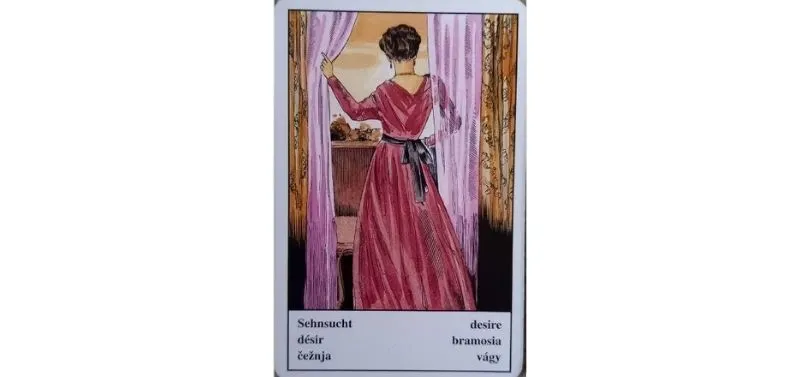
Many readers have reported that, while they have many of the key cards familiar from the Vera Sibilla and della Zingara decks, Bohemian cards tend for some reason to have a darker, more dramatic, perhaps slightly soap-opera feel to the readings. Be warned; these guys really don’t go for sugar-coating at all! Anger, Jealousy, burning Desire… all the drama is here.
They are ideal for Grand Tableau style spreads (8 x 4 for 32 or 9 x 4 for 36, just as you’d do with the Kipper cards).
But there are also some other traditional methods and spreads associated with this deck in particular.
For example, there is the classic “Gypsy’s Answer” spread, the 21–Card Romany spread, a Wheel of Fortune spread (NOT the one readers may be familiar with from Tarot), counting can often be a feature. And unusually, it is often this deck’s Merriment, rather than its Sweetheart or Lover cards, which gets treated as the base significator.
Kipperkarten (Kipper Cards)
Last but not least. Probably the second most widespread and popular oracle deck after Petit Lenormand, and one which has quite a few different decks now. The original German Kipperkarten (second version by Hildegard Leiding) looks like this:

For anyone used to reading with either the Italian Sibillas (La Vera Sibilla/Gypsy Oracle Cards) or the 32 or 36 card Austro-Hungarian Bohemian Cards, then you’ll find the Kipper cards very familiar indeed. They do not have playing card references, only images.
Number of Cards In Kipper Decks: 36 (although the Fin de Siecle has three additional cards)
One key feature of this deck that may appeal to those reading for careers is that unlike most other decks, it does actually have a specific and clear Work card!
Deck and Reading Features
There are several Kipper decks in existence with very different designs, but all have the same cards and order. These include the original Wahrsage Kipperkarten, and more modern versions such as the the Salish, Fin de Siecle and Mystical Kipper decks. See below, though, for why not all decks are necessarily created equal.
As a direct derivative, Kipper cards have much the same “feel” and often similar meanings as the Austro-Italian Sibillas they’re all in the same family. They’re VERY direct, they involve people and situations. They don’t have reversed meanings, but bear in mind they are an are an updated version of those decks, designed for the upper middle classes of turn of the century Bavaria. There are readers who say that Kipper should only be used for romantic and familial situations, and a lot of their “clues” (including the His Thoughts card and the little cupid in the corner of it) do suggest that, but I have found they work well for other situations too.
Other readers suggest that Kipper cards must be read in particular ways, as they were originally designed and that anything else is “invalid”. And it’s true that like most late 19th century oracle decks they have had particular layouts, methods of reading and features associated with them historically, especially utilising the design features of the illustrations, but generally speaking since Kipper cards have so many similarities with those prior decks, there’s no reason why you shouldn’t read them in similar ways. What I would say, though, is that the direction characters and illustrations are facing, and some of the “clues”, especially if you have the original Kipperkarten or the Salish, adds greatly to the experience of the reading, as do cards that are designed to “connect” between others. Like the Bohemian cards, these can be read in a 9 x 4 Grand Tableau as below:

The ‘feel’ of Kipper card readings is very different in terms of meanings and what you get out of a reading from, say, the Lenormand. But just like the Italian Sibillas and Bohemian cards from which they are derived, they are direct and to the point and are really for everyday “What, where, who, why, how” details and predictions. In addition, traditionally, given they can be read with directional and other cues, this can make reading Kipper a very different reading experience if you want it to be.
So What Are All These Decks Best Used For?
Well, unlike where you might use a much more esoteric deck like Tarot, which is more for in-depth psychological or life journey analyses, meditation, human condition type stuff, most 19th century oracle cards tend to be more grounded and deal very much with the everyday.
Use Le Petit Lenormand (36 cards) For: Grounded universal human concerns, events and people. Storytelling. Apply the universal concepts and combinations to situations and questions at various levels, but expect simple answers. There are “rules” in particular layouts, but the cards are still fairly instinctive and quick to use once you’re clear on meanings. While known to be “everyday” in comparison to Tarot, they still tend to be FAR less direct than Sibillas and Kipper, and are conceptual rather than situational. They also only have two specific person cards (although some of the animal cards can indicate other people) and the Grand Tableau is traditionally designed for more personal readings; what is going on in MY life, for example.
Use Sibillas (52 Cards) For: Everyday events and people; direct and specific predictions and explorations: the lowdown on the what, where, who. If you want readings with a multiple cast of characters outside of the main querents, these are good decks to use. Both the French and the entirely different Italian versions have much to recommend them, but as above, the French goes more for ‘romantic’ ideals with very French cultural interpretations (and has some brilliantly literal imagery), whereas the Italian is slightly more everyday and, as we know is a sister deck of both the Bohemian and the Kipper cards. It will therefore have some familiar features if you are more used to those. It’s really just whether or not the deck you’re using gives you the situation or person you’re looking for and how it resonates with you.
Use Bohemian Cards (32/36 Cards) For: A simpler version of how you use the Sibillas, these are also good for when you want direct, and especially when you want no sugar-coating as they tend to be a bit more dramatic than their sister decks. Some people find them a little dark or negative for this reason, but remember, their traditional reading methods’ focus on the Merriment (happiness) card as key when one is surrounded by all this drama. This means they can be good for problem-solving or dealing with ‘troubles’, as at least some of the layouts direct the reader to how they can achieve the Merriment state in the face of various real life problems and dramas.
Use Kipper (36 Cards) For: Much as with the Sibillas or Bohemian cards, you’re looking at everyday events and people; direct and specific predictions and explorations: the lowdown on the what, where, who. You have several characters outside of the Main Male and Female cards, although be aware, the themes largely reflect upper middle class Bavarian life of the late 19th and early 20th centuries. Crucially, Kipper is the one deck that has a direct Work card (the Lenormand’s “work” card has often been disputed as there isn’t a card named for it, it tends to look at different ‘aspects’ that would apply to modern work), so if you’re reading for careers, a Kipper deck could be the one to choose.
A prior but differently-edited version of this article was previously published at https://oraclecarddaily.substack.com.