Algorithmic Investing, Explained : A Guide for Non-Quants

AlphaGrep Mutual Fund | SEBI Registration No.: MF/090/26/16
Picture your local bakery which sells dark chocolate cookies every day. The baker doesn’t wake up on the wrong side of the bed and think, “today I’m going to make the cookies more bitter.” She follows the recipe, because that produces the cookies that her customers have come to trust and enjoy.
A good baker doesn’t change the recipe because of her mood or gut feeling. Neither does an algorithm.
Algorithmic investing by design works according to a strict set of pre-defined rules that don’t suddenly change when the market is euphoric, crashing, or stagnant. Humans on the other hand panic, get nervous, and skip steps. The recipe, or the algorithm doesn’t.
So let’s break down the steps involved in algorithmic investment.
Step 1: Data, the ingredients
Every recipe starts with the ingredients, flour, sugar, and butter etc. In algorithmic investing, the data points are price, volume, earnings, and interest rates etc. Cleaning data points to generate strategies is one of the most important and manually intensive steps for a quantitative trader. Just as stale ingredients can spoil a batch of cookies, in the same way having unclean or messy data can lead to strategies which are not based on actual market realities.
Step 2: Signal, “is the dough ready?”
Raw ingredients don’t tell you what to do, observations and measurements do. It depends on the experience of the baker to know that the dough needs to chill for an hour and that its edges need to be golden. These are both signals that indicate that the dough is ready to be used. Similarly a quant may observe that a stock has been trending upwards for the past 6 months, or is unusually low as compared to its 12 month average. Signals turn a pile of numbers into actionable observations.
Step 3: Rule, the instruction on the recipe card
Get AlphaGrep Mutual Fund’s stories in your inbox
Join Medium for free to get updates from this writer.
A recipe may say, “once the edges turn golden and the center dips inwards, take the tray out.” A rule links an observation to a decision. In investing that may translate to a rule like, “buy a stock if its 50 day average price moves above the 200 day average price. When the opposite crossover happens, exit the position or sell.” These rules are constructed before live trading begins, which leaves no room for discretionary calls like, “this time the market feels different.” By testing rules across different market conditions, we are able to study when it works and when it doesn’t, and it is only run when we are comfortable with the risk and reward.
Step 4: Execution, getting the cookies out the door
When an order comes in saying, “bake 100 cookies for tomorrow”, it doesn’t say how. The baker could jam multiple trays into the oven all at once to prepare the order, but that would result in unevenly baked and partially wasted cookies. A smart baker would bake in smaller batches that could be monitored easily, and create consistent batches.
Markets also follow a similar pattern. If your rule says, “buy a large amount of stock” and you tried to buy it all at once, you would push up the price against you, similar to crowding the oven. Execution also needs to be planned out strategically by a quantitative trader. Trades need to be split into smaller segments and timed reasonably so costs are kept down. A great recipe with haphazard execution will always give you a worse cookie than what you designed.
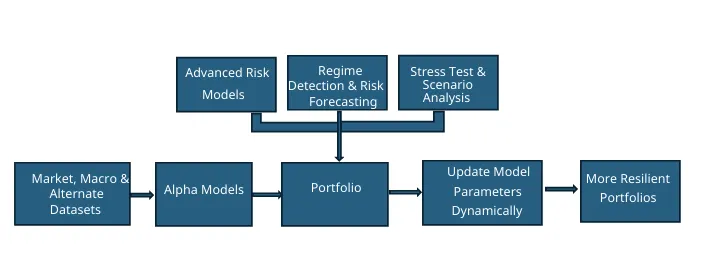
So the whole pipeline is as follows. Data becomes a signal, signal becomes a rule, and the rule is executed.
Now for the question the cookies can’t answer: is any of this actually run by a robot?
Most people have the misconception that algorithmic trading is done by a “robot trader”, who creates strategies, makes decisions, and executes them without any human intervention. That is not how it works. In algorithmic trading, human judgement and skill plays a key role before the trading even begins. Researchers programmatically test their hypothesis against years of data, study how it performs in different market conditions, and decide whether it merits execution or not. Once a strategy is approved, then software executes it faster and more efficiently than a human could.
A flawed idea that is executed perfectly is still a flawed idea, which is why the real work of a quantitative trader is in the research. Algorithms once set up don’t run forever either, they need to be monitored by a human in case they display behavior that they weren’t designed for, or the incoming data is spurious. In these cases, the trader needs to step in and investigate.
Algorithmic trading is not a black box or a machine that has outgrown its makers. It is a systematic approach used by traders which includes, clean data, extracting actionable rules from the data, and careful execution, all designed, tested, and supervised by people.
Next time you hear “algorithmic trading”, think of your local bakery: a recipe written by people, tested carefully, and baked the same way every day, regardless of the baker’s mood.
Disclaimer : Views expressed herein involve known and unknown risks and uncertainties that could cause actual results, performance or events to differ materially from those expressed or implied. This communication is for informational purposes only and should not be construed as investment advice or a recommendation to invest in any scheme/product. There is no assurance or guarantee of returns, capital protection or capital guarantee to investors. Past performance may or may not be sustained in future and is not a guarantee of any future returns. This communication may contain references to algorithmic and data-driven investment approaches, such models are based on historical data and predefined methodologies and are subject to limitations. They do not guarantee performance or eliminate market risks, and outcomes may vary depending on market conditions. It is hereby expressly stated that AlphaGrep Investment Management Private Limited (AMC), AlphaGrep Mutual Fund, its sponsors, trustees, affiliates, officers, employees or representatives do not make any representation or warranty, express or implied, as to the accuracy, completeness or fairness of the information or views contained herein.
Mutual Fund investments are subject to market risks, read all scheme related documents carefully.