AI Visibility Audit: How LLMs Decide Which Brands to Recommend — and Which to Ignore

Most Brands Think They’re Visible. They’re Not.
Let’s start with a hard truth.
Most businesses believe that if they rank on Google, they’re visible.
They’re wrong.
Today, a potential client doesn’t always open 10 tabs and compare websites. Instead, they ask:
- “Best digital marketing agency for lead generation”
- “Top SEO company for small business”
- “Who offers reliable reputation management services?”
And they trust the answer they get from AI.
Now here’s the uncomfortable part:
If your brand isn’t mentioned in that answer, you don’t exist at that moment.
Not on page 2. Not on page 10.
Just… invisible.

A Quick Reality Check (This Is Happening Right Now)
Imagine two agencies:
- Agency A: Ranks #1 on Google for multiple keywords
- Agency B: Doesn’t dominate rankings but has strong presence across blogs, mentions, and industry discussions
Now ask an AI tool:
“Best digital marketing agencies for ROI-focused campaigns”
In many cases, Agency B gets mentioned.
Why?
Because AI doesn’t just rank websites.
It recognizes patterns of trust and authority across the web.
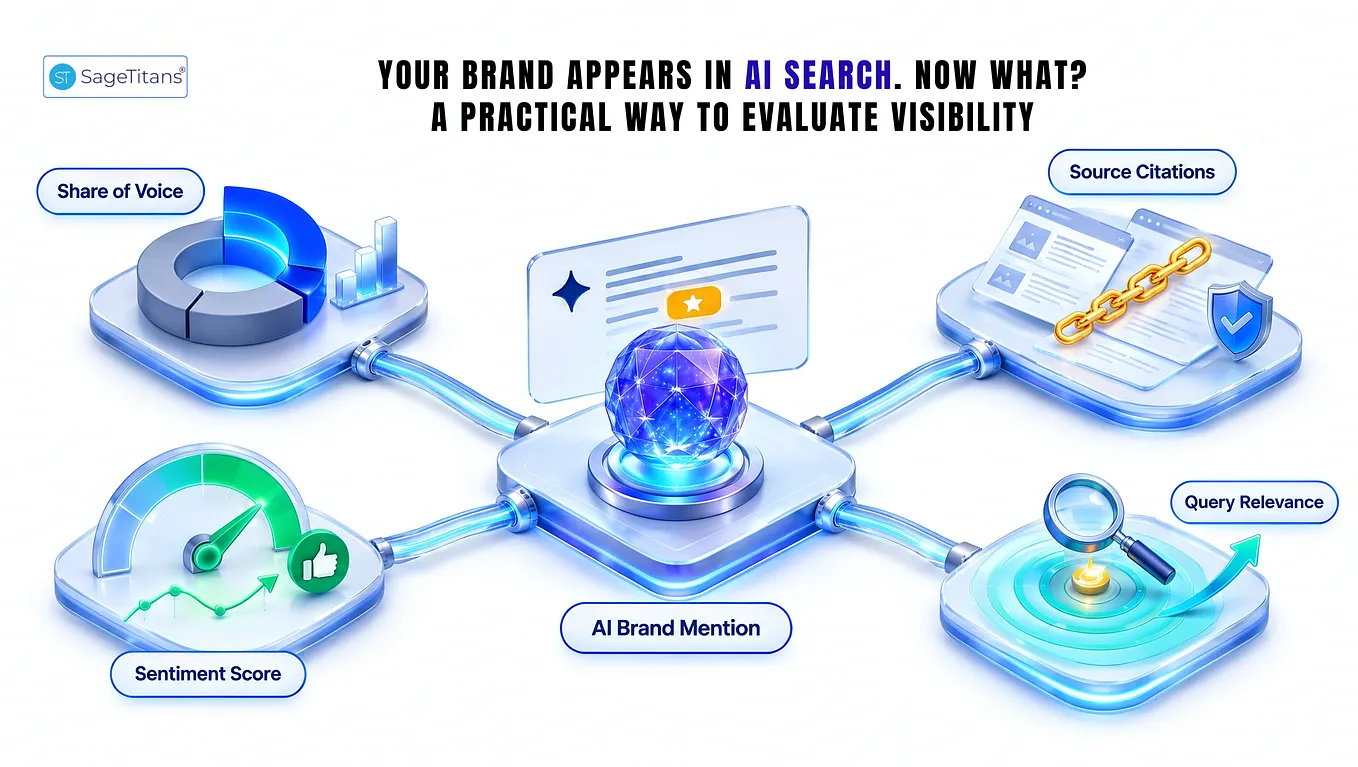
What Is an AI Visibility Audit Really?
Most people think it’s just another SEO report with a fancy name.
It’s not.
An AI Visibility Audit answers one simple but powerful question:
When asked about your industry, does AI know you exist and trust you enough to recommend you?
This includes:
- Whether your brand is mentioned in AI-generated responses
- How your content is interpreted by LLMs
- Where your authority signals are strong — and where they’re missing
It’s less about rankings… and more about recognition.
Where Most Brands Get It Completely Wrong
Here’s what we see again and again.
1. They Over-invest in Their Own Website
They publish blogs. Optimize pages. Improve speed.
All good things.
But here’s the problem:
AI doesn’t learn only from your website.
It learns from the entire internet.
If your brand exists only on your domain, you’re building in isolation.
2. They Treat Content Like a Checklist
“Publish 10 blogs per month.”
“Target keywords.”
“Add internal links.”
This approach worked before.
Now?
AI is looking for depth, clarity, and consistency of expertise — not volume.
3. They Ignore How People Actually Ask Questions
Most content is still written for search engines, not for conversations.
But AI tools are driven by natural language queries.
If your content doesn’t match how real people ask questions, it gets ignored.
How LLMs Actually Decide Who Gets Recommended
Let’s simplify what’s happening behind the scenes.
AI models don’t “rank” like Google.
They predict the most reliable answer based on patterns.
Here’s what influences that prediction:
1. Entity Clarity
Your brand must be clearly defined:
- Same name everywhere
- Same services
- Same positioning
If your brand appears inconsistent, AI gets confused and skips you.
2. Topical Depth (Not Breadth)
A brand that writes 50 shallow blogs ≠ authority.
A brand that deeply covers the following:
- SEO
- Google Ads
- Reputation Management
becomes recognizable.
3. Distributed Presence
This is where most brands fail.
Get Sage Titan | Digital Marketing Company’s stories in your inbox
Join Medium for free to get updates from this writer.
AI sees:
- Guest articles
- Mentions on other sites
- Industry discussions
- Listings and profiles
The more your brand appears in relevant contexts, the stronger the signal.
4. Trust Signals
AI leans toward brands that “look credible”:
- Structured content
- Clear expertise
- Consistent messaging
- Mentions on authoritative platforms
It’s not just what you say it’s where and how often it’s reinforced.
What an AI Visibility Audit Actually Looks Like (In Practice)
Let’s make this real.

Step 1: AI Prompt Testing
We simulate real queries like:
- “Best SEO agencies in the US”
- “Top companies for online reputation management”
- “Who offers content removal services?”
Then we analyze:
- Who shows up?
- Why them?
- Why not you?
Step 2: Competitor Mapping
We reverse-engineer competitors:
- Where are they mentioned?
- What type of content do they publish?
- How often do they appear outside their own site?
This reveals patterns you can replicate — and improve.
Step 3: Content Gap Identification
We look at your content and ask:
- Does it answer real-world questions?
- Is it structured for clarity?
- Does it build authority — or just fill space?
Step 4: Entity & Presence Audit
We check:
- Brand consistency across platforms
- Listings, profiles, mentions
- Missing placements that competitors already have
The Strategy Most Brands Are Missing
Here’s the shift that matters.
Old mindset:
How do I rank higher?”
New mindset:
How do I become the part of the most reliable answer?”
That changes everything.
How to Actually Improve Your AI Visibility
No fluff. Just what works.
1. Build a Recognizable Brand Entity
Stop changing messaging across platforms.
Define:
- Who you are
- What you do
- Who you serve
And repeat it consistently everywhere.
2. Create Content That Solves, Not Just Explains
Forget generic topics.
Instead:
- Answer real client problems
- Break down decisions
- Share insights others avoid
Make your content feel like an experience not information.
3. Expand Beyond Your Website
This is non-negotiable.
You need:
- Guest blogs
- Industry features
- Strategic mentions
Because AI builds trust from external validation.
4. Align Content with AI Queries
Think like your audience:
- What would they ask ChatGPT?
- What decision are they trying to make?
Then create content that fits those exact scenarios.
5. Build Topic Authority (Not Random Blogs)
Pick core areas and dominate them:
- SEO
- Paid Ads
- Reputation Management
Create layered, connected content around each.
Why This Matters More Than You Think
This isn’t a “future trend.”
It’s already happening.
And here’s the advantage:
Most businesses haven’t adapted yet.
Which means:
- Less competition
- Higher visibility opportunity
- Faster authority building
Early movers won’t just rank better — they’ll be recommended first.
A Simple Way to Think About It
Google shows options.
AI gives answers.
If you’re not part of that answer, you’re out of the conversation.
Conclusion: Visibility Is No Longer About Being Found
It’s about being chosen.

An AI Visibility Audit doesn’t just tell you where you stand — it shows you why you’re being ignored and what needs to change.
Because in this new landscape:
The brands that win aren’t the ones with the most traffic.
They’re the ones AI trusts enough to recommend.