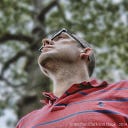
One Soldier’s War: The Long Road Home

Colin Keast was born on 24 January 1922. Seventeen years later, with the outbreak of war, he lied about his age to enlist. Like so many boys of his generation, the thought of staying behind while others marched away was unthinkable. He wanted to be part of the fight, even if he could not yet understand what that truly meant. Within months he was in uniform, a private in the British Expeditionary Force, bound for France and Belgium. Their mission was simple in words but brutal in reality: to hold the line against the oncoming storm of the German blitzkrieg.
The BEF soon found themselves outmatched by the speed and force of the blitzkrieg. Columns of armour smashed through the Low Countries, overwhelming British and French defences. For men like Colin, barely trained and still more boy than man, the retreat was a blur of exhaustion and terror. They fought delaying actions where they could, but by May 1940 the order was to fall back on the coast. Colin joined the hundreds of thousands gathered at Dunkirk, penned between the sea and the enemy.
On the beaches and the mole pier, fear and desperation mingled with discipline. Colin remembered crossing the long wooden pier and coming to the shattered gap blown open by bombing. Planks had been laid across the hole, but they swayed and dipped as each soldier stepped out onto them. He edged across, heart pounding, eyes fixed ahead. Behind him, his closest friend, a fellow private, lost his footing. Colin heard the splash, turned, and saw only water. The boy was gone. For the rest of his life Colin never forgot that moment. He made it onto one of the rescue ships, the “little ships” and destroyers that carried the BEF back across the Channel, but he left France with the image of his friend sinking into the sea burned into his memory.
After Dunkirk the Army changed. The Border Regiment was rebuilt, and Colin remained with it. The world of the infantry was shifting, and Colin volunteered for the new airborne forces, drawn to their daring role and the challenge of glider operations. He trained for months, the kind of training that left men hard, lean, and utterly committed to each other. Promoted to corporal, he was sent with the 1st Battalion of the Border Regiment to North Africa, where they prepared for the invasion of Sicily in 1943.
On the night of 9 July, Colin climbed into a Horsa glider with his section. Inside the fuselage, the atmosphere was thick with tension. The air was hot and close, men sat shoulder to shoulder, their rifles between their knees, faces pale in the dim red light. Some joked, some were sick, but most sat silent, lost in thought, listening to the creak of the tow rope and the endless drone of the tug plane. Every man knew that once the glider was cut loose, their lives depended on a few minutes of blind descent in the dark. Operation Ladbroke was a gamble, and they were the chips.
As they approached Sicily, tracer fire arced up into the sky. Pilots, panicked or misjudging their position, released gliders too early, sending dozens into the sea. Colin’s glider was among those that made land, though the landing was rough, splintering wood and tearing canvas. Men staggered out into the dark, gathering their kit and weapons, shaken but alive. The battalion was scattered, but they regrouped where they could and carried out their mission, seizing ground until the Eighth Army pushed through. It was a baptism of fire for the airborne forces, and it left a deep mark on the men who survived.
A year later came the operation that would define Colin’s war. Market Garden was to be the bold stroke to end it — seize the bridges over the great rivers of Holland, open the road to Germany, and finish the fight by Christmas. By then Colin had been promoted to sergeant, leading men of his own. In September 1944 he boarded another Horsa, bound for the landing zones outside Arnhem.
Get Michael Clarkson’s stories in your inbox
Join Medium for free to get updates from this writer.
The flight across was long, the cabin rattling with every gust, the smell of fuel, sweat and canvas filling the air. Some of the younger men tried to laugh it off, but Colin, now a seasoned soldier, knew what awaited them. He had seen friends drown, seen men scattered across foreign fields. He sat quietly, thinking not of glory, but of survival, and of the men who looked to him for steadiness.
The landing in Holland was deceptively smooth. The fields stretched out before them, parachutes blossomed in the sky, and gliders cracked open on impact, spilling men, jeeps and guns. For a brief moment it looked as though the operation might succeed. But by the second day the truth was clear. The Germans had armour in strength, and the British airborne were outnumbered, outgunned, and cut off. The perimeter shrank, centred on Oosterbeek. Mortars fell relentlessly, houses burned, and casualties mounted.
When the withdrawal finally came, it was chaos. Darkness, rain, and the enemy closing in on every side. Colin was separated from his unit in the confusion. Alone, clutching his rifle, he moved through the blackness. Every rustle, every footstep, could be friend or foe. He later admitted that in those hours he fired at sounds, not knowing whether he was shooting at Germans or his own men. That kind of uncertainty left a mark no medal or discharge could erase.
In the end he stumbled on a Dutch family willing to shelter him. They led him to a tractor inspection pit in their barn. He lowered himself into the hole and they covered it with planks, sealing him in. The air was damp, the space so tight he could barely shift his position. For days he crouched there in silence, listening to the farm above. At one point he heard German voices, shouts, then gunfire. After that it was quiet. He realised the family who had hidden him were gone, killed for their courage, and he was left alone, unable to move or even cry out.
Rescue finally came when American soldiers reached the area. As part of what became known as Operation Pegasus, they pulled Colin from his hiding place and brought him back across the lines. He had survived Dunkirk, Sicily and Arnhem, but the cost was heavy. Soon after, the Army discharged him. Today we would call it post traumatic stress, then it was simply called nerves.
He lived through Operation David in Belgium and France, was evacuated at Dunkirk, fought in Operation Ladbroke in Sicily, endured Operation Market Garden in Arnhem and was rescued in Oosterbeek during Operation Pegasus. He rose through the ranks to Sergeant and faced it all before his twenty fourth birthday
His story is not just the record of one man’s service, but a reminder of the youth of those who went, the weight they carried, and the things they endured but could never speak of again.
This is why we honour them. This is why we remember them. This is why we must never forget.
Written By
Michael Clarkson
(Grandson to Sergeant Colin Keast)