Stop Making People Compensate for Bad Design
A poorly designed doorway shouldn’t require a community of people constantly accommodating one another. And when someone identifies a better solution, management should do something about it.


I recently started paying closer attention to the front entrance of my apartment building. It’s an interesting little example of how poor design creates unnecessary work for people, and how easily that work gets transferred from the people responsible for the design to the people who have to live with it.
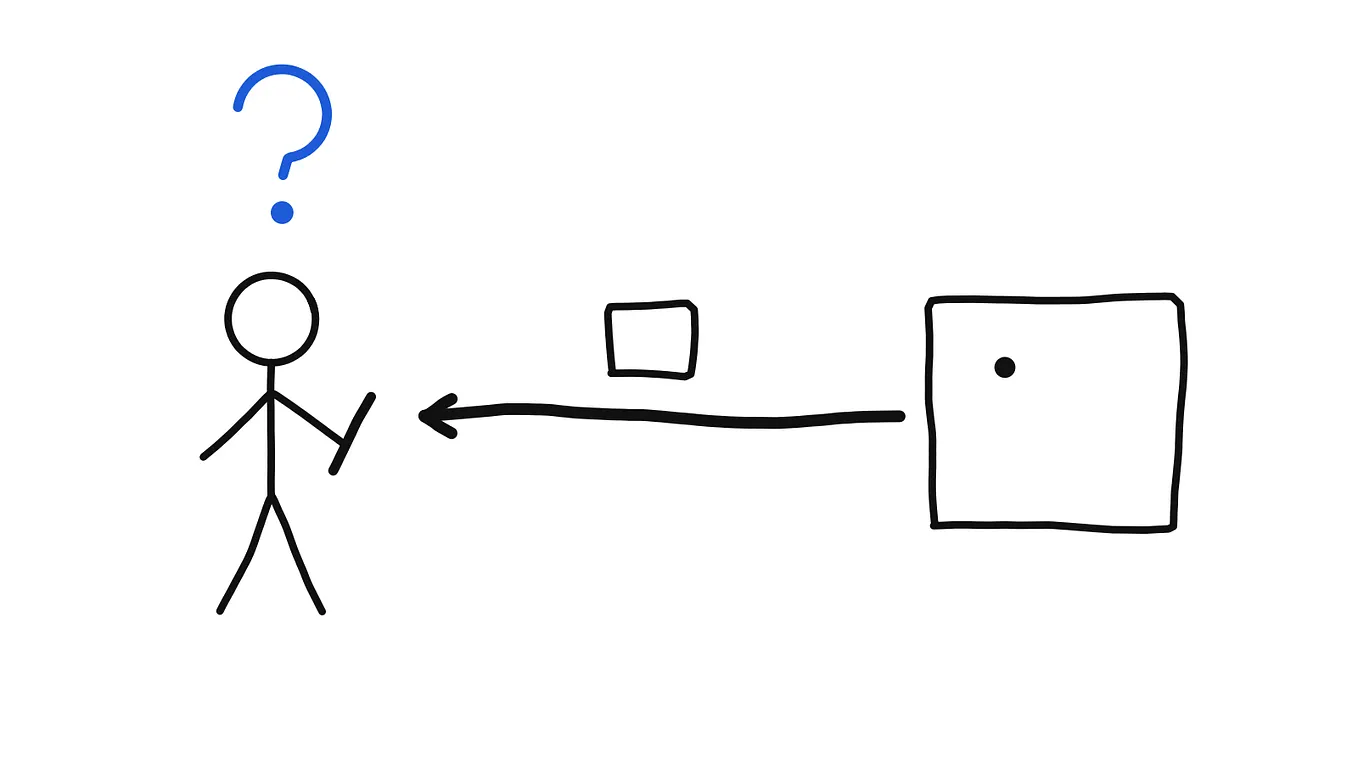
The building has an electronic exit button immediately to the left of the front door. You can push the button and practically walk through the door simultaneously. Exiting is effortless.
Entering, however, is another story.
The turnkey used to unlock the front door is several feet away, on another wall. You have to walk over to it, operate the mechanism, return to the door, and then coordinate your entry with whoever happens to be nearby.
It sounds trivial, doesn’t it?
But these little design decisions create all sorts of unnecessary social interactions.
Someone might be standing near the door, and you have to figure out whether they’re waiting to enter. Someone might approach while you’re operating the turnkey. Someone might expect you to hold the door. Suddenly, an ordinary activity like entering your own building becomes an exercise in anticipating other people’s movements and accommodating their circumstances.
And why?
Because the entry mechanism is poorly positioned.
The obvious solution would be to put the turnkey on the door itself or immediately beside it.
Problem solved.
The Hidden Labor of Bad Design
We often underestimate how much unnecessary labor poor design creates.
And I’m not just talking about physical labor. There’s also the mental effort, the interruptions, the coordination, and the social accommodation required to compensate for something that could have been designed better in the first place.
Think about how frequently we encounter this arrangement in everyday life.
A poorly organized workplace requires employees to develop workarounds.
An inefficient public service requires applicants to make repeated phone calls, submit redundant paperwork, and chase down information.
A poorly designed building requires tenants to coordinate their movements and accommodate one another in spaces that could have been arranged more intelligently.
Then, instead of correcting the underlying problem, management often expects people to become better at navigating it.
Be more patient! Be more considerate! Communicate better! Cooperate with one another!!!
In other words, the people experiencing the consequences of bad design are expected to supply the additional labor necessary to make that design FUNCTIONAL.
That’s a rather convenient arrangement for the people who made the decisions.
Courtesy Shouldn’t Be an Engineering Requirement
I’m not suggesting that people should stop being considerate.
Holding a door for someone who is clearly approaching is a perfectly reasonable courtesy. Helping someone who needs assistance is another matter.
But courtesy should be voluntary. It shouldn’t become an unofficial operating requirement for navigating an unnecessarily complicated environment.
There’s a difference between people occasionally helping one another and an environment that continually depends on people compensating for its shortcomings.
When the latter becomes routine, we start normalizing unnecessary work.
We even begin judging people who don’t participate in it.
Someone who doesn’t hold the door might be considered rude. Someone who doesn’t interrupt their movements to accommodate another person might be perceived as inconsiderate.
But perhaps we’re asking the wrong questions.
Why are we evaluating people’s manners when we could be examining the design that keeps creating these situations?
Why should an individual have to absorb the inconvenience of an institutional decision they had no part in making?
And why should someone else’s poor planning become my daily responsibility?
Management Should Welcome Suggestions, Not Bury Them
There’s another problem worth discussing.
Get MinimalCompass’s stories in your inbox
Join Medium for free to get updates from this writer.
What happens when someone actually identifies a design flaw and offers a reasonable solution?
Too often, suggestions disappear into an organizational void.
Someone sends an email. Someone mentions an improvement to management. Someone identifies a recurring problem that could be addressed with a relatively simple adjustment.
And then… nothing.
No acknowledgment. No evaluation. No explanation. No indication that anyone has even considered the suggestion.
This is particularly frustrating because organizations frequently talk about community, communication, resident satisfaction, and continuous improvement.
But what good are those concepts if the people closest to the problems can’t get anyone in management to pay attention?
Suggestions shouldn’t be treated as miscellaneous correspondence that can be acknowledged whenever someone gets around to it.
They should be treated as useful operational information.
When someone identifies a problem and proposes a practical solution, management should evaluate it promptly. If the suggestion is reasonable and affordable, there should be a willingness to implement it. If it isn’t feasible, explain why.
And if the same problem keeps generating complaints, that’s an even stronger reason to investigate it.
A suggestion that could eliminate recurring friction deserves more attention than another reminder telling people to be patient with that friction.
Management shouldn’t need to wait for a problem to become a formal complaint, an incident, or an expensive repair before taking it seriously.
A little initiative can prevent a lot of unnecessary work.
Fix the F*cking System, Not the People
There’s a broader organizational philosophy here that extends well beyond apartment buildings.
When something repeatedly goes wrong, our first instinct shouldn’t always be to examine the behavior of the people involved.
Sometimes the system itself is producing the behavior.
Sometimes people are doing extra work because the original process was poorly conceived.
Sometimes what looks like a lack of cooperation is actually a predictable response to an environment that requires too much coordination.
And sometimes the solution is remarkably simple.
Move the effing turnkey.
Reorganize the workspace.
Eliminate redundant paperwork.
Change the procedure.
Put the necessary equipment where people actually need it.
These aren’t revolutionary ideas. They’re basic principles of good design and competent management.
But they require something organizations don’t always demonstrate: a willingness to examine their own decisions rather than continually asking everyone else to adapt.
I would rather live in an environment that requires less accommodation than one that constantly celebrates how accommodating its residents have become.
Because the objective shouldn’t be to produce people who are exceptionally good at navigating unnecessary obstacles.
The objective should be to eliminate as many unnecessary obstacles as possible.
So, to anyone managing a building, an office, a public service, or an organization:
When someone brings you a reasonable suggestion for improving the way things work, don’t let it disappear into the void.
Look at it. Evaluate it. Act on it, bitches! 😂
Your job isn’t simply to manage the inconveniences your organization produces.
Your job is to reduce them.
And sometimes, all it takes is moving a turnkey a few feet.
⬛