Churches Don’t Need More Volunteers — They Need Better Systems

The biggest challenge facing churches today isn’t a shortage of willing hearts. It’s an outdated way of getting things done.
Every Sunday, churches bring people together around a shared purpose. Volunteers welcome visitors, worship teams lead services, ministry leaders coordinate activities, and pastors spend hours preparing messages and caring for their congregations.
But behind every successful Sunday is a mountain of work that most people never see.
Phone calls need answering. Visitor information needs recording. Follow-up messages need sending. Events need scheduling. Social media needs updating. Prayer requests need routing. Administrative tasks keep piling up.
And who handles most of it?
The same small group of dedicated people.
Churches often respond to growing workloads by recruiting more volunteers. They organize another sign-up drive, create another ministry team, or ask existing members to take on additional responsibilities.
But what if the problem isn’t the number of volunteers?
What if the real problem is the systems they’re expected to work with?
The Volunteer Burnout Cycle Nobody Talks About
Church volunteers serve because they care. They want to make a difference, support their pastors, and help their communities grow.
But passion doesn’t eliminate exhaustion.
Consider a church with 300 regular attendees and a small administrative team. Every week, someone needs to:
- Answer incoming phone calls and visitor inquiries.
- Manage event registrations and room bookings.
- Follow up with first-time visitors.
- Respond to emails and prayer requests.
- Prepare announcements and social media updates.
- Coordinate volunteers and ministry schedules.
- Update church records and communication lists.
None of these tasks is particularly complicated on its own. The problem is that they never stop.
When processes are manual, even simple responsibilities consume valuable time.
One volunteer forgets to follow up with a visitor. Another misses a scheduling update. A phone call goes unanswered because the church office is closed. A pastor spends an evening responding to administrative messages instead of preparing for Sunday.
Eventually, people who once served joyfully begin feeling overwhelmed.
You cannot solve an inefficient system by continuously adding more people to it.
You simply distribute the frustration across a larger team.
More Volunteers Won’t Fix Broken Processes
Imagine hiring five more volunteers to manage visitor follow-ups.
If visitor information is still collected through scattered forms, shared spreadsheets, and handwritten notes, those five volunteers will inherit the same inefficient process.
Or imagine recruiting another person to manage church communications.
If announcements still need to be manually rewritten, scheduled, approved, and published across multiple platforms, the workload hasn’t disappeared. You’ve just assigned it to someone else.
This is where church leaders need to rethink their approach.
Instead of asking, “Who else can help us do this?” start asking, “Why does this task require so much manual effort in the first place?”
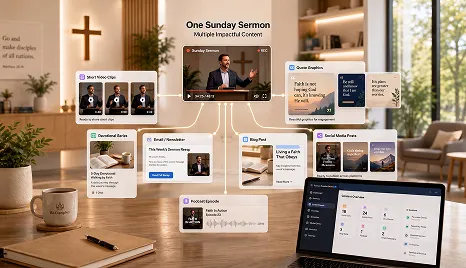
For example, social media automation tools for pastors can help transform one sermon into multiple pieces of content, schedule posts, and maintain a consistent online presence without requiring someone to create every update from scratch.
The goal isn’t to eliminate volunteers. It’s to stop wasting their time on repetitive work that better systems can handle.
What Better Church Systems Actually Look Like
A better system doesn’t necessarily mean expensive software or complicated technology.
It means creating reliable processes that allow people to focus on meaningful responsibilities instead of constantly managing administrative tasks.
Here are five areas where churches can make an immediate difference.
1. Automate Visitor Follow-Ups
First-time visitors are among the most important relationships a church can develop.
Yet many churches still rely on someone remembering to send a follow-up message after Sunday service.
A more effective process captures visitor information, organizes it, and triggers timely follow-up communication.
For example:
- A visitor completes a digital connection card.
- Their information enters the church’s visitor database.
- A personalized welcome message is sent.
- The appropriate ministry leader receives a notification.
- A team member follows up personally.
Technology handles the coordination. People handle the relationship.
2. Stop Missing Important Phone Calls
A church’s phone line is often its first point of contact with the community.
Someone might be calling to ask about service times, request prayer, inquire about childcare, register for an event, or seek urgent pastoral assistance.
But churches don’t operate like traditional businesses. Staff members are frequently in meetings, preparing sermons, visiting members, or working outside regular office hours.
An unanswered call could mean a missed opportunity to connect with someone who needs help.
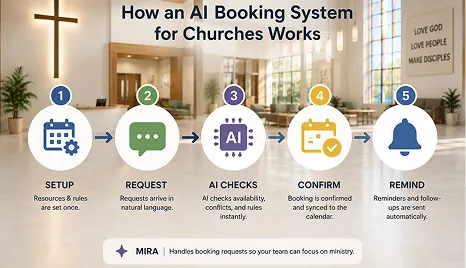
An AI-powered church answering service can respond around the clock, answer common questions, capture caller information, and route important requests to the appropriate person.
Pastors and staff don’t need to answer every routine inquiry personally.
They need to know that important conversations are being handled appropriately.
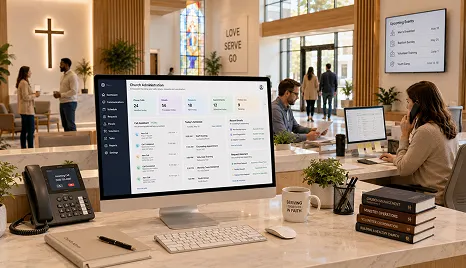
3. Simplify Church Administration
Church administration can quietly consume an enormous amount of staff time.
Scheduling appointments, organizing event registrations, managing room bookings, responding to routine questions, and updating records all require attention.
These responsibilities are necessary, but they don’t always require human involvement at every step.
Get Missional Agents’s stories in your inbox
Join Medium for free to get updates from this writer.
Churches can introduce automated workflows to:
- Confirm appointments and registrations.
- Send event reminders.
- Organize incoming requests.
- Route messages to relevant departments.
- Reduce repetitive data entry.
- Keep communication organized.
The result is a more predictable workflow and fewer administrative bottlenecks.
4. Build a Consistent Communication System
Church communication shouldn’t depend on whether one particular volunteer has free time.
Announcements, event reminders, sermon highlights, newsletters, and social media updates need a consistent process.
A centralized communication workflow helps ensure that the right information reaches the right people at the right time.
It also prevents the common problem of different ministry teams sharing outdated or conflicting information.
5. Give Pastors Their Time Back
Pastors are called to lead, teach, shepherd, and care for people.
Yet many spend significant portions of their week handling tasks that could be simplified or delegated through better systems.
Technology should support pastoral leadership, not replace it.
When administrative processes become more efficient, pastors gain more time for sermon preparation, discipleship, leadership development, and personal relationships.
That’s a much better use of their calling and experience.
The Next Step: Bringing AI Into Church Operations
Traditional automation is useful, but artificial intelligence is opening up a new level of operational support for churches.
Instead of simply following predefined instructions, AI-powered systems can understand questions, organize information, assist with communication, and help coordinate different workflows.
This is where a church operations AI agent becomes valuable.
Think of it as an intelligent digital support system that helps manage routine church responsibilities.
Depending on its configuration and integrations, it can help with:
- Answering common church-related questions.
- Managing incoming inquiries.
- Supporting appointment scheduling.
- Capturing visitor information.
- Routing prayer requests and messages.
- Assisting with administrative workflows.
- Supporting consistent church communication.
For example, imagine someone calling your church on Saturday evening.
They want to know when Sunday service begins, whether childcare is available, and how they can request prayer.
Instead of reaching a voicemail box, they receive an immediate response from an AI receptionist.
The system answers approved questions, captures relevant details, and routes requests requiring personal attention to the appropriate staff member.
Your church remains accessible even when the office is closed.
That’s not replacing ministry. That’s removing unnecessary barriers to ministry.
AI Should Support People, Not Replace Them
There’s an important distinction church leaders need to understand.
The purpose of AI in ministry isn’t to replace human relationships, pastoral care, or meaningful volunteer service.
People still need people.
A visitor needs a warm welcome. Someone experiencing a crisis needs genuine compassion. A struggling family needs pastoral support. Volunteers need encouragement and community.
No automation can replace those relationships.
But technology can make it easier for people to build them.
AI can handle routine inquiries while staff members focus on complex conversations. Automated reminders can reduce coordination work. Communication workflows can help volunteers stay organized.
Churches should also establish clear safeguards around privacy, sensitive information, pastoral escalation, and human oversight.
The best systems know when to automate and when to bring a real person into the conversation.
A Better Question for Every Church Leader
Before launching another volunteer recruitment campaign, take a closer look at how your church operates.
Ask your leadership team:
- Which tasks consume the most staff and volunteer hours?
- Which responsibilities are repeated every week?
- Where do communication delays happen?
- How many visitor inquiries or phone calls go unanswered?
- Which processes depend entirely on one person?
- What could be automated without compromising personal relationships?
You may discover that your church doesn’t need another five volunteers.
It needs a better visitor follow-up process, a more reliable communication system, automated administrative workflows, or an AI receptionist that can respond when staff members aren’t available.
Start by fixing one bottleneck. Measure the time saved. Improve the process. Then expand.
You don’t have to transform every church operation overnight.
The Future of Church Growth Is Not About Doing More With More People
Churches don’t grow stronger simply by adding more tasks, meetings, and responsibilities to their teams.
They grow stronger when people can focus on what matters most.
Volunteers should spend more time serving people, not navigating confusing spreadsheets. Pastors should spend more time shepherding, not chasing administrative messages. Ministry leaders should spend more time building relationships, not coordinating every small detail manually.
The next chapter of church operations isn’t about replacing people with technology.
It’s about giving people better tools, better processes, and more time to fulfill their calling.
Churches don’t need more exhausted volunteers. They need systems that make volunteering, leading, and serving more sustainable.
Because the goal was never to keep everyone busy.
The goal was to make ministry more meaningful.
Explore how Missional Agents helps churches use purpose-built AI agents to improve communication, streamline operations, and create more time for ministry.