The Information People Need Most Is the Hardest to Organize


When someone is grieving and overwhelmed, they don’t need more information. They need the right information, in the right sequence, designed for the state they’re actually in.
A few years ago, a consulting firm partner called me after staring at estate paperwork for two hours. Sharp, analytically capable, professionally used to complexity. She couldn’t figure out where to start.
“I don’t understand why I can’t process this,” she said. “It’s not even that complicated.”
The paperwork wasn’t complicated. The situation was. Three weeks out from her father’s death, sleeping badly, fielding calls from siblings. Nobody had organized that information for someone in her state. They’d organized it for a calm reviewer in a quiet office.
That conversation changed how I think about what I do.
Grief doesn’t impair intelligence. It narrows bandwidth.
The executors I work with are often some of the most capable people I’ve encountered. What they’re experiencing isn’t cognitive impairment — it’s a narrowing of bandwidth for processing new information, especially when that information carries emotional weight alongside procedural weight.
It’s like trying to assemble furniture in a house that’s on fire. The instructions are fine. The conditions aren’t.
Most estate guidance fails not because it’s wrong, but because it was written for someone who isn’t there.
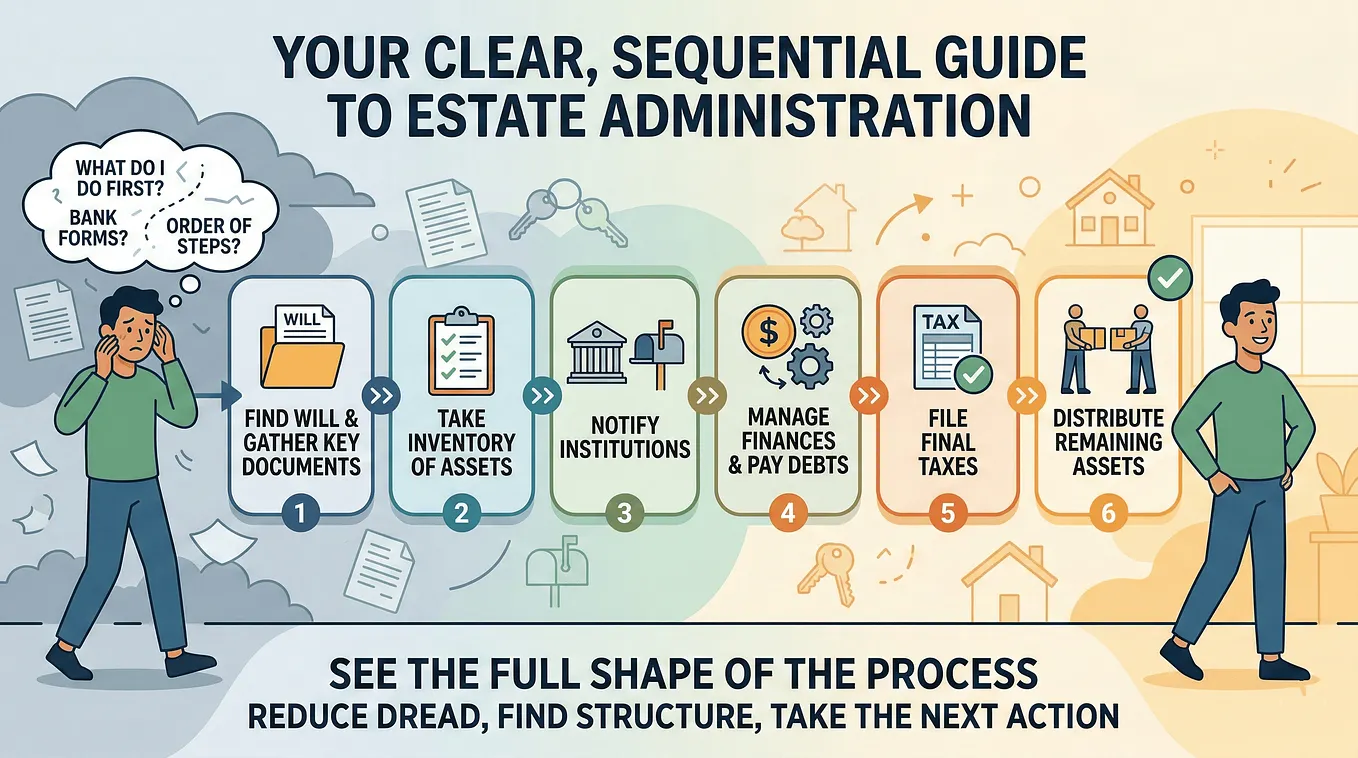
Sequence is the hard part
When I build a checklist or write a guide, the hardest part isn’t getting the procedural details right. It’s sequence.
Get Morgan Pierce’s stories in your inbox
Join Medium for free to get updates from this writer.
Most people organize information by category — all the banking information together, all the creditor information together. That’s logical. It’s also nearly useless for someone in week three of an estate.
What an executor actually needs is information organized by moment. Not “here is everything about bank accounts” but “here is what you do about bank accounts in the first two weeks, in this order.” The distinction sounds minor. In practice it’s the difference between a guide that gets used and one that gets put in a drawer.
The question I ask before publishing anything: if someone read this at 11pm, three weeks after a death, after a hard call with a sibling — would they know what to do next? Not what all the options are. What to do next.
What this work actually taught me
My background is in communications. When I moved into estate administration, I assumed the subject matter expertise would be the hard part, and the writing would come naturally.
It was the reverse. The procedural knowledge is learnable. The discipline of writing for someone exhausted and grieving who still needs to make accurate decisions — that’s harder, and it matters more.
Information organized for the reviewer inside the institution is compliance. Information organized for the person doing this work — in the conditions they’re actually in — is help.
That’s the distinction I keep coming back to. I haven’t solved it once and for all in ten years. I just keep getting a little better at it.