Sanwaliya Seth and the Secret of One Percent 💫


Mandphiya, Chittorgarh: a mysterious car, a temple’s history, and four tales of faith
The Car Outside the Temple
A temple. And outside that temple, a car. Not an ordinary one, but one of the most expensive cars in the world. New, gleaming. In the day the sun bounced off it so hard you had to squint, and at night it seemed to shine even in the dark.
Why was it parked here? That was all anyone could think. Every devotee who walked past stopped, stared, and asked the same thing: whose car is this?
One day passed. Then two. Five, six days went by and the car was still there. Nobody came to claim it. A car worth 2 crore rupees, standing outside a temple with no owner in sight. Nobody had any idea.
Then one day the temple’s offering boxes were opened. And there, among the bundles of notes, lay the key to that very car. Beside it was a note. It read: “I made a one percent agreement with Sanwaliya Seth. This car is that one percent. I am leaving its value here, for my Sanwaliya Seth.”
Now think about it. If this car, worth 2 crore rupees, was just one percent, then how much did that man earn? Two crore times a hundred: 200 crore rupees. One man, one promise, and one percent.
Today I want to tell you some secrets of Sanwaliya Seth like this one, so stay with me until the end.
And if you like, you can also watch the video that goes with this article. Follow This (My) Page On Medium 🙏🏻

So, let us begin.
The Night the Offering Boxes Open
It was the night of Chaturdashi. The fourteenth day of the dark fortnight, one day before Amavasya, when the Bhandar at the Sanwaliya Seth temple in Mandphiya is opened. The place lies about 40 kilometres from Chittorgarh, on the Udaipur road. Outside, devotees stood in long queues. Inside, under the watch of cameras and officials, the counting team sat down. And then the lids came up.
Bundles of cash. Gold ornaments. Heavy silver. Sometimes a gold bar. According to news reports, in April this year the offerings for a single month crossed 41 crore 67 lakh rupees, described as the biggest figure so far. In the December 2024 count, along with a 1 kg gold biscuit came stranger gifts: a silver pistol, a silver bullet, even silver handcuffs. Letters turn up too. In one, a devotee wrote that half of the last prayer had been answered, and could Sanwaliya Seth please arrange the government job as well.
Why does a village temple receive this much? The answer sits in three words: business partner. Here devotees do not just ask. They make God a partner in their work. If there is profit, a share of it goes to the Seth. And if someone forgets to pay it back? That small “if” holds the deepest secret of this story. But first you need to know where this Seth came from.

A Cowherd’s Dream
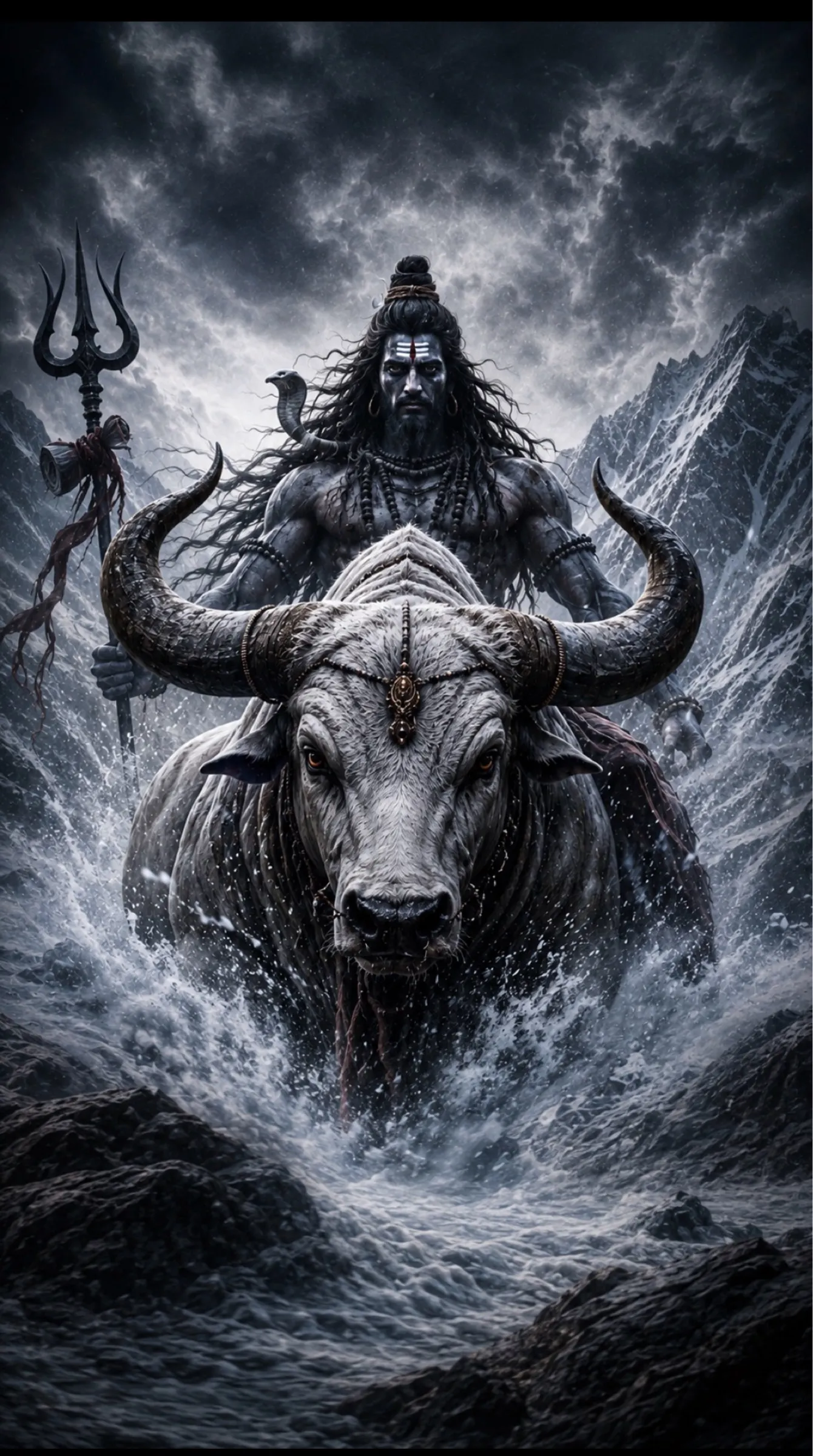
According to tradition, the year was 1840. In the village of Mandphiya lived a cowherd named Bholaram Gurjar, an ordinary man who made his living from milk and cattle. One night he had a dream: three divine idols lay buried in the ground at a place called Chhapar, in the Bhadsoda-Bagund area. (Some sources say four idols, but most accounts mention three.)
In the morning he told the villagers. Some laughed. Some shook their heads. But a few picked up spades and followed him. And when they dug, they found exactly what Bholaram had seen: three beautiful idols of Lord Krishna.

A Little Imagination
Picture that night. It is close to Amavasya, the dark is thick, and torches shake over the rough ground at Chhapar. Bholaram stops, breathless, beside a mound and points with a trembling finger. “Here.” The first spade falls. Nothing. The second. Only soil. The third strikes something hard, and a dull clang cuts through the silence of the night. The villagers step back. The earth is brushed away, and in the torchlight a dark face appears, smiling softly, as if it had waited centuries for exactly this moment.
Why were the idols buried at all? One popular belief says they were made by Naga sadhus and hidden underground out of fear of invaders. Mewar’s land has seen centuries of invasion, so it does not sound impossible. Still, it should be taken as the memory of tradition, not as documented history.

Three Idols, Three Doors
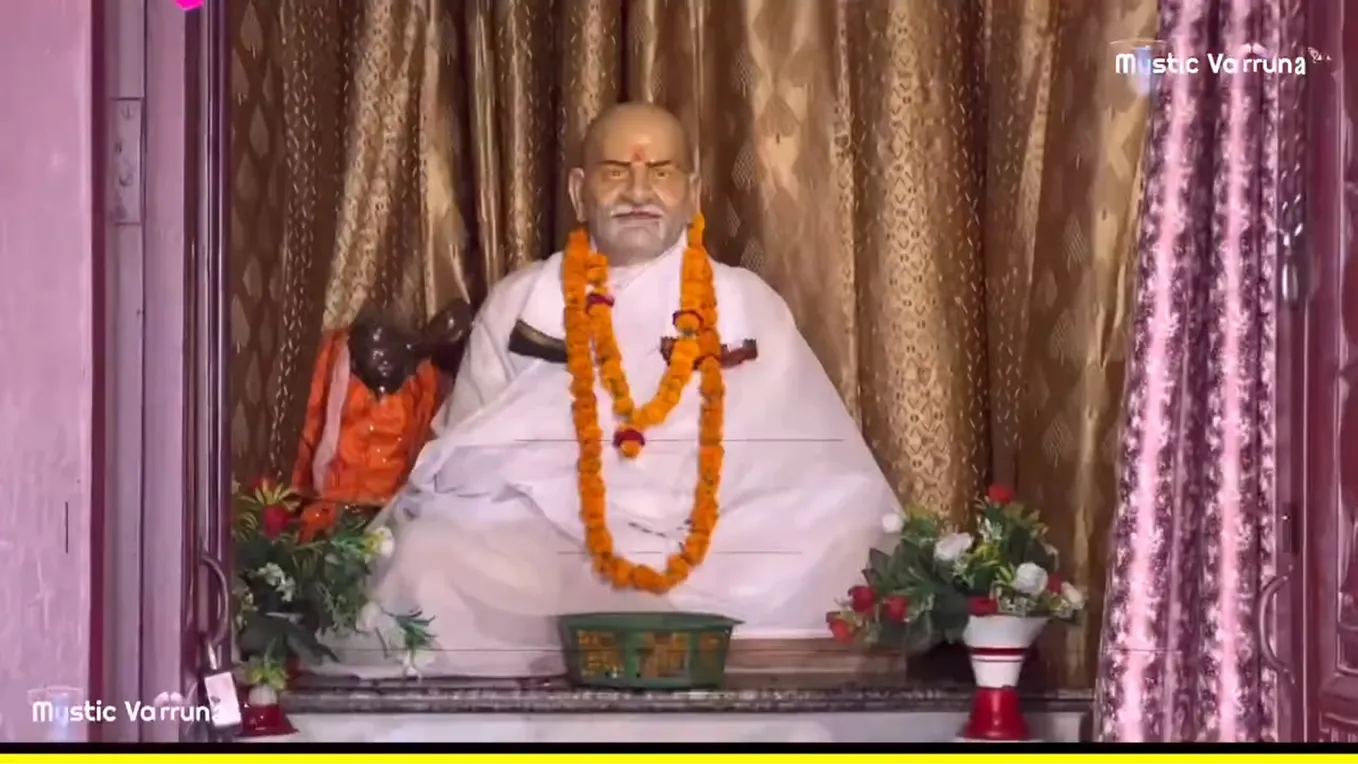
What happened next is unusual in the story of temples. One idol was taken to Mandphiya, a second was installed at Bhadsoda, and the third stayed where it appeared, at Chhapar in Bagund. Temples came up at all three places, within roughly 5 kilometres of one another. The Bhadsoda-Bagund site is called the Prakatya Sthal, the place of manifestation, while the Mandphiya temple became best known as Sanwaliya Dham. Among Vaishnav devotees it is ranked second only to Nathdwara.
Some accounts say the Mandphiya temple was built with the support of the Mewar royal family. Sources also disagree on the temple’s age: some say about 250 years, others about 450. And one more thing worth noticing: the sources say “1840" without saying whether that is the Common Era or the Vikram Samvat. If it is Vikram Samvat 1840, that comes to around 1783 CE, which fits the 250-year claim. So the safer way to say it is that this is a tradition from the eighteenth or nineteenth century.
Today the temple is run under the Government of Rajasthan. In 1992 the state passed the Sanwaliyaji Mandir Mandal Act for the smooth running of the temple, and a board has looked after it since.

Why Is He Linked to Krishna?
The first answer is in the name. “Sanwala” means dark-complexioned, and Krishna’s very names are Shyam and Ghanshyam. The idols that came out of the earth were of dark stone, with the same enchanting smile on the face and the same flute in the hands. So devotees naturally took them to be Krishna, and the appearance of the idols to be his leela.
The second answer is in the word “Seth”. A Seth is a respected merchant, someone whose word people trust without paperwork. Krishna was the lord of Dwarka, that rich port city of trade whose wealth is mentioned even in the Puranas. And in the folk tradition of Gujarat and Rajasthan, the “merchant Krishna” was already alive. Think of the story of Narsi Mehta: according to folk tradition, when nobody would honour his hundi, God himself came as a merchant called Shamalshah Seth and accepted it. That is a story of folk faith, not of historical record, but it is the same feeling that reaches Sanwaliya Seth: that God guards the merchant’s word.
The third thread is the Gita. Krishna told Arjuna: “yogakshemam vahamyaham”. For those who think of me with undivided devotion, I carry the burden of their yoga (getting what they do not have) and kshema (protecting what they do have). What better line could there be for a trader? There is also a popular belief that Meerabai used to worship this very Murlidhar, though that too should be treated as tradition.
The One Percent Agreement

This is the most remarkable custom here. According to news reports, traders, businessmen and licensed opium farmers come to the temple before starting their work, make Sanwaliya Seth their business partner, and offer a share of the profit into the Bhandar once it comes. How much that share should be is each devotee’s own vow. In everyday talk, people mostly speak of “one percent”, but some give more and some less. It is not a written contract. It is a promise. And only someone who has kept it, or broken it, knows what a promise is worth.
Get Mystic Varruna’s stories in your inbox
Join Medium for free to get updates from this writer.
The tradition has spread so far that a Sanwaliya Seth temple has also been set up in Indore, where many traders go with the same faith. Now listen to the stories that sit at the heart of this belief.
Please note: the four stories below are fictional. The characters and events are the author’s creation, inspired by feelings that run through folk belief. They should not be read as the life story of any real person.
Story 1: After the Hailstorm

In a village of the Chittorgarh region, Ratanlal Dhakad grew opium, the very crop whose every drop the government keeps count of. One year in the month of Chaitra, hail fell so hard that half the crop lay flat in the field. The moneylender’s loan hung over his head, and the man’s collector now sat at his door every day.
One night Ratanlal travelled to Mandphiya without telling anyone. He had nothing to offer. He stood before the idol and muttered, “Seth, I have no profit, only hope. Whatever profit comes this time, one percent of it is yours.” There was no answer. Nothing but the echo of the temple bell.
Before the next harvest, strange things began to happen. The land everyone called barren was the first to sprout. Then, the night before the weighing, a fire broke out in Ratanlal’s storeroom. The village ran to help, but by the time they arrived the room was ash. Yet Ratanlal’s heart was pounding, because that very evening, for no reason, he had had all the sacks carried out into the courtyard. “Someone was telling me,” he said later, “do not keep these inside today.”
When the weighing was done, his yield was the highest in the whole area. The loan was cleared. He bought more land. And before the next Chaturdashi, Ratanlal was the first to count out that one percent, in full, not a paisa short. People ask who set the fire. Ratanlal smiles and says, “When someone saves you before the fire, you do not ask questions about him.”
Story 2: The First Page of the Ledger

Mohanlal, a cloth merchant of Bhilwara, kept one habit his father had taught him: writing “Shri Ganesh” on the first page of every new ledger. That year he added one more line beneath it: “Shri Sanwaliya Seth, partner at one percent.” His accountant raised an eyebrow. “If you name a partner, you have to share the losses too.” Mohanlal laughed. “No, Munim ji. This partner asks only for a share of the profit. The losses he bears himself.”
But the test came soon. There was a contract for thousands of metres of cloth with a big trader in Surat. On the last day the news arrived: the trader had gone bankrupt, the order was cancelled. The warehouse was stacked to the roof with bolts of cloth, the loan instalment was due, and in the rival market people were whispering that Mohanlal was finished.
That night, around twelve, someone knocked at the shop door. Mohanlal looked out of the window. A tall, dark-complexioned man stood outside, wrapped in a yellow shawl, with a strange calm in his eyes. He gave no name and no address. He only said, “I want all the stock. Take the advance now.” And he counted out the full advance and laid it on the table.
Mohanlal looked down at the accounts book for a moment. When he looked up, the door was open and the man was gone. The money lay on the table, real and counted. In the morning, when he opened the ledger, his hands shook. Right there, next to that line, was a small mark in fresh ink: a flute. He never told anyone whether he had drawn it himself.
Story 3: A Night on the Empty Highway

Gopal Singh was a truck driver, worn out by long hauls but honest. One night, in a ghat section of the Udaipur-Chittorgarh road, his truck suddenly stopped. Darkness all around, a jackal calling somewhere far off, and behind him the fading sound of some vehicle. He remembered the stories about that road: robberies, lone drivers.
With shaking hands he folded them in prayer. “O Sanwaliya Seth, if I get out of this night safe, one percent of whatever I earn for the rest of my life is yours.” He turned the key. Nothing. He turned it again, and the engine roared awake. The vehicle behind him turned off at the next bend at that very moment. Gopal Singh breathed out.
The years passed. One truck became three, three became fifteen. He now had drivers and offices of his own. And slowly a clever calculation took birth inside him: “That was a promise made in a moment of fear. This is such a big profit now, and one percent of it?” That year he offered nothing at the Bhandar. Nor the next.
Then the bad days came. One truck after another met with accidents, contracts broke, debt grew. The night the lender’s notice arrived, Gopal Singh remembered the night in the ghat. The very next day he reached Mandphiya. He sat down and worked out the accounts: from the first year to that day, one percent of every profit he had made, with full interest. He did not even have that much money. He sold a truck to pay it. People say his rise began again from that day. The point of the story is just this: a promise made to the Seth can be broken, but its account is never wiped out.
Story 4: Ananya’s Last Contract

Ananya was a young entrepreneur from Indore. Her small company had one month of money left. Tomorrow she had a meeting with the last investor: if he said yes, the company lived; if no, everything was over. She did not sleep all night. In the morning she went first to the Sanwaliya Seth temple in Indore.
She offered nothing there, because she had nothing to offer. She took out her small notebook and wrote in it: “One percent of the company’s first profit in the name of Sanwaliya Seth. And it should be used where someone’s stomach is filled.” Then she told herself, “Now, yes or no, I have written it.”
In the investor meeting the whole room was cold. He asked questions for an hour, and at the end he shook his head. “No.” Ananya’s heart sank. She was about to get up when someone behind her said, “One minute, please.” A senior woman who had been sitting silently until then spoke up. “I saw what you wrote on the last page. A person who knows how to share a part of her profit even in a crisis, I am ready to put in the full amount with her.”
The company ran. It ran very well. And on the day of the first profit Ananya kept her word: with that one percent she had thousands of plates of food served. Even today that small notebook lies on her desk, and on the first page it says, “Partner: Sanwaliya Seth.” People ask whether it was God’s grace or coincidence. Ananya says, “Sometimes belief itself becomes the biggest capital.”
Truth, Faith and Caution

So now the question: does giving one percent really grow your wealth? The honest answer is that there is no proof of it. This is the realm of faith. But look at the discipline behind the faith. A person who fixes a share of the profit in advance stays clear of greed, keeps accounts, learns gratitude, and asks himself every year how much he earned and how much he gave. Perhaps that very discipline steadies the business too. And Krishna in the Gita asks us to let go of anxiety about the fruit: the action is in our hands, and for the fruit we keep faith.
One caution is also needed. If anyone comes to you in the name of Sanwaliya Seth asking for “the Seth’s share”, do not give it to them. The share here is offered at the temple’s Bhandar through its own arrangement, with no middleman.
So the next time you start something new, ask yourself: am I ready to give a part of my profit to someone who asks nothing of me, yet sees everything? They say the dark Seth keeps your account. And there is never a mistake in his ledger.
Fact and Fiction: How to Tell Them Apart

Fact and widely reported tradition: the Sanwaliya Seth temple at Mandphiya; about 40 km from Chittorgarh; the tradition of Bholaram Gurjar’s dream, the discovery of three idols and three temples; the monthly counting of the Bhandar; the devotees’ belief in making God a business partner; the 1992 temple board act; the news figures for April 2026 and December 2024.
Folk belief with no documentary proof found: idols made by Naga sadhus; hidden underground for fear of invaders; worshipped by Meerabai; the car story at the start, which is told by word of mouth (no verified details of donor, date or vehicle were found); the exact age of the temple and the era of 1840 (Samvat or CE), on which sources differ.