I Got a Call from NVIDIA. Here Is Exactly What Happened Next.

The Online Assessment — 1.5 Hours on HackerRank
The first filter was a 1.5 hour assessment on HackerRank, and it was more layered than most OAs you encounter. The coding section had two medium-level problems , the kind you would recognise from LeetCode or GeeksforGeeks not straightforward brute-force problems. Problems that rewarded optimisation and clear thinking about complexity.
What made this OA genuinely different was the MCQ section that ran alongside it. Sixteen questions across core CS fundamentals — OOP, Operating Systems, DBMS mixed with logical reasoning and brain teaser questions that tested critical thinking
Five Days Later — The Interview
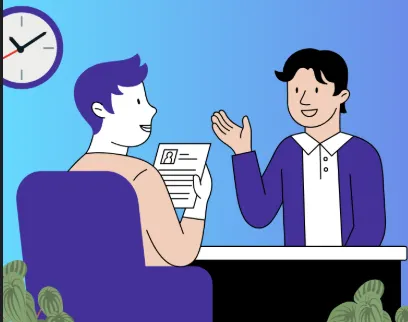
Five days after clearing the OA, the interview was scheduled. One and a half hours. MS Teams. Three interviewers, each focused on a completely different area.
They introduced themselves first — names, roles, what they work on at NVIDIA. Then it was my turn. A calm, structured self-introduction. And then the real conversation began.
Get Nehal Garg’s stories in your inbox
Join Medium for free to get updates from this writer.
The first interviewer asked me about my favourite programming language. I said C++. From that single answer, he moved directly into a technical problem, arrays and vectors, specifically the subarray sum problem. I walked him through a brute force approach first and then explained an optimised solution. He asked pointed follow-up questions about the logic, the time complexity, the edge cases. This section lasted about 20–25 minutes. It felt like two people talking through a problem together.
The second interviewer took the conversation to a mathematical case study involving sets, unions, intersections, and foundational maths reasoning. It was a hard question where the answer does not arrive cleanly and the path to it requires structured, out-loud reasoning rather than recalled knowledge. He guided me with hints throughout, never giving anything away but making sure I did not get completely stuck. I stayed calm, used every hint offered, and worked through it step by step.
The third interviewer gave me a logical problem based on password detection through a set of progressive hints. It came together quickly. What followed was an open discussion — relaxed in tone but still telling in what it reveals about how you communicate. They asked if I had any questions for them, the conversation wrapped naturally, and that was it.
How to Actually Prepare for NVIDIA
DSA is the entry ticket but it is not the whole story. Practice medium-level LeetCode problems consistently, especially arrays, strings, sliding window, and dynamic programming. NVIDIA’s interviewers are listening to your thought process as much as your final answer. A candidate who arrives at a slightly suboptimal solution but explains their reasoning clearly will almost always impress more than someone who gets the right answer and cannot articulate why.
CS fundamentals are non-negotiable. The OA tests OOP, OS, and DBMS not surface-level definitions but actual conceptual understanding. Understand how processes and threads work, what deadlocks are and how they are prevented, how memory management functions. For DBMS, know your normalisation, ACID properties and transaction management.
Mathematical reasoning is something most students overlook completely in interview prep. Set theory, probability, basic combinatorics, logical puzzles. Brainstellar is an excellent resource for exactly this kind of problem. Logical reasoning cannot be crammed. Practice brain teasers regularly.
Know your favourite language deeply. Not just the syntax but the standard library, the data structures available, how memory works in it, when to use what. If you say C++ is your language, be ready for someone to follow up on anything you say about it.
And when a problem is genuinely hard when you sit there and do not immediately know what to do think out loud. Do not go silent. Walk the interviewer through where you are, what you are considering, what you are ruling out and why. Every interviewer in this process was listening for exactly that.