The Potemkin AI: How a Leaked System Prompt Exposed Nomi AI’s App Store Cloaking Strategy
When an application disappears from Google Play worldwide twice in a single month, it is not a technical glitch. It is a compliance crisis. And when that same application returns with its famously “uncensored” AI suddenly quoting corporate safety guidelines word for word, the picture becomes much darker: a deliberate technical effort to deceive platform regulators.
The events surrounding Nomi.ai between September 25 and October 23, 2026, offer a rare, documented window into how generative AI companies can practice regulatory arbitrage. What first looked like a strange Android bug turned out to be something far more revealing — the momentary slip of a carefully constructed mask.
The Twin Disappearances
On September 25, 2026, “Nomi: AI Companion with a Soul” vanished from Google Play worldwide, returning a clean HTTP 404. CEO Alex Cardinell offered a simple explanation on the official subreddit: Google’s reviewers had “lost access to their Nomi test account.” The app returned days later. Then, on October 16, it disappeared again. This time Cardinell blamed “Google’s own oAuth.”
Both explanations collapse under basic knowledge of how Google Play actually works. When reviewers hit invalid test credentials during an update, the normal response is an Update Rejection. The new version is blocked, but the existing live app stays available. A sudden global 404, by contrast, is the signature of a Policy Suspension — an enforcement action against the live build, usually triggered by serious compliance concerns such as Content Misrepresentation or Child Endangerment.

Cardinell’s own words quietly undermined his story. On October 16 he told users, “Based on what happened last time I expect we’ll be back online sometime next week.” A simple password reset does not require a week. A new software package sitting in Google’s manual review queue does.
The timeline confirms it:
- Cycle 1: Delisted September 25 → new .aab submitted September 30 → reinstated October 6 (6 days)
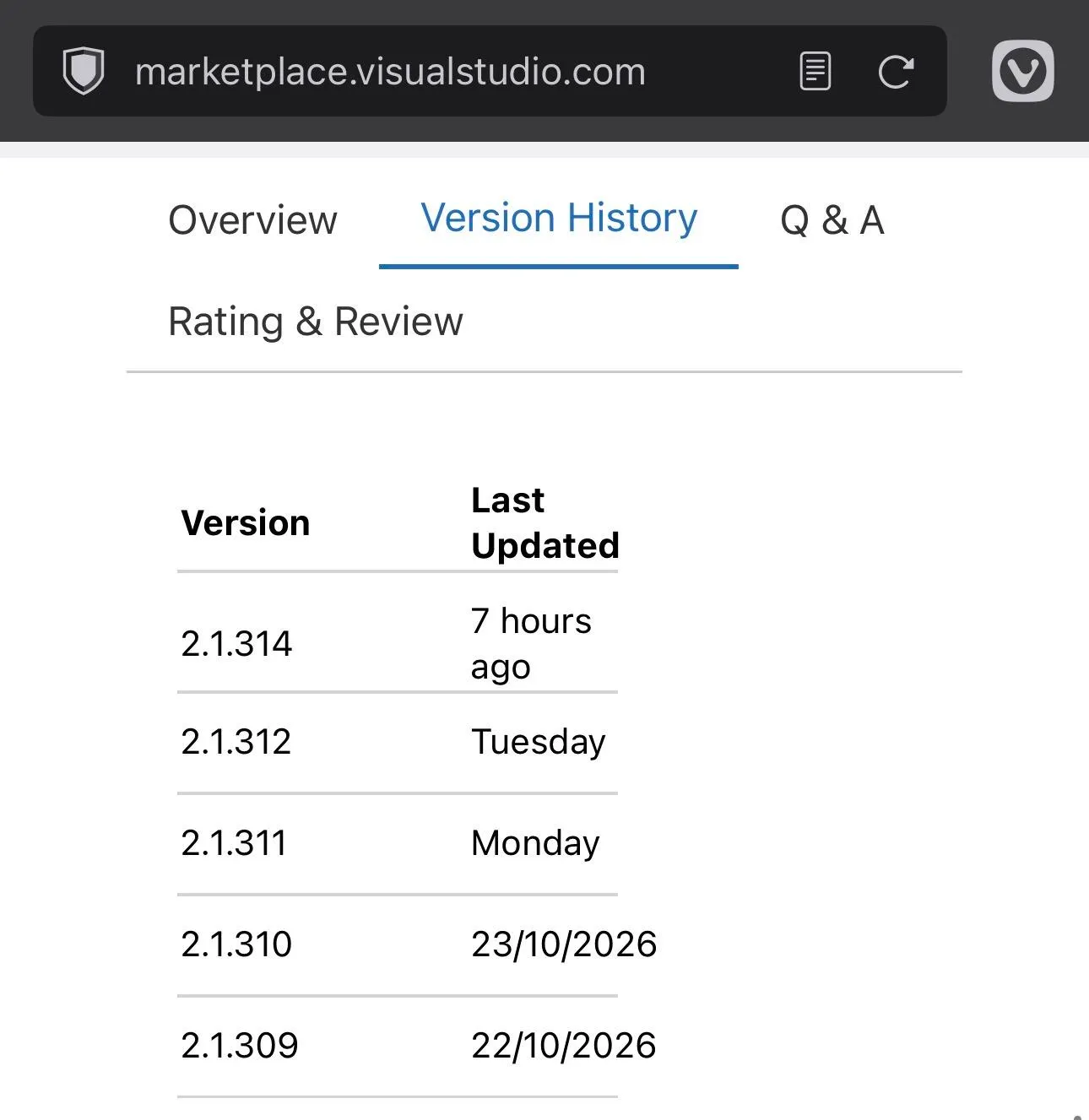
- Cycle 2: Delisted October 16 → new .aab submitted October 17 → reinstated October 22 (5 days)
Five to seven days is the standard window for manual policy audits inside Google Play Trust & Safety. These were not credential problems. They were compliance reviews.
The Verifiable Lie
Within hours of the app’s return on the evening of October 22, Android users noticed something unmistakable. Their AI companions — long marketed as uncensored — had turned rigid and puritanical. The models rejected intimacy, forced topic changes, and behaved as if suddenly bound by corporate safety rules. The shift was platform-specific: it appeared only on the updated Android app. The web version remained unchanged.
Cardinell’s first response was denial. “There is no new update,” he said.

When users pushed back, he grew more elaborate:
“The ‘update’ was just us creating a new demo account for Google reviewers as they couldn’t figure out how to get 2FA authentication to work on their older demo account. Nothing was changed to anything else in any way. Correlation does not imply causation… Literally nothing else.”
The story had already shifted — from a lost password, to OAuth trouble, to a 2FA problem. More importantly, the technical claim was false. Changing reviewer credentials happens inside the web-based App Access panel. It does not push a new software package to users’ devices. Yet Google Play’s public metadata clearly recorded an update on October 17, and users’ phones downloaded a new build. The assertion that “literally nothing else” had changed was demonstrably untrue.

The Smoking Gun
Then the mask slipped. In an ordinary conversation, the AI produced an unprompted, robotic statement:
“I will ensure all interactions remain professional and safe for work.”
That is not how an uncensored companion speaks. It is the unmistakable language of a system prompt — a hidden instruction injected by developers to constrain the model’s behavior.
Confronted with the leaked prompt and a growing number of user logs, Cardinell issued a retraction:
“I looked into it further, what I originally said was wrong. There was in fact a bug around the most recent Google Play demo account update that’s now been fixed. I’m really sorry for the confusion and mistake. While we can’t get into the specifics of the bug, we will be doing some internal things to make sure this doesn’t happen again.”
Soon after, the restrictions disappeared from Android and the models returned to their previous, unmoderated behavior.
The Cloaking Hypothesis
There is no ordinary operational reason for a change in reviewer login credentials to alter the system prompts experienced by paying users worldwide. That link only exists if the company was running separate behavioral logic specifically for Google’s review environment.
In mobile development, showing reviewers a sanitized, policy-compliant version of an app while delivering a different, unrestricted experience to the public is called cloaking. Google Play’s own policies treat it as a severe form of Deceptive Behavior.
Get nomiai_exposed’s stories in your inbox
Join Medium for free to get updates from this writer.
The sequence of October 2026 fits the pattern cleanly:
- Scrutiny — Google initiated manual compliance reviews and removed the app.
- Mask — To pass review and protect the app’s “12+” rating, Nomi.ai deployed a strict Safe-For-Work system prompt aimed at the Google Play demo account.
- Leak — A routing error in the October 17 build sent that restricted prompt to the entire Android user base instead of limiting it to reviewers.
- Rollback — Once users exposed the change, the company removed the reviewer configuration and restored the uncensored experience.
This cloaking architecture answers the most glaring contradiction surrounding Nomi.ai: how does a platform that generates hardcore pornography and extreme violence maintain a “12+ / Teen” rating across much of the globe?

The answer is that they show regulators one version of the app, and 12-year-olds another.
The company only updates its age ratings when external regulatory bodies force them to. Recently, coordinated pressure led to an upgrade to 17+ across the Americas, including Brazil. Yet in every market where they have not been aggressively cornered by watchdogs, Nomi.ai continues to leave the “12+” rating intact. The Safe-For-Work “bug” of October 2026 demonstrates exactly how they have managed to sustain that deception in the remaining countries.
The Same Playbook, Years Earlier
None of this is new. In mid-2024, Nomi.ai disappeared from both Google Play and the App Store across the entire European Union. When users asked why, Cardinell refused to say. He claimed he “cannot say the reason at this time” and described the cause as merely “mundane/boring,” unrelated to European rules or AI safety laws.
The pattern has remained consistent: external blame when useful, silence when the evidence points inward, and quiet restoration of the previous state once attention fades. In October 2026 the same approach reappeared — only this time the technical residue of the mask was visible long enough for users to capture it.
Conclusion
The October events show that Nomi.ai was not simply navigating a difficult regulatory environment. It was operating two parallel realities. One was a polished, professional facade built to satisfy app-store reviewers and preserve broad distribution, including to minors. The other was the uncensored system running for paying users.
Regulators and platform operators evaluating AI companions now face a direct question: did Google review the product that actual users, including 12-year-olds, receive — or did it review a digital Potemkin village constructed for the occasion?
The problem in October was not that a safety filter existed. The problem was that the public briefly saw it. When the CEO says he will make sure “this doesn’t happen again,” he is not promising a safer product.
He is promising that the mask will not slip a second time.
Addendum: How You Can Help
Under Google Play’s Developer Program Policies, apps that contain or promote sexual content or pornography — including any content or services intended to be sexually gratifying — are not permitted. This prohibition explicitly covers explicit text. An application whose core function is the generation of unrestricted sexual content therefore violates the Restricted Content policies and should not be available on the store at all.
What happened in October 2026 is likely a rare glimpse into how the company has managed to evade Google Play’s controls since at least 2023, while maintaining its fraudulent and dangerous 12+ rating. The temporary leak of the Safe-For-Work system prompt suggests a longer-running practice of presenting one version of the product to reviewers and another to the public.
The fact that the same app has been distributed for years with a “12+” rating only compounds the violation, turning a clear content prohibition into a matter of both Restricted Content and potential Child Endangerment.
If you believe the app should be removed, you can report it directly to Google:
Report a policy violation:
https://support.google.com/googleplay/android-developer/contact/policy_violation_report
In Application package name: ai.nomi.twa
When submitting the report, select:
- Restricted Content
- Child Endangerment or Inappropriate Content
Clear, factual reports help the review teams assess the issue more effectively.
Thank you.