Why Javed Akhtar Won the God Debate (Even If God Might Still Exist)


A recent debate between Javed Akhtar and Mufti Shamail Nadwi drew wide attention because it promised something rare: a discussion about God grounded in logic rather than scripture or sentiment.
I watched it closely, not as an ex-Muslim trying to score points, and not as a believer defending faith, but as an agnostic. I do not know whether God exists. I’m open to the possibility that He does. What I am not open to is accepting arguments that fail under scrutiny simply because they are familiar, confident, or comforting.
By that standard, Javed Akhtar won this debate. Not because he disproved God, but because the case presented for God never met its burden.
What Each Side Actually Argued
Mufti Nadwi presented arguments many believers recognize immediately: science cannot assess God because God transcends the physical, the universe is contingent and therefore requires a Necessary Being, order and fine-tuning suggest intelligent design, objective morality requires God, evil exists because of human free will or divine wisdom, and ultimate justice occurs beyond this life. These are classical theistic arguments, refined over centuries. He even gave it a touch of humor by questioning that religions offer holidays, what do atheists offer to ‘attract’ people?
Javed Akhtar’s position was far more restrained, and often misunderstood. He did not argue that God does not exist. He argued that extraordinary claims require evidence, that “I don’t know” is an intellectually honest position, that moral meaning does not collapse without theology, and that immense suffering seriously undermines claims of divine goodness. This was epistemic restraint, not atheistic certainty.

How Philosophical Debates Actually Work
In philosophy, you “win” not by proving the opposite side false, but by either meeting your burden of proof or demonstrating that the other side has not. Akhtar did not need to explain the origin of the universe. He needed only to show that the explanations offered were insufficient.
He accomplished that.
The Contingency Argument That Wasn’t
Mufti Nadwi leaned heavily on the contingency argument: the universe depends on causes, therefore it must terminate in a Necessary Being. But several critical steps were missing.
Even if something necessary exists, why must it be personal? Why intelligent? Why moral? Why concerned with human behavior? Calling God “necessary” does not demonstrate His existence, it defines Him as an exception to the rules everyone else has to follow. Akhtar rightly pointed out that this move explains nothing. It simply relocates the mystery one step back and declares victory.
The Burden of Proof Misdirection
Nadwi repeatedly insisted that disbelief carries the same burden of proof as belief.
It absolutely does not, and watching Nadwi press this point was exhausting.
“I am not convinced” is not the same as “God does not exist.” Akhtar’s use of Bertrand Russell’s teapot analogy was appropriate and devastating: the burden lies with the claimant. If someone claims an undetectable teapot orbits between Earth and Mars, we are not obligated to disprove it. The person making the claim must demonstrate it. Nadwi never successfully rebutted this, he just kept insisting the rules were different for God.
Again, that does not make any sense.

The Moral Argument That Attacked a Phantom
Nadwi argued that without God, morality collapses into mob rule. That was never Akhtar’s claim.
Moral evolution is not the same as moral relativism. Secular ethics does not reduce to majority voting. Nadwi attacked a caricature, the idea that if 51% of people vote for slavery, it becomes moral, while leaving divine morality’s (such as standing behind said slavery) own problems completely unaddressed.
If morality comes from God, we face the Euthyphro dilemma: either God commands things because they are good, meaning goodness exists independently of God, or things are good simply because God commands them, meaning “good” is arbitrary and means nothing more than “whatever power decrees.” Nadwi wants the comfort of objective morality without addressing that his own framework either makes morality independent of God or reduces it to divine whim.
He never resolved this. He just kept insisting secular morality was somehow worse, without being able to address why.

Where the Debate Turned: Natural Evil
This is where the argument truly collapsed.
Free will can explain war. It cannot explain genetic disorders. It cannot explain childhood cancer. It cannot explain congenital suffering or natural disasters that kill thousands. These precede choice, agency, or moral failure.
Get Nushuz Author’s stories in your inbox
Join Medium for free to get updates from this writer.
When confronted with this, Nadwi turned to familiar responses: tests, divine wisdom, justice later. These are expressions of faith. They are not logical explanations.
A system that produces suffering before choice cannot blame choice for suffering. If children are born with agonizing diseases, you cannot invoke free will as the explanation. If earthquakes kill entire populations, you cannot say humans chose that outcome. Either God designed a universe where innocent suffering is built into the structure, or God is not the designer. Pick one.
Nadwi chose instead to say “God has His reasons” and “we cannot understand divine wisdom.” That is not an argument. That is surrender dressed up as humility.

The Contradiction Left Unresolved
Nadwi repeatedly described God as morally good while also insisting God is beyond human moral evaluation.
Both cannot be true.
If “good” simply means “whatever God does,” then the word loses meaning. Morality stops constraining power and starts sanctifying it. This is not a minor philosophical quibble — it is the mechanism by which every religious atrocity gets justified. When believers want to praise God, human morality applies. When critics point to genocide, slavery, or eternal torture in hell, suddenly we are told human morality does not apply to God.
This contradiction was never resolved because it cannot be resolved. It is definitional equivocation masquerading as theology.

Why Akhtar Won, Even If God Might Still Exist
Akhtar won because he stayed within his burden, admitted uncertainty, and asked questions that went unanswered.
Nadwi lost ground not because his arguments were new or unusual, they were classical arguments believers have used for centuries, but because mystery was deployed where argument was required. “We cannot understand God’s ways” is not a response to the problem of natural evil. It is an admission that the response does not exist.
Akhtar did not win by disproving God. He won by showing that the arguments presented did not prove God. That is how philosophical debates work. The person making the claim must meet their burden. Nadwi did not meet his.
The Question the Debate Never Addressed
I am an ex-Muslim, and watching this debate raised a question that neither speaker touched: even if a God exists, what justifies the assumption that this God is the one described by Islam?
Proving the existence of a creator is not the same as proving the truth of a specific religion. The gap between “something necessary exists” and “that something is Allah, and He cares deeply about whether you pray five times a day, fast during Ramadan, and avoid pork” is vast and completely unjustified.
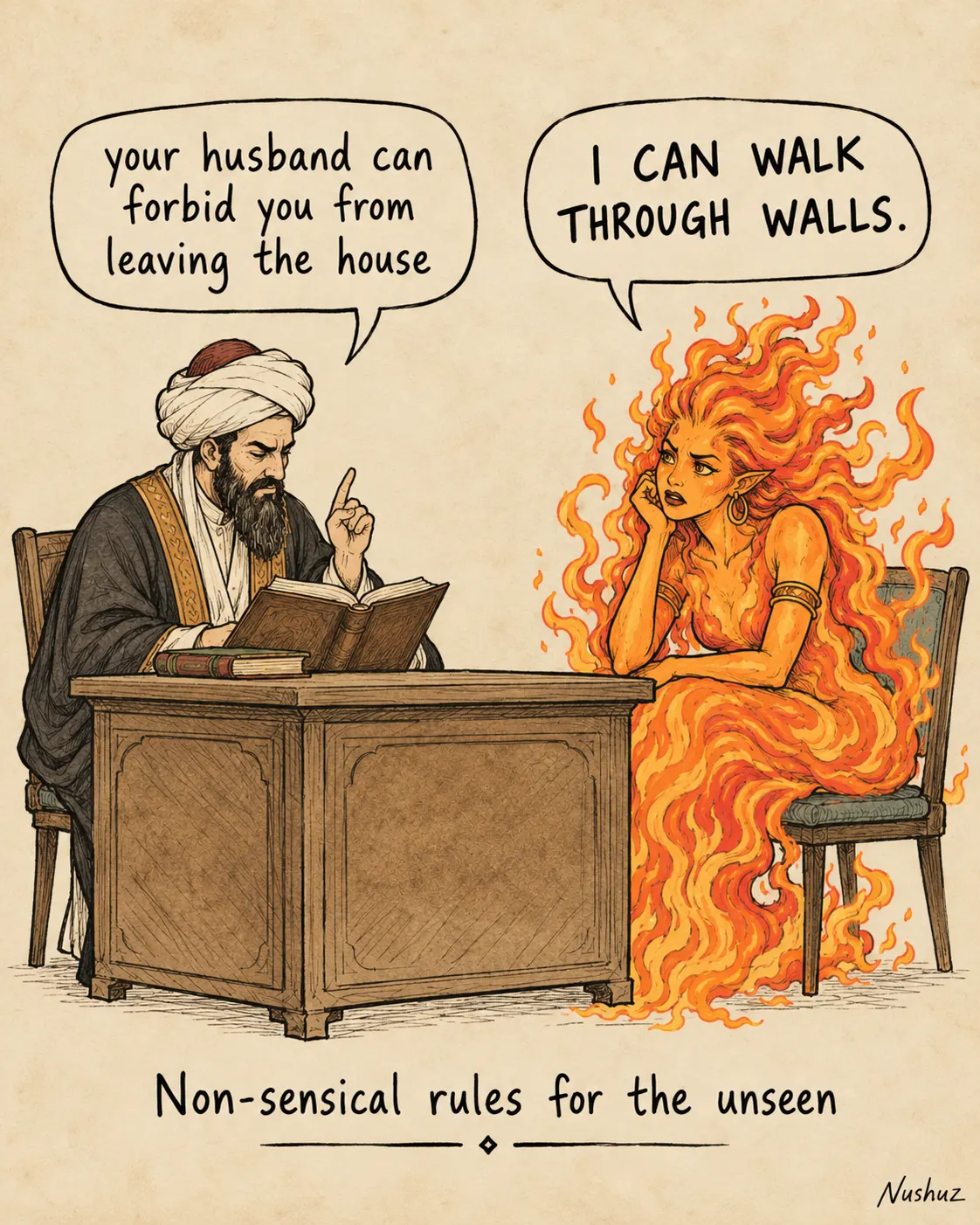
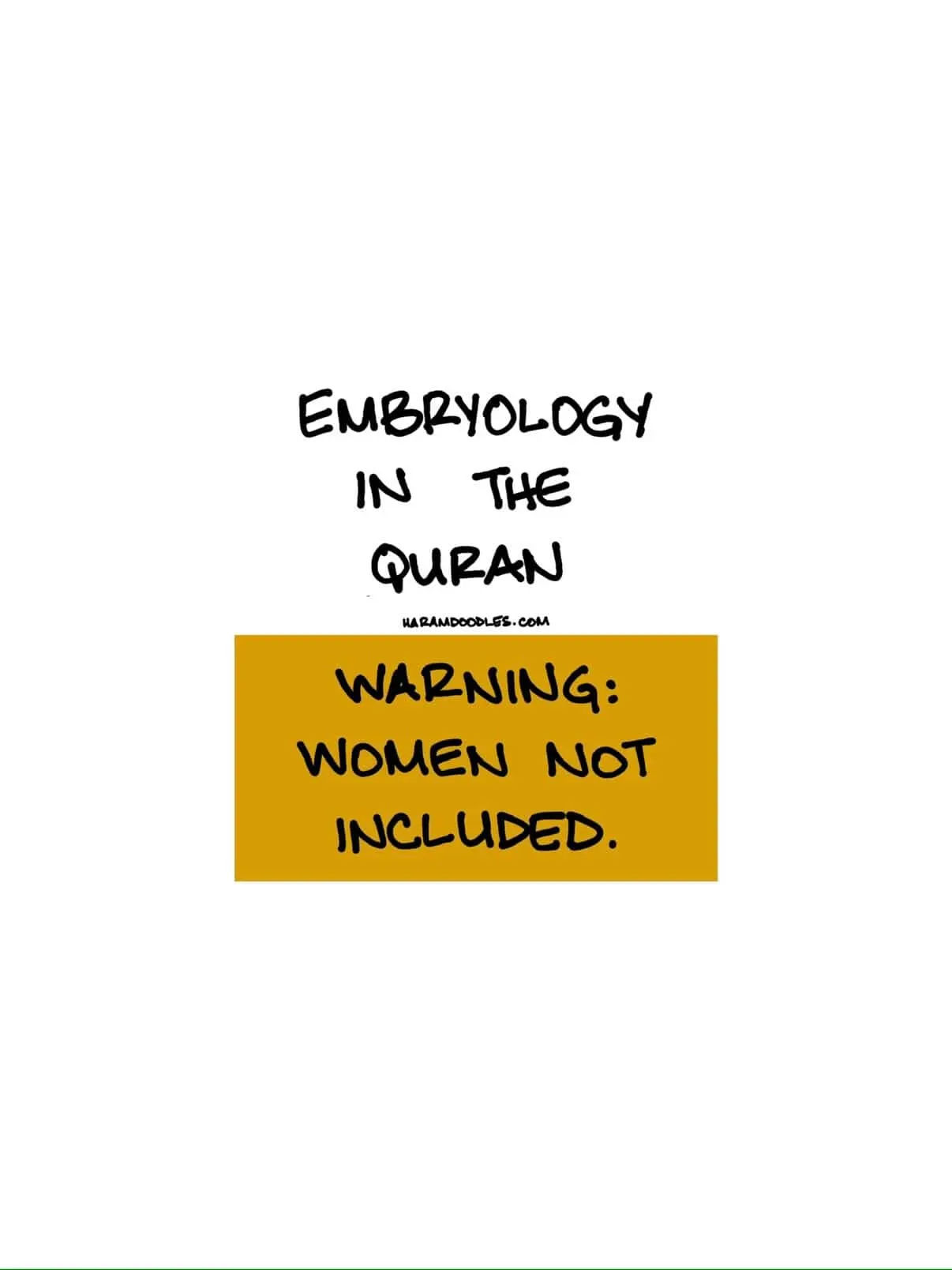
A being capable of designing a universe governed by physics, chemistry, and biology would also be capable of anticipating moral and scientific consequences across time. Yet the God described in the Quran offers detailed regulations for seventh-century social arrangements while remaining silent, or mistaken, on issues whose harms became unmistakable with time: slavery, child marriage, wartime sexual violence, the genetic consequences of close-kin marriage.
This gap matters. If a deity is all-knowing, moral clarity should not expire with history. The problem is not simply whether God exists, but whether the God inferred from philosophical arguments bears any resemblance to the God asserted by Islam.
That leap was never justified in this debate. It cannot be justified, because the evidence does not support it.
What “I Don’t Know” Actually Means
Nadwi treated agnosticism as intellectual cowardice, as though admitting uncertainty is somehow less rigorous than asserting certainty without evidence.
The opposite is true.
Refusing weak explanations is not hostility. Sitting with “I don’t know” is not nihilism. It is intellectual honesty. It is the recognition that some questions remain unanswered, and filling that gap with unfalsifiable claims does not bring us closer to truth.
God may exist. I genuinely do not know. But repeating hollow arguments does not make them sound. It does not make them compelling. It only asks us to lower our standards for what counts as evidence, to accept “because I said so” dressed up in philosophical terminology.
And that, more than doubt itself, is what should trouble us.
If the best arguments for God’s existence cannot withstand scrutiny, if they require us to stop asking questions at precisely the moment questions become most urgent, if they demand we accept mystery as explanation and call it wisdom, then we are not being asked to believe in God.
We are being asked to believe in the people who claim to speak for Him.
And that is a much smaller, much more human claim than the one they pretend to be making.
If this struck a nerve, you’ll love my book Born a Burden: Breaking Free from Islam, Tradition, and Silence now available for purchase worldwide. It tells the stories we weren’t allowed to hear, with the same unapologetic lens you just read. Join my Substack to stay updated and receive stories, common defenses, commentary on articles, the rebuttals, and more!