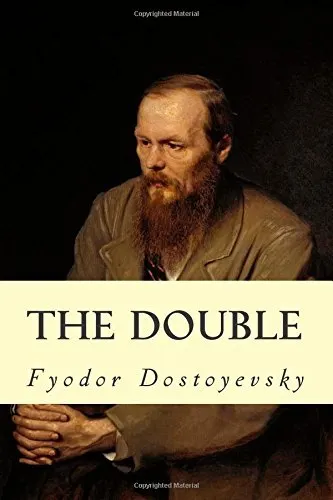
Book Review — Notes From Underground

Summary
This work is fairly unique in the canon of Dostoevsky. The first part of the book is a philosophical treatise, attacking the inadequacies of rationalism and utopianism. The second part in a novella, flushing out his philosophical argumentation. This is Dostoevsky’s first literary deep dive into the world of philosophy. Regarding the novella, the narrator is a 40 years old man, disgruntled with the world and living “underground” (“underground” means the thinking man, the enlightened man). He reflects on an event that happened in his late 20's when he visited a prostitute. This interaction was apparently so monumental it kept the narrator “underground”, living a life of misery, being told that 2+2 = 4, but even if it was possible living under such certainty and safety — the majority of humans destroy it, wanting the adventure of 2+2 = 5. Like with most of Dostoevsky’s works, the final scene is the prostitute exposing the hypocrisy of the narrator and when the narrator tries to find her and apologize — she is nowhere to be found, forcing the reader to question the purpose of this random intercourse.
— What I Liked —
The Philosophical Musings of Dostoevsky
Get OckhamFree’s stories in your inbox
Join Medium for free to get updates from this writer.
Finally, we get to hear from the legendary author. Up to this point in his canon, there was just a whiff, a brief shout of philosophy. But here in this work, we start to hear from Dostoevsky the philosopher. He attacks rationalism — arguing that humanity pushes back from living out the demands of science, the demands of mathematics. Humanity would rather have chaos or make chaos if necessary. He also attacks Utopianism. Dostoevsky is clear — humans want adventure. He goes even farther stating that need suffering. Suffering is obviously incongruent to Utopianism.
Dostoevsky also dismantles the idea that education solves the world’s ills. If you just educate, man will see the joys of rationalism and choose to live there. But more often than not, he won’t. Consciousness brings us to despair, but at least you are alive. And yet, Dostoevsky also argues that “being dumb” is where happiness exists. The conscious man cannot be happy. Why? Because he will bang his head on the stone wall of science.
— What I Didn’t Like —
The Story (the second half of Notes of the Underground)
It was never clear what Dostoevsky was getting at. The underground man, the conscious man is not noble or attractive to the reader. I can’t tell if he is a sellout or a romantic man, therefore, a man to be admired. The character was manic, lost into his consciousness. I get it — he is trying to create his own worldview, embracing a rogue mentality. But there was no hope (or at least Dostoevsky hid the hope in it). I want to say the prostitute was more likeable, more noble. She saw life for what it was — even though Dostoevsky fights against it. It is like he is not convinced of the moral path. In other words, I don’t think the novella furthers his worldview. Instead, he seemed to get lost in it. Again, I understand what Dostoevsky is trying to convey. But the reader is not left with a clear path forward. And no, the clear path forward is NOT rationalism. I see that. But looking through the cracks must still be a greater existence. The stone wall of natural law is not the answer. And according to Dostoevsky, even if it was, it is a terribly boring and mundane existence. I would rather be an insect.
Conclusion
This is a must read, mainly to begin to understand Dostoevsky. I personally didn’t really care for the novella, but many readers will. I just think some of his other novellas magnify his philosophical leanings better than this one. Nevertheless, any taste of Dostoevsky is worth the price of admission. So eat and be merry.